The Federal Communications Commission (FCC) adopted its “Unleashing American Drone Dominance” spectrum order on Thursday, November 19, with Chairman Brendan Carr and Commissioners Anna Gomez and Olivia Trusty all approving. The Report and Order, FCC 26-81, opens the 450 MHz band to drone control links, lets ground radars track drones at 24.45 to 24.65 GHz, and rewrites the rules for the 800 MHz air-ground band that carries in-flight internet.
Those are the three changes DroneXL previewed on October 28 and read in draft on Wednesday. Carr and Trusty issued statements. Gomez approved without one.
The draft the FCC published on October 29 described the 800 MHz air-ground band as a service for people on board aircraft. Trusty’s statement says the final item clarifies that the spectrum can be used for drone operations.
Trusty Says the Final Item Clarifies Drone Use of the 800 MHz Band
Trusty wrote that she “supported the request to clarify that this spectrum can be used for drone operations” and that the final item does so. The draft’s 800 MHz section, paragraphs 123 to 167, never mentions drones. Neither does the 800 MHz passage of the release or of Carr’s statement.
The only 800 MHz spectrum in this order is the four megahertz at 849 to 851 and 894 to 896 MHz that Gogo Business Aviation has held alone since 2013, so I read her sentence as referring to that band. The October 29 draft says these systems “provide mobile communications to persons on board aircraft.” Its fact sheet says outdated rules had hindered drone and counter-drone technology in all three bands, but the one 800 MHz change it lists is broadband on commercial aircraft.
“Clarify” is Trusty’s word, and it can mean the commission believes the existing rules already allowed drones and is now saying so. She does not name who made the request or say how the final text words it. The FCC’s release says the update lets providers deliver broadband “to commercial and other aircraft.” Carr describes the 800 MHz part as the removal of obsolete rules on how transmitter power is measured.
The adopted text was not at the FCC 26-81 address on the agency’s document server early Friday. That is normal a day after a vote. The FCC posted the final text of its October 29 order opening the Cellular band to drones on October 30. Gogo’s four megahertz sit directly above that Cellular band. Both statements carry the header FCC 26-64, which is the number of the commission’s environmental review order, so cite the release’s FCC 26-81.
The Statements Leave the 400-Foot Coverage Question Open
Carr’s statement says the 450 MHz rules “enable a nationwide drone connectivity network” for command-and-control links and create an interstate spectrum highway. Neither statement nor the release says whether the final order requires coverage at 400 feet (122 meters), which the draft made optional for the band’s only licensee.
That licensee is AURA Network Systems. Under the draft it converts its site-based licenses into one nationwide license and can meet its build-out with service at 25,000 feet plus 5,000 feet, with 400-foot coverage as an alternative it may choose instead. A chairman’s statement rarely goes into build-out metrics, so the silence says nothing either way. The release keeps the draft’s line that the old rules prohibited “wide-area, low-altitude service” and does not describe the build-out terms.
The 24 GHz Radar Rule Is Described as Ground-Based and Case by Case
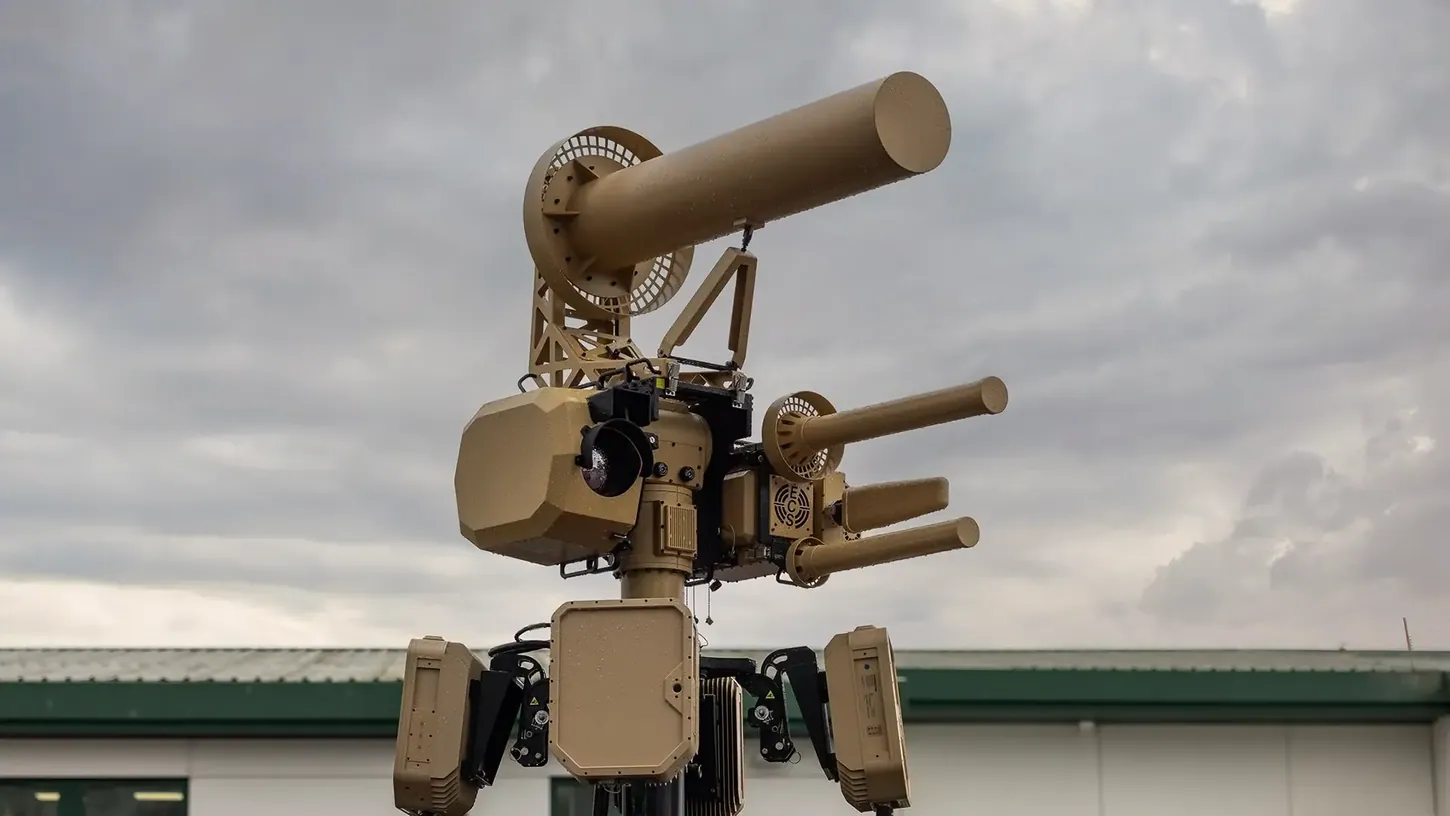
The release describes the 24.45 to 24.65 GHz rule as ground-based radar that tracks drones near places such as airports, prisons and stadiums. Trusty says the item protects federal users through case-by-case review and coordination, which matches the draft’s choice of site licensing over a fixed cap on radar density.
The draft declined airborne radars and radars operating in motion, and nothing in the three documents suggests that changed. The draft sets most of the rules to take effect 30 days after Federal Register publication.
DroneXL’s Take
I wrote on Wednesday that if the commissioners wanted 400-foot coverage in the 450 MHz license they had to write it in before the vote. The release and the statements don’t tell me whether they did. They do tell me, in one sentence from Trusty, that drones came up in the 800 MHz part between the draft and the vote.
I’m for more licensed spectrum for drones, and four megahertz next to the Cellular band could be useful if that is what the order clarifies. I’d still like to have read the language before it was adopted, because the draft the public saw didn’t have it. When FCC 26-81 posts, read the 800 MHz section and paragraph 63 on the 400-foot option before anything else.
Sources: FCC news release, November 19, 2026, with statements of Chairman Carr and Commissioner Trusty, FCC draft Report and Order FCC-CIRC2611-02, GN Docket 26-74 and WT Docket 24-629
DroneXL uses automated tools to support research and source retrieval. All reporting and editorial perspectives are by Haye Kesteloo. Read our editorial standards.
Advertise with DroneXLYour company hereReach 200,000+ drone readers a month with a sponsored article, a banner on your beat, or a partnership.See the options →