The Federal Communications Commission (FCC) votes Thursday, November 19, at 10:30 a.m. Eastern on an “Unleashing American Drone Dominance” order that would let AURA Network Systems convert its site-based 450 MHz licenses, spread over 54 sites, into one nationwide license for drone control links and general aviation, with no auction and no windfall payment. Chairman Brendan Carr put the draft online on October 29, the day the commission opened the 800 MHz Cellular band to drones.
When DroneXL previewed the vote on October 28, the coverage benchmark at 400 feet (122 meters) was the clause to read first. The January 2025 proposal would have required AURA, if it kept its high-altitude service, to serve 400 feet over 35% of each of the FCC’s regional license areas within eight years.
The draft keeps the nationwide license and the high-altitude service. It drops that 400-foot requirement.
The Draft Swaps the 400-Foot Benchmark for 5,000 Feet, as AURA Asked
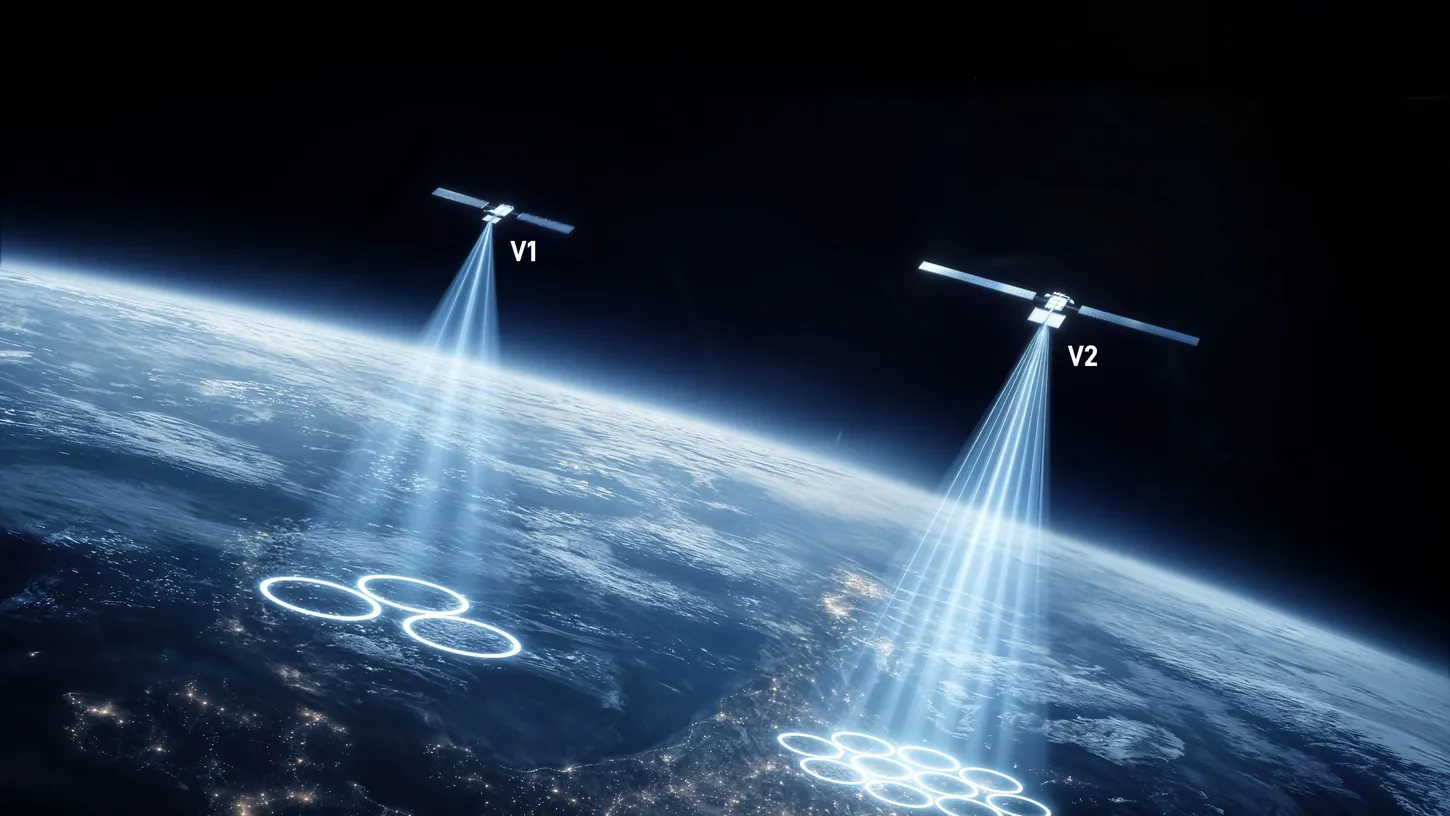
AURA could meet its build-out with 25,000-foot service over the lower 48, Hawaii and part of Alaska, plus 5,000 feet over 50% of the lower 48 and Hawaii in four years and 90% in eight, under the draft. Coverage at 400 feet, the Part 107 ceiling, becomes optional.
The Alaska share is 13% at four years and 25% at eight. The 400-foot option asks for 35% of the lower 48 and Hawaii at four years and 70% at eight, plus 9% and then 19% of Alaska. AURA picks its option when it files its construction notice, and any later licensee would get the same choice. The territories get no targets.
The 5,000-foot metric is in the draft “as requested by AURA.” In its comments, AURA said its network can provide low-altitude coverage but that it expects demand mainly in controlled airspace between 3,000 and 10,000 feet, and called the low-altitude benchmark unnecessary. It also told the FCC a 400-foot alternative “could ensure that the rules are sufficiently flexible” for future uses. A July 21, 2025 filing set out the numbers the draft adopts.
The draft order accepts the engineering case behind that. The band is 650 kilohertz wide, and the FCC writes in paragraph 61 that a network serving both high-altitude and 400-foot flights is “most likely not feasible.” The Enterprise Wireless Alliance made the same point. The draft says AURA was the only commenter to propose specific numbers.
The only other commenter the draft cites on altitude, the First Person View Freedom Coalition, asked the FCC to write “below 400 feet” instead of “at 400 feet.” The draft declines, citing the FAA’s wording. It also drops region-by-region measurement. AURA said building out regions without demand “would result in significant wasted investment,” citing most of Alaska, and the FCC added the empty stretches of the Gulf, Central and Western regions.
Missing a final benchmark still costs the whole license. Fail any interim metric and the term drops from 15 years to 13, with the final deadline pulled in to year six. Fail any final metric and the license ends automatically. Coverage counts as drone control service only if AURA’s links meet the RTCA DO-406 standard, or a later one the FCC adopts.
The draft disagrees with itself twice. Paragraph 63 sets the final 400-foot target for Alaska at 19%, and footnote 174 says 21%. Footnote 163 says nobody proposed 400-foot metrics, while paragraph 63 credits AURA with the 400-foot Alaska figures.
AURA Owes No Windfall Payment for a License Only It Qualifies For
The draft finds no undue enrichment and asks for no windfall payment or holding period. AURA has spent $100 million on the band since its 2021 waiver, the order says, citing AURA’s comments. The leftover spectrum between its sites cannot reasonably go to anyone else without harmful interference.
The eligibility test fits one company. A covered incumbent must provide service at 25,000 feet over the lower 48, Alaska and Hawaii on every available channel, from sites that block anyone else from building a regional service. AURA told the FCC the criteria ensure the applicant “is in fact the only entity that can operate in the band.” The FCC adds that any windfall payment would likely fall below a de minimis threshold.
The First Person View Freedom Coalition opposed giving the nationwide license to a private company and warned of underinvestment and monopoly pricing. The draft answers that AURA has long been the sole licensee and that “neither of these consequences is apparent in the record.”
The Draft Gives Echodyne Its Radar Rule but Not Its Licensing Model
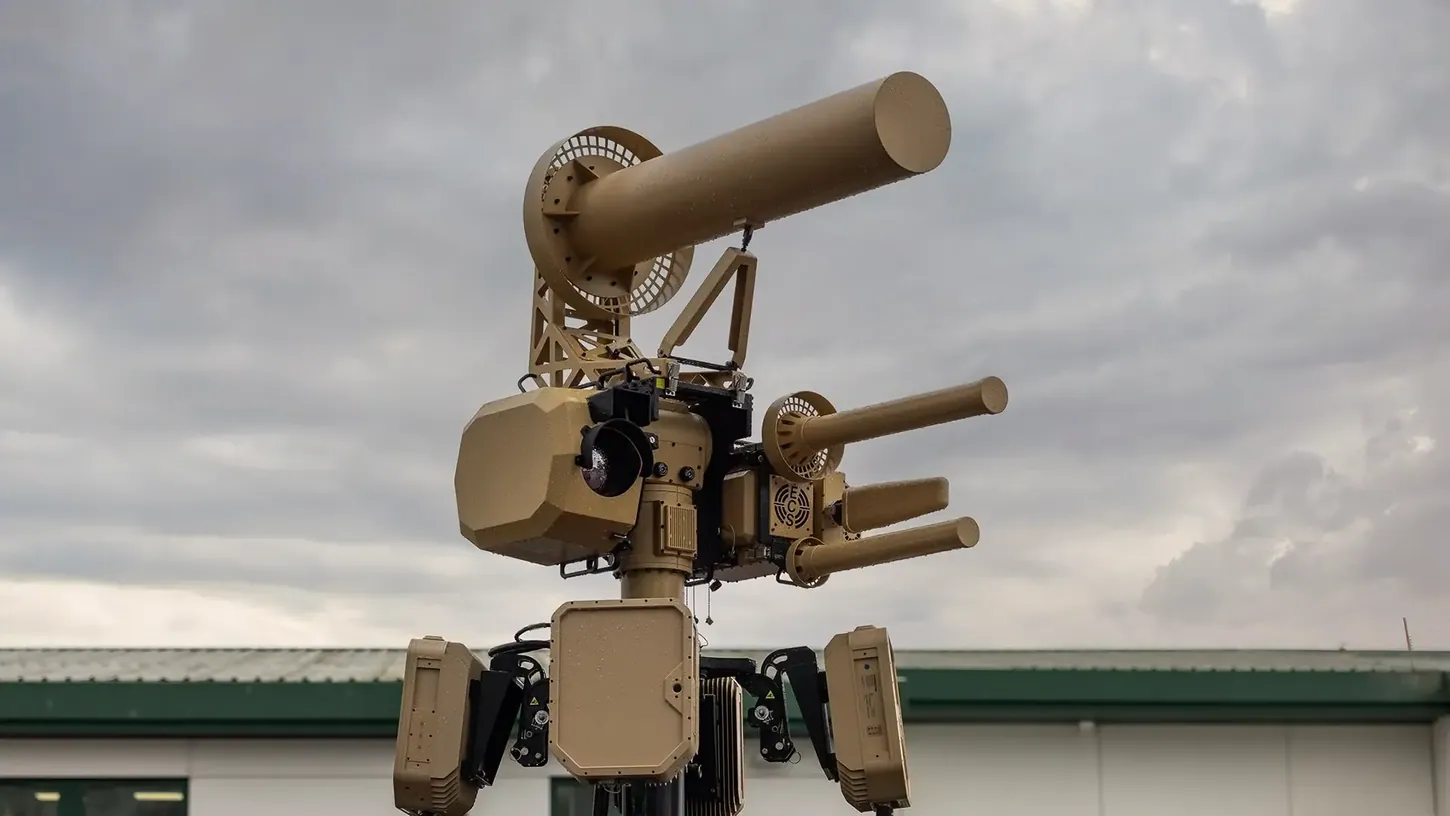
The 24 GHz part would add secondary radiolocation at 24.45 to 24.65 GHz, the rule Echodyne petitioned for in 2018, but it licenses each radar by site and turns down Echodyne’s requests for geographic licensing and for airborne radars, with temporary-location licenses for radars on trailers and vehicles.
Echodyne had argued that site rules would be too rigid for state agencies that move radars to respond to drone incursions. The FCC answers that temporary-location licenses cover those cases. Radars operating while in motion are not allowed. It sided with the radar makers on density, declining the National Telecommunications and Information Administration’s proposed cap of four units per square kilometer, and it notes that Echodyne and MatrixSpace have run under waivers for years without interference.
The order says spectrum access gives no power to track, mitigate or disable a drone. Echodyne’s outside counsel at DLA Piper spoke with FCC staff on November 9 about moving radars certified under waivers onto the new rules and about how the temporary-location rule is applied. In meetings with FCC staff and three commissioners’ offices, including Carr’s, on November 10 and 12, SpaceX asked for a registration database with the technical specifications of licensed radar stations.
A search of dockets 24-629 and 26-74 on November 18 found no AURA filing since the draft posted. Its last were reply comments in May, and the draft already gives AURA the metrics it asked for.
The Prison Jamming Order Leaves Drones to the SAFER SKIES Act
Thursday’s first item would authorize non-federal jamming of contraband phones inside correctional facilities. The draft states it does not authorize jamming of Part 15 unlicensed devices, “under which the majority of UAS control links operate,” and leaves drones over prisons to the SAFER SKIES Act of December 2025.
Counter-drone company Dedrone asked the FCC to treat any drone below 400 feet over a prison’s footprint as a contraband device. The draft does not grant that. It points instead to the counter-drone authority Congress gave state and local agencies, including corrections departments, the DHS and Justice Department interim rule of July 1, 2026, and the special temporary authority the FCC granted correctional agencies on July 2. The Correctional Leaders Association has asked the FCC to renew that authority before it expires on December 29, 2026.
The order’s further notice goes further on Part 15. It proposes letting licensed jamming systems block unlicensed signals at 2.4 GHz, 5 GHz including 5.725 to 5.85 GHz, and 6 GHz, in parts of a facility where all such devices are banned. Those are the bands most consumer drones use for control and video. Dedrone asked for 433 MHz and 902 to 928 MHz as well, and neither is in the proposed list. The draft frames the proposal around Wi-Fi and Bluetooth devices. Much of the contraband it targets arrives by drone, as in the ten-prison case the Justice Department charged in June.
DroneXL’s Take
I wrote on October 28 that weaker 400-foot targets would hand one company a nationwide license with the drone part made optional. The draft does exactly that, and it does it in the open, at the licensee’s request, in comments and a July 2025 filing.
The draft cites no commenter who disputed AURA’s physics, and the FPV coalition never put a 400-foot number on the table, so I don’t fault the FCC for believing it.
As I read it, that makes the 450 MHz order a network for larger uncrewed aircraft and crewed planes in controlled airspace, which is useful. Nothing in the draft requires it to be a control link for the Part 107 fleet at 400 feet, and the “drone dominance” branding oversells it. Under the draft, 400-foot coverage becomes a license obligation only if AURA elects the low-altitude option, and AURA has told the FCC it expects little low-altitude demand. If the commissioners want that coverage, they have to write it in before Thursday’s vote, not after AURA files its construction notice.
Sources: FCC draft Report and Order FCC-CIRC2611-02, GN Docket 26-74 and WT Docket 24-629, FCC draft Third Report and Order FCC-CIRC2611-01, GN Docket 13-111, Sunshine notice, Federal Register, November 18, 2026, FCC November 2026 Open Meeting
DroneXL uses automated tools to support research and source retrieval. All reporting and editorial perspectives are by Haye Kesteloo. Read our editorial standards.