
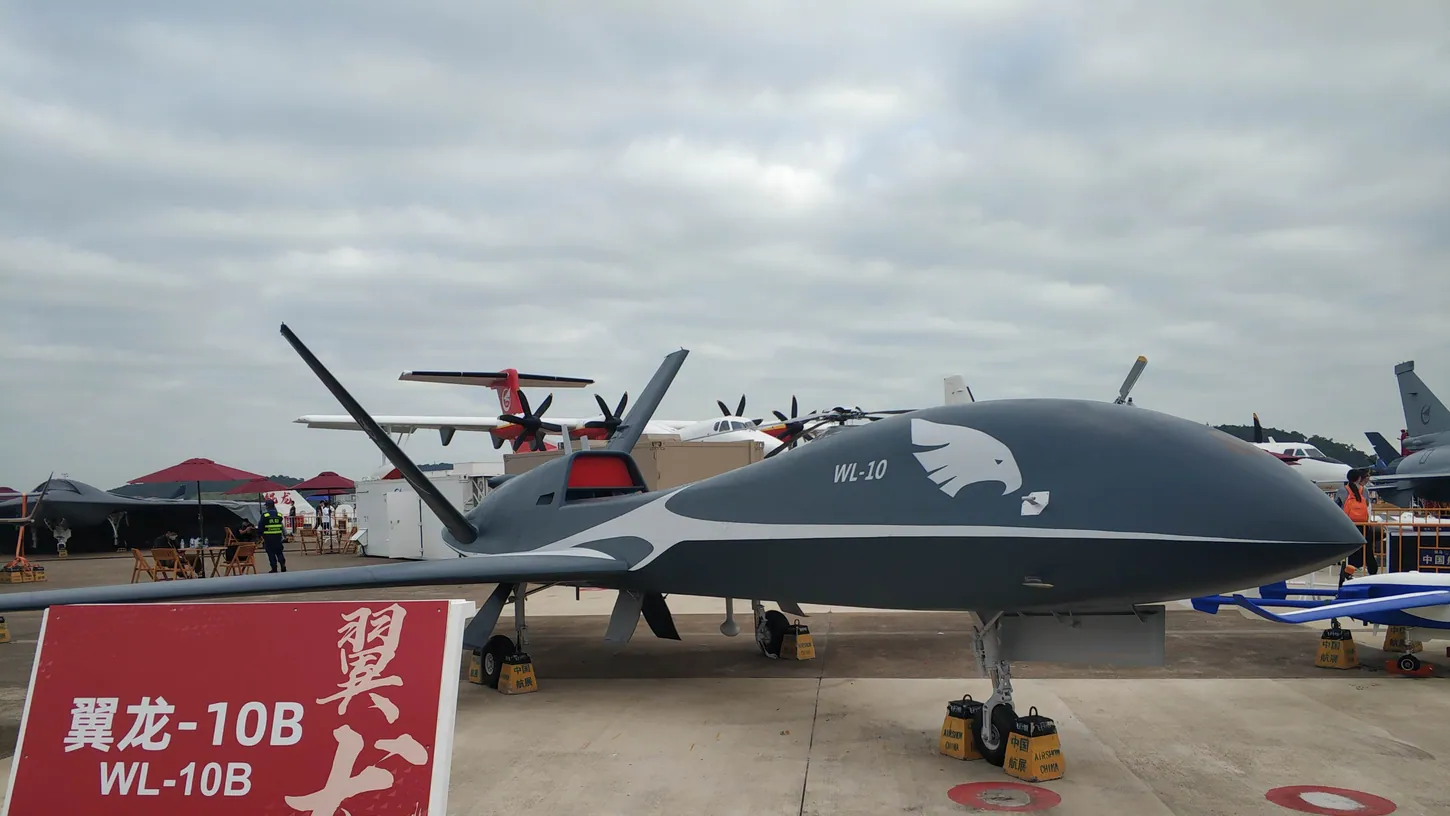
China’s People’s Liberation Army has spent more than three months arguing in its own newspaper that drone warfare moves faster than a rigid chain of command. Since July 30 the PLA Daily has run at least four articles on giving frontline commanders more freedom to act without waiting for orders from above, the South China Morning Post reported late Friday.
One of them, written by two authors at the Air Force Research Institute, describes how Ukraine’s Delta battlefield system lets small units strike without asking first. That is the same software Army Secretary Dan Driscoll told the Senate his own service cannot match.
The most detailed of the articles also insists that major operations stay under centralized command. Inside a PLA unit, a Communist Party committee oversees major decisions, and the commander shares responsibility with a political commissar.
PLA Daily Writers Say Approval Chains Make Units Miss Targets
An October 18 PLA Daily commentary said rigid command arrangements in recent conflicts had made forces “miss opportunities.” Troops had to seek approval “level by level” before striking. Its authors proposed that a frontline unit’s authority widen automatically under sudden threat and narrow again once conditions settle.
The series started on July 30, when a commentary called mission command the “basic mode of distributed operations” and said dispersed units with no real-time orders from above must decide for themselves while carrying out their superior’s intent. Mission command is the Western practice of giving a subordinate the objective and leaving the method to them.
Speed was only half of the October argument. Its authors wrote that large, fixed command posts are easy to find and easy to hit with long-range precision weapons, and that armies in recent wars had moved to smaller, mobile headquarters. A unit that already holds authority can keep fighting after its headquarters is destroyed.
The October authors, Shi Jiading and Zhao Lin, still put a ceiling on the idea. Strategic and campaign-level operations stay under centralized command, they wrote, because flexibility has “boundaries” and delegation has a bottom line.
Air Force Researchers Cite Ukraine’s Delta and Russia’s Jammers
Xu Changshuai and Feng Xiaoyu of the Air Force Research Institute wrote on November 2 that Ukraine’s Delta system lets frontline units act on shared targeting data. Troops can hit a target without asking again, they said, when it sits inside their assigned area and the authority was delegated beforehand.
“Time has become a scarcer tactical resource than firepower,” the two wrote, according to the South China Morning Post’s account of the commentary. Their article ran on the paper’s foreign-military page and describes Ukrainian, Russian and US Marine practice without prescribing anything for the PLA. It also names the weak point, citing reports that Russia’s Krasukha-4 jammer can cut the control links of FPV drones within 22 miles (35 km). PLA researchers have been working on that problem too, and in January state television showed one soldier directing a 200-drone swarm that its developers said could fly through jamming.
A November 5 commentary by Liao Zhenxi and Zou Zhenning applied the same logic to swarms of autonomous systems. Commanders should move from “issuing instructions for everything” to “guidance through rules,” they wrote, with clear limits on what an AI system may do alone, continuous monitoring, and a commander able to step in. The software is already arriving, and DroneXL reported last year that the PLA was putting DeepSeek AI into drone swarms and robot dogs.
US Analysts Say Party Control Will Outrank Speed
Timothy Heath, founder of the US consultancy Perceptum, told the Post that PLA commanders have little tactical independence under centralized command and party discipline. “I am sceptical that the PLA will be able to make this transformation,” he said, and he expects any change to be superficial.
Orders in the PLA run from the Central Military Commission through the theater commands to units in the field. A commander can make an urgent tactical call inside an existing plan and report it afterwards. Anything larger goes up the chain. Larry Wortzel, a retired US Army colonel who studies the PLA, told the Post that for major changes “one must ask permission,” and that mission command could weaken the party’s control of the army.
The PLA Daily has reported one case of responsibility moving down the ranks. On October 13 it described a Central Theater Command army brigade running a joint exercise with other services while higher headquarters only supervised, and a captain coordinating airspace and fire support without asking for instructions. That was training. Wortzel said he had seen no evidence of the wider proposals being implemented.
Rand Corporation researchers warned in an October 2025 report that handing down authority without better-trained, better-disciplined officers could produce “more aggressive, uncoordinated behavior” in a crisis. Chinese military commentators have a name for the training gap, the “Five Incapables,” and the Post says they were highlighting it around Xi Jinping’s military overhaul at the end of 2015. A May 2025 National Bureau of Asian Research volume found the phrase turning up less often in the PLA Daily, though it still appeared several times in 2023.
DroneXL’s Take
The US Army and the PLA are now both studying the same Ukrainian software, and I’d say both are learning that the code is the easy part. When I wrote about Delta in August, the detail that stayed with me was where it came from. Volunteers in a drone unit built it because the radio chain to the guns was too slow, and the Ukrainian Army resisted it for years. Delta works today because a small unit is allowed to shoot at what it sees on the map. The PLA Daily writers understand that, and the November 2 piece says a squad’s judgment has to be trusted by the command system. My read is that trust is the one thing the PLA can’t order into existence while a commissar co-signs the decisions. I’ll believe the PLA has changed when its newspaper shows a captain making that call somewhere other than an exercise his superiors were grading.
Sources: South China Morning Post (Gabriel Dominguez), PLA Daily, Rand Corporation, National Bureau of Asian Research.
DroneXL uses automated tools to support research and source retrieval. All reporting and editorial perspectives are by Haye Kesteloo. Read our editorial standards.
Advertise with DroneXLYour company hereReach 200,000+ drone readers a month with a sponsored article, a banner on your beat, or a partnership.See the options →


