
NATO Allied Air Command ran three days of counter-drone training in the Baltic region from November 17 to 19, and the crews had real drones to find. Belgian and Turkish F-16s, Finnish F/A-18 Hornets and Italian Eurofighters flew the mission with Lithuania’s NASAMS surface-to-air missile system, the command said on November 24.
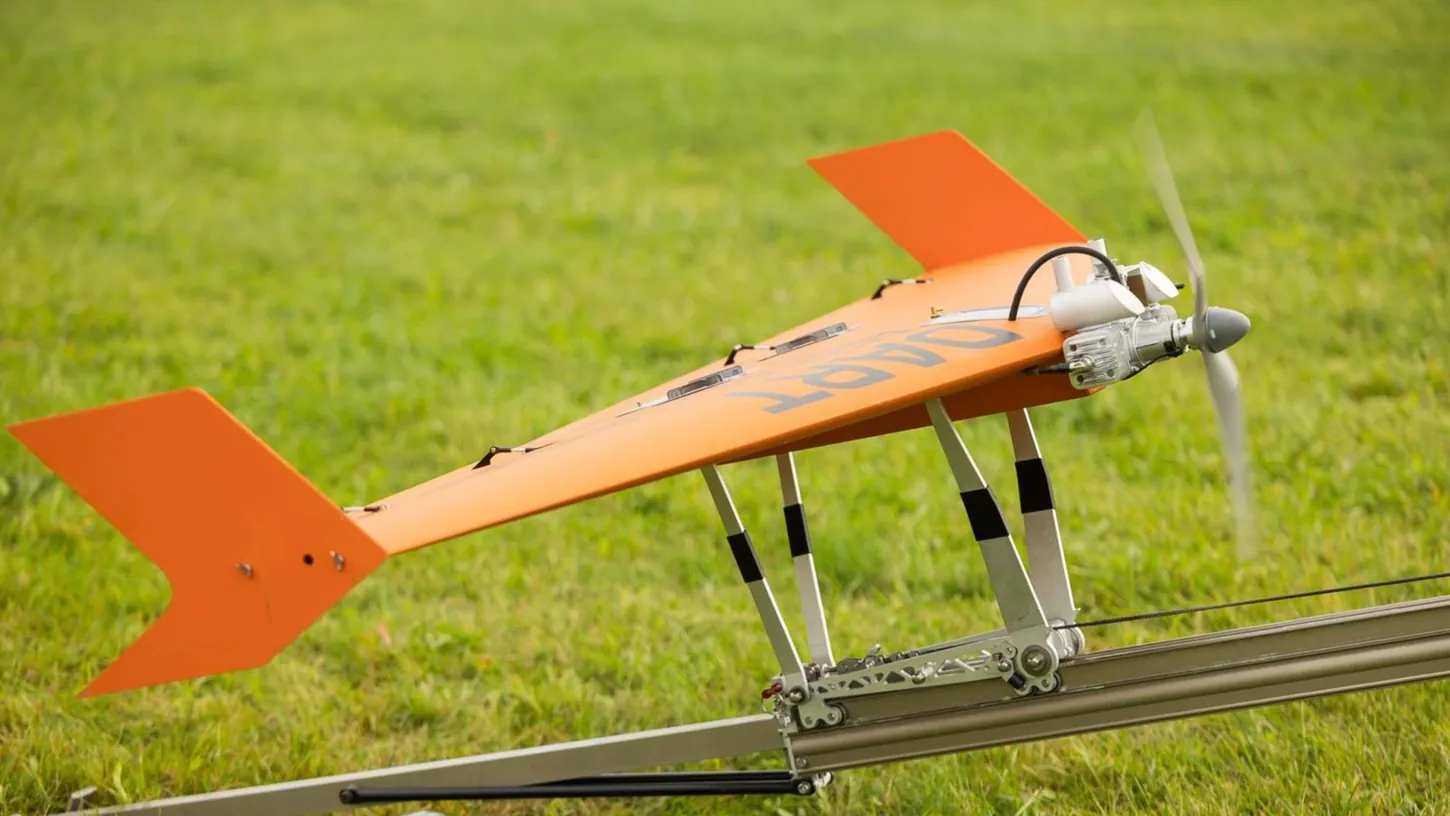
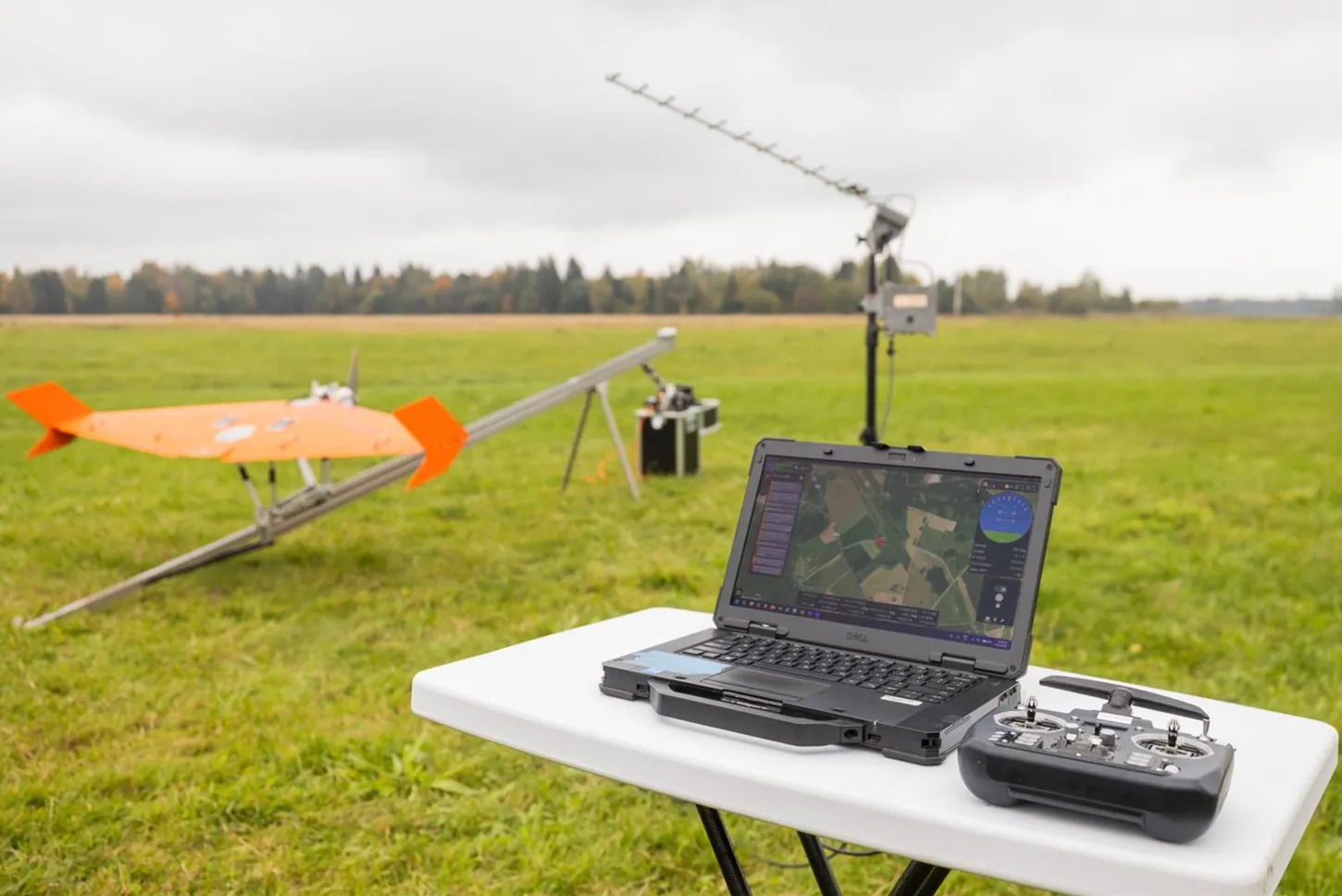
The photos NATO published with the announcement are credited to KrattWorks, an Estonian drone maker, and they show its orange DART aerial target on a launch rail in a field. The training came two months after Italian Eurofighters shot down the first drone ever downed over Lithuania. NATO’s statement does not say whether anyone fired at the targets last week.
KrattWorks’ DART Gave NATO Crews a 29-Pound Target
The drone in NATO’s photos is the KrattWorks DART, a fixed-wing aerial target with a 7.2-foot (2.2-meter) wingspan and a 13 kg takeoff weight, about 29 pounds. KrattWorks lists its top speed at 125 mph (202 km/h) and says the Estonian Defence Forces already use it.
Allied Air Command’s release names no company. It says the allies trained in a red-versus-blue air scenario “with the assistance of industry and the use of real-life” drones. The photo credit names KrattWorks, and the airframe in the pictures has DART painted on it.
KrattWorks sells the DART as a target for sensor systems, heavy machine guns, anti-aircraft cannons and air defense missiles. The company’s spec sheet gives it 40 or 110 minutes of flight time and an operating altitude up to 16,400 feet (5,000 meters). In October the company told Defense News it is also building a target that mimics jet-powered Shahed-type drones and expects to present it by the end of 2027.
NATO’s February and May counter-drone missions over the Baltics looked different. On February 20, the threat was a Bayraktar TB3, a full-size Turkish combat drone. On May 27 over Lithuania and Latvia, a NATO AWACS aircraft fed crews what the command called notional target information.
The Mission Flew Under NATO’s Upgraded Baltic Air Defence Rules
Belgium, Italy and Turkey hold what Allied Air Command now calls NATO Air Defence duties in the Baltics. The mission was Baltic Air Policing for 22 years, until allies upgraded it at the Ankara summit in July. Finland’s Hornets and an A330 tanker from the multinational unit at Eindhoven joined.
Estonian Defense Minister Hanno Pevkur told ERR in July that the upgrade gives NATO’s top commander broader authority, and that pilots no longer wait for a political decision before shooting down a drone that strays into NATO airspace. We covered the push for those powers before the summit.
NATO says its new Air Defence posture combines fighters, surveillance, counter-drone systems and sea- and surface-based defenses.
DroneXL’s Take
Real targets are the right way to train. A crew that has only chased simulated tracks and one large Bayraktar has not practiced finding a 29-pound drone with a 7-foot wing. Using a Baltic company for the targets makes sense too, because KrattWorks builds them in Estonia and the Estonian military already trains on them.
In September I wrote that NATO’s answer on the eastern flank was “a jet-shaped answer to a plywood-shaped problem.” The Ankara upgrade dealt with the authority but not the cost, and fighters from four air forces plus a missile battery against a target this small is still expensive. I’d like the next release to say whether anything was fired and what a shot would cost.
Sources: NATO Allied Air Command, KrattWorks, Defense News, ERR
DroneXL uses automated tools to support research and source retrieval. All reporting and editorial perspectives are by Haye Kesteloo. Read our editorial standards.
Advertise with DroneXLYour company hereReach 200,000+ drone readers a month with a sponsored article, a banner on your beat, or a partnership.See the options →


