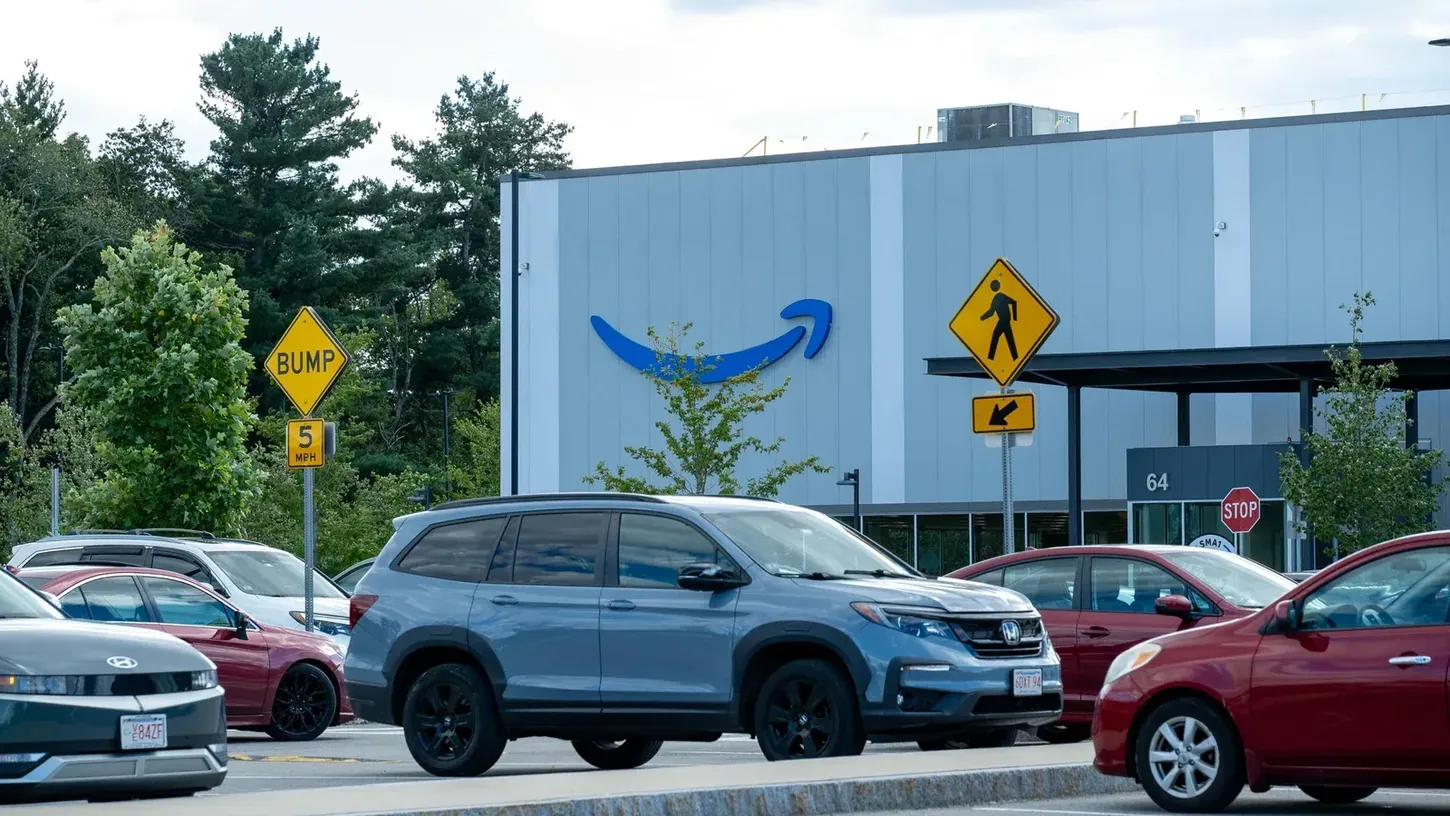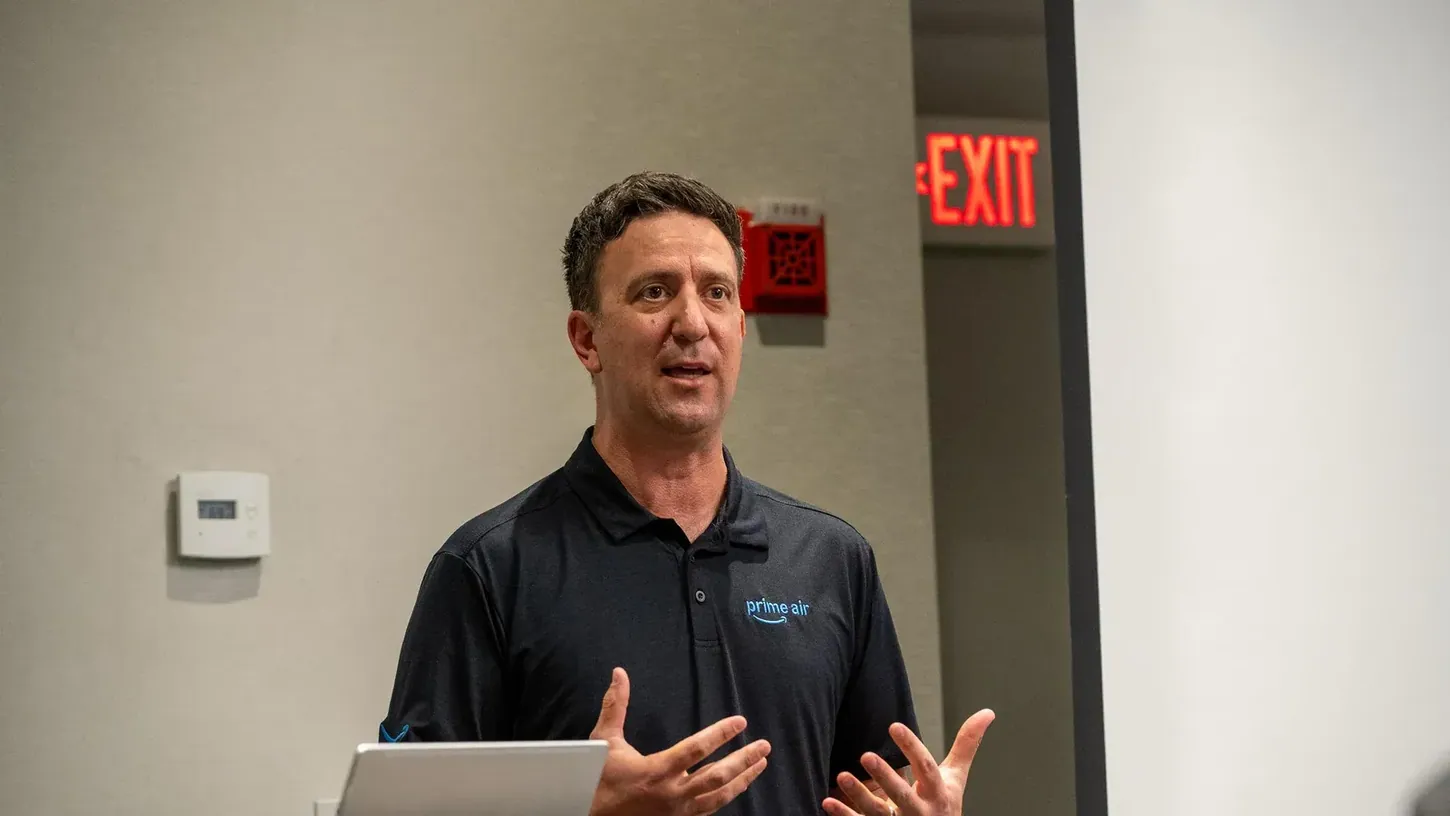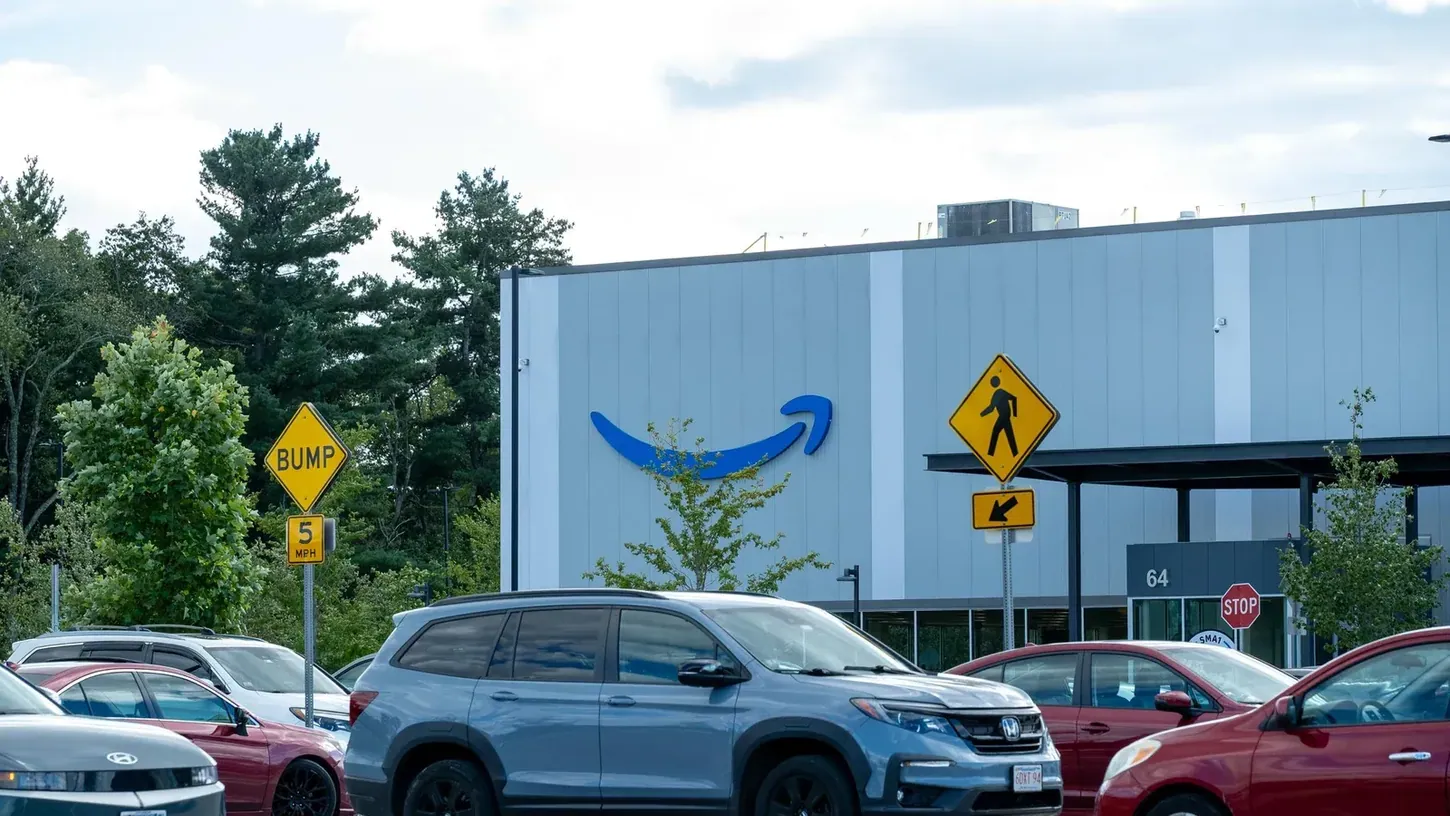
Massachusetts state Sen. John Velis says he will refile his drone bill in January and add rules for commercial delivery to it, now that Amazon has withdrawn its Prime Air drone pad application in Westborough. Velis, a Westfield Democrat, told the Daily Hampshire Gazette in a story published Tuesday, November 24, that the withdrawal was a good thing and that drone delivery should not go ahead until the state has a framework of its own.
The current version of his bill, Senate No. 3008, says the operation of drones “shall not be subject to any municipal ordinances, bylaws or regulations.” Westborough voters passed a bylaw 510 to 13 on October 19 that bans commercial drone launch pads and drop zones, and it is still waiting on the attorney general. Asked whether his bill would override that bylaw, Velis told the Gazette that the state needs uniform drone rules and that towns should be free to act until it has them.
The bill Velis filed in January 2025 does not contain that sentence.
The Clause Overriding Town Drone Rules Was Written in Committee
The clause entered S.3008 in committee. Sen. Michael Rush’s S.2438 barred towns from regulating drones under 55 pounds, with exceptions. The Joint Committee on Transportation merged it with Velis’s S.2454 on a 7-0 vote and wrote a broader sentence with no weight limit and no exceptions.
Rush’s bill said no municipality “shall enact or enforce any ordinance regulating the operation” of drones except as the FAA or state law allows. It defined a drone as weighing less than 55 pounds (25 kilograms), which leaves out Amazon’s MK30 at 83.2 pounds (37.7 kilograms) maximum takeoff weight. Velis’s filed text covered weapons, interference with airports and emergency crews, and flights near critical facilities, and it said nothing about town rules. Seven senators on the committee voted on March 5, 2026, and S.3008 was reported out and sent to the Senate Committee on Ways and Means on April 1. The bill history showed no action since when DroneXL checked it on November 24. Both filed bills defined “operate” as “to pilot, fly, control, direct, or program the flight” of a drone, and S.3008 carries no definition of “operate” or “operation.”
Velis has now filed a drone bill in two sessions running, S.2308 in 2023 and S.2454 in 2025, and DroneXL covered the July 2025 hearing where he tied the second one to his 2018 deployment to Afghanistan. He told the Gazette’s Layla Penn that a recent deployment to the southern border reinforced that view, and that drones over Barnes Air National Guard Base in Westfield and Westover Air Reserve Base in Chicopee are part of a larger problem of no statewide regulation. He had no figures on drone reports near Barnes.
S.3008 Lists Commercial Distribution Centers as Critical Facilities
S.3008 makes it an offense to fly a drone within 500 feet (152 meters) of a “critical facility” to photograph or record it without the facility’s written permission. The fine is $1,000, with up to a year in jail. The bill’s list of critical facilities includes “a commercial distribution center.”
The bill does not define that term. My reading is that an Amazon warehouse like the one at 64 Otis Street in Westborough fits it. Courts, police stations, jails and hospitals with air ambulance service are on the same list. The distribution-center item was already in the bill Velis filed in January 2025, 19 months before Amazon presented its Westborough plan to the Select Board on August 18, 2026. Velis’s filed version made the same flights an offense only when the pilot meant to further another crime involving physical harm. The committee draft dropped that condition, so on that reading a pilot photographing a drone delivery hub from within 500 feet would need the facility’s written permission first.
The same paragraph bars launching, flying or landing a drone within 500 feet of a US military installation without written permission from both the state and the base commander. S.3008 opens by saying any person may fly a drone in Massachusetts for personal, commercial or public purposes if they follow federal law. Apart from the military buffer, it has no provision on delivery or on where commercial drones take off and land.
Velis Wants Delivery Held Until Massachusetts Writes Its Own Rules
Velis told the Gazette that Massachusetts has been wrong to leave drones to the FAA and that no delivery project should move forward until a state framework exists. He said, “I’ve got absolutely no problem with the municipalities coming forward,” if the state is not going to act.
Amazon had proposed flying packages under 5 pounds (2.3 kilograms) from Otis Street to homes within 7.5 miles (12 kilometers). I recorded the September 23 forum where Amazon said it still planned to launch from Westborough, and the company has since said it will file a revised project. MassDOT told the Gazette it has not received an application from any commercial drone delivery operator, Amazon included, which matches the letter the agency sent Amazon on October 22. Amazon did not respond to the Gazette’s request for comment.
The request from 16 legislators for a task force and a freeze on state approvals is still under review, MassDOT told the paper. Rep. Kate Donaghue, D-Westborough, one of the signers, said in an email to the Gazette that Amazon’s withdrawal “does not obviate the need for a task force,” especially since Amazon has said it intends to reapply.
Westborough’s bylaw went to the attorney general on October 22. The 90-day review under M.G.L. c. 40, § 32 runs to January 20, 2027 (October 22 plus 90 days) unless it is extended. The town’s Prime Air page says MassDOT must approve the bylaw too. The Zoning Board of Appeals takes up what is left of the residents’ appeal on December 7.
Residents inside the 7.5-mile circle of any Prime Air site can find the steps open to them in DroneXL’s residents’ guide, and the Prime Air tracker page lists every site. Complaints about a delivery drone go to Amazon’s customer service at 1-888-280-4331, or through the chat under “Something Else” and then “Amazon Drone Delivery.”
DroneXL’s Take
Massachusetts has 351 cities and towns, and a pilot shouldn’t need 351 rulebooks to cross the state. A federal judge struck Newton’s drone registration rule and altitude limit in 2017, and whatever room the FAA leaves should be filled once, by the state. I’d keep that part of S.3008.
Where an MK30 that weighs 83 pounds at takeoff comes and goes is a different question. The drone carries 5 pounds and no parachute, and the FAA’s own fact sheet says states have a valid interest in choosing where aircraft operate on the ground. Westborough’s bylaw says in five of its sections that it does not regulate flight, and its ban covers pads and drop zones. S.3008 never defines “operation,” and my read is that a delivery company could argue a launch pad is part of operating a drone. I’m for drone delivery where the urgency justifies the flight, like medication or a defibrillator, and Zipline’s lighter, tethered P2 shows how to do it. When Velis refiles in January, the bill should say that towns don’t regulate flying and that a town still has a say over a delivery hub on the ground.
Sources: Daily Hampshire Gazette, Massachusetts Legislature (S.3008, S.2454, S.2438), Town of Westborough, FAA
DroneXL uses automated tools to support research and source retrieval. All reporting and editorial perspectives are by Haye Kesteloo. Read our editorial standards.
Advertise with DroneXLYour company hereReach 200,000+ drone readers a month with a sponsored article, a banner on your beat, or a partnership.See the options →