Ericsson says it linked counter-drone and air defense systems over a tactical 5G network at Atlas 26, the Spanish Armed Forces’ main joint exercise, held October 19 to 23 at the Medano del Loro training area in Huelva. The company says it is the first time Spain connected counter-drone systems on 5G alone, without fixed cabling.
The release, as issued by Ericsson
Nov 24, 2026
Ericsson (NASDAQ: ERIC) has demonstrated the use of a tactical 5G network to wirelessly interconnect counter-drone and air-defense systems during Atlas 26, the Spanish Armed Forces’ main joint military exercise, focused on responding to unmanned aerial threats, and held from 19 to 23 October at the Médano del Loro training area in Huelva. For the first time the Spanish Armed Forces have connected counter-drone (C-UAS) relying solely on a tactical 5G network, replacing fixed cabling with a highly mobile, rapidly deployable link.
Atlas 26 evaluates the joint response to massive air threats, with a focus on drone, anti-aircraft and missile technologies. Effective coordination depends on sharing data between sensors, radars, command posts and effector systems quickly and reliably. Until now, that interconnection relied on physical cabling, which constrains how quickly forces can reposition and scale on the ground.
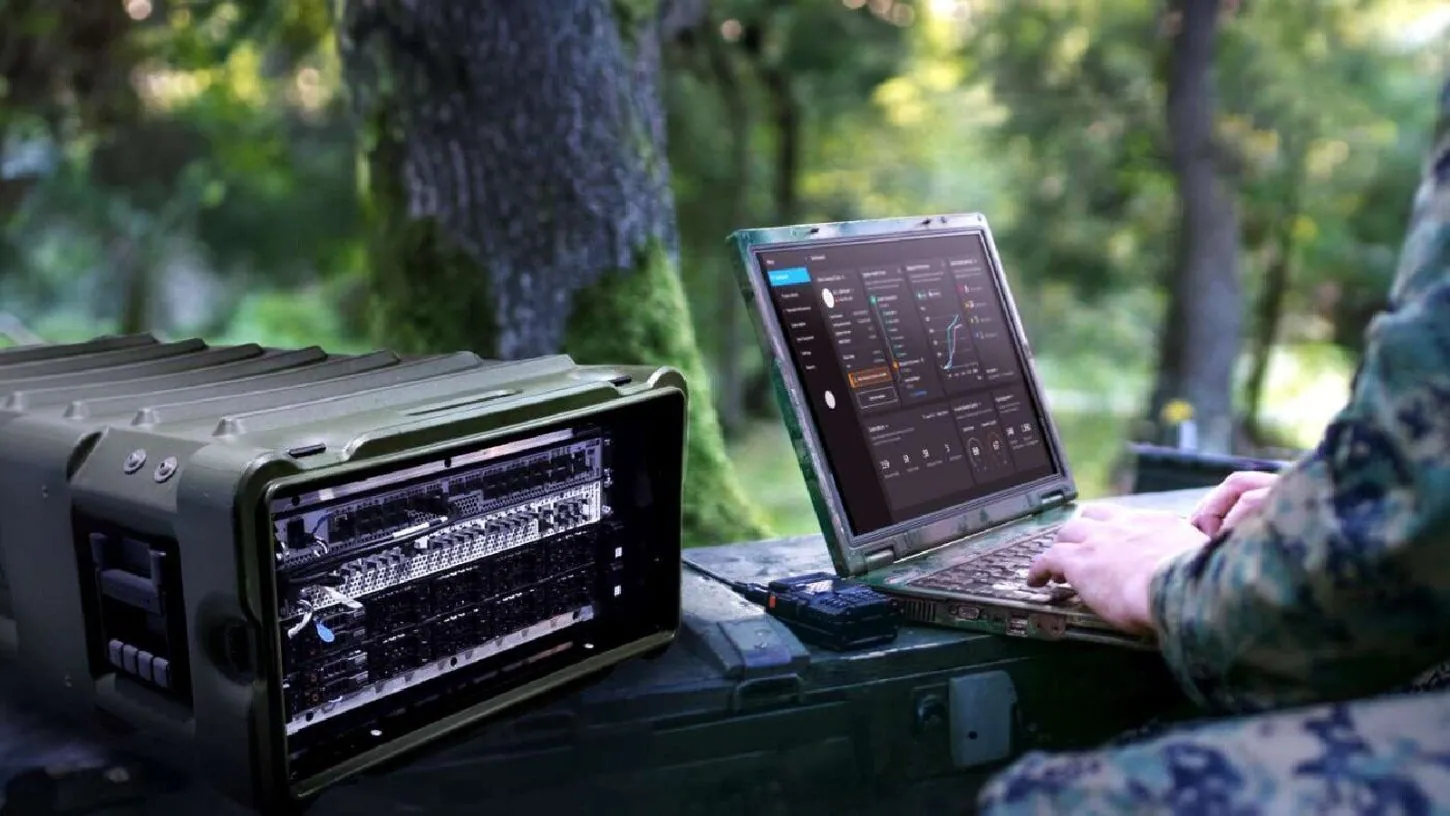
The demonstration used Ericsson Ultra Compact Core, a compact, mobile, defense-grade and rapidly deployable 5G Core. The deployment featured a pre-integrated solution comprising Ericsson 5G Core software, the Ericsson Container-as-a-Service platform and the necessary hardware infrastructure and was operated by the 5G Spanish Cyber Defense Centre of the Joint Cyberspace Command (Mando Conjunto del Ciberespacio). Ericsson equipment installed operated in bands reserved exclusively for military use.
The demonstration established a tactical 5G network providing:
- Dedicated connectivity isolated from commercial traffic using military-exclusive spectrum.
- Reduced exposure to electromagnetic interference and congestion.
- Low-latency data exchange between connected systems, supporting the coordination of distributed counter-drone and air-defense capabilities.
Juan Olivera, Country Manager, Ericsson Spain, said: “This exercise has shown how commercial 5G innovation, hardened for defense, can give armed forces a decisive operational edge. A sovereign, deployable 5G network puts resilient, high-capacity connectivity exactly where it is needed, with no dependence on fixed infrastructure.”
Tactical 5G provides armed forces with a mobile connectivity layer that can be rapidly deployed and adapted to changing operational conditions. By reducing reliance on fixed cabling and connecting distributed sensors, command-and-control systems and effectors, the Atlas 26 demonstration highlights how tactical 5G can give armed forces greater flexibility to deploy, reposition and connect their systems in the field, providing a practical foundation for its wider adoption across Spain’s and Europe’s future operations.
Advertise with DroneXLYour company hereReach 200,000+ drone readers a month with a sponsored article, a banner on your beat, or a partnership.See the options →