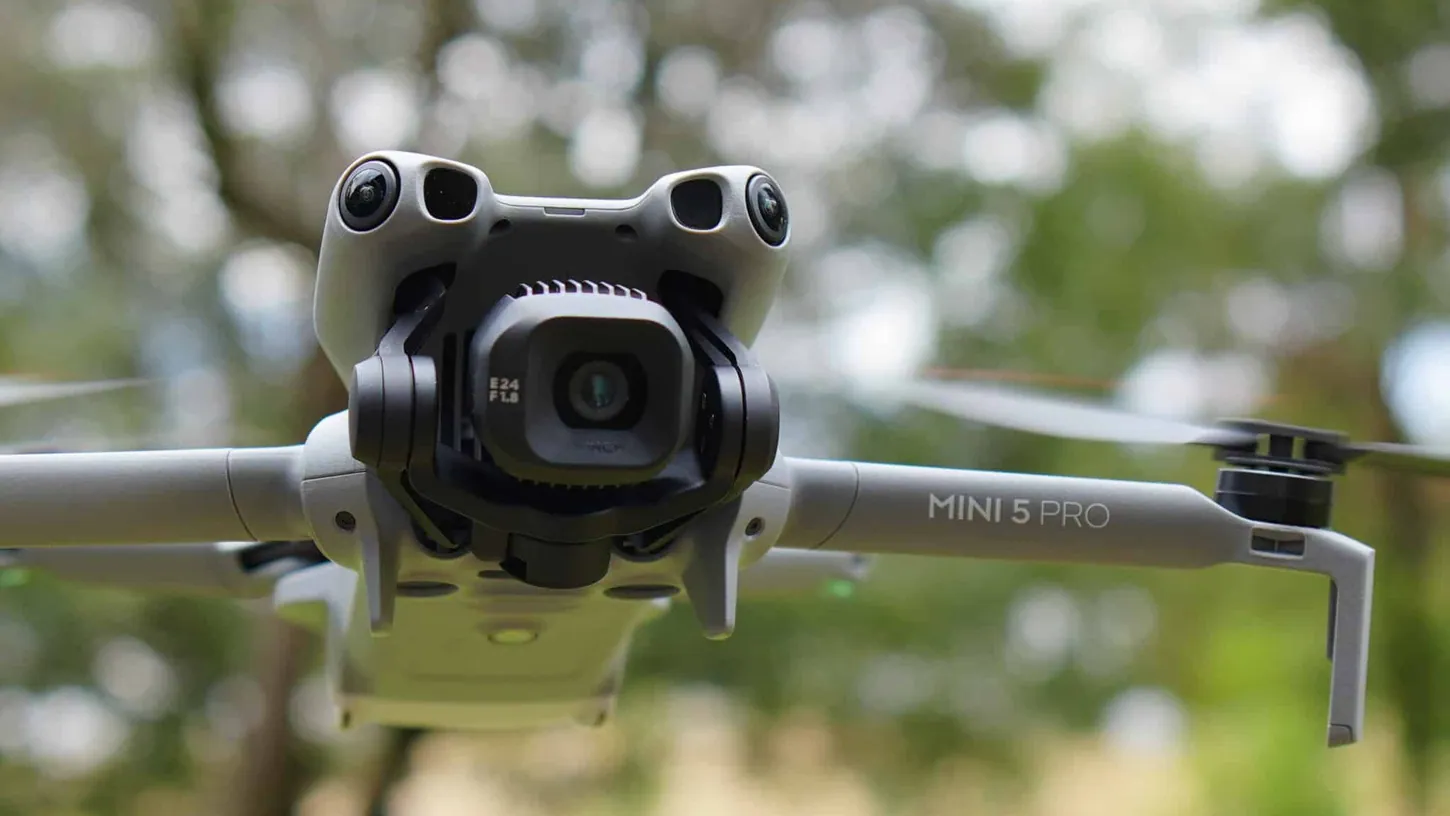
The Trump administration’s new round of China tariffs reaches drones. The Office of the U.S. Trade Representative on Wednesday proposed tariffs of up to 20% on nearly all goods from China, counting the 12.5% forced-labor tariff many of them already pay. Chinese civil drones and drone parts went into a reduced group capped at 10%. Civil drones from the European Union, Japan, South Korea, Taiwan and Vietnam are exempt.
For a DJI drone, that 10% would sit on top of the 25% Section 301 duty Chinese drones have paid since 2019 and the Section 232 drone tariff that took effect September 3. The small brushless motors inside a camera drone did not make the reduced list.
Chinese Drones Get Up To 10% More, Stacked On The August Tariff
USTR’s China notice puts every unmanned aircraft code (HTS 8806) and drone parts (8807) in Annex A, the group proposed at up to 10%. The listing is limited to civil aircraft, which the notice defines as all aircraft other than military aircraft that meet the tariff schedule’s general note 6.
The rest of China’s goods face up to 20%. The China notice ties that figure to the 20% rate agreed in the Kuala Lumpur arrangement Trump and Xi Jinping reached on October 30, 2025. If USTR decides talks with Beijing are going nowhere, it proposes up to 40% on all Chinese goods, drones included. The New York Times reported Trade Representative Jamieson Greer calling the approach “targeted.”
Every China rate is net of the forced-labor Section 301 tariff of 12.5% that started July 24. That action exempts civil aircraft under the same general note 6 language, so a drone that qualifies has paid none of it and would take the full 10 points. U.S. Customs and Border Protection decides what qualifies, and the notices do not address consumer camera drones by name. One that does not qualify already pays the 12.5% and would move to a 20% total.
The notices for the EU, Japan, Korea, Taiwan and Vietnam exempt goods already under Section 232 tariffs on steel, aluminum, copper, cars, trucks, wood, patented drugs and chips. Drones are not on that list, and China’s notice contains no Section 232 exemption at all. On paper, a qualifying Chinese consumer drone would go from 50% (25% under Section 301, 25% under Section 232) to 60% of import value. A thermal drone in the 100% Section 232 tier would reach 135%.
Allied Drones Are Exempt From The New Tariff
Civil drones and drone parts from the EU, Japan, South Korea, Taiwan and Vietnam sit on the exemption annex in each country’s notice, so the new duty would not apply to them even though the EU faces a general 15% rate, Taiwan up to 15% and Vietnam up to 35%.
That exemption covers the new tariff only. Allied drones still pay the August Section 232 rate, capped at 15% for the EU, Japan, Korea and Taiwan only when the importer certifies that “substantially all hardware, software, and technology” comes from those countries or the United States. Fourteen economies drew a finding on Wednesday, according to USTR’s announcement.
Nothing Takes Effect Before Late January
The proposals are not final, and none of the 14 notices sets an effective date. Written comments and requests to testify are due January 5, 2027, and USTR’s Section 301 Committee opens public hearings January 25 at the U.S. International Trade Commission in Washington.
Until then, the drone tariffs that bite are the older ones. The first-term Section 301 tariffs on Chinese goods, 25% on drones since 2019, never went away. They were the base of the 170% stack that hit DJI hardware in April 2025, before the Supreme Court struck down Trump’s emergency tariffs on February 20 in Learning Resources v. Trump. The FCC’s December 22 Covered List decision still blocks authorization of new foreign drone models, and the Section 232 duties of 25% and 100% have applied since September 3. A third Section 232 tier, 25% on propellers, landing gear and other drone parts, starts February 9, 2027.
Motors And Batteries Stay In The Full 20% Group
Chinese lithium-ion batteries (HTS 8507.60) get the reduced rate only as civil aircraft articles. Every other Chinese lithium-ion battery already pays the 12.5% forced-labor tariff and would rise to 20%, plus the 25% that non-EV batteries have paid under the first-term Section 301 tariffs since January 1, 2026.
USTR set that 25% battery rate in September 2024, during the four-year review of the original China tariffs. Whether a spare drone battery counts as a civil aircraft part is the same question CBP has to answer for the drone itself.
Motors are plainer. Annex A lists electric motors only above 735 watts, and only for civil aircraft, so the small DC motors in camera drones and FPV builds stay in the 20% group, a 7.5-point step up from today’s forced-labor rate. Sintered neodymium magnets, the material inside those motors, get the reduced group from China and an exemption from the allies. No camera heading made the reduced list, so DJI’s Osmo line would face the same 20%.
None of these parts are on the annexes of the August drone proclamation, which covers airframes, propellers, landing gear and a few power and control components. For American builders sourcing Chinese cells and motors, this proposal is the new tariff that reaches them.
DroneXL’s Take
My read: for anyone buying a finished DJI drone, Wednesday’s proposal barely registers next to the FCC Covered List and the August tariff, which decide what reaches American shelves and at what price. Up to 10% more on a grandfathered Mini is real money, but it is not the story.
The parts list is. The administration has wanted American drone makers since the June 2025 drone dominance executive orders, and the August proclamation itself admits those makers build from imported components. Under this proposal, a finished Chinese drone that qualifies as civil aircraft is capped at 10% under the two newer China tariffs combined. The bare Chinese motor an American builder bolts onto a frame is capped at 20%.
DJI’s aircraft still carry the 25% Section 232 tariff that those motors don’t, so the finished drone pays more in total. But USTR built a civil-aircraft discount for the plane, not for the parts a small drone maker actually imports. Anyone building drones in the United States should file a comment by January 5 asking for small drone motors and cells to move into Annex A.
Sources: USTR, USTR China notice, USTR EU notice, USTR forced-labor final action, The White House, Federal Register, The New York Times (Tony Romm and Ana Swanson)
DroneXL uses automated tools to support research and source retrieval. All reporting and editorial perspectives are by Haye Kesteloo. Read our editorial standards.
Advertise with DroneXLYour company hereReach 200,000+ drone readers a month with a sponsored article, a banner on your beat, or a partnership.See the options →