
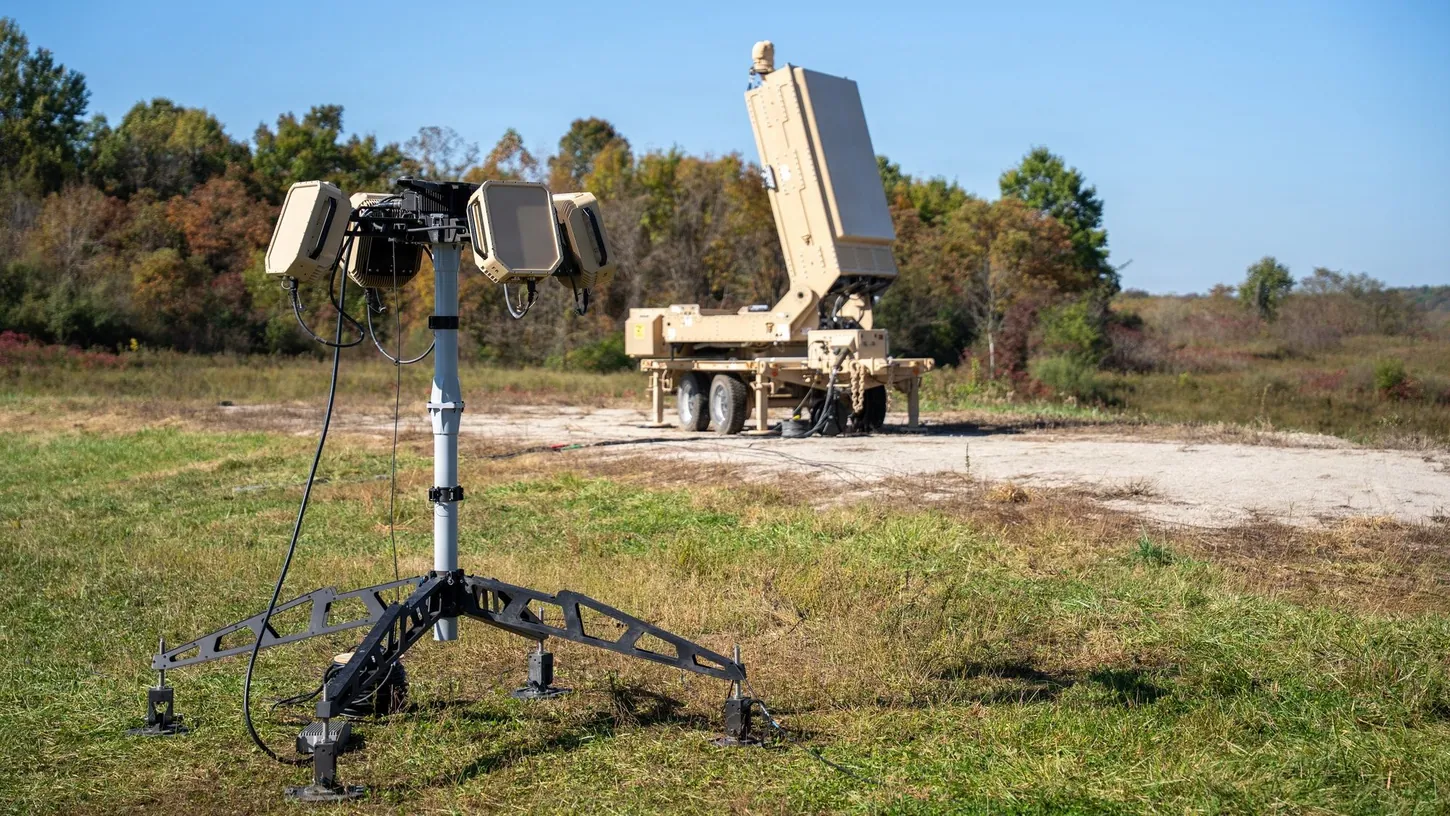
The Justice Department says police can pick up the Remote ID signal your drone broadcasts, including the location of the controller in your hands, without a wiretap order. An opinion from its Office of Legal Counsel, dated November 24 and released November 25, concludes that radar, cameras, acoustic sensors and radio-frequency receivers generally do not violate the federal Wiretap Act or the Pen-Trap Statute.
Assistant Attorney General T. Elliot Gaiser signed the 55-page opinion. It is addressed to the Counsel to the President and covers federal, state, local, tribal and territorial agencies. In May, DroneXL reported that the Orange County Fire Authority was reading Remote ID to trace the pilots flying over the Garden Grove chemical tank emergency.
The same opinion puts DJI’s own control and video link outside the exception that makes Remote ID fair game.
Remote ID Counts as a Public Broadcast Under the Wiretap Act
OLC says the content of a Remote ID message is the drone’s serial number, the control station’s location, and the aircraft’s position, velocity and emergency status. The FAA requires that broadcast on open Bluetooth and Wi-Fi standards so most phones can read it, which makes it readily accessible.
That phrase is the legal hinge. The Wiretap Act lets anyone intercept an electronic communication that is “readily accessible to the general public,” and the opinion finds Remote ID qualifies on every test it applies: no encryption, published signal parameters, and a published data format in ASTM F3411. The department’s release quotes Gaiser promising “renewed legal clarity” for agencies trying to “detect and defeat drone threats.”
OLC also covers the fallback argument. If a Remote ID module were legally a tracking device, it says, the Fourth Amendment would be the only limit, and pilots lose there too. The opinion cites the D.C. Circuit’s 2022 ruling in Brennan v. Dickson that “drone pilots generally lack any reasonable expectation of privacy” in their drone’s location during flight.
The same three tests reach past Remote ID. The opinion names MAVLink, the open telemetry protocol used by ArduPilot and PX4 builds, as a published data format that points toward a link being readily accessible. An unencrypted MAVLink telemetry radio sits closer to Remote ID than to DJI on OLC’s map.
DJI’s OcuSync and Lightbridge Links Fall Outside the Public Exception
DJI’s links land on the protected side. OLC says proprietary links whose signal parameters and modulation are withheld from the public, naming DJI’s Lightbridge and OcuSync, show “indicia of intended privacy.” ExpressLRS joins them because it runs on proprietary LoRa modulation with user-set parameters.
Intercepting the contents of those links may violate the Wiretap Act unless another exception or legal authority applies, and the Justice Department says such cases get decided one technology at a time. Passive spectrum monitoring that only registers a signal’s presence is different: OLC says it does not violate the Wiretap Act. Any system that decodes a drone’s signal must still be used consistently with the Fourth Amendment, the opinion adds.
A footnote covers DJI’s encrypted AeroScope packet, which carries the drone’s model, location and telemetry. OLC says users of DJI’s own AeroScope receivers count as a party to that communication and may read it. Detection systems that read the packet with reverse-engineered encryption keys get no such cover, because they are not a party.
Local Police Still Answer to State Eavesdropping Laws
Footnote 6 limits how far the opinion reaches. The Supremacy Clause shields federal officers acting within their duties from state prosecution, but local and state personnel acting outside 6 U.S.C. § 124n(a) “may be subject to state eavesdropping laws” and state pen-register statutes, which OLC says it does not interpret.
OLC’s bottom line is that agencies may run all four detection categories without relying on the federal counter-drone statutes, the authority behind the FBI school that certifies officers to take drones down. Personnel acting under those statutes are exempt from the Wiretap Act. Police who skip them are covered by this opinion on federal law only.
Two other limits stay in place. OLC says none of this relieves compliance with the Communications Act and FCC spectrum rules, and it notes the FCC is still working out compliance requirements for the SAFER SKIES Act. The opinion also says nothing about how long a department may keep the flight and pilot-location records its sensors collect.
DroneXL’s Take
I’m fine with police reading Remote ID. Pilots were told it would work as a license plate for drones, and a plate is meant to be read. Anyone with a phone and a free app can already see where you are standing, or where you took off, when you fly.
My concern is the log. Ten days ago I wrote that the radar, cameras and Remote ID receivers on Houston’s FEMA grant list sit outside Part 124’s privacy limits. This opinion goes further and says those sensors need no counter-drone authority at all, while it says nothing about retention. That leaves the rules for a database of every legal flight and every pilot’s position near a stadium to each department, and to state law where it exists. Any city spending FEMA counter-drone money should publish how long it keeps Remote ID records before the sensors go up, because nothing in this opinion sets one.
Sources: U.S. Department of Justice, Office of Legal Counsel, “Application of the Pen-Trap Statute and the Wiretap Act to Unmanned Aircraft System Detection Technologies” (Nov. 24, 2026), Justice Department press release 26-1414, Tech Times.
DroneXL uses automated tools to support research and source retrieval. All reporting and editorial perspectives are by Haye Kesteloo. Read our editorial standards.
Advertise with DroneXLYour company hereReach 200,000+ drone readers a month with a sponsored article, a banner on your beat, or a partnership.See the options →


