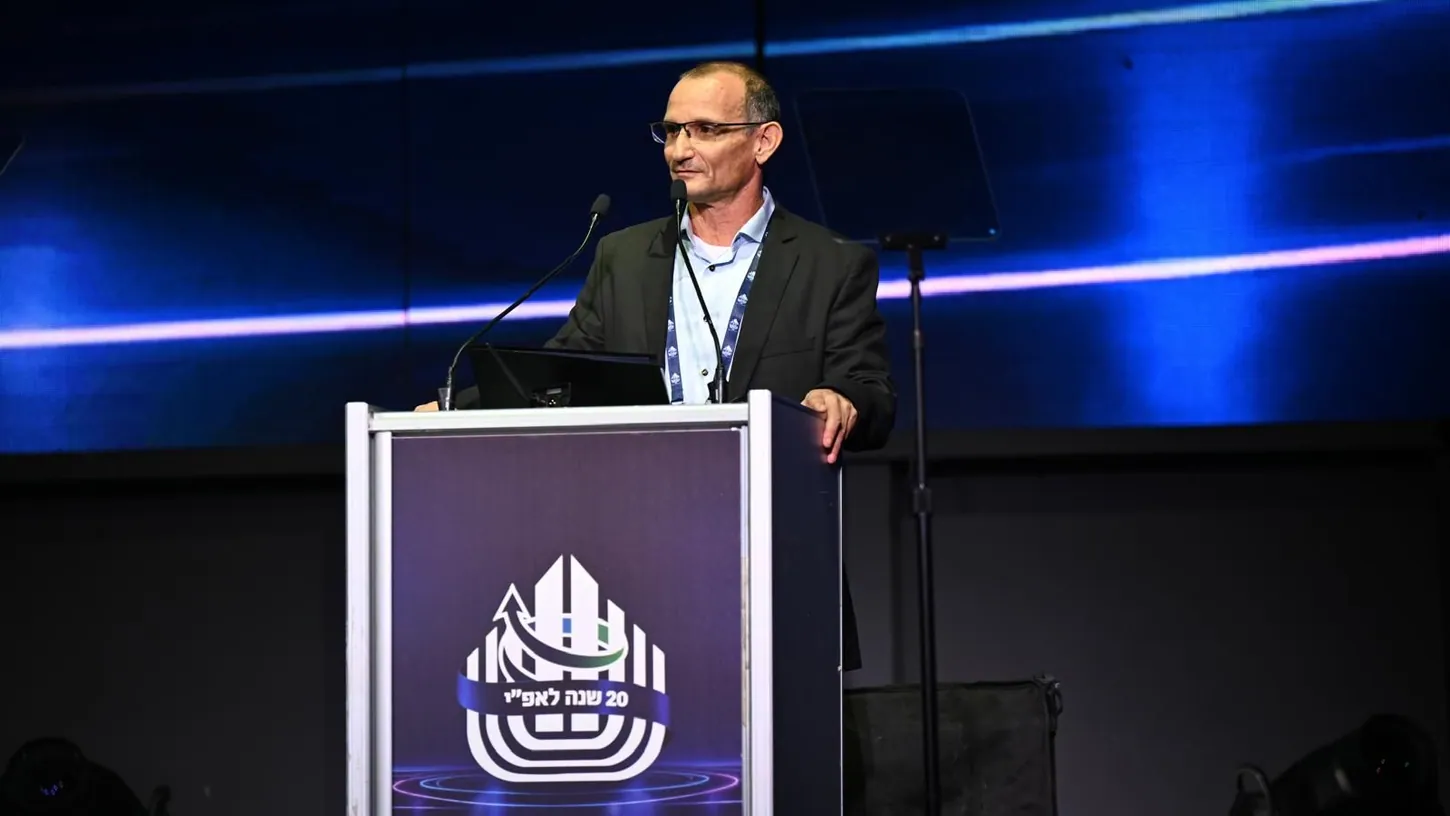
Israel’s Defense Ministry wants high-tech startups, venture capital funds and private investors inside an arms export business that hit a record $19.2 billion in 2025. Director General Amir Baram made the pitch Wednesday at the annual conference of the Defense Export Controls Agency (DECA), which said some 200 new companies joined its exporters registry this year.
The newcomers are walking into a market where three companies do most of the selling. Israel Aerospace Industries, Rafael and Elbit Systems accounted for about 85% of Israel’s defense deals last year, according to CTech. Drones and UAVs made up 4% of the 2025 export total.
DECA Processed 16,000 Marketing License Applications in 2026
DECA processed about 16,000 marketing license applications and 5,900 applications for new defense export licenses between January and the November 25 conference. Some 1,300 defense exporters now operate in Israel, and around 400 new products were registered with the agency this year, the ministry said.
Europe and Asia drive that paperwork. About 44% of marketing license applications concerned European countries and 36% Asian ones. For new export licenses the split was 40% Europe and 33% Asia. An application is not a sale, and the release gives no approval rate.
The ministry’s conference release says application processing times have been cut “by dozens of days,” more of the work has gone digital, and exporters get more transparency on where their files stand. It gives no before-and-after figure.
Baram framed the opening to newcomers as an addition, not a replacement. “The State of Israel needs all of them,” he said of the big contractors and the small and medium-sized companies, pairing the primes’ production capacity with the speed of younger firms.
Israel Backs the Push With State-Guaranteed Venture Funds
The money side began in September 2025, when Israel’s Finance Ministry and the Defense Ministry’s Directorate of Defense Research and Development asked the Knesset Finance Committee to approve a state guarantee of up to about NIS 200 million ($60 million) for dedicated defense-tech venture funds, according to the ministry.
This September the two ministries picked Adir Capital, part of Idan Financial Instruments, and SLING Capital, part of Giza, to run state-backed venture funds for defense-tech startups, The Defense Post reported. The guarantee is meant to lower the risk for private investors. CTech has also reported that the ministry is putting hundreds of millions of shekels directly into Israeli defense-tech companies.
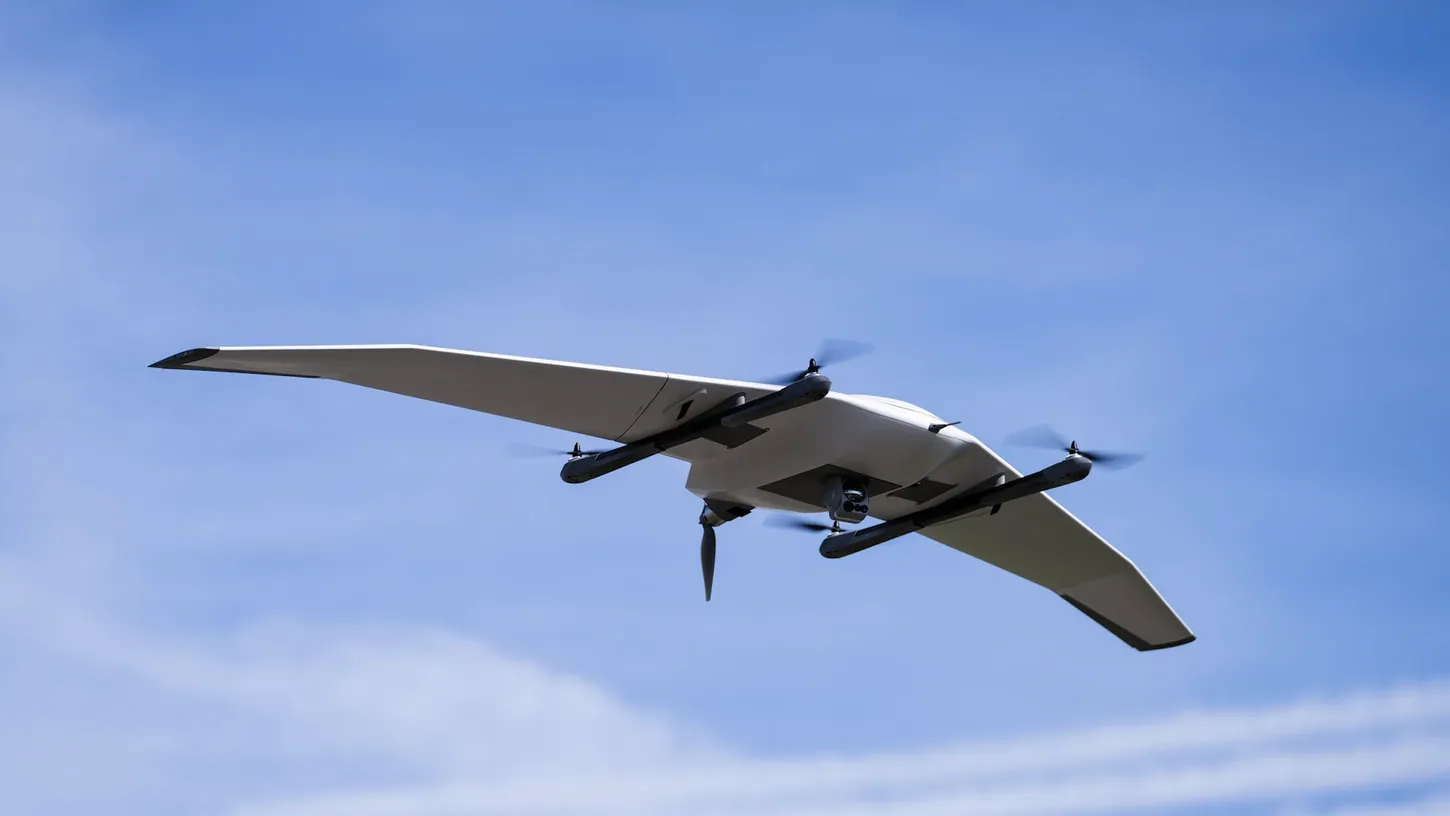
Drones Were 4% of Israel’s Record 2025 Defense Exports
The ministry’s 2025 export report put drones and UAVs at 4% of the $19.2 billion total, roughly $770 million by DroneXL’s math. Missiles, rockets and air defense systems led at 29%, followed by observation and optronics at 22%. Europe bought 36% of everything and North America 13%.
That small slice sits next to some of the most visible drone companies Israel has produced. Heven AeroTech passed a $1 billion valuation last December as an Israeli-founded company based in the US. XTEND has been listed on the NYSE since September as a Delaware company headquartered in Tampa, after competing in the Pentagon’s contest for a share of 60,000 attack drones.
The established players are moving production abroad too. Rafael’s UAV subsidiary Aeronautics, which Ondas Holdings sought to acquire earlier this year, Calcalist reported, signed a teaming agreement this month to build the Orbiter 4 VTOL in Germany with an Airbus unit. The ministry’s 2025 release does not say whether drone sales by Israeli-founded companies registered abroad count toward Israel’s export figure.
DroneXL’s Take
I like the direction. Three companies holding 85% of the deals is a weakness, in my view, for a country that sells this much hardware. Startups build faster and cheaper, and Ukraine has shown that cheap drones that change every few months can matter as much as missiles. But the ministry is courting a crowd that has already found another door. Heven and XTEND, two of the best-funded Israeli drone names, are now based in the US and chasing Pentagon business from there. XTEND got there through a US merger aimed at American buyers, not because of DECA, but the lesson for Jerusalem is the same. A license that arrives a few dozen days sooner and a state-guaranteed fund are good first steps. If Israel wants the next drone startup to export from Tel Aviv rather than Tampa, my read is that the licensing system has to move at startup speed, and DECA hasn’t shown anyone a number that says it does yet.
Sources: Israel Ministry of Defense, CTech, The Defense Post
DroneXL uses automated tools to support research and source retrieval. All reporting and editorial perspectives are by Haye Kesteloo. Read our editorial standards.
Advertise with DroneXLYour company hereReach 200,000+ drone readers a month with a sponsored article, a banner on your beat, or a partnership.See the options →