
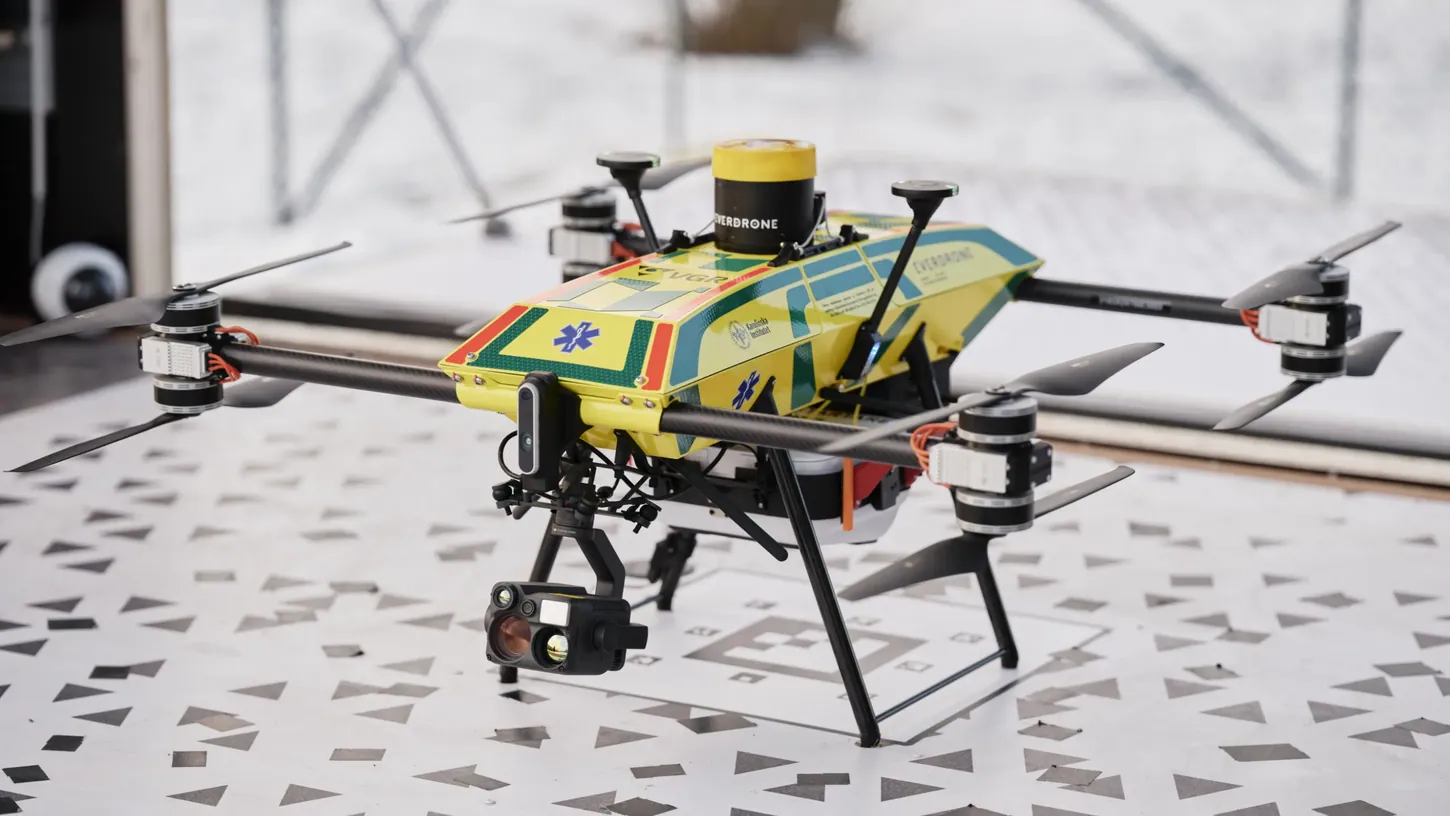
Everdrone’s E3 defibrillator drone appeared on the navigation display of an Avincis air ambulance helicopter during a test in Stockholm on September 11, the two companies announced on November 26. It is the same Swedish company whose drone beat an ambulance to a cardiac arrest in Borås in July.
The E3 broadcast its position over FLARM, a collision-warning system first built for glider pilots. A new feature in the helicopter picked up that signal and drew the drone on a screen the pilot already uses on routine flights. Crewed aircraft could see Everdrone’s drones before this, but only through separate digital tools.
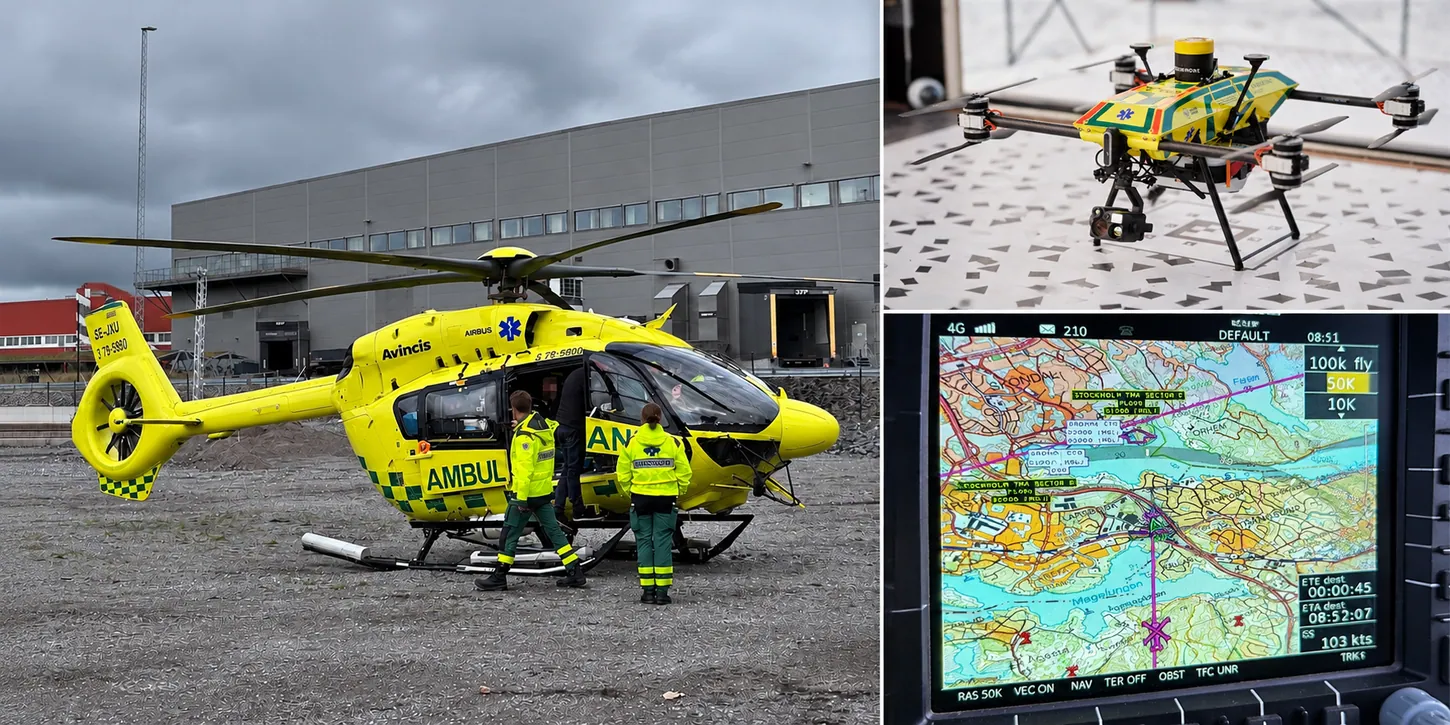
The Avincis Test Put the Drone on the Helicopter’s Main Display
The helicopter in the test, registered SE-JXU in Everdrone’s photos, is an Airbus H145. Avincis added two new five-bladed H145s to its Stockholm air ambulance fleet in June 2025. The company flies helicopter air ambulances for Swedish regions and hospitals.
Rickard Gillberg, head of flight operations at Avincis, said in the Everdrone announcement that if the helicopter isn’t safe, “we cannot help the patients who need us.” Everdrone CEO Mats Sällström said it is essential that drones “are not developed as a separate system” next to crewed aviation.
The announcement does not say how close the drone and helicopter came, how many flights the test covered, or whether the receiving feature is now switched on across the Avincis fleet.
Everdrone signed with Region Stockholm’s ambulance service in February to fly AED drones there, which puts its drones in the same low airspace the region’s air ambulances use.
The FAA’s Part 108 Fight Is About the Same Problem
The US is arguing over the same gap. The FAA’s proposed Part 108 rule for beyond visual line of sight (BVLOS) flight would make crewed aircraft that are not broadcasting their position through ADS-B Out or an approved conspicuity device yield to BVLOS drones in parts of low-altitude airspace.
That provision drew more than half of the roughly 3,100 comments on the proposal, and the FAA reopened the docket in January to take more input on electronic conspicuity. The National Business Aviation Association asked for universal electronic conspicuity instead, so every aircraft can see every other one. The final rule has been in White House review since July 10.
Earlier this year, a surveying drone hovering over a LifeFlight helicopter at Primary Children’s Hospital in Lehi, Utah, halted air operations while a critically ill child waited for transport. Police said the operator was apparently not aware the helicopter was about to take off.
DroneXL’s Take
I like this test because it puts the burden in the right place. The drone does the broadcasting, and the helicopter pilot gets the information on a screen they already watch, with no new app and no new rule telling them to give way. That is the opposite of the US approach in Part 108, which asks crewed pilots to equip or yield. Drones carrying defibrillators and helicopters carrying patients are going to share the same few hundred feet over Stockholm, and the same will happen over American suburbs once BVLOS is routine. I’d rather see the FAA push drones to be visible in cockpits the way Everdrone and Avincis just did than spend another year arguing over who has to move.
Sources: Everdrone (Cision), AIN.
DroneXL uses automated tools to support research and source retrieval. All reporting and editorial perspectives are by Haye Kesteloo. Read our editorial standards.
Advertise with DroneXLYour company hereReach 200,000+ drone readers a month with a sponsored article, a banner on your beat, or a partnership.See the options →


