Poland asked its NATO allies on November 23 to consider shooting down Russian missiles over Ukraine when they head toward alliance territory, Bloomberg reported. The request came three days after three Russian Kh-101 cruise missiles crossed into southeast Poland and hit the ground before NATO jets on patrol could identify them.
That same Monday night, shortly before midnight, a Russian jet-powered drone crossed the border near Dorohusk. Polish commanders had permission to shoot it down. They held fire when it turned back toward Ukraine.
Three Kh-101 Missiles Crossed Poland and NATO Jets Never Fired
Two Swedish Gripen fighters flying NATO air policing over Poland could not identify the three Kh-101s in time on November 20. The missiles spent about three minutes in Polish airspace before they came down at Nowy Lipowiec, Rudnik nad Sanem and Mołodycz.
The jets had authorization from NATO’s air operations center to fire if certain conditions were met. Operational Commander Gen. Ireneusz Nowak blamed the missed identification largely on extremely difficult weather. Nobody was hurt. The missile at Mołodycz landed about 920 feet (280 meters) from an empty holiday cottage. Defence Minister Władysław Kosiniak-Kamysz first said that object might have been a jet-powered drone. Early maps of the incident, including the one Visegrád 24 posted, still label it a Geran-5. On November 22 the Lublin prosecutor’s office said it had found Kh-101 fragments at all three sites, and that preliminary findings date the missiles to the fourth quarter of 2026, built at a plant in Dubna, in the Moscow region.
All three sites sit in the same corner of the country as the Nowa Dęba training ground, where the Coalition of the Willing held its exercise Koalicja 26.2 from November 9 to 22. It is also the second incident this year in which a Kh-101 has come down in Poland: on July 30, one left a crater near Tarnawa-Kolonia in the Lublin region. Poland has fired before: in September 2025, after 19 Russian drones crossed the border, NATO jets shot down hostile aircraft over Poland for the first time since the 2022 invasion.
Poland summoned Russia’s ambassador, Georgy Mikhno, on November 24. He read a statement saying “Russia categorically rejects the accusations of involvement in the incidents” and accused Warsaw of stoking anti-Russian sentiment.
A Russian Jet Drone Turned East, and Poland Chose Not to Shoot
Poland’s Operational Command said a Russian drone made a brief incursion around 11:40 p.m. on November 23. The command authorized a shoot-down. It called the shot off when the drone turned east, citing the potential danger to civilians on the ground and the possible effects of downing it.
According to PAP, it was a camera-equipped jet drone, most likely flying reconnaissance. RMF FM, citing unnamed sources, reported that the drone flew about 12 miles (20 kilometers) into Poland and stayed for roughly nine minutes. The government’s security center sent an alert to residents of eastern Lublin province. Deputy Defence Minister Paweł Zalewski told RMF FM the next morning that the risk of civilian damage decided it, and that Poland treats “everything that enters Polish airspace as a threat” (DroneXL’s translation). He said he did not know whether the drone was armed.
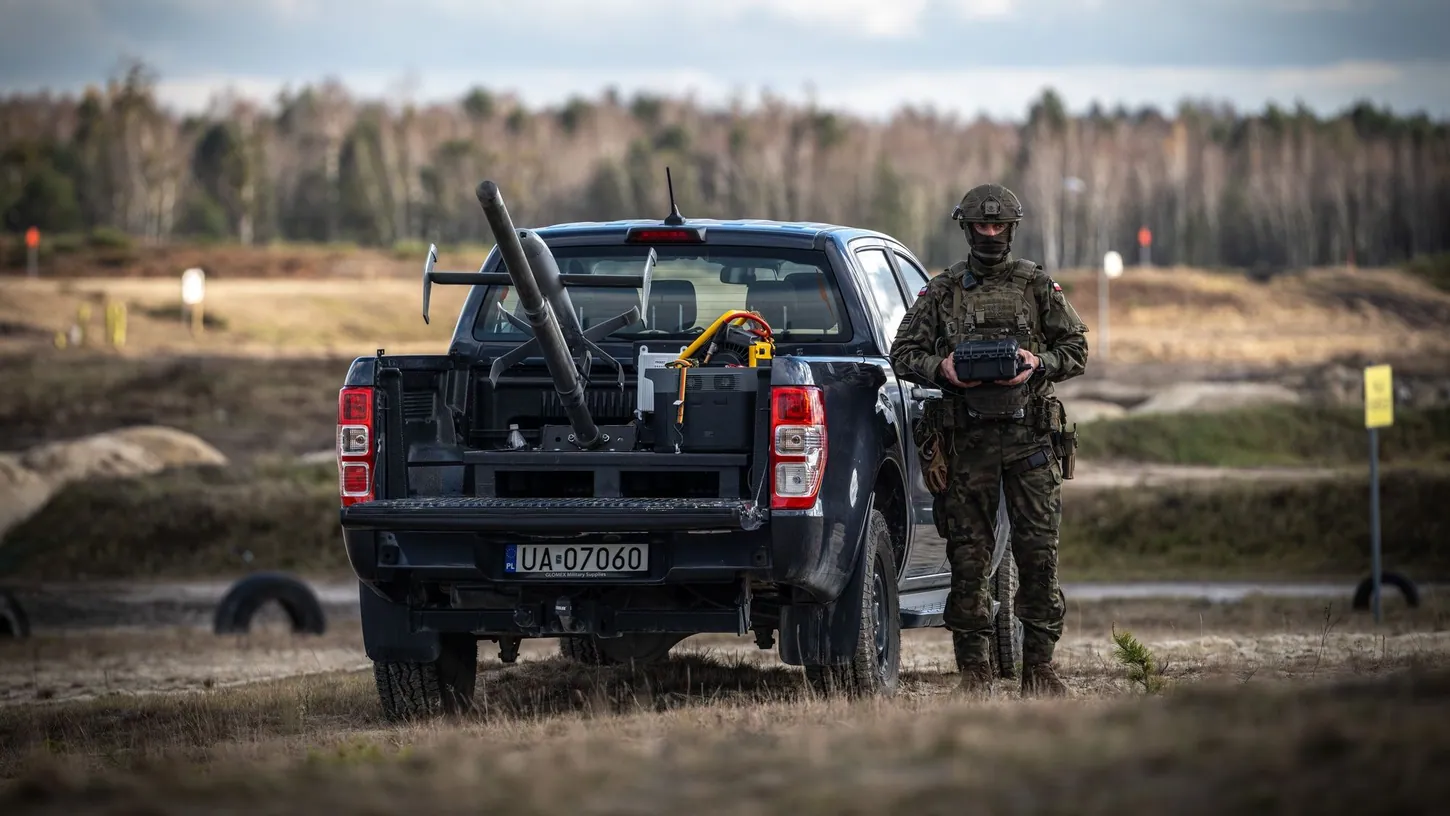
That night Ukraine’s air force counted 96 Russian drones, 64 of them jet-powered. Jet drones are the ones Ukraine’s cheap air defenses struggle with most, and Ukraine’s defense minister named them as targets for DESNA, which pairs Norwegian fire control with cheap Ukrainian missiles.
NATO Sent an AWACS Instead of a Mandate to Fire Over Ukraine
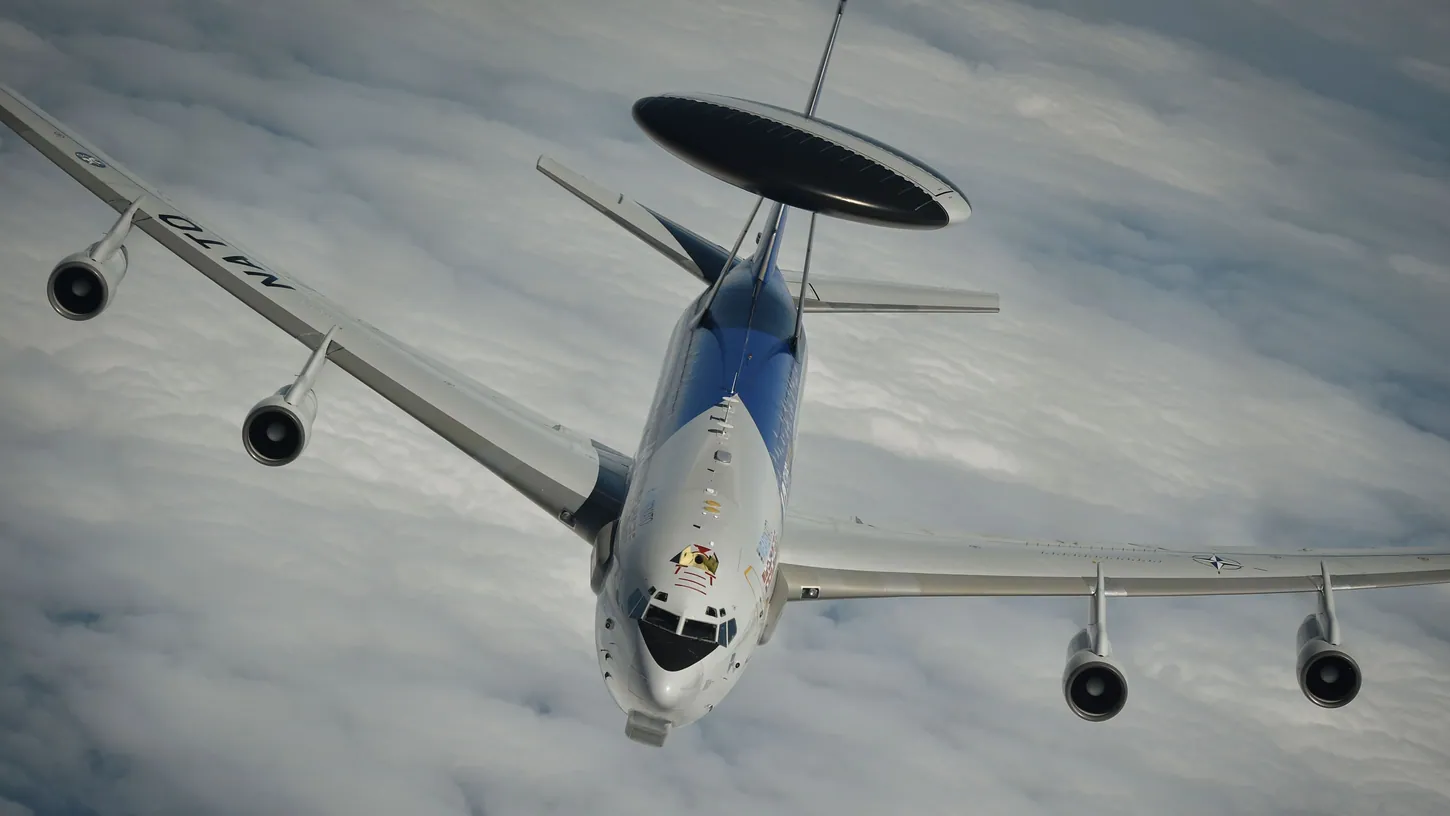
After the November 23 ambassadors’ meeting, spokesperson Allison Hart said the Supreme Allied Commander Europe had authorized the forward deployment of a NATO AWACS aircraft, and that NATO was examining additional assets in Poland and elsewhere. As of November 26, NATO had not agreed to intercept anything over Ukraine.
Bloomberg reported, citing people familiar with the talks, that some allies backed Warsaw’s idea in Brussels, but the discussion was preliminary and no decision had been made. NATO decides by consensus, so any decision needs every member to agree. Poland’s Deputy Defence Minister Cezary Tomczyk said on RMF24 that he could not confirm Bloomberg’s account, and that earlier talks had concluded such a procedure was impossible. He said NATO is “in no way favorable” because the plan creates numerous complications, and that it would need Kyiv’s consent, early warning from Ukraine and access to its airspace.
Romania is one of the reluctant allies, and its position carries weight. In May, a Russian Geran-2 hit an apartment block in Galați and injured two people, the first injuries caused by a Russian drone on NATO soil. On November 26, President Nicușor Dan said Romania does not back Poland’s proposal, at least for now, because an analysis by Romanian state bodies a year ago concluded it would amount to co-belligerence.
Foreign Minister Radosław Sikorski argues the opposite. He said on November 25 that downing Russian missiles over Ukraine at Kyiv’s request would fall within self-defense, because a missile or drone heading for Polish airspace is already a direct threat. Ukraine’s ambassador in Warsaw, Vasyl Bodnar, said there is a constant exchange of airspace information between Kyiv and Warsaw, and that Kyiv is waiting on NATO.
Poland is moving on its own side of the border meanwhile. It plans a no-fly zone reaching more than six miles (10 kilometers) in from the eastern border, and the government wants it in force by late December or early January. DroneXL covered Poland’s SAN counter-drone program when it was signed in January, and its initial operational capability is due before the end of this year.
DroneXL’s Take
In four days, three cruise missiles and a jet drone crossed into Poland and nothing was shot down. In each case the reason was sound. Pilots shouldn’t fire on a target they can’t identify, and a commander shouldn’t drop a jet drone onto a village to make a point. My read is that Warsaw’s request follows directly from that. Over Poland the window is three minutes and the debris comes down in Polish fields and villages. Over western Ukraine there is more time, more room, and a government in Kyiv that says it is waiting for NATO to say yes.
Romania’s co-belligerence argument is the strongest case against it, and Romania has earned the right to make it after Galați. I still think Sikorski has the better argument. Russia is the party launching missiles that end up in NATO fields. Until the alliance agrees on something, I expect Poland’s own no-fly zone and the first SAN units to be the only new defenses in place this winter, and the AWACS will mostly give NATO a clearer view of what it is choosing not to shoot.
Sources: Notes From Poland, Bloomberg, Ukrainska Pravda, Super Express Lublin / PAP, Interia, Kyiv Independent, Spotmedia, Euromaidan Press, OSW, NATO Spokesperson on X, Polish Operational Command on X
DroneXL uses automated tools to support research and source retrieval. All reporting and editorial perspectives are by Haye Kesteloo. Read our editorial standards.
Advertise with DroneXLYour company hereReach 200,000+ drone readers a month with a sponsored article, a banner on your beat, or a partnership.See the options →