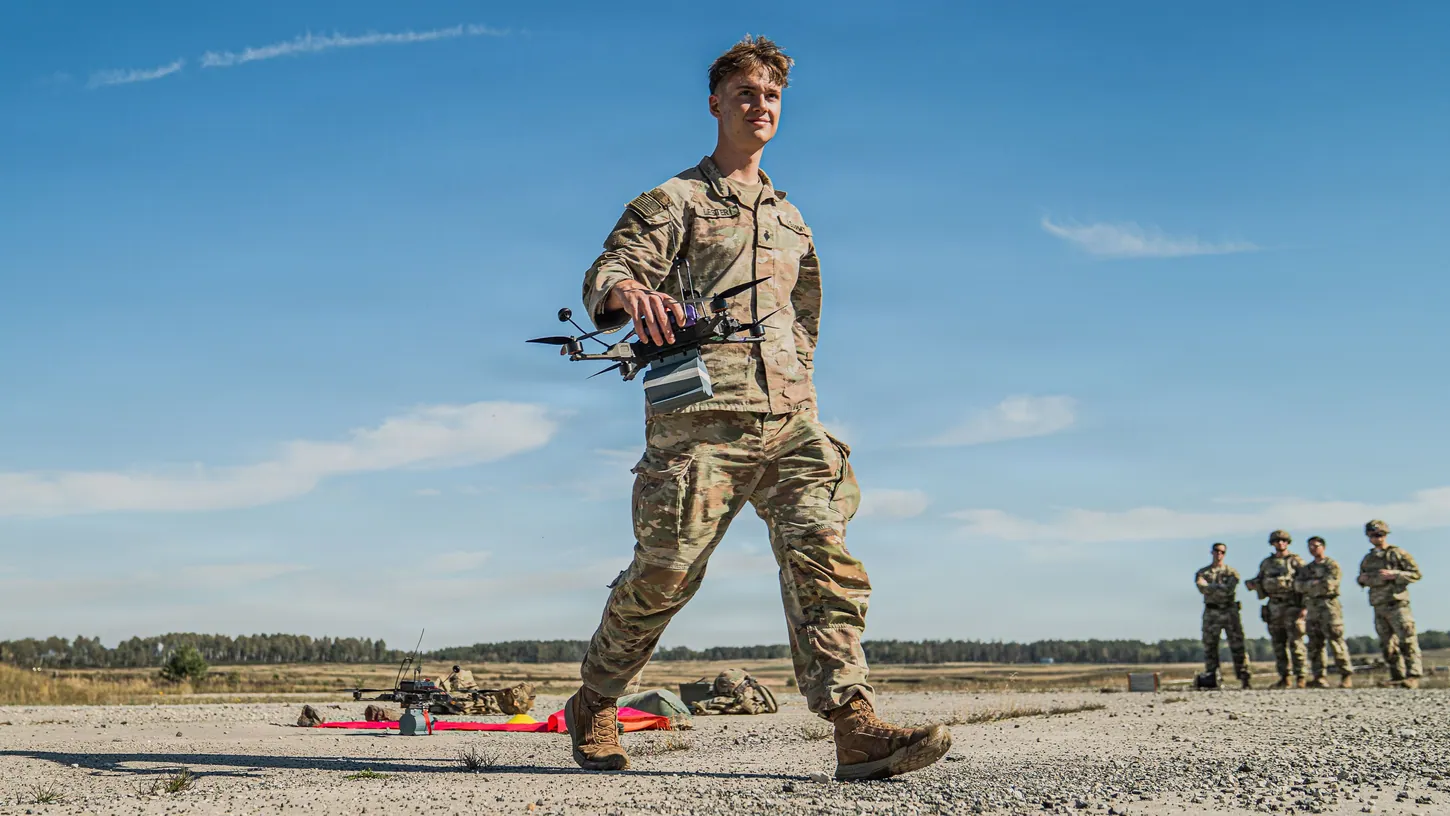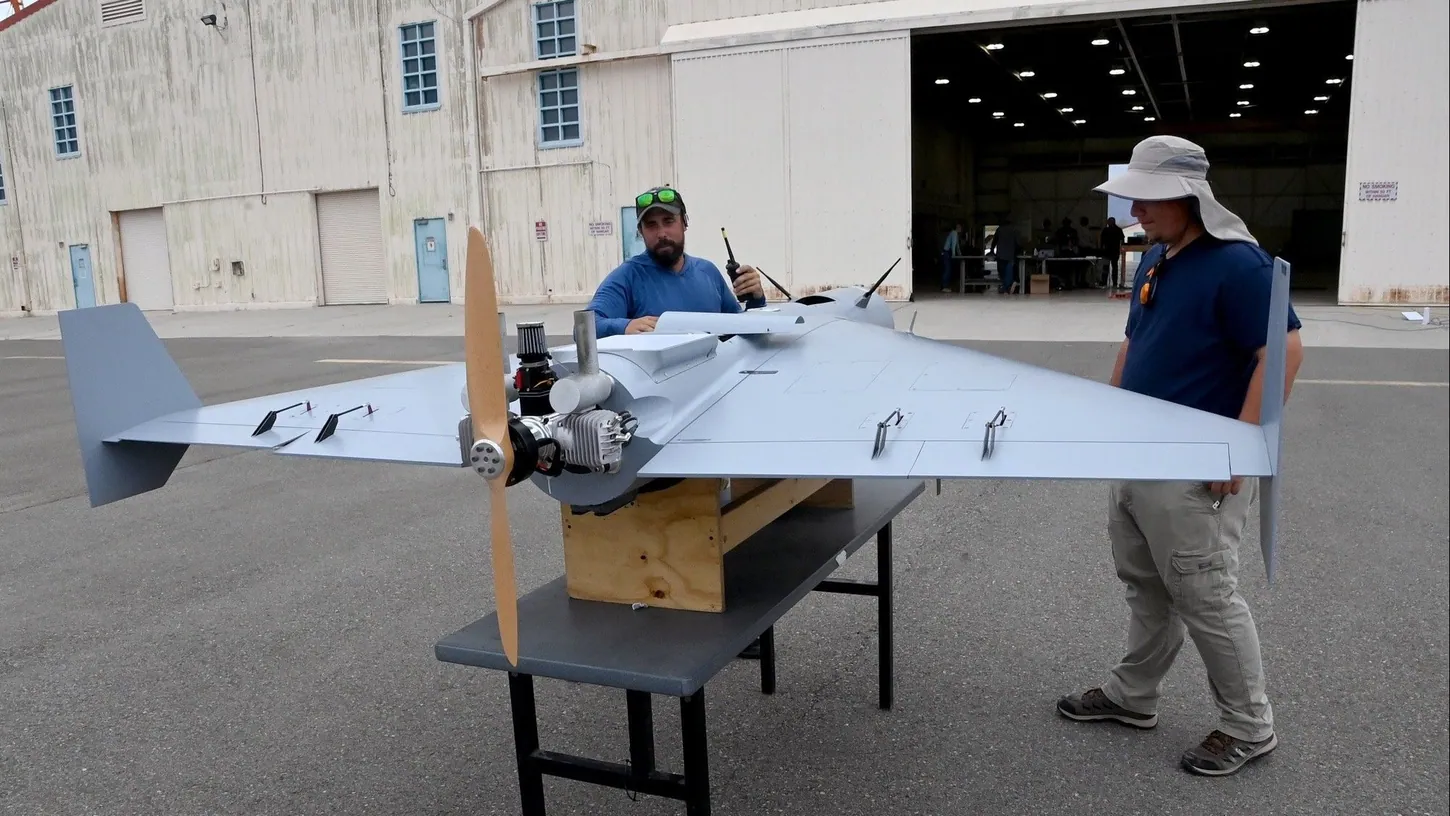
The Pentagon’s Defense Innovation Unit has opened Drone Dominance: Extended Range Strike Gauntlet II, with up to $500 million budgeted for prizes and follow-on orders. It wants surface-launched one-way attack drones that fly 600 nautical miles or more for under $250,000 each at scale, plus a cheaper medium-range class under $130,000.
Submissions close December 7. Every company that demonstrates and attempts all of the test cards at a government range in mid-March 2027 collects $500,000, and the best get a prototype deal. Gauntlet I, the Ground-Based Affordable Mass challenge, ended in mid-November, and its prototype agreement holders go straight to Gauntlet II without a new proposal. The solicitation does not say who they are.
DIU Prices The Drones By Cost Per Successful Strike
The DIU solicitation makes cost per effect the main figure of merit: the fully burdened unit cost divided by the mission success rate. Long-range entries must come in under $500,000 per effect, medium-range entries under $300,000, so a drone that fails half its missions costs double.
Long range starts at 600 nautical miles (about 690 miles) with a 25-pound minimum payload, and DIU “strongly” prefers more than 100 pounds. Medium range runs from 20 to 600 nautical miles with a 7-pound minimum, although DIU notes that typical medium-range use is 20 to 100 nautical miles. Entries must be TRL 7 or better, keep working when GPS and data links are jammed, and arrive as complete all-up rounds with an inert payload and a safe-arm device designed for MIL-STD-1316 compliance.
Gauntlet II Adds A Medium Tier And Lowers The Payload Bar
The Army’s companion SBIR topic for G-BAM set the same $500,000 cost-per-effect and $250,000 flyaway targets. It asked for at least 35 pounds of payload and had no medium-range class. Gauntlet II drops the long-range minimum to 25 pounds and adds the cheaper medium tier.
That opens the door to designs already on the market. Vector’s BOMBARD, unveiled November 19, is a ground-launched pulse-jet drone that Vector rates at about 684 miles (1,100 kilometers), or roughly 594 nautical miles. That is six nautical miles short of DIU’s long-range line, which would put it in the medium tier on range alone despite its 110-pound payload.
Foreign Companies Can Compete For Up To $500 Million
The solicitation is open to U.S. and international companies, with foreign firms needing an NCAGE code, and its up to $500 million covers more than prizes. Top-rated entrants get a prototype Other Transaction Agreement, then possible production awards in a tiered structure based on performance, production capacity and on-time deliveries.
The money comes with a production test. DIU wants 20 to 30 systems delivered by June 2027 for end-user validation, more than 100 within six to eight months of the solicitation, and a credible path to 100 or more a month. Each company brings three inert systems and no more than eight people to the March demonstration. A Gauntlet III follows in mid-August 2027, with its solicitation expected in April.
None of it is guaranteed. DIU states that participation or selection “does not guarantee an award” or obligate the government to buy anything.
The name invites confusion with the other Gauntlet II. The Drone Dominance Program’s small-drone competition posted its Gauntlet II results in September, when Neros made both leaderboards, and that program’s Phase 3 prices its Deep Strike FPV drones at $5,000. The long-range ceiling here is 50 times that.
DroneXL’s Take
The cost-per-effect rule is the best idea in this solicitation, because it puts the failure rate inside the price. A $200,000 drone that gets through one time in three scores as a $600,000 drone and fails the long-range bar outright, so a cheap airframe can’t win on sticker price alone. I’m less sure about the schedule. DIU wants more than 100 systems within eight months, and the solicitation names no Gauntlet I winners to show who can build at that rate. Watch the mid-March demonstration for how many entrants attempt every test card and collect the $500,000.
Source: Defense Innovation Unit, Drone Dominance: Extended Range Strike Gauntlet II solicitation; U.S. Army SBIR, Ground-Based Affordable Mass topic
DroneXL uses automated tools to support research and source retrieval. All reporting and editorial perspectives are by Haye Kesteloo. Read our editorial standards.
Advertise with DroneXLYour company hereReach 200,000+ drone readers a month with a sponsored article, a banner on your beat, or a partnership.See the options →