
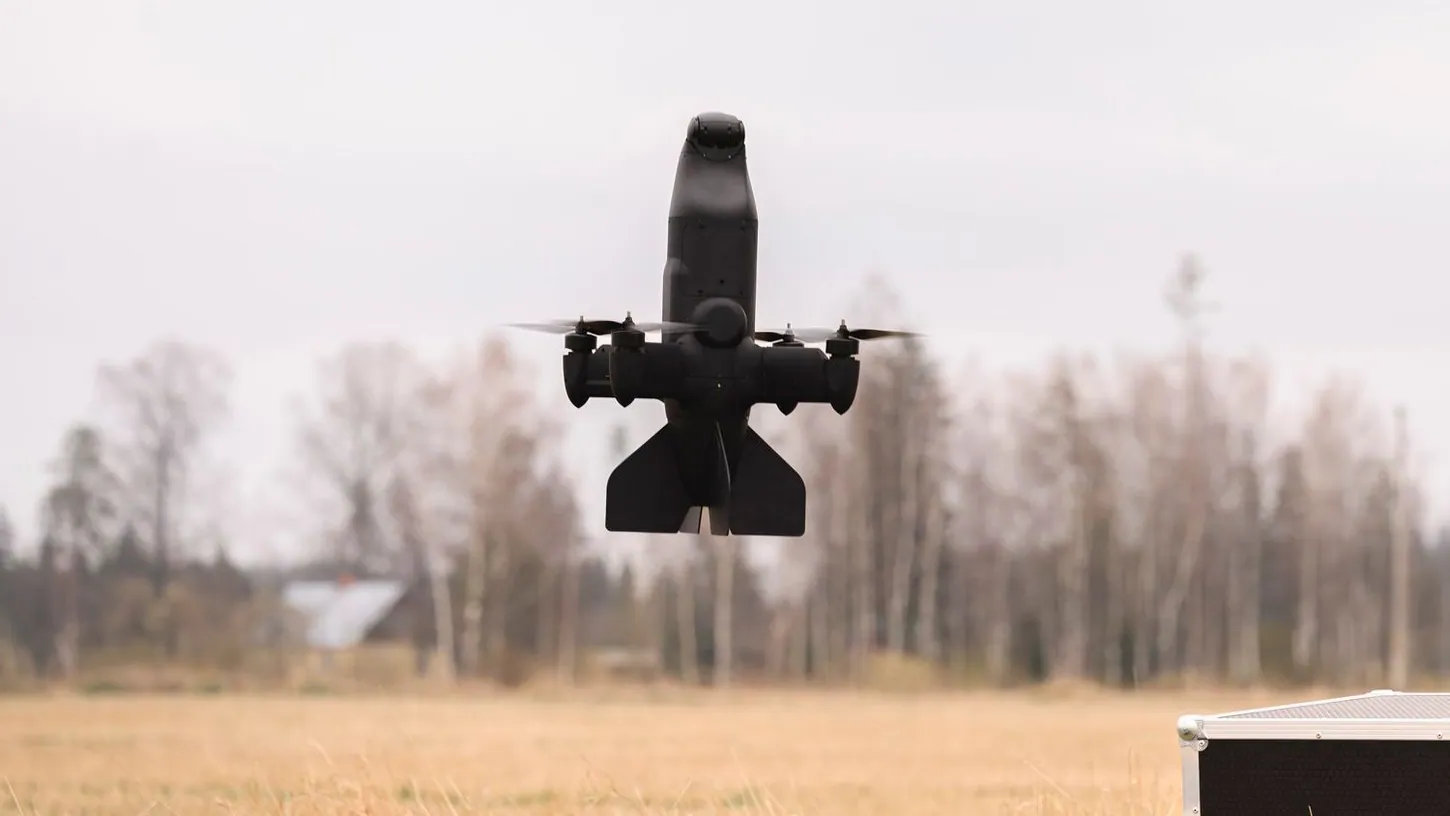
Latvia’s armed forces launched an interceptor drone and NATO scrambled fighter jets early Friday after an unidentified drone crossed briefly into Latvian airspace near the Russian border. The interceptor flew its mission and returned to its launch site, the National Armed Forces said.
The alert in Ludza municipality started at 2:30 a.m. local time (7:30 p.m. ET Thursday) and ended 25 minutes later. The military did not say where the intruder came from, what kind of drone it was, or whether anything was fired at it.
It was the fourth night this month that Latvia called on its interceptor drone units against a border intruder. On November 1 the interceptor did not come back. Latvia blew it up in the air, three minutes after its target had crossed into Russia.
Latvia’s Orange Alert Ended After 25 Minutes With No Shot Reported
The National Armed Forces tracked a drone along the border and said it was briefly over Latvian territory. Ludza got an orange alert, the level for a confirmed threat, and it was lifted at 2:55 a.m. A yellow warning for neighboring Balvi municipality, to the north, ended around 3:30 a.m.
Fighters from NATO’s Baltic Air Policing mission were activated and ground-based air defense units stood ready, according to the military’s statement. It does not say which country’s jets flew. The armed forces said they have sent extra air defense units to the eastern border and that foreign drones are likely to approach or enter Latvian airspace again while Russia’s war in Ukraine continues.
Estonia followed a few hours later. Its Defense Forces warned six southern counties of a possible air threat at 6:40 a.m. Friday and called it off at 7:22 a.m., ERR reported. The Estonian military told the broadcaster it had detected drones moving near its borders overnight and that NATO jets were sent there too. Reuters reported that Latvia’s alerts came while Russia’s Leningrad region, which borders Estonia, said it was shooting down more than 40 drones.
NATO jets have already shown they can kill a drone here. French jets shot one down over Latvia in June, and allied fighters downed another over Balvi in August, Euronews reported, citing the armed forces. In September, Italian Typhoons brought down the first drone over Lithuania.
Latvia Destroyed Its November 1 Interceptor To Keep It Out Of Russia
Latvia ordered its own interceptor to self-destruct on November 1 instead of letting it follow a drone across the border. The intruder left Latvian airspace for Russia at 7:16 p.m. local time and the order came at 7:19 p.m., military officials told journalists in a briefing two days later.
The blast some residents heard that evening was the interceptor’s self-destruct system and not a foreign drone, the officials said in LSM’s account of the briefing. They described the intruder as most likely a Russian Geran-type drone and said the interceptor system had been in service for less than six months.
Early on November 3 the military launched two interceptors from separate positions at a drone it said looked like the types Ukraine flies, and it suspected that drone came down somewhere in Balvi. On the night of November 10 to 11, three drones entered Latvia. Two crossed the eastern border for one to two minutes each. The third came in from Lithuania and flew the length of the country toward Estonia with NATO jets behind it. The armed forces said the conditions to destroy that one never came together, in part because of the risk to civilians, and that their interceptor units are stationed only on the eastern border. Poland held fire on a Russian jet drone near Dorohusk on November 23 for the same reason.
The military has not named the interceptor it flies on these nights. One it has shown in public is Blaze, made in Latvia by Riga-based Origin Robotics. The defense ministry put a Blaze demonstration on the program of its October 1 NATO media day at Lielvārde air base, and Latvia, Estonia and Belgium began taking deliveries in January, according to Latvia’s investment agency, which said a military competence center would evaluate how to bring it into the force. Blaze carries a high-explosive fragmentation warhead. Origin’s product page says an operator can call off an attack until the final approach, and that the drone destroys itself if it breaches its geofence, loses its link or suffers a critical failure.
DroneXL’s Take
Latvia is learning this job in public, and I think that’s worth more than another procurement plan. A leaked EU defense report says most of Europe’s counter-drone programs won’t deliver before 2030. Latvia has interceptor crews on its border now, and it tells residents afterward what the bang was.
The results are still thin. None of the four November accounts reports an interceptor hitting its target. A drone that stays for one or two minutes can be back in Russia before anything reaches it, and the border stops the chase. My read is that the interceptor flying home on Friday means the crew called it off and kept the round, which beats blowing one up every time a drone turns around. The intruder still got away.
Sources: Latvian Ministry of Defence, LSM, ERR, Euronews, Reuters, Investment and Development Agency of Latvia, Origin Robotics
DroneXL uses automated tools to support research and source retrieval. All reporting and editorial perspectives are by Haye Kesteloo. Read our editorial standards.
Advertise with DroneXLYour company hereReach 200,000+ drone readers a month with a sponsored article, a banner on your beat, or a partnership.See the options →


