
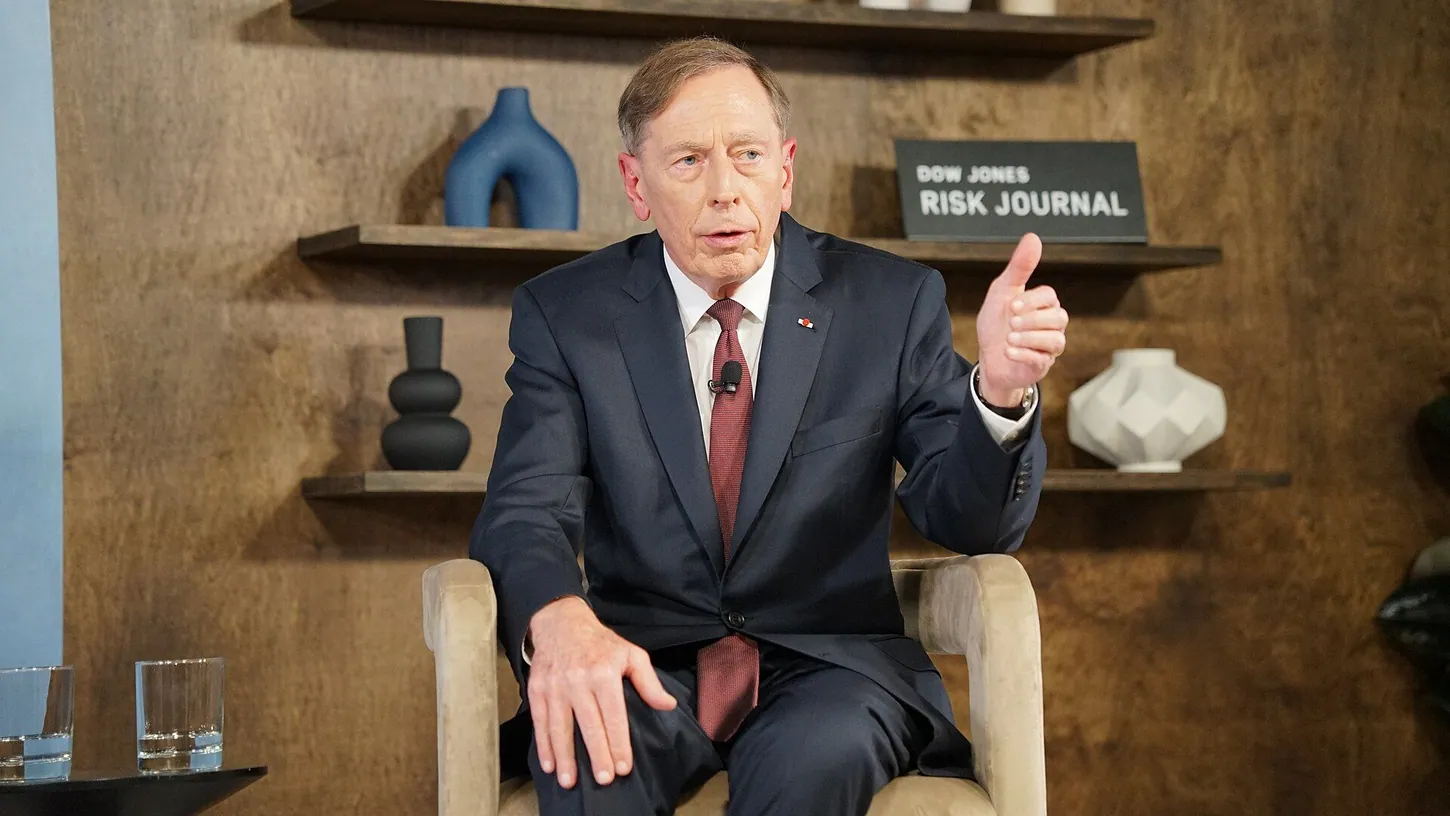
Retired Gen. David Petraeus says Russia and Ukraine have both now used truly autonomous drones in combat, drones that need no pilot at the controls, and that there is no effective defense yet against the swarms they make possible. Geopolitics host Pyotr Kurzin posted the clip on X on Friday, from an interview he first published in full on August 31.
Petraeus commanded US Central Command and NATO’s coalition in Afghanistan before he ran the CIA. He says Ukraine already builds far more drones than it flies, and its factories are not the reason.
Petraeus Says Ukraine Lacks the Pilots to Fly the Drones It Builds
In the clip Kurzin posted, Petraeus says Ukraine’s 8 million drones a year would let it fly 20,000 a day, double its current daily count, “if they had the launch teams and the pilots.” That puts today’s figure near 10,000, and crews are the limit.
He gave the same numbers in a September interview with RBC-Ukraine: something like 8 million drones this year and over 10,000 a day of all types. There he called the number of available pilots a major limit, along with how fast crews can launch, and said autonomy and better launchers would raise it.
The 8 million is a capacity figure. Ukraine’s National Security and Defense Council says the country’s FPV makers can build more than 8 million drones a year, across more than 160 companies. Ukraine’s defense ministry said in November that the country allocated about €30 billion to buy 9 million drones in 2026. None of these figures is an audited count.
Ukraine’s Swarm Record Backs Part of Petraeus’s Claim
Ukrainian forces have flown Swarmer’s swarm software in combat, with the drones deciding among themselves which one drops its munitions. That record backs the swarm half of Petraeus’s claim about the war. Swarmer counts more than 100,000 combat missions by its own figures.
Petraeus offers autonomy as the answer to the pilot shortage. A truly autonomous drone means “you no longer need a pilot to remotely control that system,” he says, and that makes swarms practical. Until directed energy weapons are perfected and built in larger numbers, nothing stops them.
In the clip he doesn’t say which drone flew without a pilot, on which side, or when, and that half is harder to pin down. Ukraine’s Kolibri 10 Advance finishes its attack run alone, after a human designates the target. The Russian kamikaze swarm software Anthropic exposed in September, which picks its own targets, never flew a live mission as far as Anthropic knows.
Directed energy, the fix Petraeus points to, is still small. A presidential adviser said this week that Ukraine’s 4 kW Blysk laser downed a jet-powered Geran, and its maker gives it a range of about 0.6 miles (1 kilometer).
Petraeus Wants Humans on the Loop, Not in It
Kurzin pushed back in the interview, arguing that a pilot’s intuition should never be replaced, whether flying a drone or a fighter jet. Petraeus answered that future forces will have “humans on the loop, not in the loop,” because the fight is heading toward “autonomous systems of autonomous systems.”
In that model a human supervises and can step in, but no longer steers each drone. Petraeus credits Ukraine’s edge to the network more than the airframes: the battle management system, communications, sensors and command and control. He names Delta, the battlefield software an unnamed American colleague has spent four and a half years in Ukraine helping build and get into units.
The clip opens on a line Petraeus also used in February, that Ukraine “could be the arsenal of democracy when the guns fall silent.” He qualifies it straight away: Europe still needs the intelligence, surveillance, reconnaissance and command and control the US brings.
DroneXL’s Take
The US Army is arguing about the wrong question, and I think Petraeus’s numbers show it. By his count Ukraine could fly twice as many drones as it does, and the ceiling is people, not hardware. A force that can build more drones than it can crew will hand the extra work to software, whatever its doctrine says, so “on the loop” is where every army ends up. The American debate should be about how one person supervises dozens of drones at once, and what that person needs on the screen. Ukraine already has the beginnings of that screen in Delta. The US Army warrant officer who coordinated Ukraine’s drone teams at Combined Resolve this spring expected the American brigade to lose, and he credited the Ukrainians’ method and software more than their aircraft. The Pentagon should be buying that supervision layer now, before it finds out in a war of its own that it has more drones than pilots.
Sources: Pyotr Kurzin on X, full interview on YouTube, RBC-Ukraine, The Wall Street Journal (via DroneXL), Ukraine’s National Security and Defense Council, Ukraine’s Ministry of Defense.
DroneXL uses automated tools to support research and source retrieval. All reporting and editorial perspectives are by Haye Kesteloo. Read our editorial standards.
Advertise with DroneXLYour company hereReach 200,000+ drone readers a month with a sponsored article, a banner on your beat, or a partnership.See the options →


