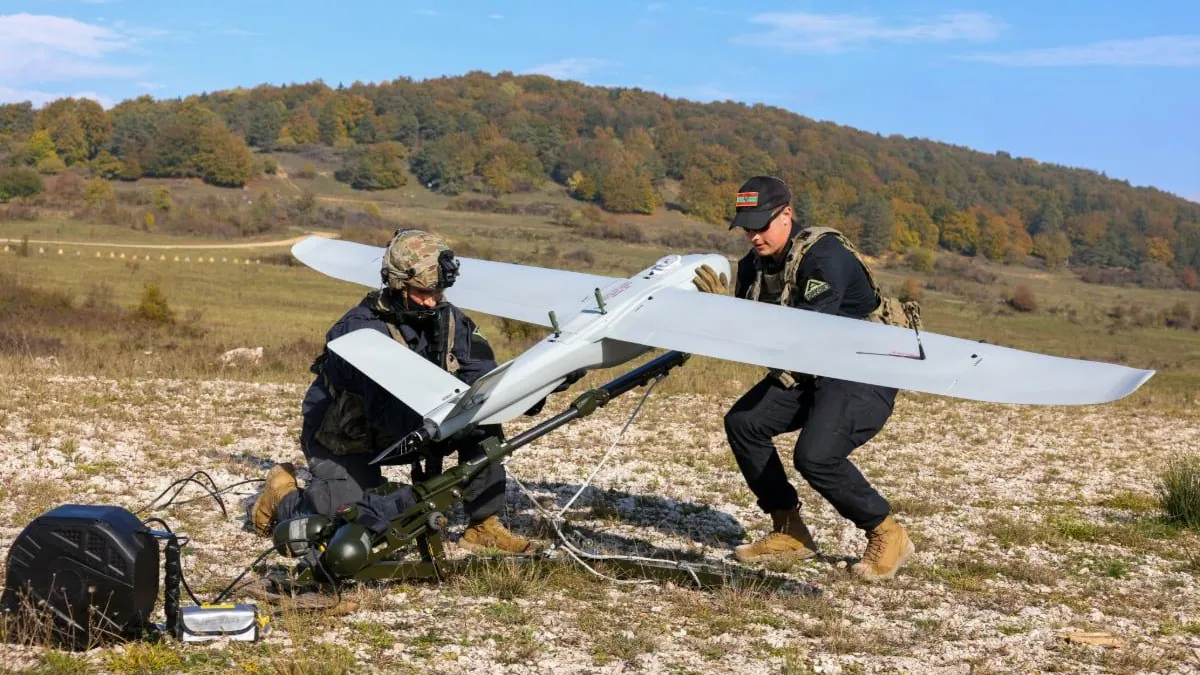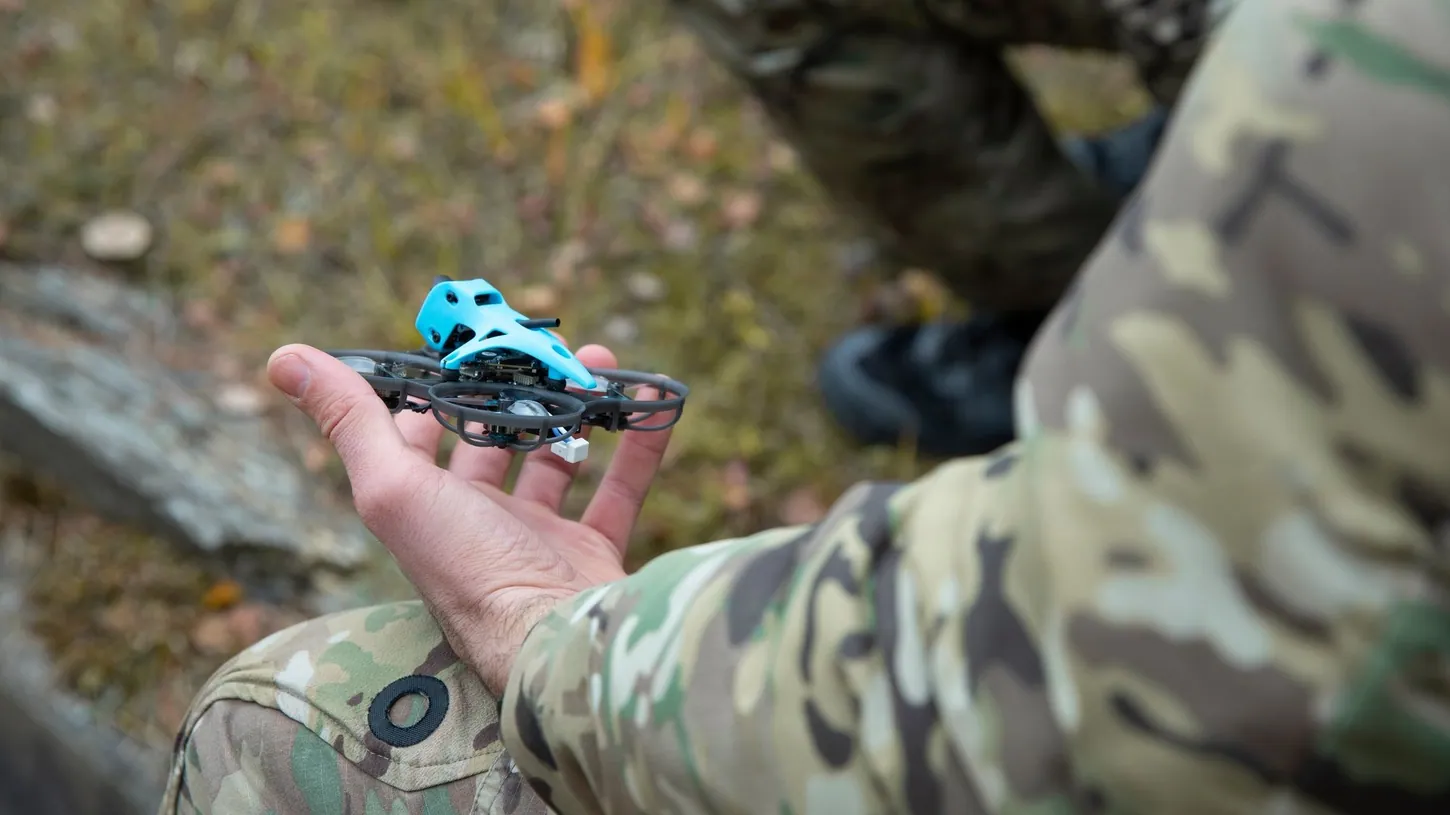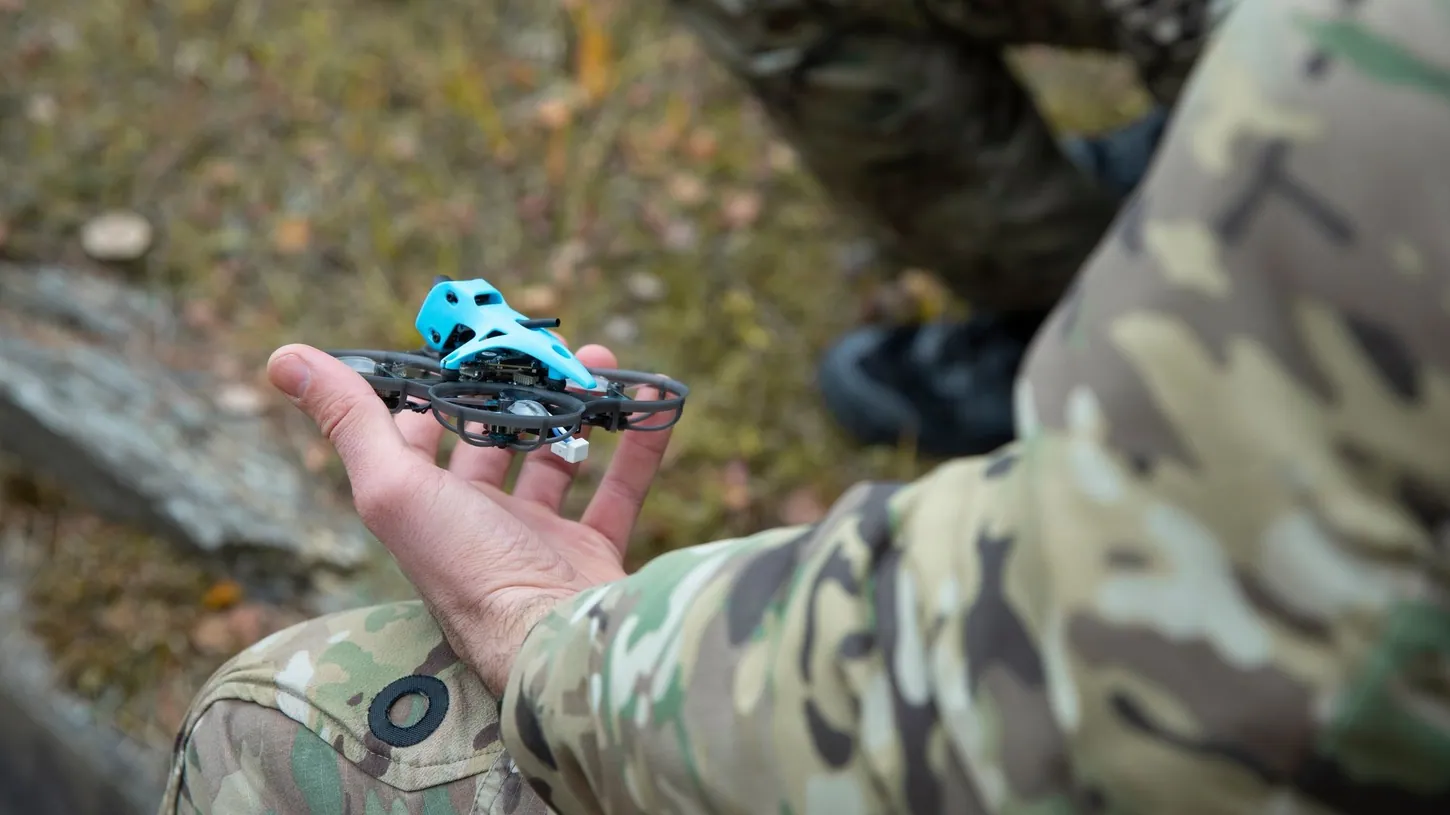
The US Army team that brought Ukrainian drone operators into this spring’s Combined Resolve exercise in Germany expected the American brigade to lose badly. Chief Warrant Officer 3 James L. Andreasen, who coordinated the Ukrainian side from Kyiv, said so on Monday in an essay for the Modern War Institute at West Point.
He hoped the defeat would push Army leaders to field drones faster. DroneXL reported in September that the Army had instead taken the drone mission away from its only drone assault battalion, a unit the Army says was always meant to be temporary. Andreasen writes that he still hears senior leaders say American forces will “fight differently” than Ukraine has.
Also on Monday, US Special Operations Command Europe posted the result of its first International Drone Crucible, held November 2 to 5 at the Grafenwöhr Training Area. American special operators, one team of them paired with Latvians, competed against German, Ukrainian and British teams. First place went to Britain’s Royal Marines.
Andreasen’s Team Expected an American Defeat at Combined Resolve
Andreasen was the primary contact at Security Assistance Group-Ukraine in Kyiv when an Army aviation team planned Ukrainian participation in Combined Resolve 26-07 in April and May. “We expected the US force to lose handily,” he writes, and he believed the Army needed a wake-up call.
His essay adds an insider’s account to what The Wall Street Journal reported from the exercise. Ukrainian operators first reinforced the resident opposing force against about 3,500 Americans, mostly from the 3rd Armored Brigade Combat Team, 1st Cavalry Division. The brigade had its standard electronic warfare and counter-drone systems. Ukrainian drones still found its moving vehicles within minutes, helped by the dust they raised, and the brigade was eliminated in the simulation. Controllers put vehicles back into the scenario to keep the exercise going.
Andreasen says the Ukrainians did this under artificial limits the exercise placed on them. He credits their method more than their aircraft: persistent reconnaissance, specialized crews, direct communication between units and a shared picture in Delta, Ukraine’s battlefield software.
The Ukrainians also offered to fly US-made drones in the exercise, and the American manufacturer, which Andreasen doesn’t name, couldn’t supply the quantity they asked for in time.
US forces improved during the rotation, he writes, and the Ukrainians later switched sides to help the Americans use drones on the attack. Estonia’s Hedgehog exercise gave the same warning in May 2025, when Ukrainian operators effectively eliminated two NATO battalions in about half a day.
Andreasen is now an Apache instructor pilot and drone master trainer at the Army Aviation Center of Excellence. The Modern War Institute publishes the essay as his own view, and it is not an Army position.
Ukrainian Operators Spend Their Own Money on Ukrainian Drones
During six months in Ukraine, Andreasen saw American equipment sitting unused while units fought with Ukrainian systems. Operators told him they would accept American drones free of charge but spent their own funds on Ukrainian ones. Their recurring complaint was that US drones are overengineered for too many missions.
They also told him that equipment which worked one week could be ineffective the next. Andreasen wants American drone, counter-drone and electronic warfare companies to put their products through Brave1’s Test in Ukraine program, which gives foreign developers access to Ukrainian users.
Andreasen also reports the weapon’s limits. He cites Jakub Jajcay, who flew first-person-view drones in Ukraine and reported a hit with detonation on 43 percent of his team’s sorties, a rate that fell to 20 to 30 percent once requested missions that could not be attempted were counted. Ukraine’s Ministry of Defence still recorded 200,218 confirmed drone strikes in Delta in June 2026, up from 105,798 in January.
Andreasen Calls a Parachute Battalion the Wrong Home for the Army’s Drone Unit
While assigned to Ukraine, Andreasen escorted leaders of the 3rd Battalion, 504th Parachute Infantry Regiment to meet Ukrainian drone units and manufacturers. Their hosts questioned how a parachute infantry mission fit with drone units that fight almost exclusively from fortified positions, and Andreasen agrees it was a poor starting point.
That is the battalion the Army has returned to regular airborne infantry duty, and the Army has said the drone role was always meant to be temporary. Andreasen doesn’t defend the choice of unit, but he says the Army still needs one assigned to drone experimentation. Ukraine, Poland and Russia have each handed unmanned systems to a dedicated organization. Retired Lt. Gen. Curtis Buzzard, the former commander of Security Assistance Group-Ukraine, has called for an unmanned systems branch inside the Army.
His measure of success is a formation that can fly its own drones, defend against the enemy’s and still accomplish its mission, without exercise controllers having to dial back the threat.
Royal Marines Won the First SOCEUR Drone Crucible
US Special Operations Command Europe ran the Drone Crucible in partnership with the United States National Drone Association, whose launch DroneXL covered in August 2024. The command’s account names the competing units and gives one result. First place went to operators from the Royal Marines’ 40 Commando and 45 Commando.
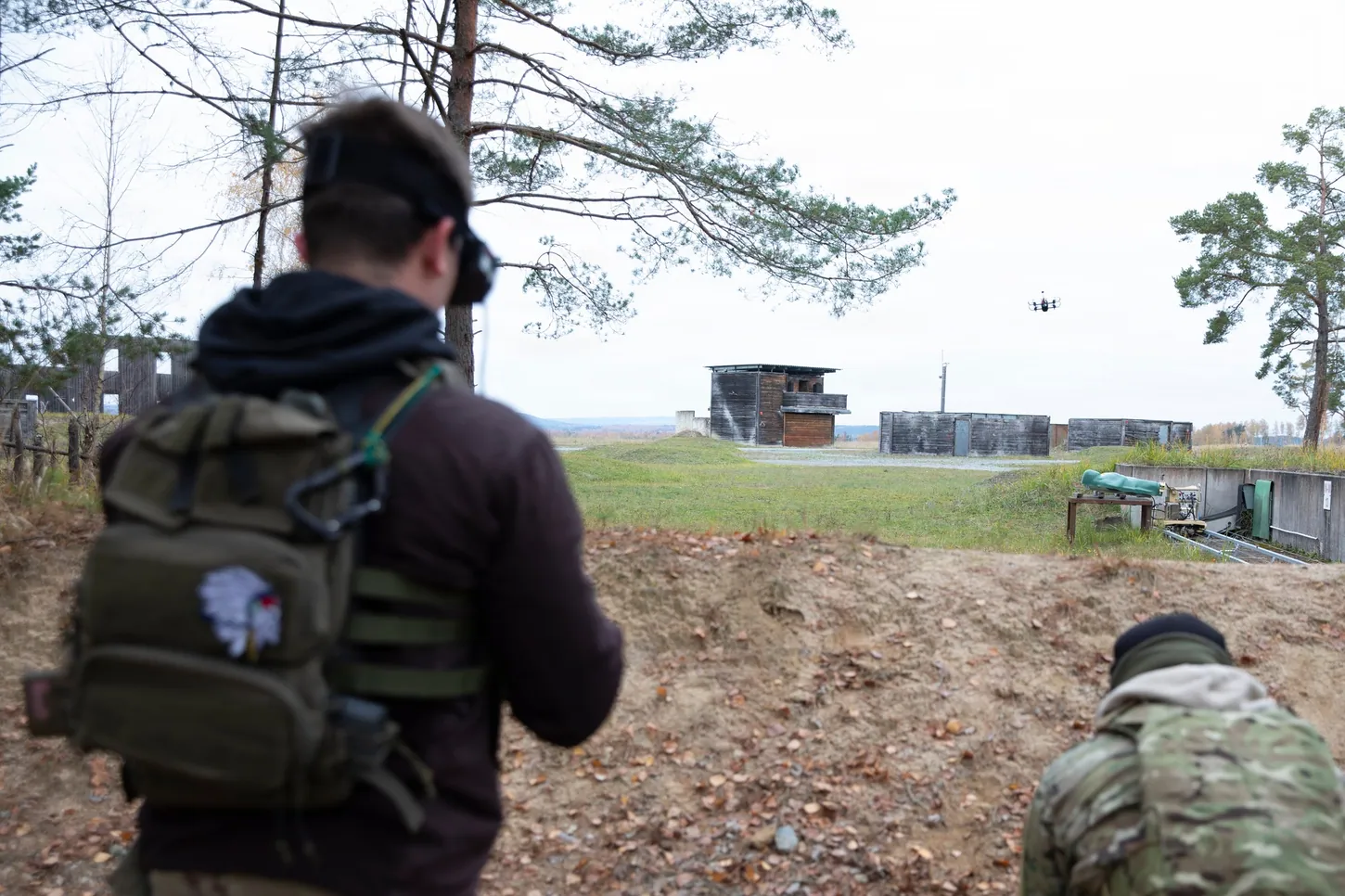
The American entries were Naval Special Warfare, the Army’s 1st Battalion, 10th Special Forces Group (Airborne), the Air Force’s 321st Special Tactics Squadron, and a joint team of US Army and Latvian operators. Ukrainian special operations forces and the German Bundeswehr’s 270th Airborne Engineer Company also competed. SOCEUR’s account gives no scores and no placings below first.
Teams flew small drones through close-quarters lanes inside confined, fortified structures and ran contact drills in dense forest and open ground, against degraded signals and limited visibility. The lanes did not fix a flight path, so each team flew its own way. SOCEUR says the performance data will be used to update and standardize how joint special operations forces employ small drones.
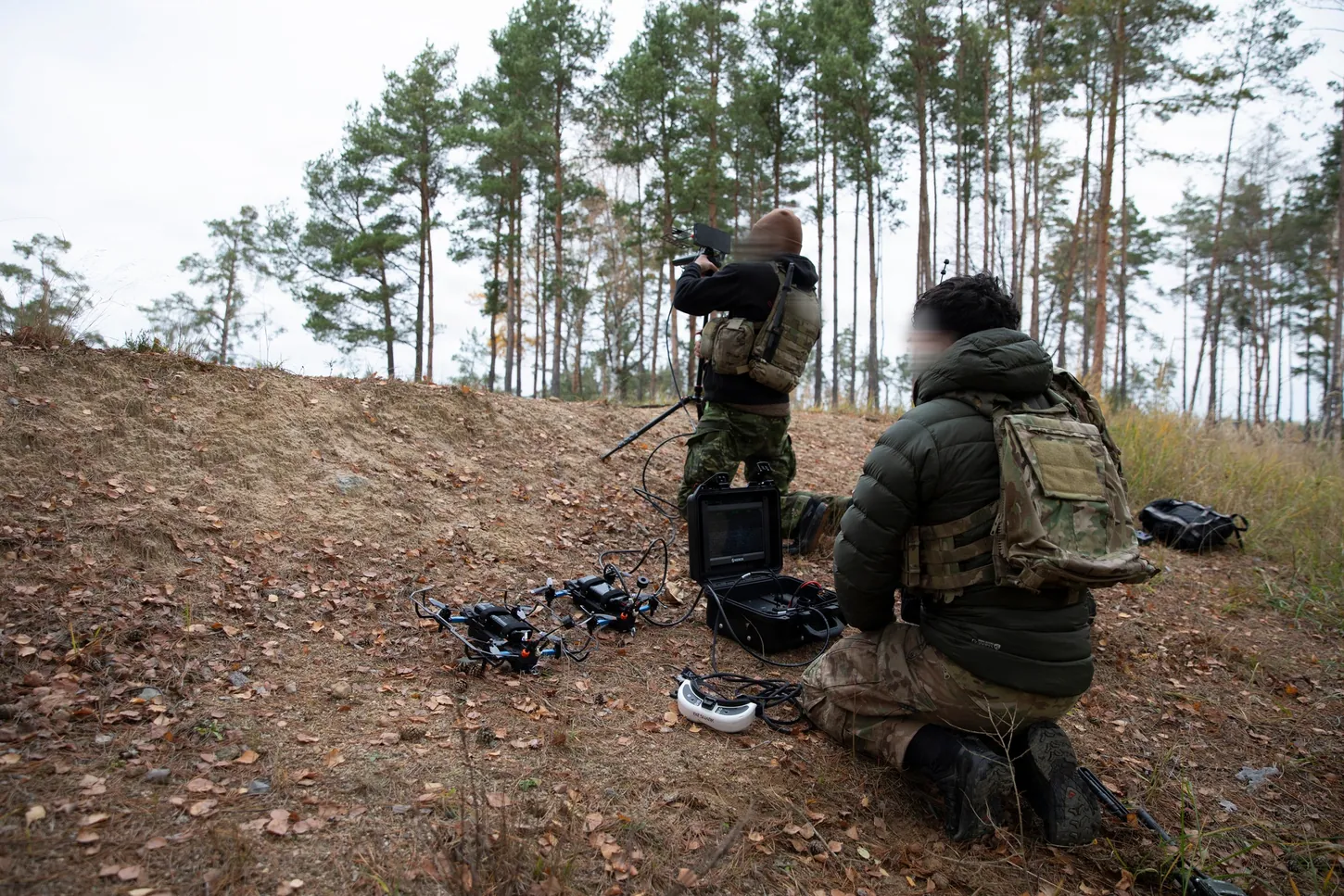
Master Sgt. Raymond Rivera, senior enlisted leader of SOCEUR’s Theater Edge Innovation Lab, said the competition lets troops find gaps they have run into before and “take those lessons learned back to their units.”
DroneXL’s Take
SOCEUR and the conventional Army both had Ukrainian drone operators on their training grounds in Germany this year, and they did different things with the experience. SOCEUR put Ukrainian special operators in a competition with its own teams and says it will update its procedures from the data. After an armored brigade lost on paper at Combined Resolve, Andreasen writes that he still hears senior leaders say American forces fight differently.
I wrote in September, in “US Army Axes Drone Battalion Months After Ukrainians Beat Its Troops,” that taking the drone mission from that battalion looked like a retreat. Andreasen makes the best case against that view I’ve read, because he took the battalion’s leaders around Ukraine and he thinks paratroopers were the wrong unit for the job. The Army says the unit was always temporary. Both can be right, and Andreasen’s point still stands that the Army needs a unit assigned to drone experimentation.
He also asks US Army Europe and Africa to keep funding the interpreters, drones and repairs that let units repeat these exercises with Ukrainian partners. To me that is the cheapest drone training the Army can buy.
Sources: Modern War Institute at West Point, US Special Operations Command Europe via DVIDS, The Wall Street Journal, Business Insider.
DroneXL uses automated tools to support research and source retrieval. All reporting and editorial perspectives are by Haye Kesteloo. Read our editorial standards.
Advertise with DroneXLYour company hereReach 200,000+ drone readers a month with a sponsored article, a banner on your beat, or a partnership.See the options →