Swiss voters approved an amendment to the War Materiel Act on Sunday, 54.29% to 45.71%, in the Federal Statistical Office’s provisional official count. The change lets Switzerland license weapons exports to 36 partner countries, the United States among them, even while those countries are at war. Turnout was 48.03%, with 1,439,715 votes for and 1,212,223 against.
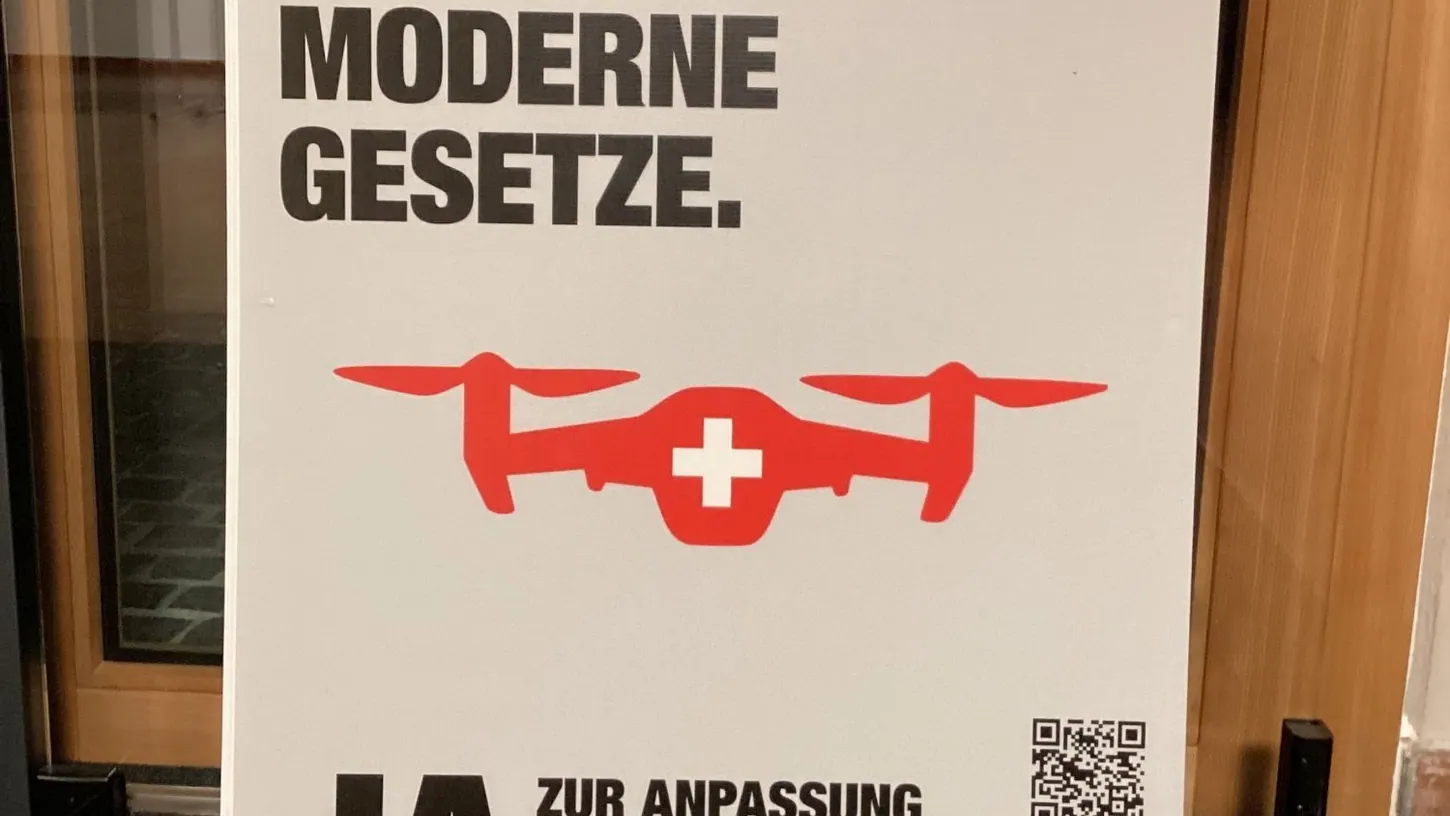
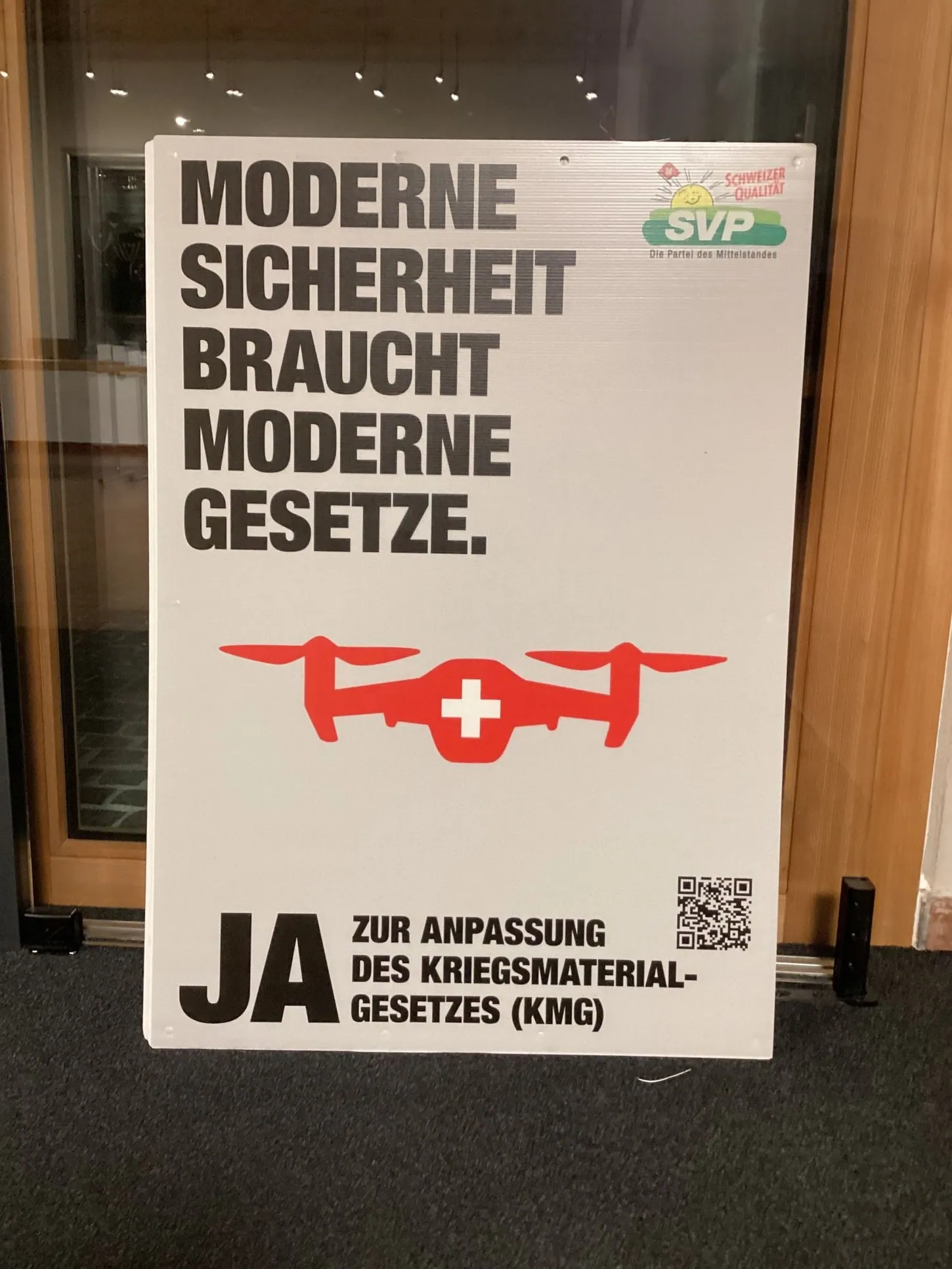
The Swiss People’s Party (SVP) campaigned for a Yes with a red drone carrying a white Swiss cross, under the line “Moderne Sicherheit braucht moderne Gesetze” (modern security needs modern laws). The ordinance that defines Swiss war materiel does list military drones. A note in the same entry says it does not include reconnaissance drones.
The Amendment Lets 36 Partner Countries Buy Swiss Arms While at War
Parliament passed the amendment on December 19, 2025. It allows war materiel exports to 36 partner countries involved in an armed conflict, provided that fits Swiss neutrality and Switzerland’s foreign or security interests. The Federal Council can also set aside the licensing criteria in exceptional circumstances.
The 36 are the 27 EU members plus Argentina, Australia, Canada, Iceland, Japan, New Zealand, Norway, the United Kingdom and the United States. Buyers also no longer have to promise in every case that they won’t pass the equipment on without Swiss consent. According to SECO’s referendum explainer, Switzerland will still demand that promise whenever foreign policy, neutrality or security reasons call for it.
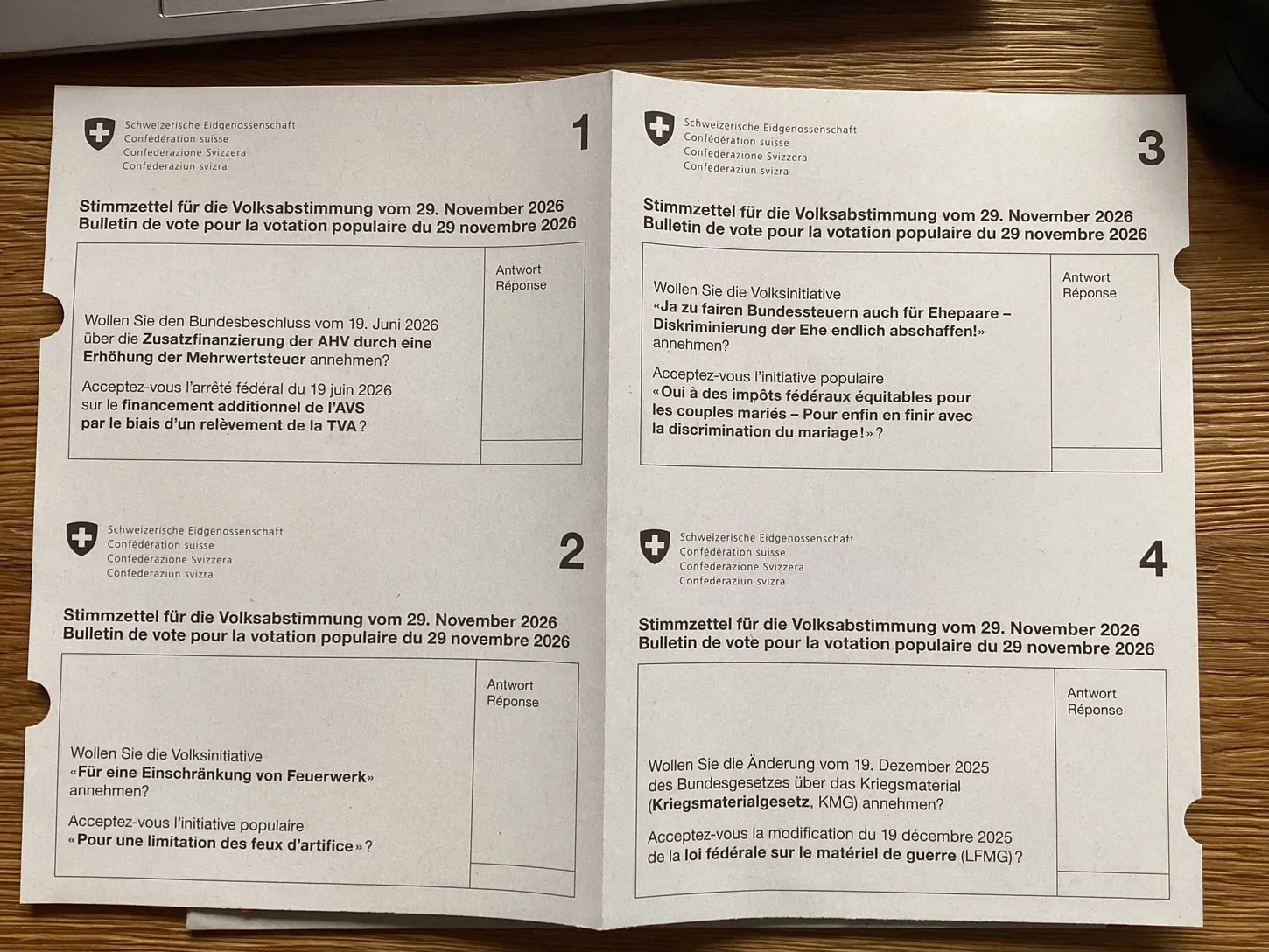
The left, the Protestant EVP party and several NGOs collected the signatures that forced the referendum, RTS reported. After the result, the Greens told Swissinfo that a multimillion-franc campaign by the arms industry had tipped the scales.
Central Switzerland Carried the Vote, and the Big Cities Said No
Twenty-one of the 26 cantons voted Yes, led by Nidwalden at 66.5%, Obwalden at 64.2% and Zug at 63.9%. Basel-Stadt rejected the amendment most clearly, at 41.6% Yes, followed by Geneva at 45.3%, Jura at 47.1%, Ticino at 47.8% and Neuchâtel at 48.3%.
A referendum on a federal law needs only a majority of voters, so the canton count decided nothing. The official results show the split ran between city and countryside more than between languages: core cities voted 42.91% Yes and rural communes 58.78%. The French-speaking region as a whole came out at 50.01%, and Vaud passed it at 50.4%.
Ukraine Stays Barred, but Swiss Gear Could Reach It Years Later
SECO, the federal government’s economic affairs secretariat, says direct exports of war materiel to Ukraine stay prohibited under the amended law, although a European buyer that gives credible assurances the equipment is for its own needs no longer has to promise not to re-export it.
Each application is still checked so the material does not reach a third country at war, directly or indirectly. SECO’s FAQ does describe one case that ends in Ukraine: a buyer that gave those assurances and then decides several years later to transfer the equipment. Re-export to Ukraine “would de facto be possible” in that case, SECO writes.
After Russia’s full-scale invasion in 2022, Bern refused requests from Germany, Denmark and Spain to pass Swiss-made military equipment on to Ukraine, among them German Gepard tank ammunition and Danish Piranha III armored vehicles. Those are the customers that count, since European states take more than 80% of Swiss war materiel exports, according to SECO.
The United States is the other half of the story. SECO says no new application for a permanent war materiel export to the US has been approved since its armed conflict with Iran escalated on February 28, 2026. The amendment lets the Federal Council license exports to the US again, limited to material that is not militarily relevant to the conflict with Iran.
Military Drones Count as War Materiel, Recon Drones Do Not
Annex 1 of the War Materiel Ordinance lists, under category ML 10.d, unmanned aircraft “specially designed or modified for military use,” with their launchers, ground equipment and command-and-control gear. Note 4 to that category says ML 10.d does not include reconnaissance drones.
So the vote governs drones built or modified for militaries, armed or not, except those that only do reconnaissance. Reconnaissance drones and the commercial parts that end up in military aircraft are licensed under the Goods Control Act, which Sunday’s vote did not change. Those are the parts that keep turning up in the wrong places: an analysis by Kyiv’s Centre for Defence Reforms found Swiss components ranked third, behind Chinese and US parts, in Russian drones downed in 2025, as DroneXL reported in its look at China’s dual-track drone strategy.
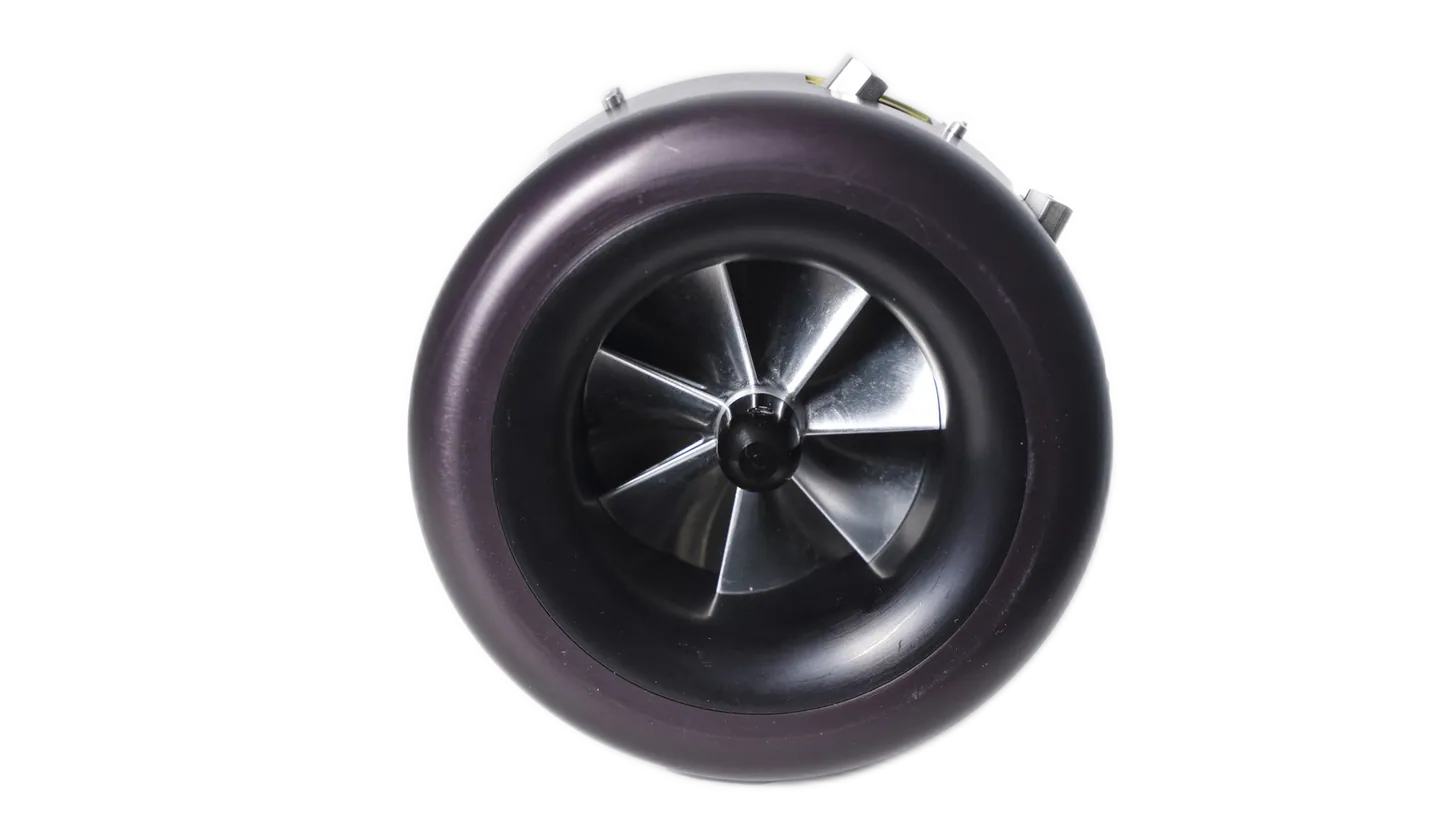
Some companies that build military drone hardware had already grown abroad before the vote. On November 17, DroneXL reported that Acutronic, which makes small jet engines for military drones and missiles, is doubling its US workforce in Texas. Its chief executive told the Financial Times he isn’t sure he would start a jet engine business in Switzerland today, citing high costs and political limits.
DroneXL’s Take
Swiss voters got this one right, and the SVP picked the right picture for its poster. European militaries are buying drones and the engines and parts that go into them, and a supplier that might refuse to ship spare parts once a customer is at war doesn’t get written into those programs. Switzerland itself went shopping last year, with CHF 108 million in framework deals for mini drones, so it knows how buyers think. My problem is with Ukraine, the country that is actually fighting a drone war every day. The amended law keeps it out of direct reach, and the only route SECO describes runs through a European buyer that changes its mind years after delivery. In my view that keeps Swiss neutrality clean on paper, and it does nothing for the soldiers who need the equipment this winter.
Sources: Federal Statistical Office, SECO, War Materiel Ordinance (Fedlex), RTS, Swissinfo
DroneXL uses automated tools to support research and source retrieval. All reporting and editorial perspectives are by Haye Kesteloo. Read our editorial standards.
Advertise with DroneXLYour company hereReach 200,000+ drone readers a month with a sponsored article, a banner on your beat, or a partnership.See the options →