
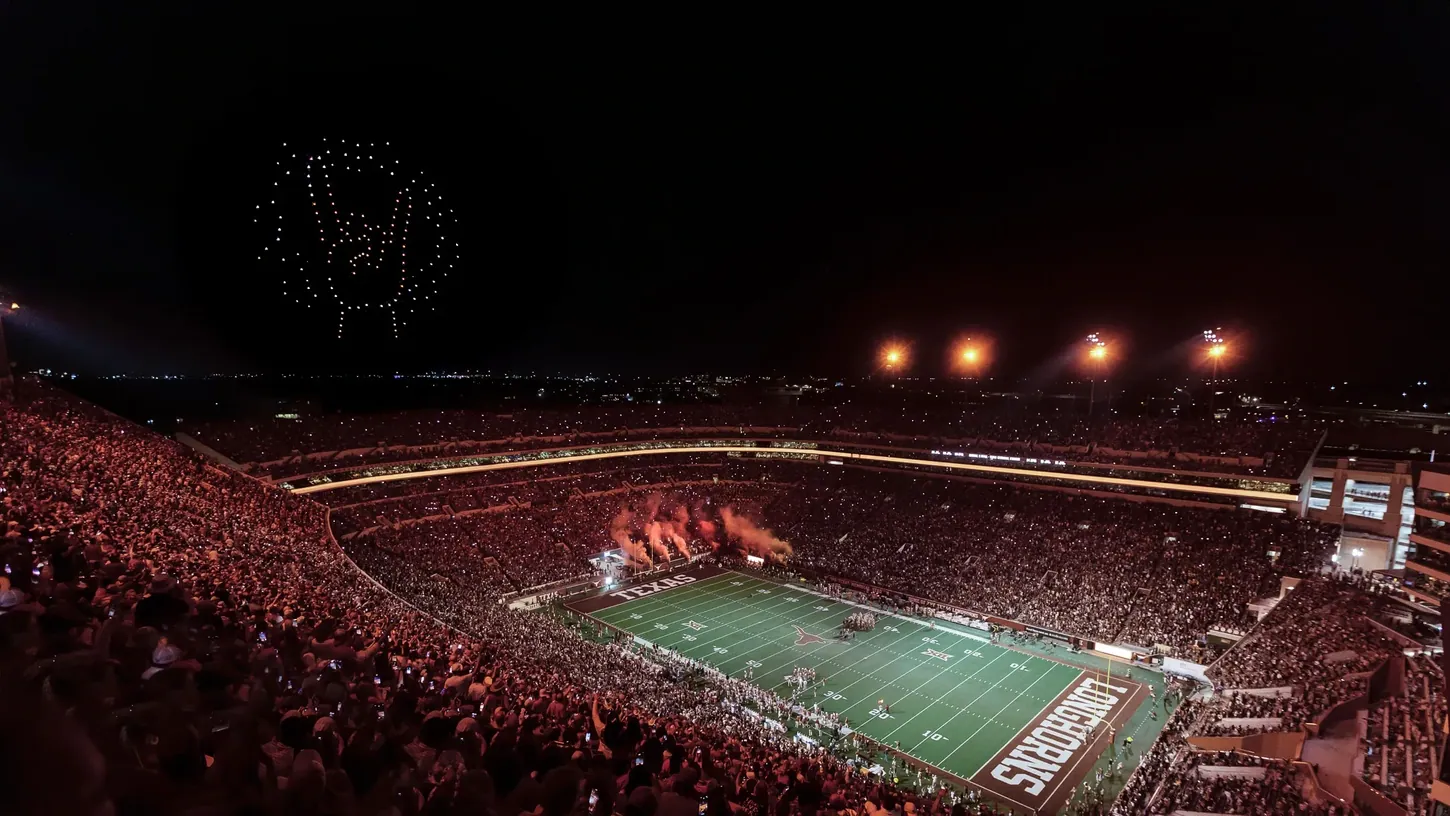
College football has a new arms race, and it is flown by drones. Nearly two dozen Division I schools have put on drone light shows during night games in the past two years, including Texas, Ole Miss, Florida, Texas Tech and Ohio State. A typical show runs 300 to 700 drones and costs more than $100,000 for four to seven images, according to a Washington Post report published Saturday.
Schools now scout each other’s shows and compete for dates with the handful of US companies that can fly them. The Longhorn logo, an oil drill at Texas Tech and a gator chomp in Gainesville have all been drawn in lights over packed stadiums.
Those shows fly over Division I stadiums that sit inside a federal no-drone zone on game night. A single drone can stop play: in 2023 a DJI Mini flying low over the field halted the UMass opener at New Mexico State until it left the stadium.
Texas Made Drone Shows A Game-Night Fixture And Rivals Now Scout Ole Miss
Texas flew the earliest game-night show the Post found, on September 16, 2023. Verge Aero drones lit up Darrell K Royal-Texas Memorial Stadium during the game against Wyoming. Deputy athletic director Drew Martin told The Washington Post he got the idea from a video of an Asian soccer match.
Martin’s own description of how schools copy each other was “Rip off and duplicate.” The Texas shows became a game-day fixture, now produced by Verge Aero network partner FlyLight Drone Shows. Verge Aero’s timeline lists more than 1,000 drones for Bevo at the November 2025 Lone Star Showdown a daylight smoke show at the September 5, 2026 home opener, and 150 drones trailing burnt-orange smoke for Ohio State a week later.
At Ole Miss, Skyworx Drone Shows, which holds FAA waivers under a Henderson, Nevada address, flew its shows at the Florida game in November 2025 and the College Football Playoff game against Tulane in December. ESPN, TNT Sports and the SEC’s social channels carried the playoff show, and officials at other Power Four schools told the Post they have flown staffers to Oxford night games this season to scout them.
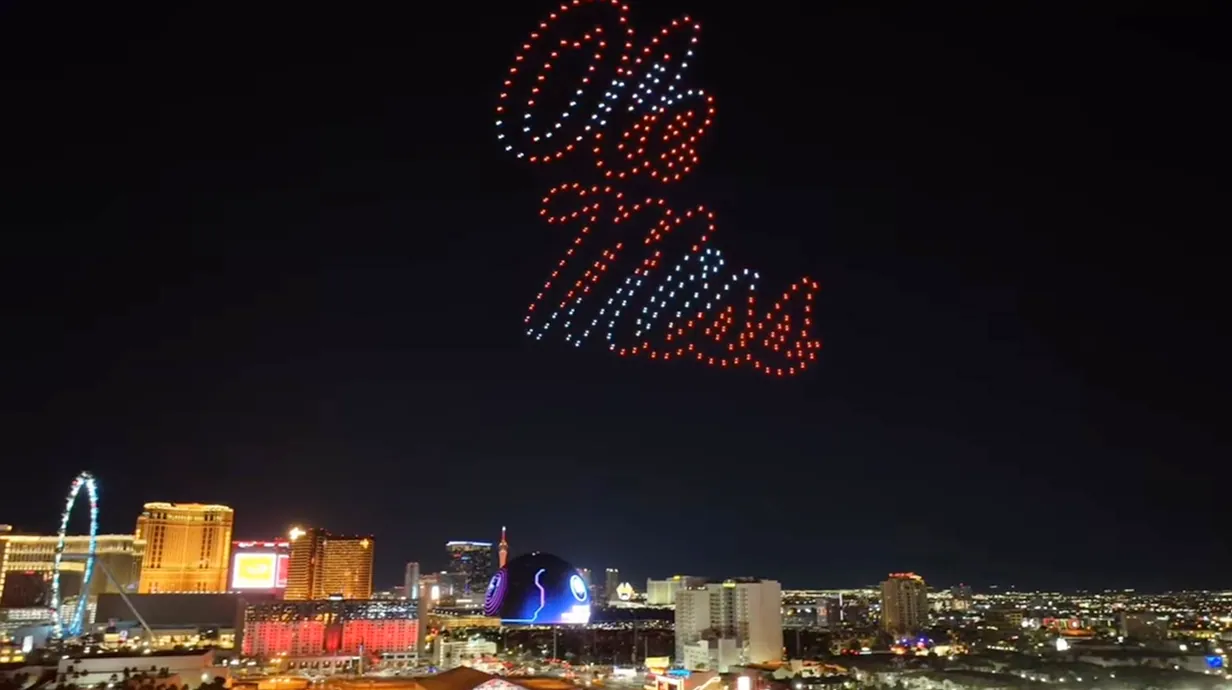
Ole Miss says Skyworx later reflew that show with 600 drones over Las Vegas, uncommissioned, ahead of the Fiesta Bowl. Supply is tight enough that Florida and Auburn reportedly chased the same date before Skyworx signed with the Gators. Skyworx senior vice president Scott Linzer told the Post: “It’s never been a better time to be in the drone show business.”
The Shows Fly Inside Airspace The FAA Closes To Everyone Else
The FAA bans drones within three nautical miles of an NCAA Division I football stadium from one hour before to one hour after every game, the same rule that covers NFL and MLB games. Show crews fly inside that zone only with FAA approval of the airspace.
Verge Aero’s account of the 2023 Texas show says the FAA was on site, and the company carved a takeoff and landing field out of the space around a stadium holding more than 100,000 people.
The paperwork runs deep. Skyworx holds two FAA altitude waivers this year, one allowing shows up to 700 feet above ground level, and each comes with 15 special provisions. Neither works as an airspace authorization: the FAA’s air traffic organization grants it separately. Alabama reminded fans last year that its own policy bans drones over Bryant-Denny Stadium on game days, on top of the federal rule.
The FCC’s Proposal Lists Show Drones As Military-Grade Equipment
The hardware behind these halftime shows sits in the FCC’s proposed import and sales ban on foreign drones. Category 7 of Public Notice DA 26-758 covers aircraft built for synchronized formation flight, naming multi-drone light shows by example. Comments in PS Docket 26-189 closed September 2.
We covered that proposal in August: most American show operators fly the Korean-built UVify IFO, and Chinese manufacturers supply most of the world’s show equipment. Fleets already bought keep flying. Replacement aircraft and fleet growth are what the proposal would cut off.
Every Longhorns show flies on Verge Aero’s own X7 light-show drones and X1 pyro-drones. Verge was flying college football’s biggest night before Austin: we covered its shows at the 2022 national championship in Indianapolis.
DroneXL’s Take
I think a college drone show is the best advertisement the drone industry has had in years. At the first Texas show, more than 100,000 people watched hundreds of aircraft fly a pre-planned route over their heads, inside a no-drone zone, with the FAA in the building. That is the system working the way DroneXL has always argued it should: let the professionals fly, and keep the guy with a Mini over the 50-yard line grounded. My problem is with Washington. Athletic directors are scouting each other’s formations and bidding for dates, and the FCC wants to file the aircraft they are buying under military capability. If schools want next season’s show to be bigger than this one, their drone vendors need to keep telling the FCC what those fleets actually are before it writes a final rule in Docket 26-189.
Sources: The Washington Post, Verge Aero, University of Mississippi, FAA
DroneXL uses automated tools to support research and source retrieval. All reporting and editorial perspectives are by Haye Kesteloo. Read our editorial standards.
Advertise with DroneXLYour company hereReach 200,000+ drone readers a month with a sponsored article, a banner on your beat, or a partnership.See the options →


