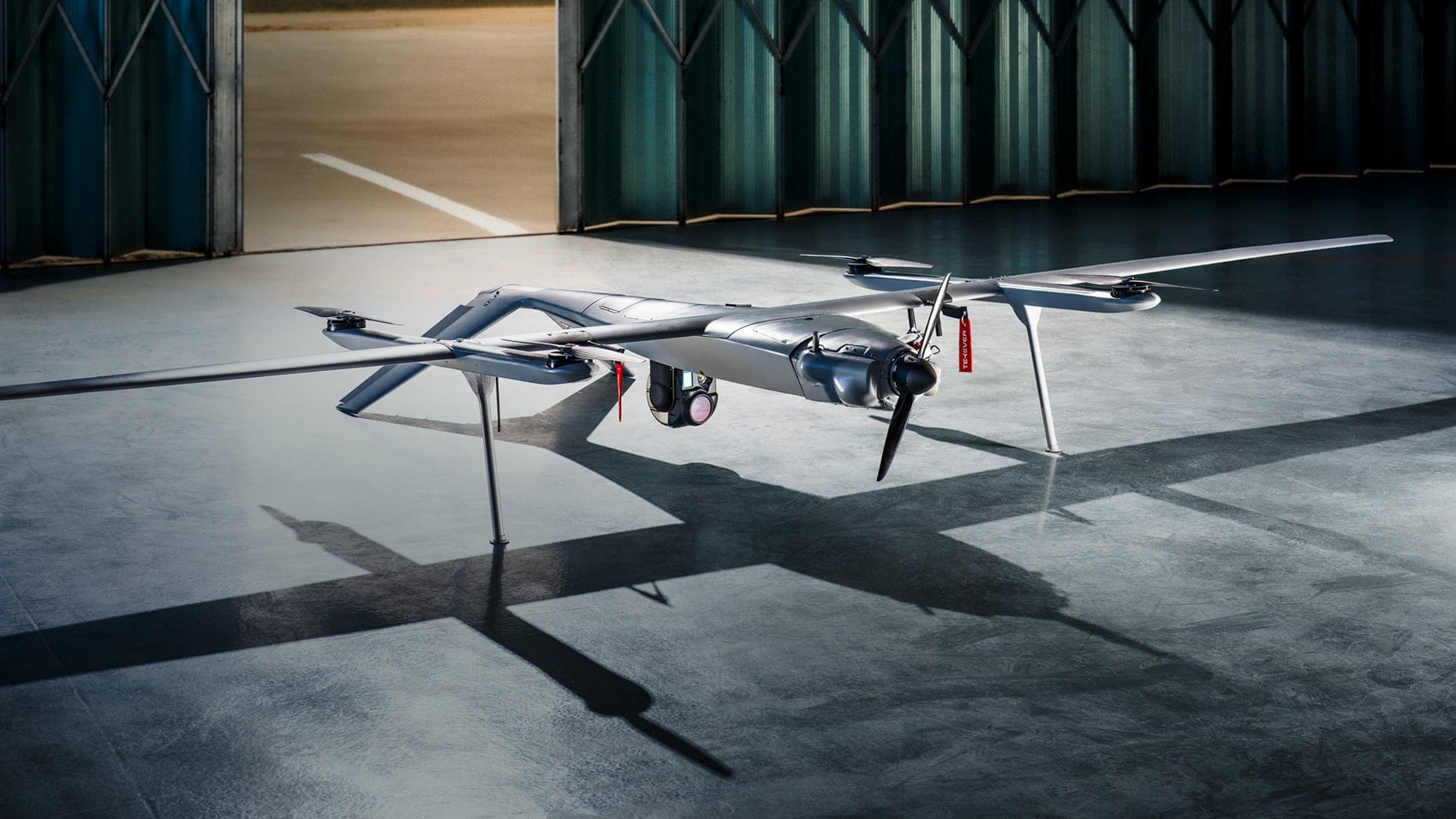
European defense tech startup Helsing has introduced its latest AI-enabled attack drone, marking a significant advancement in autonomous defense technology. The company’s new HX-2 drone is already seeing active deployment in Ukraine and is being marketed to NATO allies, including the United Kingdom, reports the Financial Times.
Revolutionary Capabilities in Modern Warfare
The HX-2 represents a dramatic shift in military technology, featuring a remarkable range of up to 62 miles. What sets this drone apart is its advanced artificial intelligence system, enabling it to operate effectively even when faced with signal jamming or communication disruptions – a crucial advantage given the electronic warfare challenges in Ukraine.
Manufacturing Innovation and Scale
Helsing’s approach to production is equally innovative, implementing cutting-edge manufacturing techniques including 3D printing. The company asserts it can produce tens of thousands of these drones annually at competitive costs, potentially revolutionizing military drone accessibility.
Strategic Investment and Partnerships
Currently valued at approximately $5.4 billion, Helsing has secured significant backing from major investors. The company has committed to establishing a manufacturing facility in the UK, pledging an investment of roughly $445 million over five years. Their strategic partnerships with established defense contractors like Rheinmetall, Saab, and Airbus demonstrate their commitment to integrating AI across various military platforms.
Combat-Ready Technology
Gundbert Scherf, Helsing’s co-founder, emphasizes the urgent need for this technology to protect NATO’s eastern flank. The HX-2’s ability to maintain target engagement even without continuous data connection makes it particularly valuable in modern warfare scenarios where electronic jamming is increasingly common.

DroneXL’s Take
The emergence of Helsing’s HX-2 represents a significant evolution in drone AI technology. This development aligns with the growing trend toward beyond visual line of sight (BVLOS) capabilities in military applications. The drone’s resilience against signal jamming could set new standards for autonomous defense systems, particularly in contested environments where traditional drone operations might be compromised.
What are your thoughts on AI-powered military drones? Share your perspective in the comments below.