Aspen Police Drone Program Enhances Public Safety with Advanced UAV Technology


Five months into its pioneering drone program, the Aspen Police Department is leveraging cutting-edge unmanned aerial vehicles (UAVs) to bolster public safety, manage crowds, and conduct search-and-rescue operations, according to the Aspen Times. This initiative aligns with a growing trend among U.S. police departments adopting drone technology for enhanced operational efficiency.
Program Overview and Capabilities
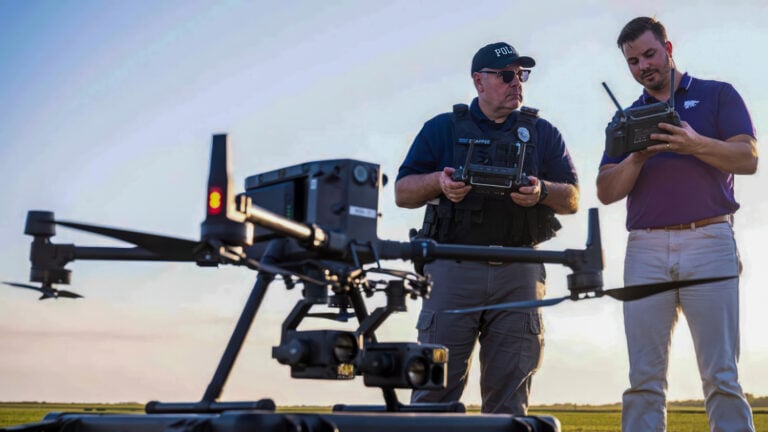
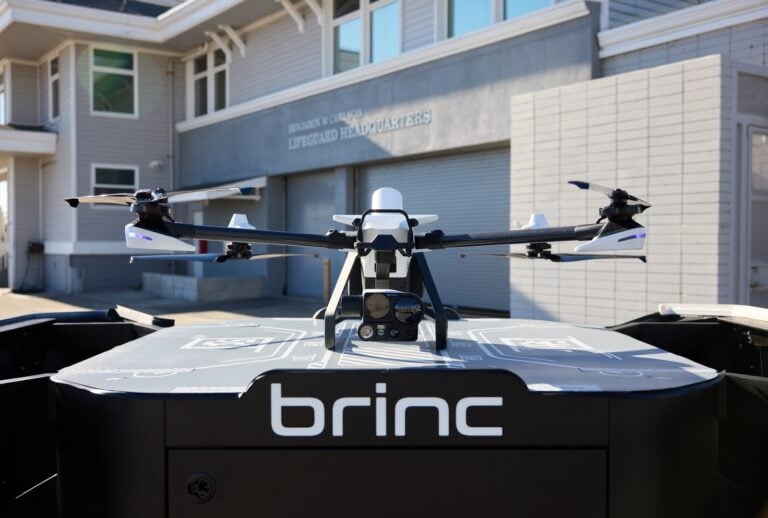
Launched in November 2024, the Aspen Police Department’s drone program employs two specialized UAVs: the Anzu Robotics Raptor T, costing $14,900 (€13,900), and the DJI Avata 2, priced at $1,299 (€1,210). Officer Lee Malik, one of three trained pilots, emphasized the program’s transformative impact:
“The amazing thing about this program is it’s just allowing us to have a perspective that we normally wouldn’t have. And that creates a safer environment for us and those that we’re interacting with.”
The Raptor T, which is basically a not-made-in-China DJI Mavic 3 Enterprise Thermal, is designed for high-altitude surveillance, reaching speeds of 32 mph (51 km/h) and equipped with thermal imaging and a long-range zoom lens capable of capturing detailed imagery, such as inside the Aspen Mountain gondola from the police station. Conversely, the DJI Avata 2 excels in low-altitude, agile maneuvers, navigating tight spaces like doorways or culverts using a headset and joystick for first-person-view control.
Operational Impact and Drone Use Cases
The drones have proven instrumental in diverse scenarios. During the Palm Tree Festival in February 2025, the Raptor T provided real-time aerial footage, enabling the incident command team to identify and address crowd altercations efficiently.
“With a thick crowd, it’s hard to see what’s going on,” Malik reportedly noted. “So we were actually able to put eyes and be able to tell them clothing descriptions, and things like that, to get them to the right spot.”
The drone’s thermal imaging also detected individuals attempting unauthorized entry in low-visibility conditions.
In December 2024, the Raptor T supported the Secret Service by establishing a visual perimeter around a high-profile Aspen residence in Colorado, leveraging its thermal capabilities to monitor wooded areas. The Avata 2, meanwhile, is ideal for “barricade” situations, allowing officers to assess threats remotely, reducing the need for immediate SWAT intervention.
“The Raptor is great at altitude, the Avata is great at low-level flight and looking in through things,” Malik explained.
Regulatory and Ethical Considerations
Operating under Federal Aviation Administration (FAA) regulations, the drones adhere to strict airspace rules. In Aspen’s Class D airspace, near the local airport, drones are limited to 100 feet (30 meters) above the city center and 50 feet (15 meters) over the West End, with a standard ceiling of 400 feet (122 meters) elsewhere. Visibility requirements mandate 3.5 miles (5.6 km) of clear sight and a 1,000-foot (305-meter) buffer from clouds.
Privacy concerns are addressed proactively. Malik clarified that drones are not used to surveil private property without exigency, such as missing persons cases, stating, “We’re really not looking to invade people’s privacy.” This approach balances operational needs with civil liberties, a critical consideration as drone use in law enforcement expands.
Market and Drone Industry Context
The Aspen program reflects a broader surge in public safety drone adoption, with departments in Pitkin County, Snowmass, and Basalt also deploying UAVs. The global drone market for public safety is projected to grow significantly, driven by advancements in thermal imaging, real-time data streaming, and compact designs like the DJI Avata 2. However, regulatory frameworks and public perception remain hurdles, necessitating transparent policies to maintain trust.
DroneXL’s Take
Aspen’s drone program underscores the transformative potential of UAVs in public safety, offering a scalable model for urban and rural departments alike. The strategic use of complementary drones—Raptor T for broad surveillance and Avata 2 for precision—demonstrates a nuanced approach to mission-specific technology. Yet, as adoption accelerates, departments must prioritize rigorous pilot training and community engagement to address privacy concerns. Aspen’s commitment to ethical use sets a benchmark, but ongoing scrutiny of FAA compliance and data handling will be essential to sustain public confidence.
Photo courtesy of Aspen Times / S. Stark-Ragsdale