
Haitian Drone Strikes Target Gang Leaders, Spark Legal Controversy

Check out the Best Deals on Amazon for DJI Drones today!
In Haiti’s capital, Port-au-Prince, drones armed with explosives have become the government’s latest weapon against gang leaders controlling over 80% of the city. A recent video released by the Haitian police showed explosions raining from the sky, signaling a high-stakes offensive to reclaim the streets. However, The NY Times reports that the Royal Canadian Mounted Police (RCMP), which supplied the drones, has condemned these strikes as illegal, raising questions about their legitimacy and effectiveness.
Why Drones Are Deployed
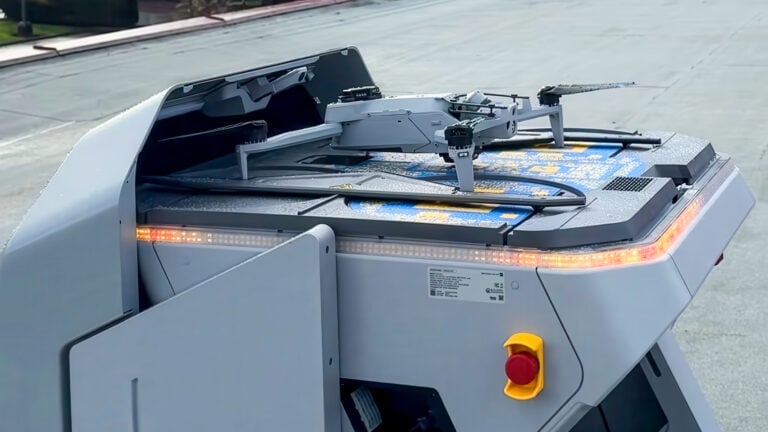
Haiti’s government is battling Viv Ansanm, a gang coalition that has seized control of much of Port-au-Prince through extortion, kidnappings, and illegal roadblocks. With 1.3 million people displaced and an international force led by Kenyan police making little headway, the government launched a drone task force in March 2025. These strikes, often using commercially available DJI drones, aim to target high-profile gang leaders like Vitel’homme Innocent, who carries a $2 million bounty. Haitians see drones as a last resort to prevent total gang dominance, but transparency about targets and casualties remains absent.
Legal Concerns Surrounding Strikes
The use of lethal drones has drawn sharp criticism from legal experts and the RCMP.
“The drone attacks it has conducted are in violation of Haiti’s domestic criminal law and international human rights law,” said Marie-Eve Breton, an RCMP spokeswoman, in an email to The NY Times.
Canada donated drones with the condition they not be used for lethal purposes, citing international human rights law, which prohibits lethal force unless there’s an imminent threat to life. Haiti’s violence, while severe, doesn’t meet the criteria for an “armed conflict,” where targeted strikes might be permissible under international humanitarian law. The lack of a clear chain of command among gangs, despite Jimmy Chérizier’s (aka Barbecue) leadership, complicates this classification.
Haiti’s Response and Secrecy
The Haitian government has remained silent, with the prime minister’s office declining to comment on national security matters. A senior official, speaking anonymously, emphasized secrecy to avoid tipping off gang leaders, relying on private contractors like a company owned by Erik Prince to minimize leaks.
“It is a blurry framework, lacking any accountability and legal backing,” said Romain Le Cour, a Haiti security analyst at the Global Initiative Against Transnational Organized Crime, in the same report.
Human rights groups, while supportive, urge transparency, noting a recent strike killed 40–100 people, with no official police statement.
Effectiveness of Drone Operations
Drones offer significant surveillance capabilities, tracking gang movements and guiding ground operations. However, their offensive use—likely involving improvised explosives or kamikaze-style attacks—is less promising.
“Taking drones and killing people is not a strategy,” said Thomas X. Hammes, a research fellow at the National Defense University.
While over 300 gang members have reportedly been killed, no high-value targets have been captured, and gang territory remains intact. Gangs have retaliated, killing at least four civilians. Barbecue’s response, claiming access to drones himself, underscores the risk of escalation.
Implications for Drone Use
Haiti’s drone strikes highlight the growing role of commercially available drones in urban conflicts, raising technical and ethical challenges. At roughly $1,500–$5,000 per unit, these drones are affordable but lack the precision of military-grade systems, increasing the risk of collateral damage. For drone professionals, this case underscores the need for clear regulations on weaponized drones, especially in civilian settings. As Haiti’s experiment continues, the balance between security and legality remains precarious, with no clear path to restoring order.
Photo courtesy of AP / O. Joseph.
Discover more from DroneXL.co
Subscribe to get the latest posts sent to your email.
Check out our Classic Line of T-Shirts, Polos, Hoodies and more in our new store today!

MAKE YOUR VOICE HEARD
Proposed legislation threatens your ability to use drones for fun, work, and safety. The Drone Advocacy Alliance is fighting to ensure your voice is heard in these critical policy discussions.Join us and tell your elected officials to protect your right to fly.

Get your Part 107 Certificate
Pass the Part 107 test and take to the skies with the Pilot Institute. We have helped thousands of people become airplane and commercial drone pilots. Our courses are designed by industry experts to help you pass FAA tests and achieve your dreams.

Copyright © DroneXL.co 2026. All rights reserved. The content, images, and intellectual property on this website are protected by copyright law. Reproduction or distribution of any material without prior written permission from DroneXL.co is strictly prohibited. For permissions and inquiries, please contact us first. DroneXL.co is a proud partner of the Drone Advocacy Alliance. Be sure to check out DroneXL's sister site, EVXL.co, for all the latest news on electric vehicles.
FTC: DroneXL.co is an Amazon Associate and uses affiliate links that can generate income from qualifying purchases. We do not sell, share, rent out, or spam your email.












They have to do what ever they can to regain control of the city. Don’t judge someone until you walk a mile in their shoes.