AVSS completes first live avalanche drone testing in Jasper National Park

Check out the Best Deals on Amazon for DJI Drones today!
Canadian drone safety company AVSS has completed its first round of live, on-mountain avalanche control testing using its Precision Avalanche Management System (PAMS) in Jasper National Park, Alberta. The test used AVSS’s SnowDart hardware and flight planning software on an existing avalanche control route inside the national park, with support from Parks Canada, Transport Canada, Natural Resources Canada (NRCan), and Innovation, Science and Economic Development Canada.
Here is what you need to know:
- The development: AVSS completed live energetic testing of its SnowDart drone-based avalanche control system on an active avalanche route in Jasper National Park, marking the first real-world mountain validation of the technology.
- What comes next: AVSS will conduct an additional 300 live tests in both simulated and real environments over the next 60 days, collecting data to refine the system for commercial deployment.
- Why it matters: Traditional avalanche control still relies on WWII-era howitzers, helicopter-dropped explosives, and hand-tossed charges. Drones can do the job at a fraction of the cost without putting crews near unstable slopes.
- The source: Josh Ogden, AVSS CEO, announced the milestone on LinkedIn.
AVSS moves from regulatory approval to live mountain testing
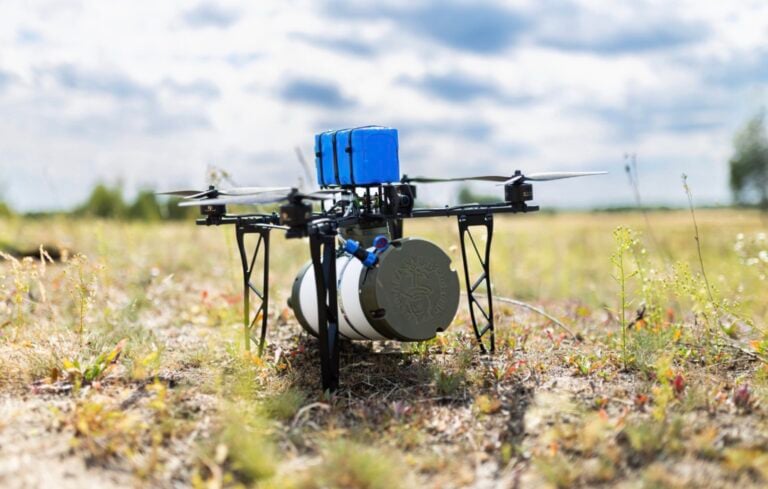
The Precision Avalanche Management System is a drone-based technology suite that uses autonomous flight planning software and consumable SnowDart explosive devices to trigger controlled avalanches in predetermined start zones, replacing the need for helicopter drops or artillery crews in dangerous alpine terrain. AVSS received its nationwide Special Flight Operations Certificate (SFOC) from Transport Canada for the system in August 2025.
That regulatory green light was a big deal. But clearing paperwork and actually dropping explosives from a drone on a real avalanche path in a national park are two very different things.
The Jasper test took place on an existing avalanche control route, meaning Parks Canada already uses conventional methods to manage snow loads in that area. This is important context. AVSS was not testing in a vacuum. The company was validating its system against a known avalanche path where safety teams already have baseline data on snow behavior, blast effectiveness, and hazard patterns.
After the SnowDarts are dropped from the drone and activated to perform surface-level and air blasts, the PAMS software collects performance data that gives operators detailed analytics on blast effectiveness. That data feedback loop is central to the system’s value proposition. Traditional methods produce results you can see but not easily measure. PAMS quantifies them.
The path from parachutes to pyrotechnics
AVSS is best known in the drone world for its ASTM F3322-compliant parachute recovery systems for DJI enterprise drones. The company makes parachutes for the DJI Matrice 400, DJI Dock 3, DJI M30, and DJI Mavic 3 Enterprise, among others. The company also secured the first FAA Category 2 Declaration of Compliance for the DJI Dock 2, enabling flight over people without a waiver.
The avalanche work is a logical extension of what AVSS already does well: airdrop dynamics and precision delivery. The company started developing the PAMS technology in 2020, spending years testing drop mechanisms and navigating the complex regulatory requirements for manufacturing and storing explosives.
That patience paid off. Transport Canada contracted AVSS to assess the technology’s potential for rail corridor avalanche control through its Innovation Solutions program. Later in 2025, AVSS received an additional contract to complete 300 live tests and explore the system’s dual-use potential.
Traditional avalanche control is expensive and dangerous
Current avalanche mitigation methods have not changed much in decades. Parks Canada manages avalanche control across roughly 23,000 square kilometers of national park terrain in the Canadian Rockies, including Jasper, Banff, and Glacier National Parks. The tools they rely on include helicopter-dropped charges, howitzers like those used by the Canadian Armed Forces at Rogers Pass in British Columbia, hand-tossed explosives by ski patrollers, and fixed Remote Avalanche Control Systems (RACS) that are expensive to build and maintain.
Helicopters burn through budget fast and cannot fly in the storms that often create the most dangerous avalanche conditions. RACS only cover fixed locations. Hand charges require trained technicians to get dangerously close to unstable snow.
Drones solve several of these problems at once. They cost less per hour than helicopters, require smaller teams, and can fly in weather conditions that would ground manned aircraft. Most critically, they keep every member of the crew far from the hazard zone.
Alaska has been exploring similar territory. The Alaska Department of Transportation tested Drone Amplified’s DART system for avalanche control, and the state’s DOT has been using DJI Docks for automated avalanche and geohazard mapping in some of the most challenging terrain in North America.
Jasper National Park adds real-world urgency
The choice of Jasper for this validation test is worth noting. The park is recovering from the devastating 2024 wildfire that destroyed a third of the townsite. Parks Canada has been studying whether the loss of vegetation in fire-damaged areas may have increased avalanche hazard in new zones. This winter, heavy snowfall has returned to the park, and Marmot Basin ski resort has seen over 80 centimeters of fresh snow in recent weeks.
Avalanche control along the Icefields Parkway (Highway 93N) already requires regular road closures during winter storms. A drone-based system that can be deployed faster and in worse weather than helicopters would be a practical tool for Parks Canada’s visitor safety teams.
The multi-agency support behind the Jasper test is notable too. AVSS tagged Innovation, Science and Economic Development Canada, Transport Canada, Parks Canada, and Natural Resources Canada (NRCan) as partners. That level of government buy-in suggests this is more than a private-sector science project.
DroneXL’s Take
I’ve been covering AVSS since their early parachute work, and this pivot into avalanche control is the most interesting thing the company has done. Parachutes are a compliance product. They enable operations that regulations otherwise block. Valuable, yes. But the avalanche system is something different. It’s a drone application that directly replaces a dangerous human task with a better alternative.
The fact that AVSS tested on an existing Parks Canada avalanche route is the detail that matters most here. This was not a demonstration on a random hillside. It was a validation test on terrain where the Canadian government already manages avalanche hazard. That tells you the government agencies involved are seriously evaluating this as an operational tool, not just funding a research curiosity.
Three hundred additional live tests in 60 days is an aggressive timeline. If AVSS hits that target, expect commercial availability for Canadian ski resorts, mining operations, and transportation agencies by winter 2026-2027. International expansion through AVSS’s 70-plus dealer network would likely follow within six months after that.
The real question is whether U.S. regulators will match Canada’s pace. The FAA’s track record on approving explosives-carrying drone operations suggests it will take longer south of the border. Alaska DOT has shown the need is real, but the regulatory pathway for PAMS-style systems in the U.S. remains unclear. Canada is leading here, and for once, that leadership gap in drone regulation is working in favor of innovation rather than against it.
Editorial Note: AI tools were used to assist with research and archive retrieval for this article. All reporting, analysis, and editorial perspectives are by Haye Kesteloo.
Discover more from DroneXL.co
Subscribe to get the latest posts sent to your email.
Check out our Classic Line of T-Shirts, Polos, Hoodies and more in our new store today!

MAKE YOUR VOICE HEARD
Proposed legislation threatens your ability to use drones for fun, work, and safety. The Drone Advocacy Alliance is fighting to ensure your voice is heard in these critical policy discussions.Join us and tell your elected officials to protect your right to fly.

Get your Part 107 Certificate
Pass the Part 107 test and take to the skies with the Pilot Institute. We have helped thousands of people become airplane and commercial drone pilots. Our courses are designed by industry experts to help you pass FAA tests and achieve your dreams.

Copyright © DroneXL.co 2026. All rights reserved. The content, images, and intellectual property on this website are protected by copyright law. Reproduction or distribution of any material without prior written permission from DroneXL.co is strictly prohibited. For permissions and inquiries, please contact us first. DroneXL.co is a proud partner of the Drone Advocacy Alliance. Be sure to check out DroneXL's sister site, EVXL.co, for all the latest news on electric vehicles.
FTC: DroneXL.co is an Amazon Associate and uses affiliate links that can generate income from qualifying purchases. We do not sell, share, rent out, or spam your email.