Helsing and Stark’s German drone deals could reach €4.3 billion, procurement documents reveal

Check out the Best Deals on Amazon for DJI Drones today!
Two weeks ago, we reported that Helsing and Stark Defence had beaten Rheinmetall for €600 million in German loitering munition contracts. That number was based on Bloomberg’s reporting. Now the Financial Times has obtained the actual procurement documents submitted to Germany’s budget committee, and the real numbers tell a very different story.
The potential total value is up to €4.3 billion. That is not a typo.
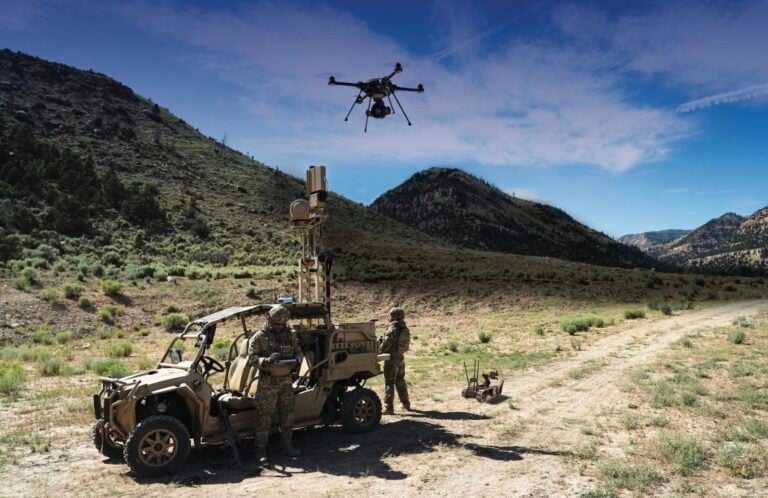
- The Development: Germany’s Bundeswehr will award initial contracts worth €269 million each to Helsing and Stark Defence for kamikaze drones, with options that could push the combined total to €4.3 billion, according to procurement documents seen by the Financial Times.
- The Numbers That Don’t Add Up: Helsing’s contract could reach €1.46 billion. Stark’s could reach €2.86 billion. The FT reports it was “not clear” why Stark’s ceiling is nearly double Helsing’s, despite Stark’s documented test failures.
- The Casualty: Rheinmetall, Germany’s largest defense contractor, was cut entirely due to delays developing its in-house FV-014 “Raider” drone.
The contract structure favors Stark despite its troubled test history
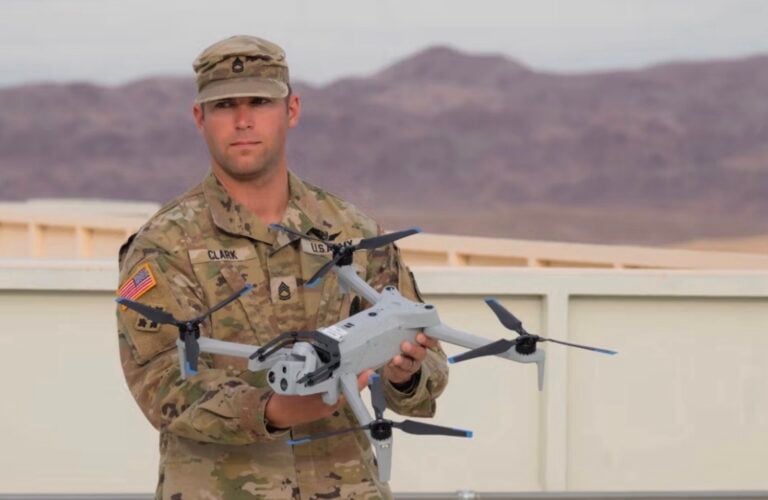
The initial deals are worth €269 million for each company, according to the procurement documents submitted to Germany’s budget committee and seen by the FT. But the option clauses tell a more interesting story. Helsing’s contract for its HX-2 drone includes options worth up to €1.46 billion total. Stark’s contract for its Virtus drone could reach €2.86 billion.
That gap is striking. We reported in October 2025 that Stark’s Virtus drones failed to hit a single target across four separate attempts during trials with British and German forces. One drone missed by more than 150 meters before crashing into woodland. Another’s battery caught fire on impact. The FT confirms these failures, noting that Stark “failed to hit a single target during two separate tests with the UK and German armies.”
Stark told the FT that the setback “was an integral part of trialling and developing new technology.”
The number of drones to be delivered by each company is redacted from the procurement files. Der Spiegel first reported news of the contracts.
Helsing’s Ukraine track record is mixed
Helsing’s HX-2 has real combat experience, but the results are uneven. Politico reported last month that the company hit its target just five times out of 14 during field deployments in the Donbas region, citing an internal German defense ministry report. That is a 36% hit rate in actual combat conditions.
Helsing pushed back on that characterization. The company said it was “proud of its performance in real combat conditions,” pointing out that it hit a Russian tank, a logistics truck, and two howitzers while facing electronic warfare aimed at disrupting Ukrainian forces. The company added that the HX-2 has been approved for frontline use by the Ukrainian army.
General Carsten Breuer, head of the German armed forces, said during a visit to trials in December that he was satisfied with drone performance. We covered those December evaluations, where Breuer stated both systems achieved a probability of destroying targets that exceeded 90% in controlled testing.
Rheinmetall gets shut out after development delays
Rheinmetall had expected to secure a €300 million deal as part of the procurement. Instead, the Dusseldorf-based defense giant was left out entirely after delays developing its in-house armed drone, the FV-014 (also known as Raider), according to two people familiar with the matter cited by the FT.
This is an escalation from what Bloomberg reported two weeks ago. That earlier reporting suggested Rheinmetall might still get a share. The FT’s sources say a separate contract remains possible “later this year,” but only if Rheinmetall’s armed drones prove satisfactory in upcoming tests. The company is expected to demonstrate its technology to the Bundeswehr in the coming weeks.
We noted back in November that Rheinmetall did not participate in the October evaluation at all. The company’s FV-014 was unveiled publicly only in September 2025, and its development timeline has lagged behind both startups. Rheinmetall CEO Armin Papperger warned in September 2025 that military drones could become the defense industry’s “biggest bubble.” Getting locked out of Germany’s biggest drone procurement is not what he had in mind.
Both contracts include an innovation clause
A detail buried in the FT report is worth highlighting. Both contracts contain an “innovation clause” that requires Helsing and Stark to offer the latest technology to the Bundeswehr. This reflects Germany’s desire to keep pace with how quickly drone technology is evolving on the battlefield in Ukraine.
The contracts must still be signed off by members of the Bundestag, who have authority to approve or block all significant government weapons spending. A decision is expected in coming weeks.
The loitering munitions will equip Germany’s flagship new brigade in Lithuania, created to deter Russia along NATO’s eastern flank. Berlin has pushed for rapid procurement as it races to equip the brigade with modern military technology.
DroneXL’s Take
The jump from €600 million to a potential €4.3 billion is staggering, and it confirms what we’ve been tracking for nearly two years: Germany’s drone investment is accelerating faster than anyone expected. Defense Minister Boris Pistorius committed €10 billion to unmanned aerial vehicles as part of a €377 billion defense spending plan through 2035, and these contracts show that money is actually flowing.
But here’s what bothers me. Stark’s potential contract ceiling is nearly double Helsing’s. The company that failed every single target in controlled trials could end up with €2.86 billion in orders. Helsing, whose HX-2 went 17-for-17 in German testing and has actual combat kills in Ukraine, tops out at €1.46 billion. The FT says it’s unclear why. I’d like an answer too.
Rheinmetall’s exclusion is embarrassing but not surprising. We’ve covered their struggle to keep pace with software-defined warfare even as they dominate traditional armor and artillery. Their Anduril partnership and Auterion investment suggest the company knows it needs to catch up. But “catch up” and “deliver a working prototype on time” are different things.
Expect the Bundestag approval in the coming weeks to get contentious. German lawmakers will have to explain to taxpayers why a company with documented test failures is in line for the biggest slice of a multi-billion-euro defense contract. That’s a harder sell than €300 million. It’s going to be interesting.
Editorial Note: AI tools were used to assist with research and archive retrieval for this article. All reporting, analysis, and editorial perspectives are by Haye Kesteloo.
Discover more from DroneXL.co
Subscribe to get the latest posts sent to your email.
Check out our Classic Line of T-Shirts, Polos, Hoodies and more in our new store today!

MAKE YOUR VOICE HEARD
Proposed legislation threatens your ability to use drones for fun, work, and safety. The Drone Advocacy Alliance is fighting to ensure your voice is heard in these critical policy discussions.Join us and tell your elected officials to protect your right to fly.

Get your Part 107 Certificate
Pass the Part 107 test and take to the skies with the Pilot Institute. We have helped thousands of people become airplane and commercial drone pilots. Our courses are designed by industry experts to help you pass FAA tests and achieve your dreams.

Copyright © DroneXL.co 2026. All rights reserved. The content, images, and intellectual property on this website are protected by copyright law. Reproduction or distribution of any material without prior written permission from DroneXL.co is strictly prohibited. For permissions and inquiries, please contact us first. DroneXL.co is a proud partner of the Drone Advocacy Alliance. Be sure to check out DroneXL's sister site, EVXL.co, for all the latest news on electric vehicles.
FTC: DroneXL.co is an Amazon Associate and uses affiliate links that can generate income from qualifying purchases. We do not sell, share, rent out, or spam your email.