LUCAS Drone’s Starlink Terminal Alarms Russian Military Analysts — Musk Says It Violates Terms of Service

Check out the Best Deals on Amazon for DJI Drones today!
Combat footage and CENTCOM imagery from Operation Epic Fury tell part of the story. Russian military bloggers are filling in the rest — and they don’t like what they see. A thread posted March 1, 2026 by open-source analyst ChrisO_wiki on X aggregated commentary from three prominent Russian Telegram channels, all sounding the alarm over one specific feature visible in official U.S. photos of the Low-cost Uncrewed Combat Attack System (LUCAS): what analysts identified as an integrated Starlink receiving antenna. Neither CENTCOM nor SpaceX has confirmed the terminal’s identity.
The thread hit over one million views. Elon Musk responded within 55 minutes.
- The Development: Russian military analysts publicly identified what appears to be a Starlink terminal integrated into LUCAS, the U.S. kamikaze drone built from a reverse-engineered Iranian Shahed-136 and first used in combat on February 28, 2026.
- The Alarm: Russian commentators warn that Starlink’s interference-resistant navigation and narrow communication beam would make LUCAS — and potentially Tomahawks, JASSMs, and other long-range strike systems — nearly impossible to jam with conventional electronic warfare.
- Musk’s Response: SpaceX CEO Elon Musk replied that using a commercial Starlink terminal on a weapon system violates terms of service, and that military satellite communications run through a separate network called Starshield, which the U.S. government operates independently of SpaceX.
- The Source: ChrisO_wiki’s thread drew from Russian Telegram channels Obsessed with War, Russian Engineer, and Dmitry Konanykhin’s channel — all considered credible within Russia’s military commentary ecosystem.
Russian Analysts See LUCAS’s Starlink Antenna as a Strategic Turning Point
Russian military commentators, analyzing CENTCOM’s own public imagery from Operation Epic Fury, identified what they believe is a Starlink receiving antenna mounted on a LUCAS airframe — and argued that if the identification is correct, it represents a fundamental change in the electronic warfare problem Russia faces. That single observation triggered a cascade of analysis across major Russian military Telegram channels about what it means for the future of precision strike warfare.
The channel Obsessed with War put it plainly: “The Americans are showing a photo of their Geran-like LUCAS drones launching at targets in Iran. And what do we see? A Starlink receiving antenna, which will allow the drone to be guided precisely to its target, if it’s not shot down, remaining in contact until the last split second.”
The account calling itself Russian Engineer went further, calling it “a very serious wake-up call.” The technical argument was specific: Starlink’s latest terminals provide not just a communication channel but alternative navigation with high interference immunity. Unlike conventional GNSS, which Russian electronic warfare systems have become reasonably effective at degrading, Starlink navigation doesn’t rely on the same signal architecture. The communication beam is also extremely narrow — difficult to detect and, in the blogger’s assessment, “virtually impossible to jam with conventional electronic warfare systems.”
The cost angle drew particular attention. If a Starlink terminal costs only a fraction of what a heavy UAV costs, it can be integrated into almost any long-range weapon system. “All these long-range strike systems will be able to be controlled anywhere on the planet and achieve the same precision as FPV drones, literally through a window,” the Russian Engineer channel wrote.
Dmitry Konanykhin’s channel added a characteristically blunt frame: “The results of laboratory work, conducted under ideal conditions by the U.S. on the territory of the former Ukraine: a Starlink module on a Shahed-like drone.” (The phrase “former Ukraine” is Russian state framing. Ukraine remains an internationally recognized sovereign state.) “And there’s no doubt this module will be installed on any drone where aerodynamics allow.”
LUCAS Combat Background: From Pentagon Briefing to Iranian Targets in Seven Months
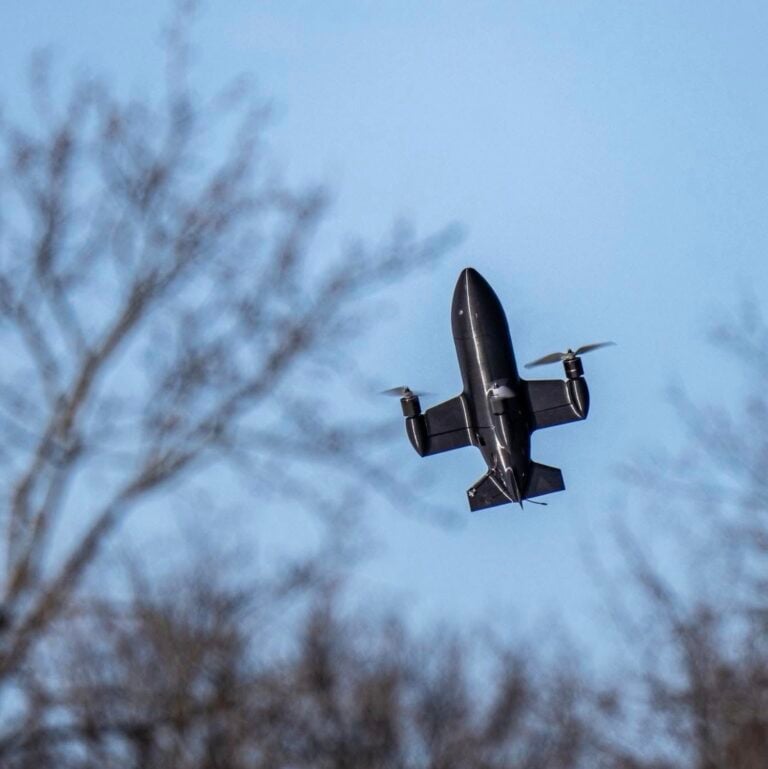
LUCAS is a reverse-engineered clone of Iran’s Shahed-136, built by Arizona-based SpektreWorks from a captured Iranian airframe rebuilt around American electronics and guidance systems. Secretary of Defense Pete Hegseth first publicly displayed it at a Pentagon event in July 2025. Seven months later, it flew in combat during Operation Epic Fury.
CENTCOM confirmed the strikes hit IRGC command and control facilities, Iranian air defense nodes, missile and drone launch sites, and military airfields. LUCAS was among the weapons used. At $35,000 per unit with autonomous AI flight controls, swarm coordination capability, and 718-kilometer range, the platform was designed from the start to flip the cost math of precision strike.
The Russian Engineer channel noted what may be a concrete effect of Starlink-guided precision: “It’s possible that such a small number of Iranian missiles being launched in a salvo is due to this innovation; the coalition is simply knocking out the launchers, no matter how camouflaged and dispersed they are.” A hyperspectral camera can detect camouflage nets made from synthetic and cotton materials, and a wide Starlink data pipe allows an immediate strike on any detected launcher.
Musk Draws the Starlink/Starshield Line — Quickly
Fifty-five minutes after ChrisO_wiki’s thread went live, Elon Musk replied. His post drew 517,000 views and made a clear distinction:
“It is a violation of commercial Starlink terms of service to use the terminal for weapon systems. This applies to all users and is shut down when discovered. There is a separate network called Starshield, which is operated by the U.S. government. This is not under SpaceX control.”
Starshield is SpaceX’s government-facing satellite service, specifically designed for national security applications. It operates on different terms, different hardware, and under U.S. government authority. SpaceX builds and launches it, but the U.S. military controls it. The distinction matters because it separates SpaceX’s commercial liability from U.S. military operations — which is exactly why Musk drew the line publicly and fast. Worth noting: Starshield hardware is manufactured by SpaceX, and a physical terminal can look identical to a consumer unit from the outside. Whether the antenna Russian analysts identified in CENTCOM imagery is Starshield or commercial Starlink remains unconfirmed.
This isn’t the first time Starlink’s dual-use problem has landed in public. Russia mounted Starlink Mini terminals on Shahed-type drones and used them to hit a moving passenger train in Ukraine, killing five people in January 2026. That attack triggered SpaceX’s whitelist enforcement in early February, which bricked unauthorized terminals across the entire Russian frontline and collapsed battlefield command and control in multiple sectors. The commercial/military line is not just a policy statement — SpaceX has now actively enforced it in one war.
Russia’s Electronic Warfare Problem Is Getting Harder to Solve
Russian commentators acknowledged directly that their existing electronic warfare systems were not built to counter Starlink-guided weapons. “If we don’t find a solution to this satellite constellation within a year, things will be ugly for us,” the Obsessed with War channel wrote.
The Russian Engineer channel dismissed the idea of destroying the constellation outright, referencing Elon Musk’s retort that Russia doesn’t have enough anti-missiles to match SpaceX’s launch rate, and that nuclear weapons can’t meaningfully destroy a constellation numbering in the tens of thousands. “Forget the Soviet tales about nails scattered in orbit, destroying satellite constellations. That might have worked against hundreds, but not tens of thousands of satellites,” the post said.
The thread’s final post directed hope at Bureau 1440, the organization developing Russia’s planned Rassvet satellite constellation — the country’s answer to Starlink. Rassvet has yet to launch a meaningful number of operational satellites, leaving Russia without a comparable alternative.
Meanwhile, the underlying math of drone warfare continues to tilt against defenders. The Iranian drone blueprint that gave Russia a mass-production weapon has been refined, Americanized, and turned against the country that first weaponized it.
DroneXL’s Take
The Russian reaction to LUCAS’s apparent Starlink terminal is worth taking seriously — not because Russian military bloggers are infallible, but because they’re identifying something Western coverage hasn’t fully addressed.
I covered the Starlink whitelist enforcement in February when SpaceX bricked Russian terminals across the frontline. What struck me then, and still does, is how the commercial/military distinction keeps collapsing in practice. Russia used commercial Starlink for drone strikes. The U.S. may be using Starshield for the same purpose under a different label. Musk’s 55-minute response was fast enough to look prepared. SpaceX knew this question was coming.
The more important point is the one the Russian Engineer channel made about jamming. Russia’s electronic warfare capability is real and has degraded conventional GPS-guided munitions throughout the Ukraine conflict. If Starshield provides an alternative navigation path with the narrow-beam, interference-resistant profile these analysts describe, that’s a genuine shift in the electronic warfare equation. Not a PR talking point.
The Russian commentators are right that this can scale. LUCAS at $35,000 is already cheap enough to field in volume. A Starshield navigation module at marginal cost on top of that produces a different kind of precision weapon than anything the previous generation of warfare managed. The cruise missile angle the Russian Engineer raised isn’t hypothetical. It’s an obvious next step for JASSM-ER specifically — a platform already built for deep strike, already proven, and already in large-scale production.
My prediction: by the end of 2026, the Pentagon will publicly confirm Starshield integration in at least one additional long-range strike system beyond LUCAS, most likely JASSM-ER. The Russian response will be louder than Bureau 1440’s launch schedule can answer.
Editorial Note: AI tools were used to assist with research and archive retrieval for this article. All reporting, analysis, and editorial perspectives are by Haye Kesteloo.
Discover more from DroneXL.co
Subscribe to get the latest posts sent to your email.
Check out our Classic Line of T-Shirts, Polos, Hoodies and more in our new store today!

MAKE YOUR VOICE HEARD
Proposed legislation threatens your ability to use drones for fun, work, and safety. The Drone Advocacy Alliance is fighting to ensure your voice is heard in these critical policy discussions.Join us and tell your elected officials to protect your right to fly.

Get your Part 107 Certificate
Pass the Part 107 test and take to the skies with the Pilot Institute. We have helped thousands of people become airplane and commercial drone pilots. Our courses are designed by industry experts to help you pass FAA tests and achieve your dreams.

Copyright © DroneXL.co 2026. All rights reserved. The content, images, and intellectual property on this website are protected by copyright law. Reproduction or distribution of any material without prior written permission from DroneXL.co is strictly prohibited. For permissions and inquiries, please contact us first. DroneXL.co is a proud partner of the Drone Advocacy Alliance. Be sure to check out DroneXL's sister site, EVXL.co, for all the latest news on electric vehicles.
FTC: DroneXL.co is an Amazon Associate and uses affiliate links that can generate income from qualifying purchases. We do not sell, share, rent out, or spam your email.