Drones and AI Are Changing How the World Finds Land Mines
Check out the Best Deals on Amazon for DJI Drones today!
In 2024, land mines and unexploded ordnance killed 1,945 people and injured 4,325 more. Ninety percent were civilians. Nearly half were children.
Demining crews removed 105,640 mines that same year. The math is brutal, and it isn’t close.
The Oldest Problem in Modern Warfare
At least 57 countries still have live antipersonnel mines buried in their soil.
Ukraine alone has an estimated 139,000 square miles of territory contaminated by explosive hazards, an area roughly the size of Montana. Demining experts estimate it could cost upward of $37 billion and potentially decades of work to clear it, as reported by The Conversation.
The traditional tools for finding mines read like a list of things nobody should have to do for a living. A person with a handheld metal detector, inching across a field. Manual probing with a rod. Trained animals walking ground that might kill them.
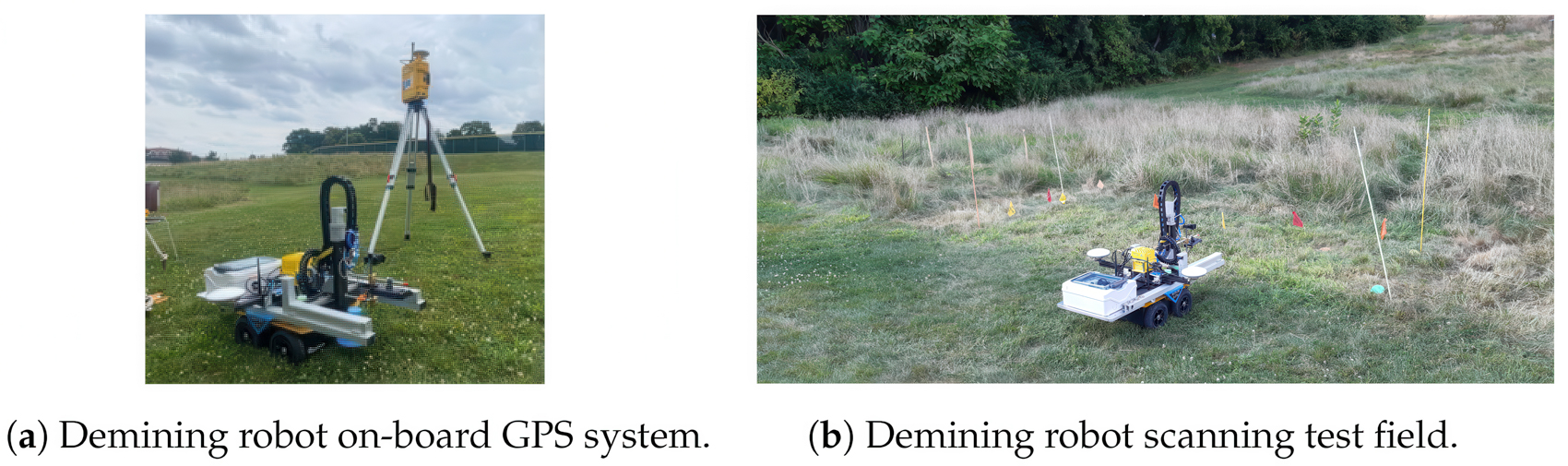
Each method is slow, dangerous, and limited. Metal detectors struggle in mineral-rich soil and miss plastic mines entirely. Ground-penetrating radar chokes on wet or uneven terrain. At the scale of contamination now seen in conflict zones, ground surveys alone simply cannot keep pace.
Something faster has to exist. Researchers at Rochester Institute of Technology think drones and AI are the answer.
Seeing What Human Eyes Cannot
The core idea is to fly over a contaminated area instead of walking through it. Drone-based aerial surveys are already being used to accelerate mine detection, particularly for surface-laid mines. The problem is that camouflage, vegetation, and shifting light conditions can make mines nearly invisible in conventional photographs.
The solution is to stop relying on a single camera and start fusing data from multiple sensors at once.
The platform the RIT team chose for data collection is the DJI Matrice 600, a professional-grade hexacopter built exactly for this kind of mission. It carries six intelligent batteries, supports a payload of up to 13.2 pounds, and can stay airborne for up to 36 minutes unloaded.
More importantly, its modular design allows researchers to mount almost any combination of sensors, RGB cameras, thermal imagers, hyperspectral systems, LiDAR units, and magnetometers, through dual CAN and API ports without touching the airframe.
It flies via DJI’s A3 flight controller with triple-redundant GPS and IMU, which matters when you’re conducting precise georeferenced surveys over terrain where a single navigation error costs you your dataset. Transmission range reaches up to 3.1 miles via the Lightbridge 2 system, giving operators meaningful standoff distance from the areas being surveyed.
Think about what that loaded Matrice 600 can see in a single pass. RGB cameras capture visual detail in color. Thermal sensors detect temperature differences between a buried mine and the soil around it.
Multispectral and hyperspectral sensors identify specific material signatures invisible to the human eye. LiDAR maps tiny surface disturbances. Magnetometers detect underground metallic components. Synthetic-aperture radar picks up changes in land surfaces.
No single sensor catches everything. A plastic mine is essentially invisible to a magnetometer. A metal mine might vanish thermally in certain soil conditions. But layer those sensors together, fuse the data intelligently, and suddenly you have a system that can see what none of its individual parts could see alone.
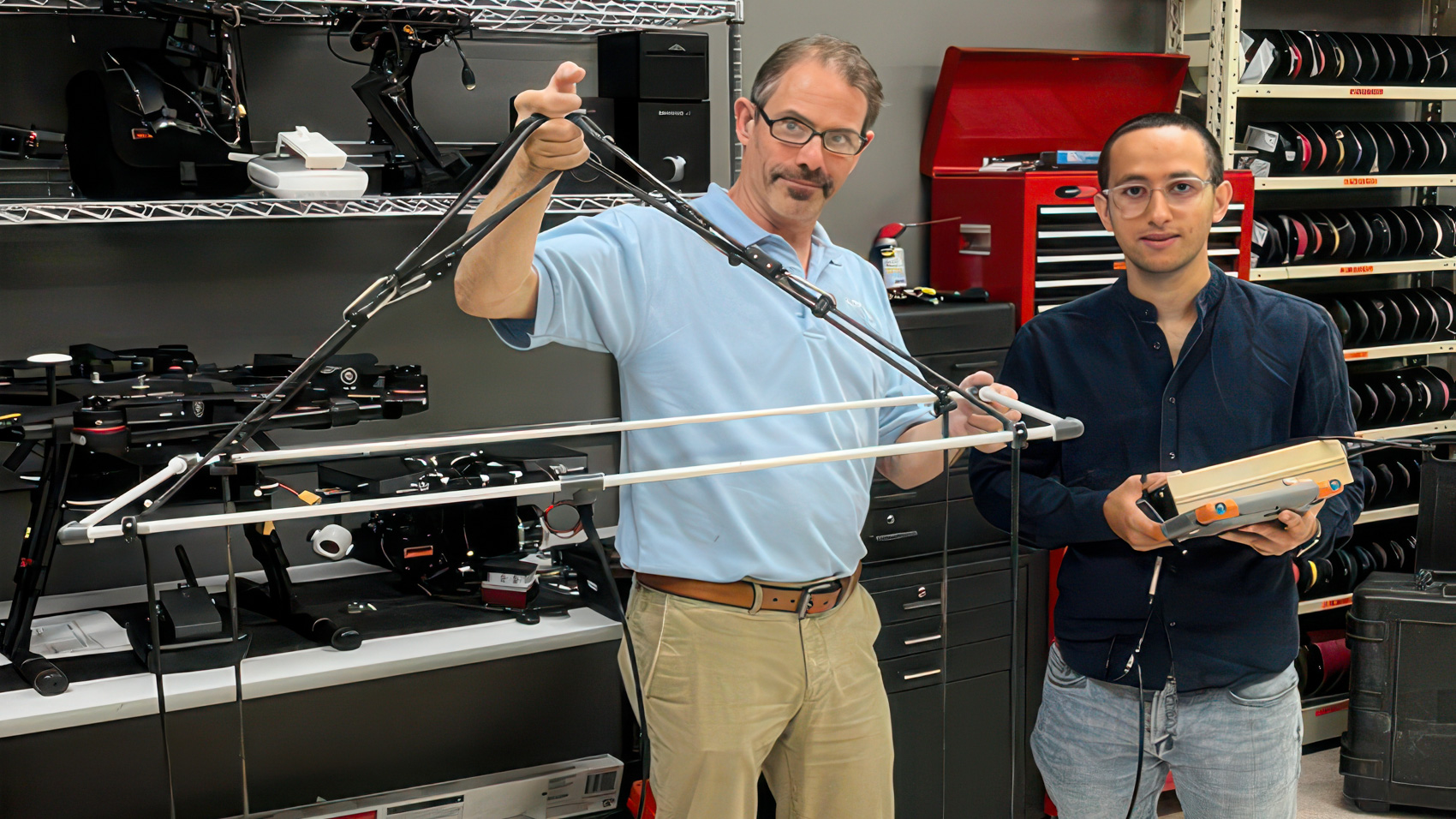
Earlier research from the RIT team tested drone-mounted electromagnetic induction metal detection as a direct replacement for handheld ground detectors. The results showed comparable accuracy to traditional methods while increasing survey speed approximately tenfold. That figure alone should stop you in your tracks. The same ground covered ten times faster, with the operator safely in the air.
Building the Dataset the World Needed
Here is where the research gets genuinely important, and where the drone community should pay attention.
Artificial intelligence models are only as good as the data they are trained on. For years, the land mine detection field has been hampered by a simple problem: no one had built a comprehensive, publicly available dataset with data from multiple sensor types, realistic mine deployments, and precise ground-truth positioning.
Without it, researchers could not properly compare algorithms, validate results, or build AI systems that perform outside of controlled test conditions. Everyone was essentially working in a silo.
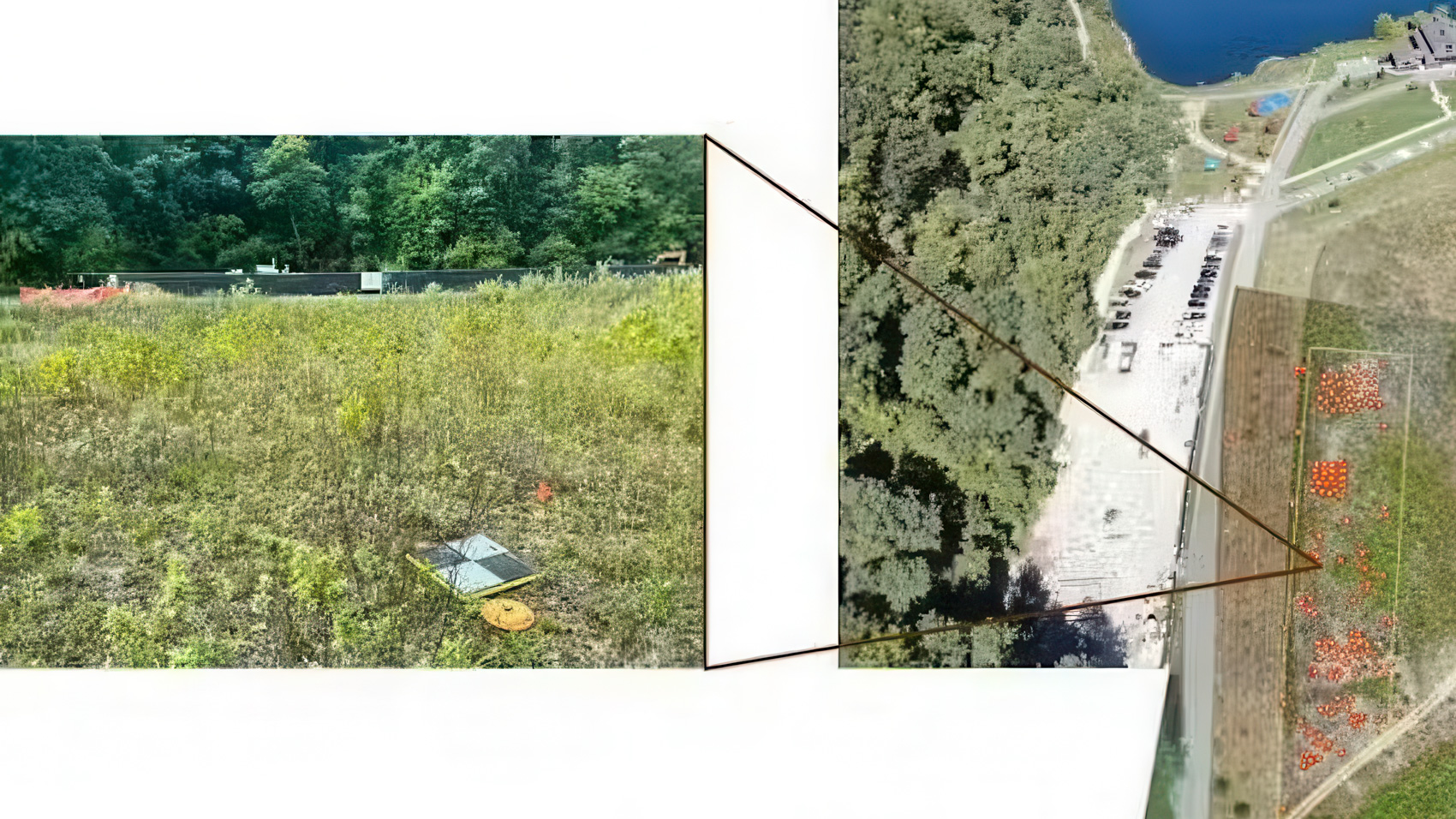
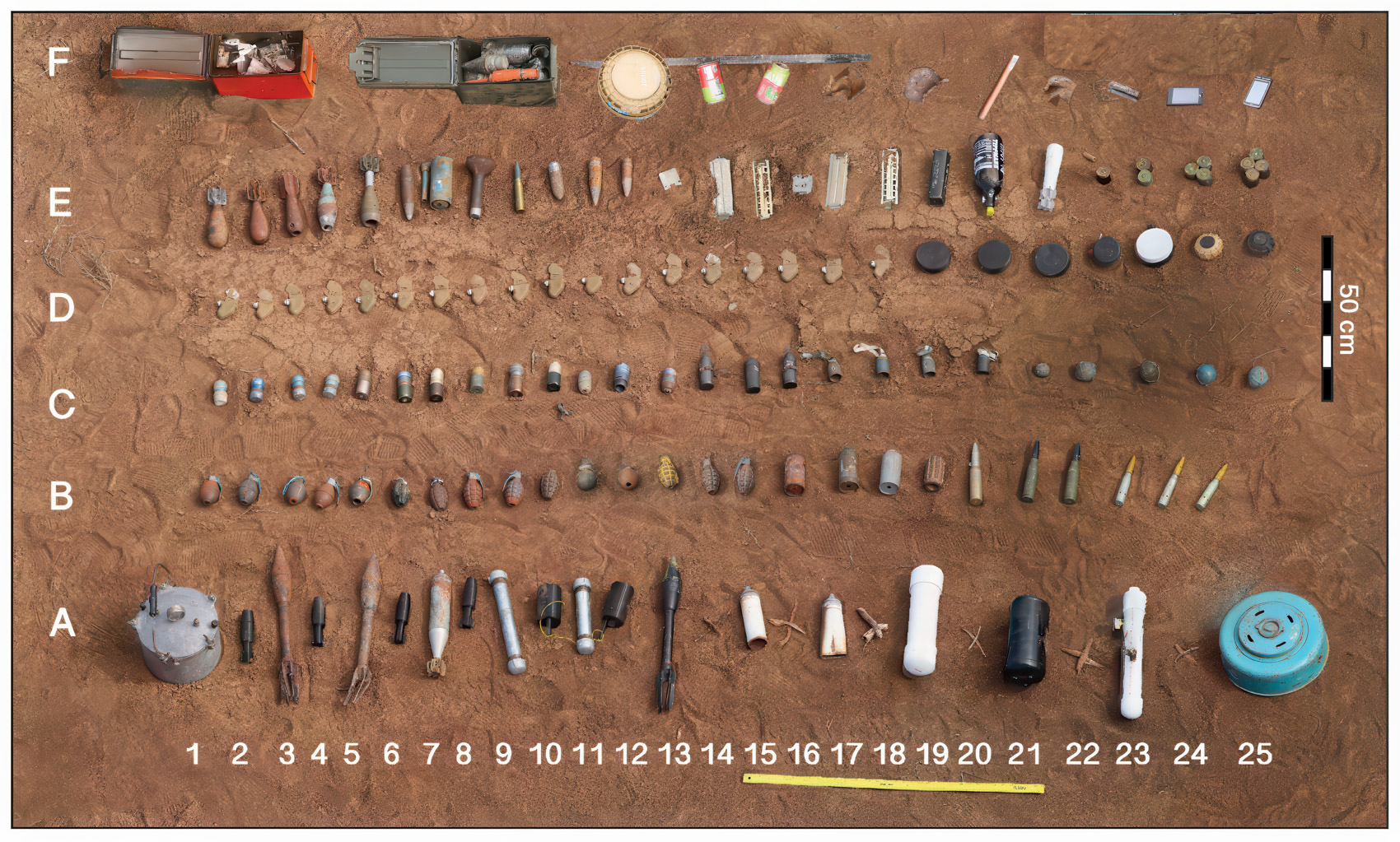
The RIT team, in collaboration with the nonprofit Demining Research Community, set out to fix that. They collected a large-scale, multi-sensor dataset at a controlled test field in Oklahoma, deploying over 140 inert land mine and unexploded ordnance targets across the field.
The DJI Matrice 600 carried the sensor stack at multiple altitudes while ground-based platforms collected simultaneously, covering hyperspectral, multispectral, thermal, RGB, LiDAR, synthetic-aperture radar, ground-penetrating radar, electromagnetic induction, and magnetometer data in a single coordinated campaign.

A portion of that dataset, a visible and near-infrared hyperspectral collection captured at 66 feet altitude, has already been released through a conference publication. The full dataset is pending journal review.
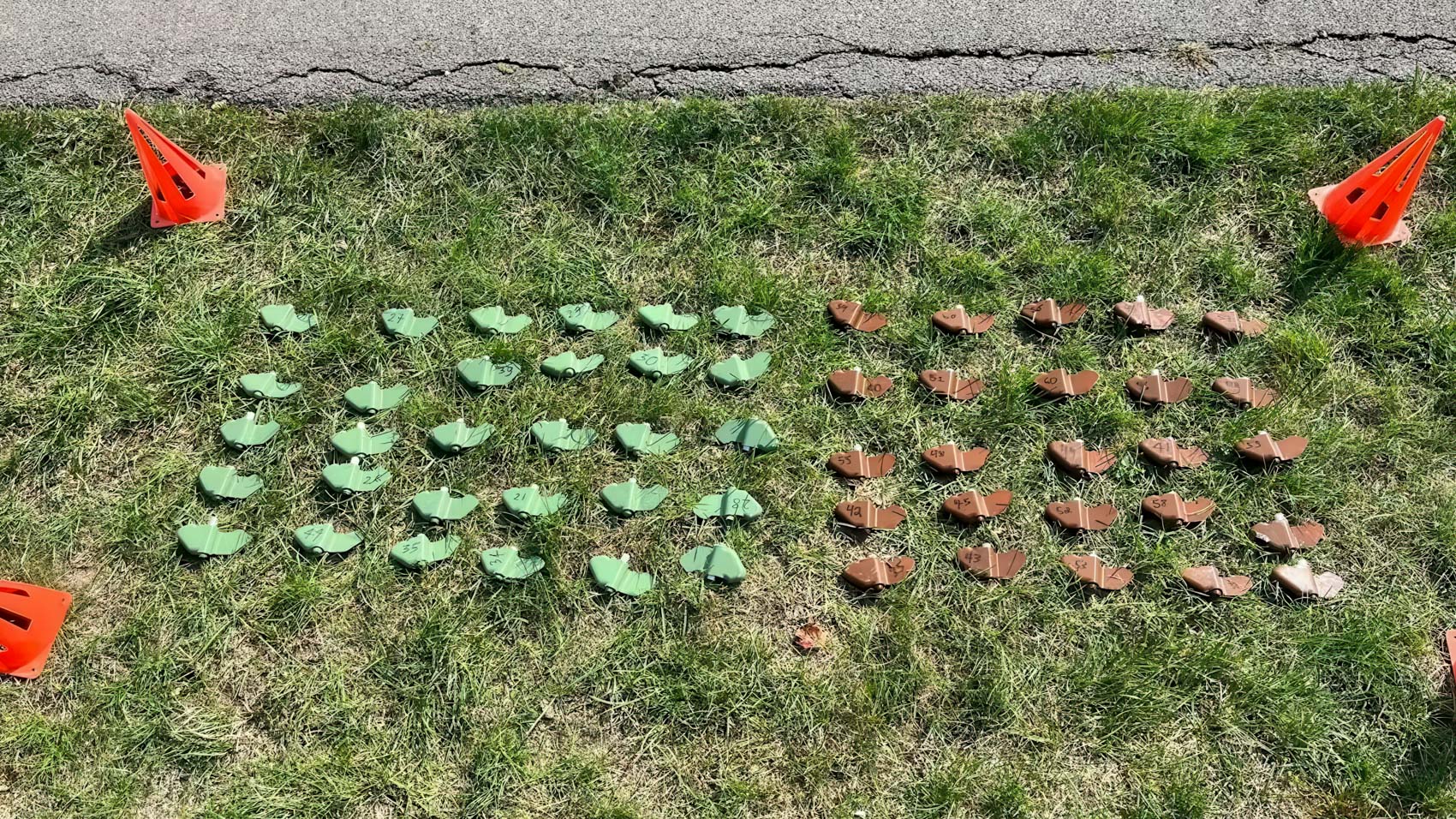
Then they took it international. Working with the Royal Military Academy of Belgium, the team scattered over 110 replicas of PFM-1 mines across varied terrain and vegetation types. The PFM-1 is worth understanding.
It is a Soviet-designed scatterable mine sometimes called the Butterfly Mine or Green Parrot. It weighs about 1.3 ounces, is made almost entirely of plastic, and its two wings allow it to glide gently to the ground when dropped from aircraft.
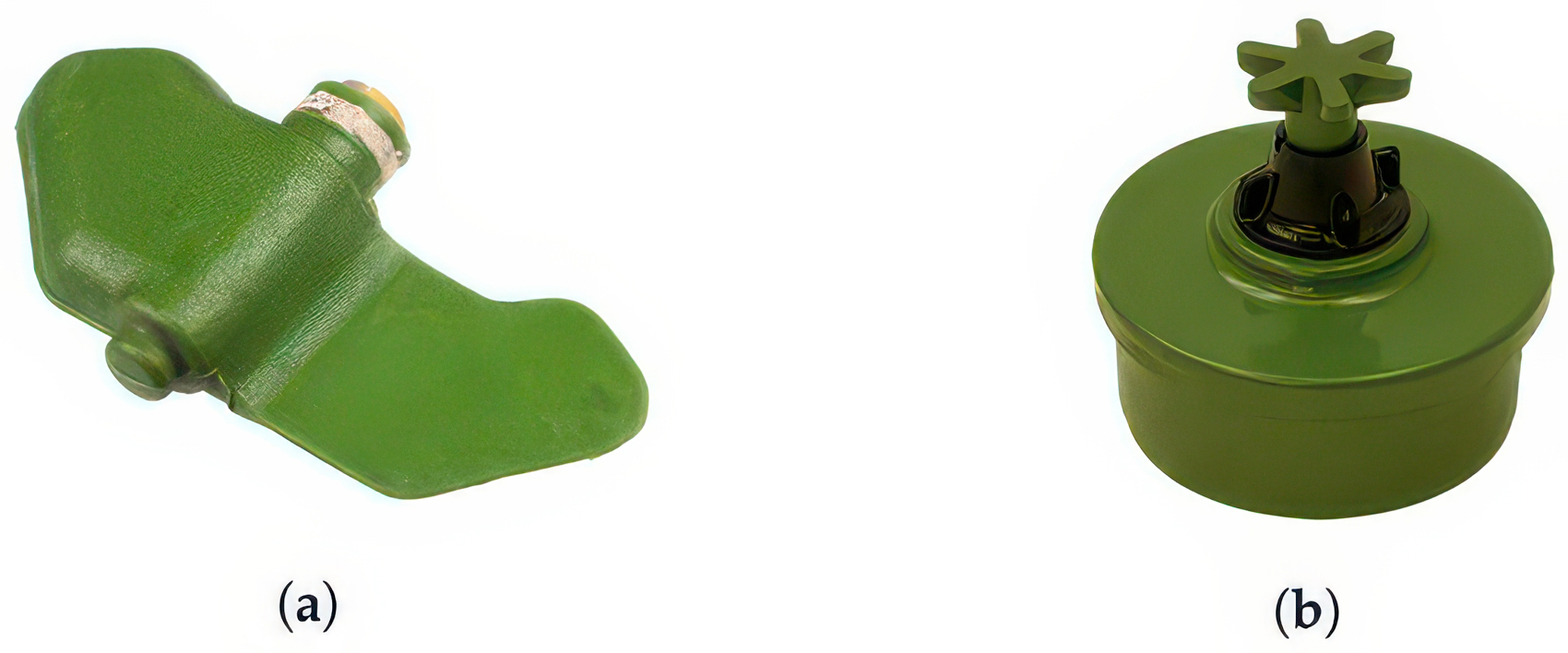
Photo credit: Rochester Institute of Technology
It looks completely harmless. It triggers at roughly 11 to 55 pounds of pressure, well within the range of a small child stepping on it. It contains virtually no metal, which makes it nearly undetectable by conventional electromagnetic methods. Russia has used it extensively in Ukraine.
The team precisely GPS-surveyed every replica mine, then flew the Matrice 600 equipped with hyperspectral, multispectral, thermal, RGB, LiDAR, and polarization sensors over the field at multiple altitudes. Other research groups and sensor manufacturers collected additional datasets over the same test field. All of it is being processed for open-access release.
To the team’s knowledge, these will be the first publicly available multisensor land mine datasets of their kind. For researchers across AI, remote sensing, and humanitarian demining, that is a significant contribution.
Teaching AI to Say “I Don’t Know”
Finding the mine is only part of the problem. The other part is knowing how much to trust the system that found it.
In applications where a false negative means someone dies, a confident wrong answer is worse than no answer at all. The RIT team’s research addresses this directly by developing uncertainty estimation for AI detection models.
Rather than forcing the system to always produce a high-confidence prediction, the goal is to give it the ability to flag ambiguity. The noisier or more unclear the sensor input, the higher the uncertainty score attached to the output.
That score travels alongside the prediction to the deminer on the ground. It is the difference between a system that says “mine detected” and one that says “possible mine detected, low confidence.” The second one keeps the operator alive longer.
It is a small design choice with large consequences.
DroneXL’s Take
Here’s what I actually think: this is one of the most important applications of drone technology being developed anywhere in the world right now, and it gets a fraction of the coverage given to a new DJI firmware update.
No sugarcoating this: the scale of the land mine problem is almost incomprehensible. Over 57 countries. Tens of thousands of square miles in Ukraine alone. Nearly two thousand people killed last year, most of them civilians, almost half of them children. And a demining industry still largely dependent on a person walking carefully across a field with a metal wand.
Here is the part that does not make the headline: the DJI Matrice 600 being used in this research is not a cutting-edge platform by current standards. DJI has long since moved on to the Matrice 350 and 4-series aircraft.
But the M600’s payload flexibility and open SDK architecture made it the right research tool for this job, and it performed exactly as designed. That is a quiet testament to the platform’s industrial legacy.
Drones do not solve this alone. AI does not solve this alone. But a drone carrying eight sensors, fusing their data in real time, guided by an AI model honest enough to admit when it is uncertain, covering ground ten times faster than a human operator? That combination changes the math.
The RIT team is not building a product. They are building the foundation other researchers and developers need to build better products. Open datasets. Validated benchmarks. Transparent AI. That is how a field moves forward.
The mines will outlast the conflicts that created them by decades. The technology being developed now will determine how many people have to die before the ground is safe again.
Photo credit: Rochester Institute of Technology
Discover more from DroneXL.co
Subscribe to get the latest posts sent to your email.
Check out our Classic Line of T-Shirts, Polos, Hoodies and more in our new store today!

MAKE YOUR VOICE HEARD
Proposed legislation threatens your ability to use drones for fun, work, and safety. The Drone Advocacy Alliance is fighting to ensure your voice is heard in these critical policy discussions.Join us and tell your elected officials to protect your right to fly.

Get your Part 107 Certificate
Pass the Part 107 test and take to the skies with the Pilot Institute. We have helped thousands of people become airplane and commercial drone pilots. Our courses are designed by industry experts to help you pass FAA tests and achieve your dreams.

Copyright © DroneXL.co 2026. All rights reserved. The content, images, and intellectual property on this website are protected by copyright law. Reproduction or distribution of any material without prior written permission from DroneXL.co is strictly prohibited. For permissions and inquiries, please contact us first. DroneXL.co is a proud partner of the Drone Advocacy Alliance. Be sure to check out DroneXL's sister site, EVXL.co, for all the latest news on electric vehicles.
FTC: DroneXL.co is an Amazon Associate and uses affiliate links that can generate income from qualifying purchases. We do not sell, share, rent out, or spam your email.