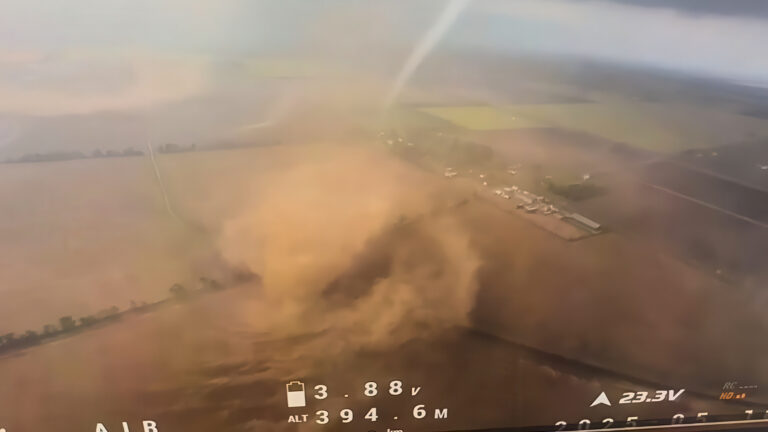
Dropped via Drone: Why Your Insurer is Scanning Your Roof Without Notice

Check out the Best Deals on Amazon for DJI Drones today!
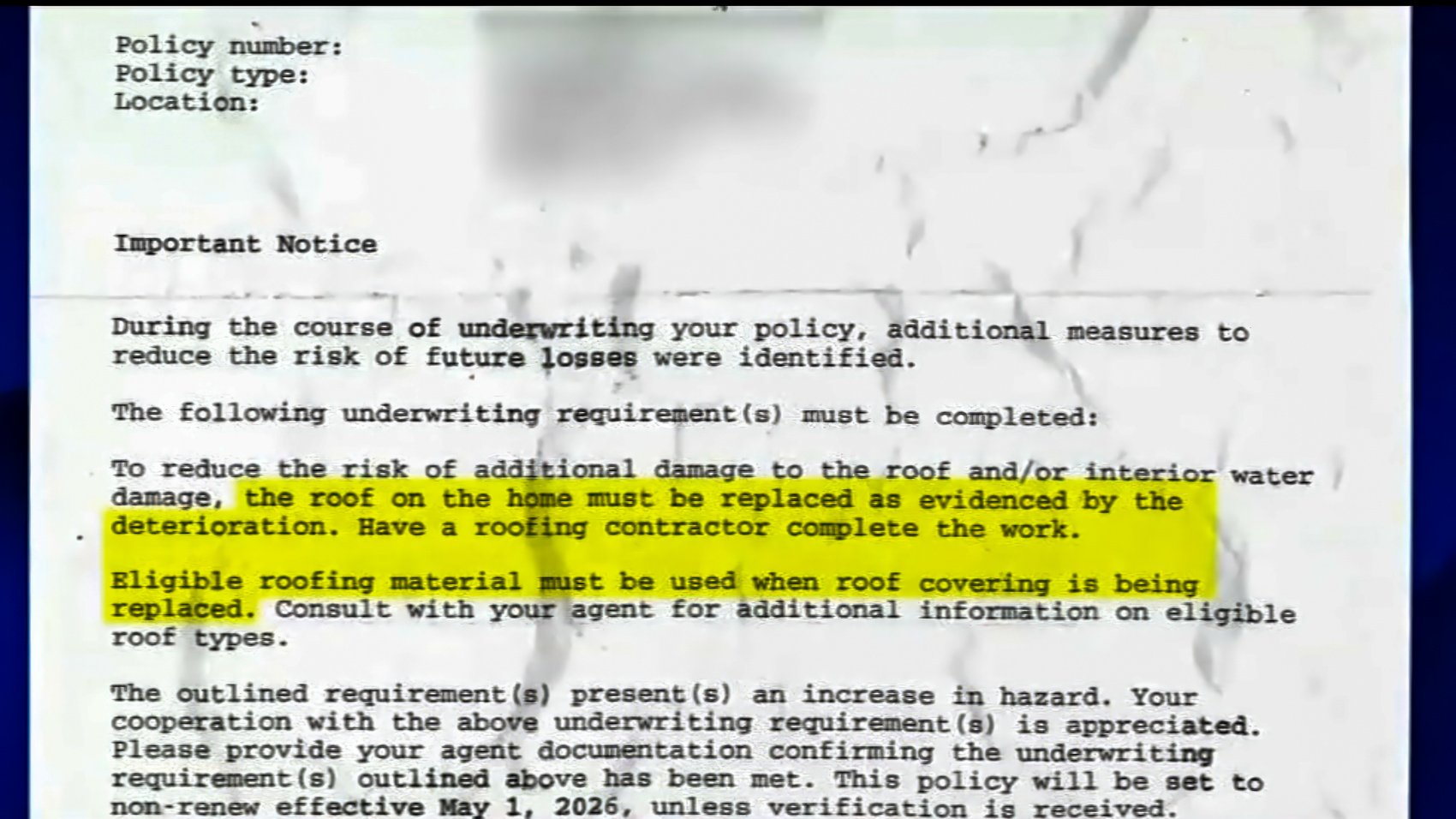
Linda Bennett lived in her Santa Ana home for decades without a single insurance problem. No leaks. No water damage. No complaints. Then a letter arrived from State Farm telling her to replace her roof or lose her coverage. Nobody knocked on her door. Nobody climbed a ladder. She believes a drone did it.
She is almost certainly right. And she is far from alone, as ABC7 reported.
The Sky Is Watching Your House
Insurance companies have been using satellite imagery for years to assess properties. What is newer, faster, and considerably more controversial is the shift toward drone-captured imagery analyzed by AI, a combination that lets insurers inspect thousands of homes quickly, cheaply, and without ever dispatching a human inspector to the property.
The technology is being sold to insurers with a specific promise: use aerial imaging and AI to identify the good risks and eliminate the bad ones at scale. One aerial imaging company active in this space claims it has coverage on 99.6 percent of the country’s population.
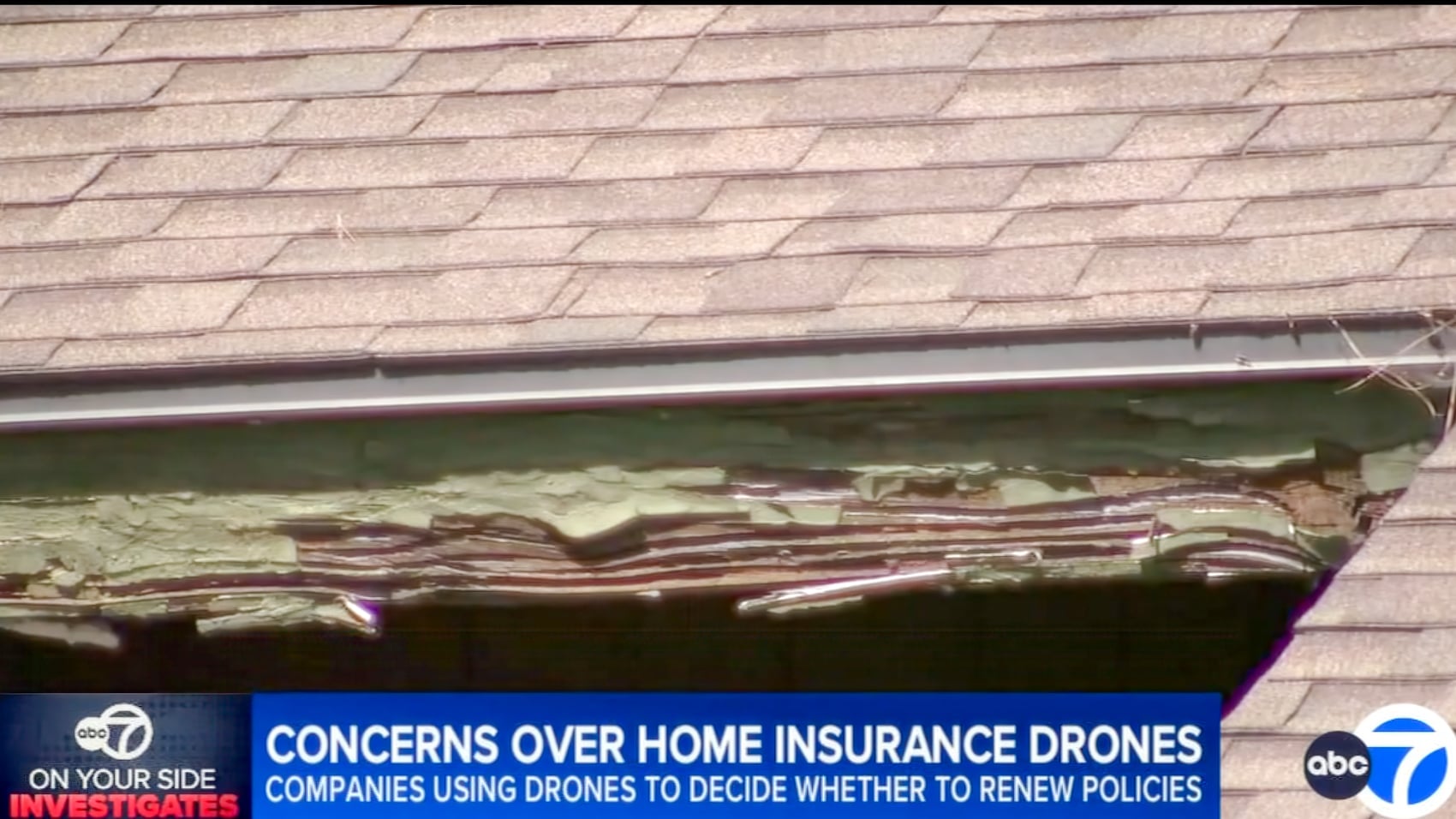
The global aerial imaging market was valued at $3.41 billion in 2024 and is projected to reach $8.24 billion by 2030. This is not a niche experiment. It is a rapidly growing industry built on the business of watching your home from above.
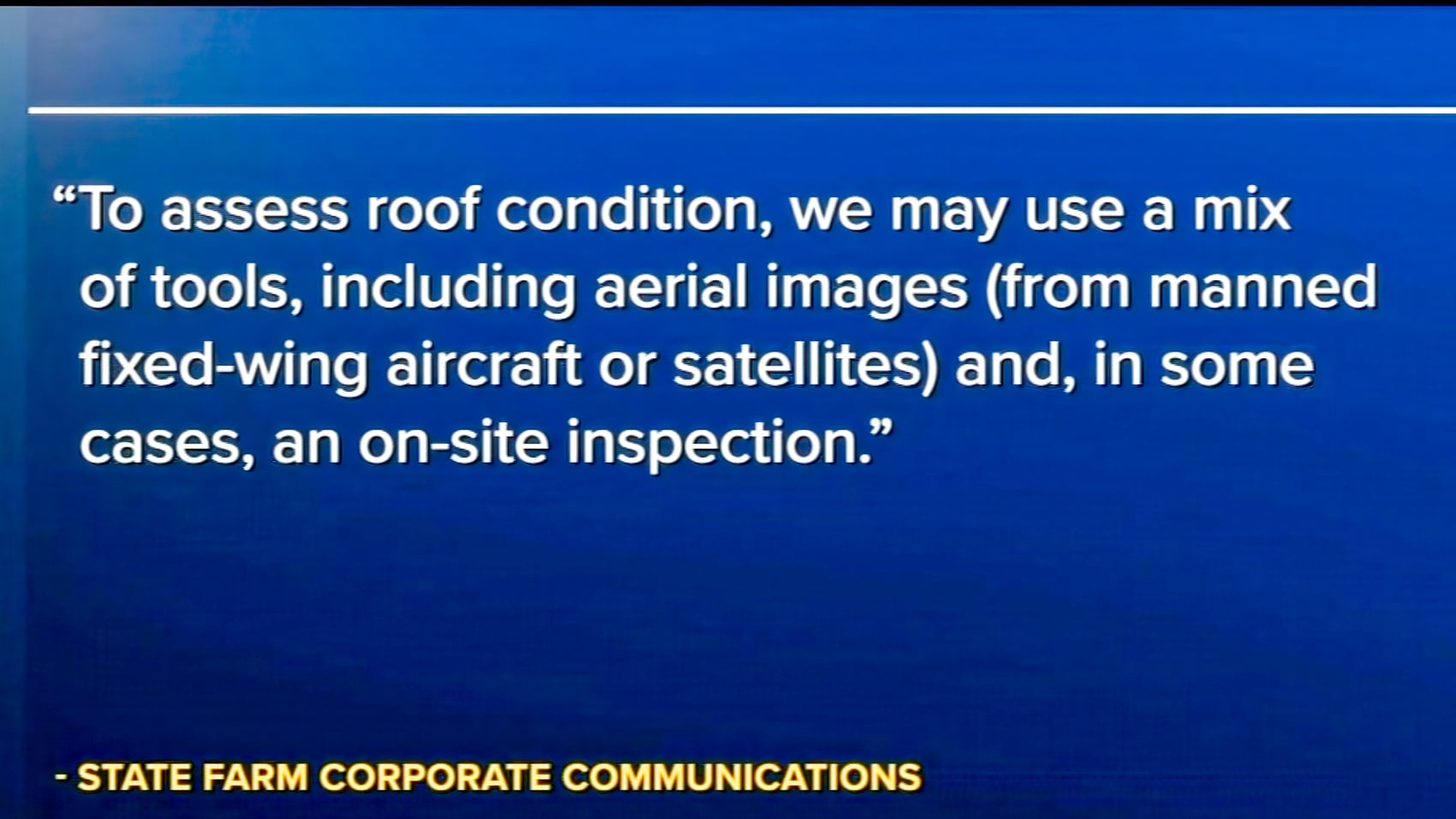
State Farm’s statement on the matter is carefully worded: they “may use a mix of tools, including aerial images from manned fixed-wing aircraft or satellites and, in some cases, an on-site inspection.” They specifically told a Texas regulator they do not use drones directly, and may instead contract third-party aerial imaging companies like CAPE Analytics or Nearmap, which do. The distinction matters legally. It changes nothing practically. The roof gets inspected. You do not find out until the letter arrives.
In Texas, the rate at which insurers chose not to renew homeowner policies nearly doubled between 2020 and 2023. Consumer advocacy groups report a dramatic increase in cases where customers are being dropped based on aerial imagery. In at least one documented case, a Texas insurer used images of the wrong house entirely. State Farm agreed to renew that policy only after the state got involved.
When the AI Gets It Wrong
Amy Bach of United Policyholders has been tracking this trend closely. She puts it plainly: the technology can be flawed. Situations exist where drones and AI reach wrong conclusions about what they see. A grainy aerial image might flag a skylight as damaged roofing material. Solar panels have been misidentified as structural problems. Moss on a neighboring structure ends up in the wrong property’s inspection file.
A homeowner outside Galveston received a non-renewal notice from State Farm in 2023 requiring a full roof replacement. She hired a roofing company, which found the roof needed only a thorough cleaning.
She asked State Farm for the inspection report and the aerial images used to make the determination. State Farm cited its policy: it has the right to survey a property at any time and is not required to share inspection reports. She had no legal recourse to see the evidence used against her.
In most U.S. states, insurers can use aerial images in underwriting decisions with no prior notice required. The legal standard is that anything visible from public airspace carries no reasonable expectation of privacy.
California introduced legislation in 2025 that would require insurers to notify homeowners before using aerial data in coverage decisions. Massachusetts has a proposed bill that would give homeowners the right to see the images, know when they were taken, and have an appeals process. Both are proposed changes to a framework that currently offers homeowners almost nothing.

Bennett faces a May 1 deadline. She has contacted other insurers and found none willing to cover her home. She is now consulting with roofers on a $20,000 project she believes is unnecessary, driven by imagery she has never seen from an inspection she was never told was happening.
If I Were Flying That Mission
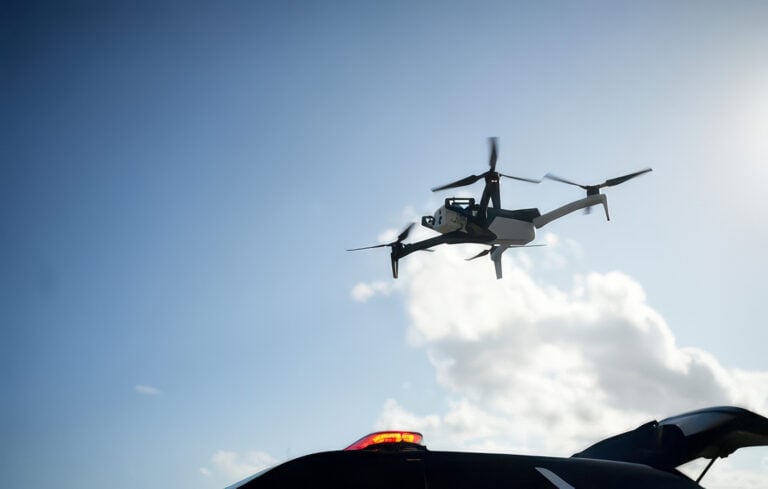
Nobody has confirmed which drone, if any, was used to inspect Linda Bennett’s roof. State Farm insists it does not use drones directly. But if an insurance operator were tasked with this kind of mission and needed to stay low-profile, the aircraft choices write themselves.
The DJI Mini 5 Pro would be my first call. It weighs 249.9 grams, which keeps it under the FAA registration threshold in many jurisdictions and makes it nearly silent at residential inspection altitudes. Its 1-inch CMOS sensor captures 50-megapixel stills with enough resolution to identify individual damaged shingles, moss coverage, or debris accumulation from above a roofline. It fits in a jacket pocket. Nobody on the street gives it a second look.

Photo credit: Rafael Suarez
If the contractor needed the extra reach for fine detail without overflying the property, the Mavic 4 Pro’s 168mm telephoto lens changes the math entirely. That camera shoots 50 megapixels through a fixed f/2.8 aperture on a 1/1.5-inch sensor from a significant standoff distance.

You can document the condition of individual roof tiles from a block away, which means the aircraft never needs to be directly over the property at all. The Mavic 3 Pro carries the same 166mm telephoto equivalent and was doing this job before its successor launched.
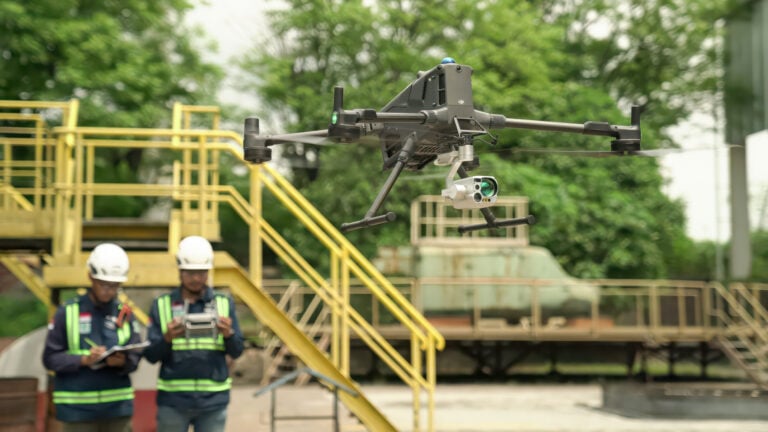
For a corporate inspection contractor flying hundreds of properties a day, none of this is speculative. The tools exist, the resolution is there, and the cost per inspection is a fraction of what a licensed human inspector charges to climb a ladder.
DroneXL’s Take
Here’s the part that nobody is saying out loud: this is not really a drone story. It is an accountability story, and drones are just the most visible symptom.
Insurance companies are using technology to make consequential decisions about people’s homes and coverage at scale, with limited transparency, limited recourse, and AI that demonstrably makes errors.
The drone is the delivery mechanism. The problem is that a homeowner in Santa Ana can lose her insurance based on an aerial image she has never seen, from an inspection she was never told about, with a deadline she cannot negotiate and a $20,000 repair bill for a roof that has never leaked.
Let’s be straight: drones are extraordinary tools. We cover them because we believe in what they can do for emergency response, conservation, agriculture, and public safety. That belief does not require us to ignore cases where the same technology is being deployed in ways that strip ordinary people of information and agency over decisions that directly affect their lives.
If your insurer has the right to fly over your home and use that footage to drop your coverage, you should have the right to see the footage. Full stop. Any legislator not already working on that bill should be.
Linda Bennett is stuck. She has a deadline, a quote for a roof she does not believe she needs, and no meaningful way to fight back. The advice from consumer advocates is to push back, document everything, and get to your state insurance commissioner. That advice is correct. It should not be the only option available.
Photo credit: ABC7
Discover more from DroneXL.co
Subscribe to get the latest posts sent to your email.
Check out our Classic Line of T-Shirts, Polos, Hoodies and more in our new store today!

MAKE YOUR VOICE HEARD
Proposed legislation threatens your ability to use drones for fun, work, and safety. The Drone Advocacy Alliance is fighting to ensure your voice is heard in these critical policy discussions.Join us and tell your elected officials to protect your right to fly.

Get your Part 107 Certificate
Pass the Part 107 test and take to the skies with the Pilot Institute. We have helped thousands of people become airplane and commercial drone pilots. Our courses are designed by industry experts to help you pass FAA tests and achieve your dreams.

Copyright © DroneXL.co 2026. All rights reserved. The content, images, and intellectual property on this website are protected by copyright law. Reproduction or distribution of any material without prior written permission from DroneXL.co is strictly prohibited. For permissions and inquiries, please contact us first. DroneXL.co is a proud partner of the Drone Advocacy Alliance. Be sure to check out DroneXL's sister site, EVXL.co, for all the latest news on electric vehicles.
FTC: DroneXL.co is an Amazon Associate and uses affiliate links that can generate income from qualifying purchases. We do not sell, share, rent out, or spam your email.