Tennessee Guard Buys FPV Strike Drones for Training

Check out the Best Deals on Amazon for DJI Drones today!
The Tennessee Army National Guard is procuring three types of small unmanned aircraft for training and operational support, according Defence Blog and solicitation documents published March 7, 2026.
The request covers six total systems across three platforms, all required to carry Blue UAS certification, the U.S. military’s security clearance program for small drones.
The procurement is tied to the 117th Regiment Regional Training Institute at the Volunteer Training Site in Smyrna, Tennessee, where Guard personnel train on modern battlefield technologies.
churros peThe systems span three very different mission profiles: close-range FPV strike, fixed-wing endurance reconnaissance, and compact indoor intelligence gathering. Together, they paint a clear picture of where the National Guard is heading with small UAS.
The Neros Archer: America’s Answer to the Ukraine FPV Drone
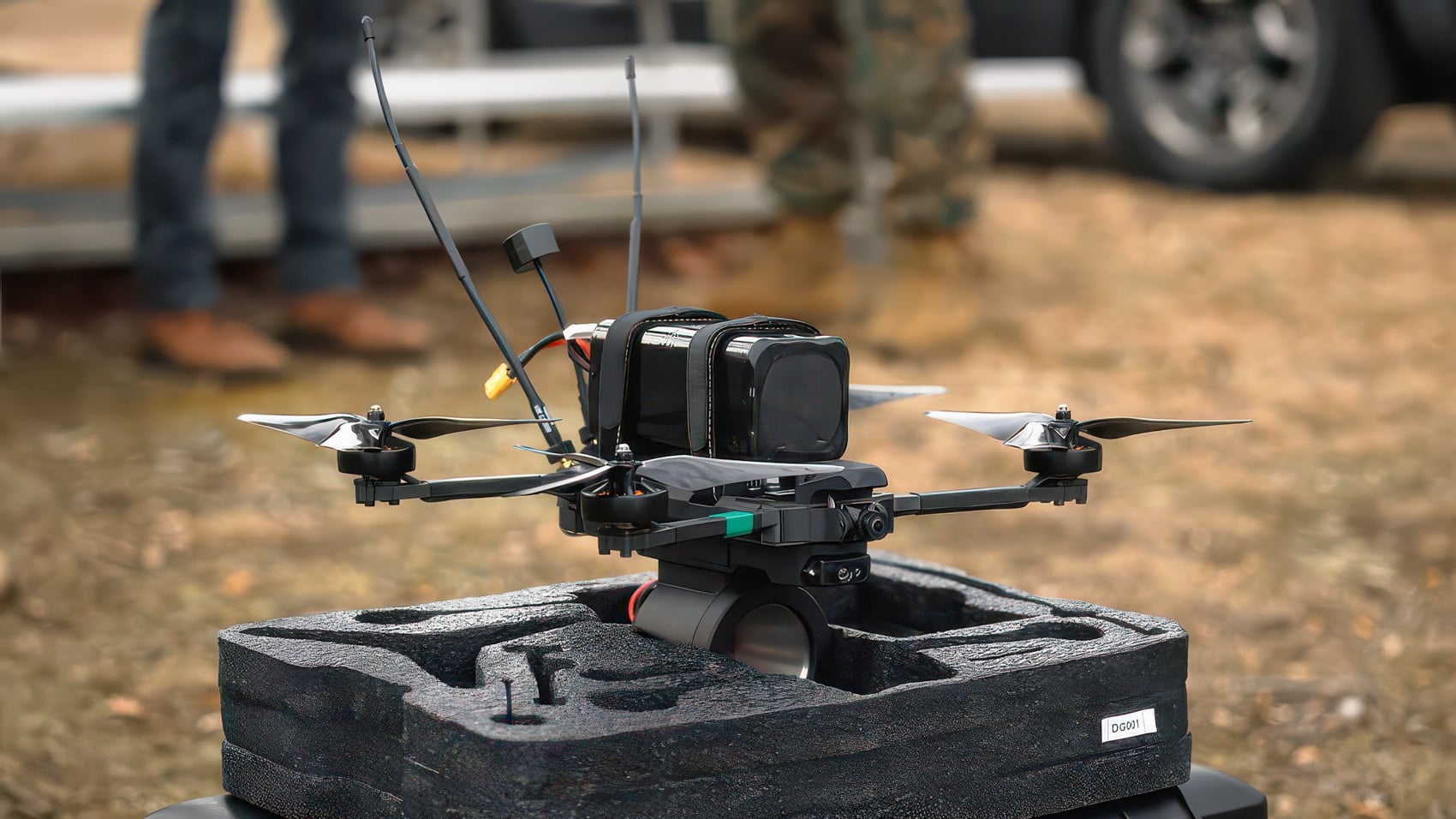
The first solicitation covers systems comparable to the Neros Archer equipped with the Crossbow ground control station, and it is the most consequential of the three requests.
The Archer is the first FPV platform ever approved for the Blue UAS list, and it earned that distinction the hard way. It was battlefield-tested with Ukrainian forces before U.S. military evaluators ever touched it.
The U.S. Army has since selected Neros as one of three primary vendors for its Purpose-Built Attritable Systems program, a platoon-level drone procurement effort. The Marines ran live demonstrations at Twenty-nine Palms. The 3rd Light Armored Reconnaissance Battalion was among the first units to receive it.
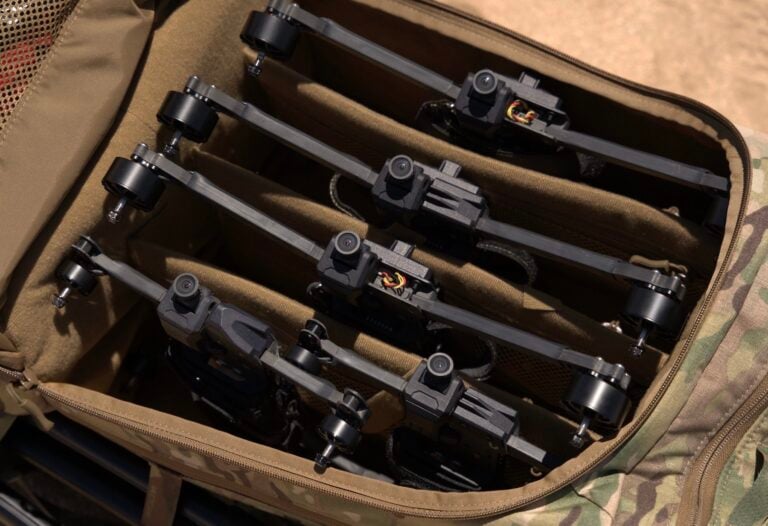
The specs explain the interest. The Archer is a compact 8-inch quadcopter, roughly the size of a dinner plate with propellers extended, weighing between 2 and 3 pounds empty. It carries a 4.5-pound payload, reaches speeds exceeding 90 mph, and has a range of over 12 miles. The Crossbow ground control station uses proprietary multi-band radio systems engineered to maintain control under active electronic jamming. Every component is designed and manufactured in the United States, with no Chinese parts in the supply chain.
The non-strike variant, which is likely what the Tennessee Guard is acquiring for training purposes, supports customizable sensor payloads for surveillance and reconnaissance. The strike variant integrates directly with Kraken Kinetics Terminus anti-armor and anti-personnel payloads. The National Guard will train on the platform. Active duty will use it in combat.
The FlightWave Edge 130 Blue: Two Hours Over Any Terrain
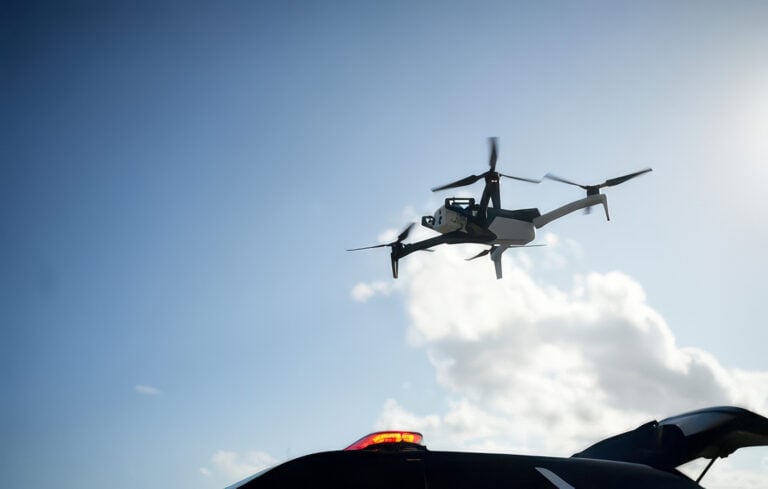
The second solicitation covers systems comparable to the FlightWave Edge 130 Blue, a hybrid VTOL tricopter designed for long-endurance reconnaissance and mapping.
This is a fundamentally different kind of drone. Where the Archer is aggressive and fast, the Edge 130 is patient and precise. It weighs just 2.65 pounds, can be assembled and hand-launched by a single operator in under a minute, and stays airborne for over two hours in forward flight mode, the longest flight time of any Blue UAS approved platform currently on the cleared list.
It operates in winds up to 40 mph and reaches a maximum cruise speed of 65 mph at altitudes up to 12,000 feet.
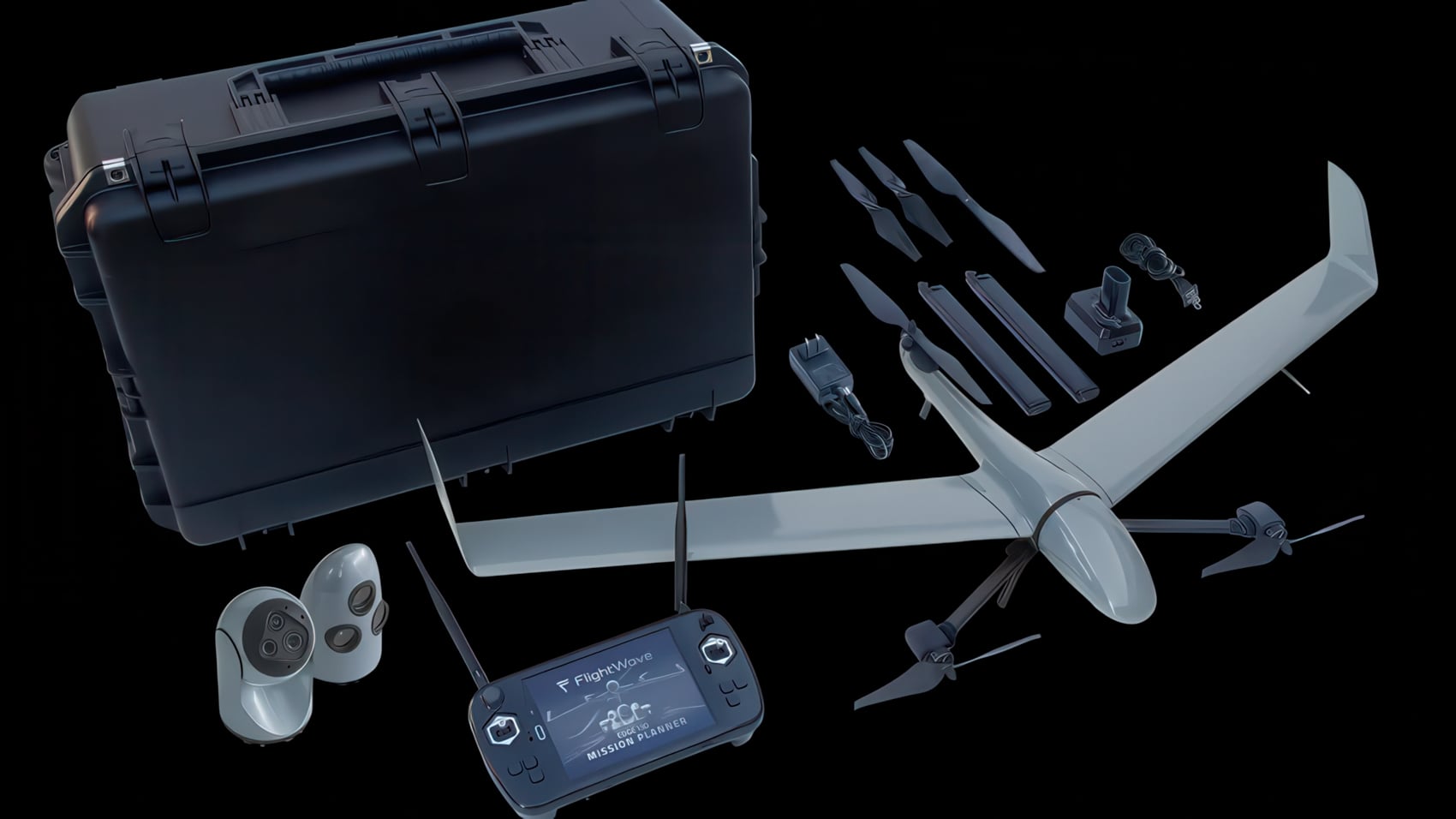
The tilt-pod design is the key engineering trick. The Edge 130 takes off and lands vertically like a multirotor, then transitions to fixed-wing forward flight for efficiency and endurance, then transitions back to hover for landing, all without interrupting the mission or requiring any ground equipment.
Five swappable Blue UAS approved payloads include a dual-channel electro-optical and infrared gimbal with 4K 30fps video and thermal imaging, and a triple-camera 39-megapixel mapping array. Encrypted AES 256 radio communications. One operator. No runway. Two hours of eyes in the sky.
The ModalAI Stinger Vision FPV: Smart Enough to Fly Itself
The third solicitation covers systems comparable to the ModalAI Stinger Vision FPV 3.5, a compact, caged first-person-view drone designed for operations in GPS-denied environments.
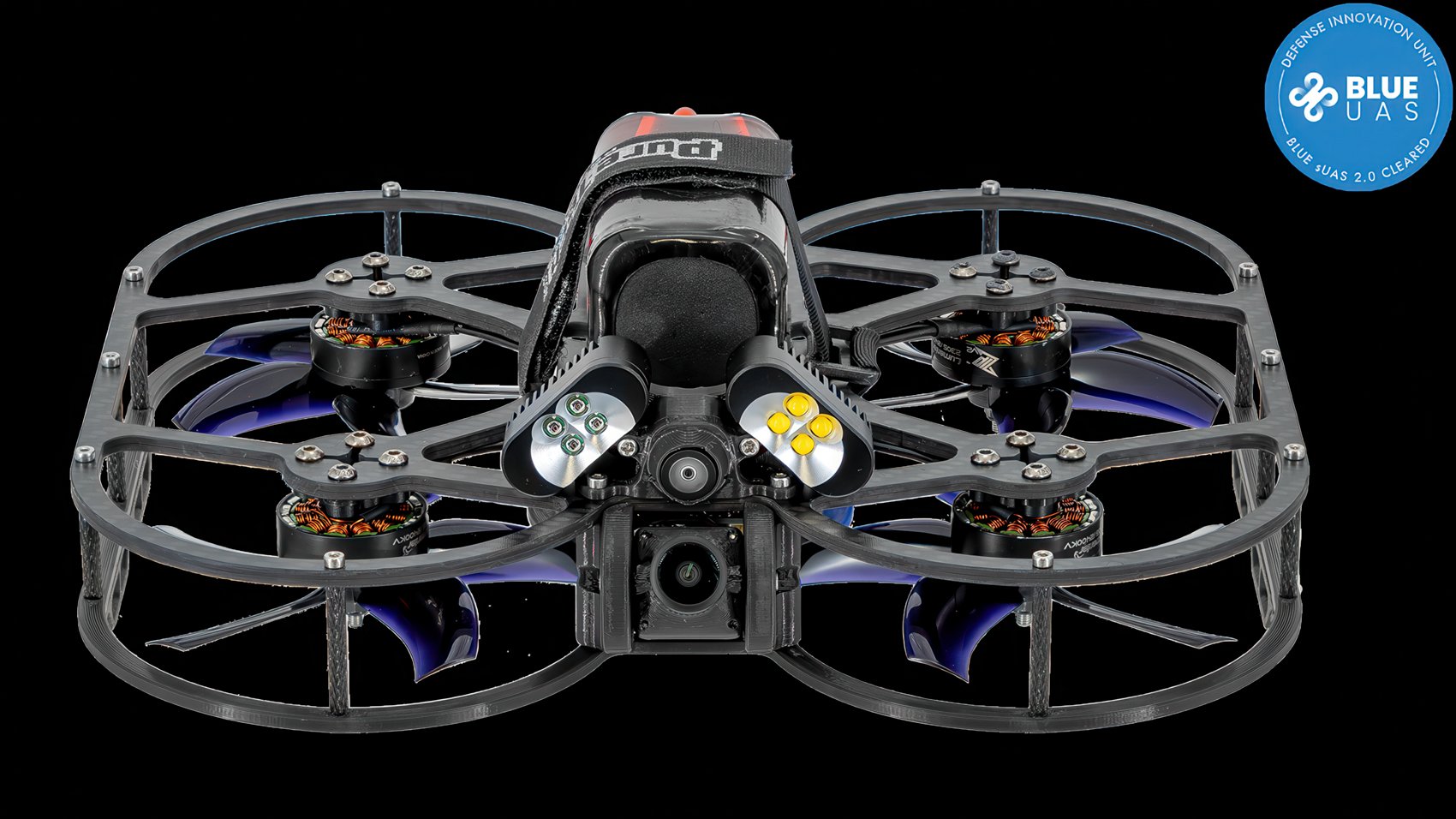
This one is built for indoors. Warehouses, tunnels, buildings. The kind of environments where GPS doesn’t work and a standard FPV drone becomes a liability in the hands of an undertrained operator.
The Stinger Vision solves that with onboard artificial intelligence. The drone weighs about 1.3 pounds, carries dual computer vision cameras, a low-light electro-optical sensor, and a downward-facing thermal camera for night positioning. It flies for 12 minutes and streams encrypted low-latency HD video via ModalAI’s US-built MVX system.
What makes it genuinely interesting for military training is the autonomy stack. The drone can hold position in GPS-denied spaces using computer vision, maintain altitude at night using thermal sensors, and automatically retrace its flight path back to the operator if the video link drops. Less experienced pilots can fly a meaningful mission. ModalAI holds more Blue UAS Framework-listed components than any other drone manufacturer, 16 in total. The Stinger Vision is cleared and ready for government procurement today.
DroneXL’s Take
Here’s what I actually think: this procurement doesn’t get nearly enough attention for what it represents.
The Tennessee Army National Guard is not buying toys. They’re acquiring the same class of platforms that have defined combat in Ukraine since 2022. FPV drones have destroyed tanks. They have changed the calculus of small-unit engagements in ways that military theorists are still catching up with.
The U.S. military watched all of it happen, learned the lesson, and now the National Guard is training on the tools that matter.
The Blue UAS program is the part of this story that doesn’t get told often enough either. The entire reason these three platforms are on the cleared list is because the U.S. government “spent years” realizing that flying DJI drones in sensitive environments was a national security problem.
Blue UAS fixed that. American-made, American-audited, American supply chains. Neros built in El Segundo. FlightWave built in Santa Monica. ModalAI based in San Diego. This is what the domestic drone industry looks like when policy forces the issue.
Two systems per platform. Smyrna, Tennessee. The National Guard is getting ready.
Photo credit: DVIDS
Discover more from DroneXL.co
Subscribe to get the latest posts sent to your email.
Check out our Classic Line of T-Shirts, Polos, Hoodies and more in our new store today!

MAKE YOUR VOICE HEARD
Proposed legislation threatens your ability to use drones for fun, work, and safety. The Drone Advocacy Alliance is fighting to ensure your voice is heard in these critical policy discussions.Join us and tell your elected officials to protect your right to fly.

Get your Part 107 Certificate
Pass the Part 107 test and take to the skies with the Pilot Institute. We have helped thousands of people become airplane and commercial drone pilots. Our courses are designed by industry experts to help you pass FAA tests and achieve your dreams.

Copyright © DroneXL.co 2026. All rights reserved. The content, images, and intellectual property on this website are protected by copyright law. Reproduction or distribution of any material without prior written permission from DroneXL.co is strictly prohibited. For permissions and inquiries, please contact us first. DroneXL.co is a proud partner of the Drone Advocacy Alliance. Be sure to check out DroneXL's sister site, EVXL.co, for all the latest news on electric vehicles.
FTC: DroneXL.co is an Amazon Associate and uses affiliate links that can generate income from qualifying purchases. We do not sell, share, rent out, or spam your email.