The $20,000 Drone Threat: Why Our Billion-Dollar Bases Are No Longer Safe

Check out the Best Deals on Amazon for DJI Drones today!
The Washington Post opinion piece published March 16 by Nolan Peterson — a former U.S. Air Force Special Operations pilot and Atlantic Council nonresident senior fellow — cuts through the usual strategic commentary with something more uncomfortable: a personal account of what drone warfare has actually changed about being a soldier. Peterson describes returning to base after missions in Iraq and Afghanistan, hitting the gym, grabbing food from Subway or Burger King, watching movies in a plywood hut. That baseline assumption — that a base perimeter means safety — is gone. Drones ended it.
- The Argument: Former USAF Special Operations pilot Nolan Peterson writes in the Washington Post that drone warfare has eliminated any meaningful sense of safety behind the front line, describing it as the worst form of warfare he has witnessed.
- The Broader Context: The piece arrives as Iranian Shahed-type drones have hit targets across the Gulf, including RAF Akrotiri in Cyprus, the Baghdad Diplomatic Support Center, and the Fairmont Palm hotel in Dubai — all within the two weeks prior to publication.
- The Warning: Peterson frames Iran’s current drone campaign not as the main event but as a preview of what peer and near-peer adversaries can field at much greater scale.
- The Source: Read Peterson’s full opinion piece at the Washington Post.
A Combat Pilot’s Diagnosis: Drones Killed the Rear Area
Peterson’s central observation is precise and hard to argue with: in every previous war he flew in, the base perimeter was a psychological and physical boundary. You cleared the wire, threat risk dropped sharply. Drone warfare has dissolved that boundary. A $20,000 Shahed-136 flying on GPS coordinates does not distinguish between a front-line position and a dining facility 200 kilometers back. It flies until it hits what it was aimed at, or until something shoots it down first.
That shift matters more than its tactical description suggests. Military effectiveness depends partly on the mental recovery that only comes when personnel believe they are genuinely away from threat. Strip that recovery window and the psychological attrition compounds over time — not through casualties alone but through sustained alertness that has nowhere to go. Peterson, writing from the perspective of someone who has operated in Iraq, Afghanistan, and Ukraine, frames this as the specific cruelty of drone warfare: it never fully stops.
Iran’s Campaign Is the Proof of Concept, Not the Peak Threat
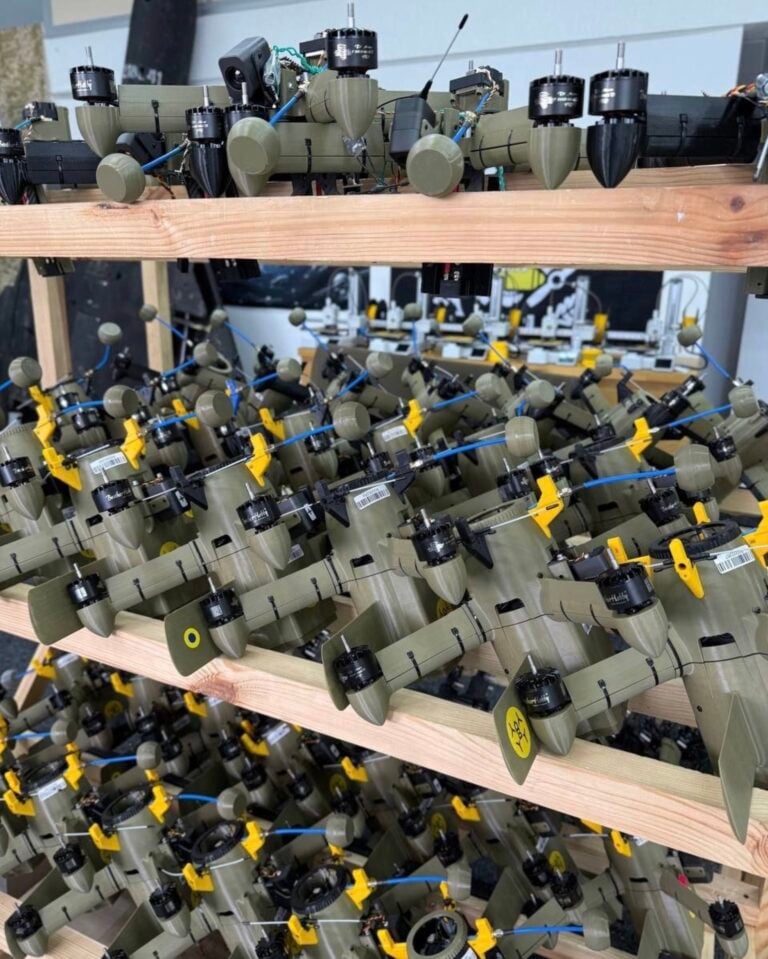
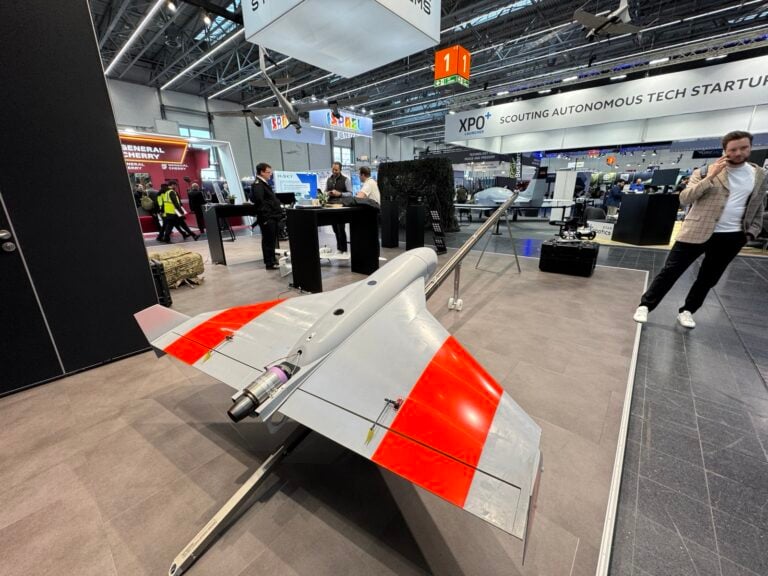
The more sobering section of Peterson’s argument is his framing of Iran as a baseline, not a ceiling. Iran’s Shahed-136 is a simple delta-wing, GPS-guided loitering munition with a rear-mounted piston engine. Its production cost runs between $20,000 and $50,000 per unit domestically. It flies at around 185 km/h, which makes it audible from a significant distance before arrival. It has a range exceeding 2,000 kilometers. And despite all those apparent weaknesses, it has hit a British sovereign base in Cyprus, a U.S. diplomatic facility in Baghdad, the Fairmont Palm hotel in Dubai, and oil infrastructure in Fujairah within the span of two weeks prior to Peterson’s piece.
Peterson’s argument is that if Iran — with comparatively limited industrial capacity — can sustain this tempo of attacks, the implications for what a more capable adversary could do at greater volume are serious. The technology required to build these weapons is not exotic. The manufacturing bottlenecks are surmountable. Any state or non-state actor with the will and some baseline industrial infrastructure can field comparable systems.
The Gulf Evidence Base Is Already Extensive
Peterson is writing against a backdrop of documented strikes that DroneXL has covered in detail since the conflict expanded. When an Iranian drone hit the runway at RAF Akrotiri on March 2, the message was clear: British sovereign territory in the eastern Mediterranean was reachable with the same weapon that has been flying over Ukrainian cities for four years. The UK had intercepted Iranian drones while operating out of Qatar and Iraq the same day. One still got through to Cyprus.
Days later, a drone struck the Baghdad Diplomatic Support Center on March 10. Five of six inbound drones were intercepted. One hit the facility. U.S. officials attributed the attack to Iran-backed militias operating under the “Islamic Resistance in Iraq” umbrella, not a direct Iranian state launch. No casualties — but the facility was struck, personnel took cover, and the compound appeared in international headlines. From an attacker’s perspective, one success in six is not failure. It is proof of concept.
The cost asymmetry driving all of this is documented and painful. Gulf states have been firing Patriot PAC-3 MSE interceptor missiles at over $13.5 million per shot to kill Shaheds that cost a fraction of that to produce. The Pentagon and Gulf states began looking at Ukrainian interceptor drones as Patriot stocks ran low. Ukraine’s $2,500 Sting interceptor became America’s most urgent defense import for exactly that economic reason.
Ukraine Proved the Problem First, Then Partly Solved It
Peterson has covered Ukraine’s war extensively, and his piece draws on that reporting. Ukraine has absorbed more than 57,000 Shahed-type drone launches since Russia’s full-scale invasion began in February 2022, as of early March 2026. The response Kyiv developed — mass-producible low-cost interceptors, layered detection networks, sustained electronic warfare — is now what the Gulf wants. Teams of Ukrainian drone warfare specialists are currently deployed to Qatar, Saudi Arabia, the UAE, and Jordan, coordinating air defense operations against the same Iranian weapon system they have been intercepting over their own cities for years.
The U.S. has also fielded its own answer on the offensive side. LUCAS, SpektreWorks’ reverse-engineered version of the Shahed-136, was deployed during Operation Epic Fury at $35,000 per unit. It adds a networked coordination layer the Iranian original lacks. But as Peterson’s piece implicitly acknowledges, offensive capability doesn’t close the gap on base-level defense.
The UK’s 12th Regiment Deployment Shows Who Has Been Paying Attention
Britain’s response to the Shahed threat has moved faster than most NATO members. The UK’s 12th Regiment Royal Artillery deployed to the Middle East in early March, bringing the detect-warn-target kill chain its personnel built alongside Ukrainian forces. That deployment confirms that lessons from Ukraine’s four-year Shahed experience are traveling — but the speed of institutional adoption still lags behind the speed of threat proliferation.
Peterson’s piece names Iran as the current actor but explicitly warns the audience not to anchor on Iran as the representative scale of the problem. That is the sentence worth reading twice.
DroneXL’s Take
Peterson’s piece matters because he is not an analyst writing from a think tank. He is a pilot writing from memory. The detail about hitting the gym and grabbing food from Subway or Burger King after a mission, then heading to a plywood hut to watch a movie, isn’t color — it’s the evidence base for his argument. That mental and physical off-switch, the one you flip when you cross back through the wire, is what drone warfare has disabled. I have been covering this pattern since Russia began mass Shahed deployments in late 2022, and Peterson names exactly what makes this different from artillery or air strikes: a drone can fly slowly, at low altitude, toward a dining facility at 11pm, triggered by a GPS coordinate that was programmed weeks ago. There is no safe distance from that threat, only better or worse defenses against it.
His warning about Iran being a warmup deserves to land harder than it probably will. Every institution that has encountered the Shahed threat — Ukraine, the UK, Gulf states, the Pentagon — has initially underestimated the volume at which it can be sustained and the breadth of targets it can reach. Each has then scrambled to field defenses they should have built earlier. The pattern has repeated across every theater. Peterson is saying, clearly, that the next actor to deploy this class of weapon will not be Iran-scale. And he’s right.
My prediction: within six months, at least one NATO member on Europe’s eastern flank will publicly acknowledge that current base-level air defense architecture cannot absorb a sustained Shahed-equivalent campaign from a peer adversary. That acknowledgment will accelerate procurement of low-cost interceptors, laser systems, and electronic warfare layers that have been in planning cycles for years. The political cover to move fast will come from articles exactly like Peterson’s — because a combat pilot saying “this is the worst” is harder to dismiss than a budget memo.
Editorial Note: AI tools were used to assist with research and archive retrieval for this article. All reporting, analysis, and editorial perspectives are by Haye Kesteloo.
Discover more from DroneXL.co
Subscribe to get the latest posts sent to your email.
Check out our Classic Line of T-Shirts, Polos, Hoodies and more in our new store today!

MAKE YOUR VOICE HEARD
Proposed legislation threatens your ability to use drones for fun, work, and safety. The Drone Advocacy Alliance is fighting to ensure your voice is heard in these critical policy discussions.Join us and tell your elected officials to protect your right to fly.

Get your Part 107 Certificate
Pass the Part 107 test and take to the skies with the Pilot Institute. We have helped thousands of people become airplane and commercial drone pilots. Our courses are designed by industry experts to help you pass FAA tests and achieve your dreams.

Copyright © DroneXL.co 2026. All rights reserved. The content, images, and intellectual property on this website are protected by copyright law. Reproduction or distribution of any material without prior written permission from DroneXL.co is strictly prohibited. For permissions and inquiries, please contact us first. DroneXL.co is a proud partner of the Drone Advocacy Alliance. Be sure to check out DroneXL's sister site, EVXL.co, for all the latest news on electric vehicles.
FTC: DroneXL.co is an Amazon Associate and uses affiliate links that can generate income from qualifying purchases. We do not sell, share, rent out, or spam your email.