America Keeps Buying Expensive Drones. China Keeps Building Millions of Cheap Ones.

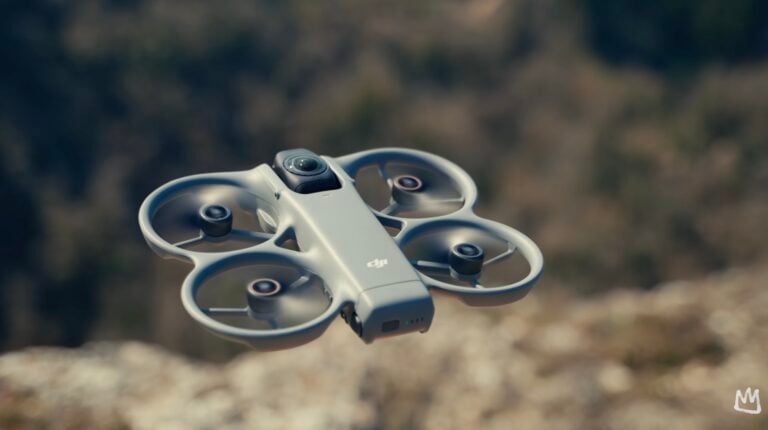
Check out the Best Deals on Amazon for DJI Drones today!
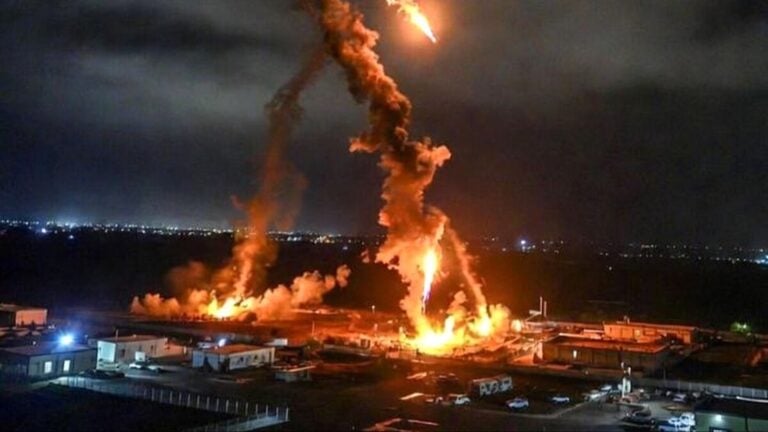
A Substack analysis by Kate McKenna has been circulating hard in defense circles this week, and the numbers inside deserve a wider audience. Eleven MQ-9 Reapers downed in under two weeks. $330 million gone, lost to Iranian surface-to-air missiles and electronic warfare that exploited weaknesses the US military has known about for years. China is producing more than four million drones annually while the US hasn’t cleared one million. That gap is the story.
The MQ-9 Reaper Is Expensive to Lose and Easy to Kill
The MQ-9 Reaper’s core vulnerabilities aren’t classified. Cruise speed between 170 and 200 knots. A large radar cross-section. SATCOM latency around 2.8 seconds. Loiter orbits that are entirely predictable. Iranian SAMs and electronic warfare systems exploited every one of those weaknesses, and 11 aircraft — $330 million worth — were gone in under two weeks during Operation Epic Fury.
McKenna calls it “Operation Epic Fumble” to drive home the procurement failure. The official name isn’t funny. The losses are. General Atomics has spent years arguing that “no pilot was at risk” as a defense against criticism of the platform. That framing doesn’t hold when the hardware bill hits a third of a billion dollars in a single operation.
This follows a pattern DroneXL has covered before. US and Israeli drones were already taking hits from Iran-backed groups in 2024, with the same electronic warfare and SAM threats identified then. A separate MQ-9 was lost into the Yellow Sea off South Korea in November 2025. The Reaper’s operational risk profile has been public knowledge for years. Iran confirmed it at scale.
Replicator Delivered Hundreds, Not Thousands
The Pentagon’s Replicator program was supposed to be America’s answer to Ukraine’s attritable drone doctrine: thousands of low-cost, autonomous systems fielded by August 2025. The Congressional Research Service’s report on Replicator (CRS Report IF12611, revised January 21, 2026) bluntly states the program delivered exactly that: hundreds, not thousands. The bulk of those were Switchblade 600 loitering munitions at more than $100,000 per unit — the opposite of cheap and disposable.
DroneXL has documented why $400 Ukrainian FPVs have been outperforming $100,000 American Switchblades in actual combat. The Royal United Services Institute (RUSI) is clear on this: Ukrainian forces lose roughly 10,000 drones per month, mostly to electronic warfare, and have responded by building $400 to $700 FPVs in basement workshops. America responded by shipping more Switchblades.
Replicator 2’s first real contract landed in January 2026 — two Fortem DroneHunter F700 net-shooting systems. DroneXL covered the Pentagon’s counter-drone marketplace pivot at the time, and Fortem also secured an $18 million Army counter-drone deal in February 2026. Counter-drone work is real and necessary. It is not the offensive attritable swarm capability Replicator was meant to build.
Red Cat and Teal: When American Defense Innovation Trips Over Itself
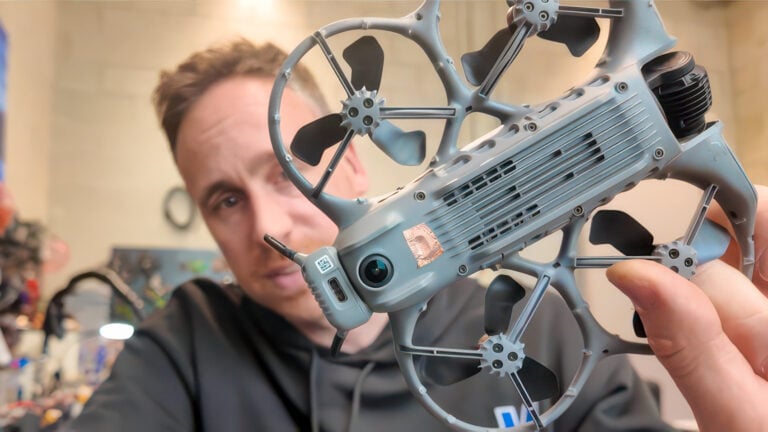
The Teal Black Widow was sold as America’s secure, EW-hardened answer to Chinese Mavic-class drones — $45,000, battle-tested in Ukraine, NDAA-compliant. The base platform is the Teal 2, designed by George Matus when he founded the company at age 17 in 2014. Red Cat Holdings bought Teal and its IP for $10 million in 2021. Matus stayed on, helped win the Army’s Short Range Reconnaissance (SRR) contract, then left in late 2024 and founded Vector Defense. Red Cat sued him on August 4, 2025 (US District Court, District of Utah, Case 2:25-cv-00646) for allegedly taking the technology he built. A federal judge denied Red Cat’s request for a preliminary injunction on November 4, 2025.
DroneXL covered Red Cat’s 646% revenue growth — $9.6 million in Q3 2025 against a $16 million net loss. That is the story of a company scaling fast on government contracts while burning cash. Ukrainian workshops are 3D-printing FPVs for $500 that survive Russian jamming. Monroe-Anderson built the first Neros drones in his parents’ garage and eventually raised $121 million for an FPV defense business. The innovation exists. Acquisition strategies, litigation, and cost-plus structure keep getting in its way.
Insitu’s Integrator Actually Listened to Ukraine
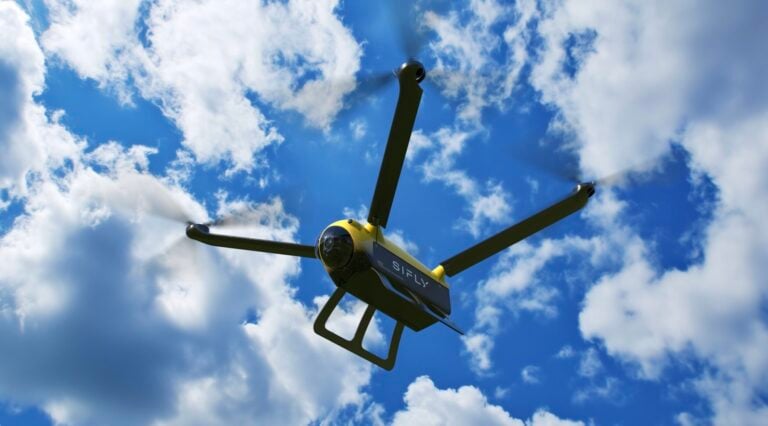
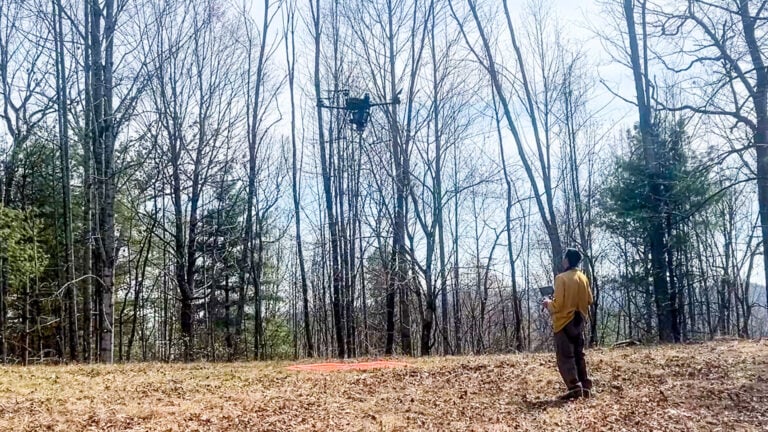
One American program deserves credit. Insitu donated 15 or more ScanEagle systems to Ukrainian forces, then watched what Russian jamming and GNSS spoofing did to them in the field. Rather than filing those lessons away, the company rushed multi-GNSS kits and upgraded datalinks in real time, then baked all of it into the Integrator family. The result is a 27.5-hour endurance platform with P-LEO SATCOM, jam-resistant datalinks, and full GNSS-denied navigation capability.
The FLARES VTOL kit, released in December 2025, lets the system launch and recover from a 10×10 metre patch of ship deck or forest clearing in 30-knot winds and heavy seas. No runway. No Skyhook recovery system. Per Insitu’s December 2025 press release, CEO Diane Rose said: “This enhanced resilience, paired with battle-proven Integrator’s long endurance, enables our customers to fly expanded mission sets with confidence anytime, anywhere, even in the most contested environments.”
That is what actually listening to a war looks like.
China’s Production Numbers Are the Real Story
China produces more than four million drones per year. The US hasn’t cleared one million. One MQ-9 Reaper costs between $28 million (per Congressional Research Service sourcing) and $34 million for more recent variants. China’s Wing Loong-2 exports at a fraction of that, and Beijing has sold the platform to operators across eight or more countries. China brought the Wing Loong X to the Singapore Airshow in February 2026 — a direct signal that it is actively marketing capable ISR and strike drones to buyers the US won’t or can’t supply with Reaper exports.
The PLA demonstrated a single soldier controlling 200 fixed-wing drones in a live test earlier this year, a story DroneXL covered in January 2026. Containerized launchers. Loyal-wingman doctrine already fielded. That test happened while the US was still tallying how many Switchblades Replicator had shipped.
Red Cat CEO Jeff Thompson confirmed the production gap directly. In a March 2026 appearance on Fox Business’s Mornings with Maria, he said: “China and Russia making about 4 million… We have to up those numbers.” That is an on-the-record admission from a US defense drone manufacturer that its primary rival is lapping the field on volume.
McKenna calculates the 11 Reaper losses as roughly 10% of the active operational fleet, depending on which deployment baseline you use — whether the exact figure is 4% of the full inventory or closer to 10% of aircraft on active rotation, losing 11 aircraft in under two weeks to a non-peer adversary is the kind of attrition rate that ends procurement arguments fast. The Defense Innovation Unit’s solicitation for containerized drone launchers is a step in the right direction. A solicitation is not a fielded capability.
DroneXL’s Take
The uncomfortable truth in McKenna’s piece is that none of this was unforeseeable. The Reaper’s vulnerabilities were documented. RUSI confirmed the Switchblade’s EW problem years ago. Replicator’s scope was quietly trimmed before the deadline. Eleven aircraft and $330 million later, we are still debating whether the US needs a sub-$5,000 attritable drone — a question Ukrainian garage builders answered in 2022. Until fixed-price procurement replaces cost-plus contracts, and until the Pentagon treats Ukraine as a production partner rather than a photo opportunity, expect more of the same. The architects of the Blue UAS framework warned in December 2025 that a drone attack on US soil was coming and that the mass-production gap was the core vulnerability. Read that warning again alongside the Reaper loss numbers, and ask yourself what the hearings Congress holds this quarter are actually going to produce.
Source: America Bought New Clothes, But China Is Mass-Producing the Uniforms That Will Bury Us by Kate McKenna via Substack.
Editorial Note: AI tools were used to assist with research and archive retrieval for this article. All reporting, analysis, and editorial perspectives are by Haye Kesteloo.
Discover more from DroneXL.co
Subscribe to get the latest posts sent to your email.
Check out our Classic Line of T-Shirts, Polos, Hoodies and more in our new store today!

MAKE YOUR VOICE HEARD
Proposed legislation threatens your ability to use drones for fun, work, and safety. The Drone Advocacy Alliance is fighting to ensure your voice is heard in these critical policy discussions.Join us and tell your elected officials to protect your right to fly.

Get your Part 107 Certificate
Pass the Part 107 test and take to the skies with the Pilot Institute. We have helped thousands of people become airplane and commercial drone pilots. Our courses are designed by industry experts to help you pass FAA tests and achieve your dreams.

Copyright © DroneXL.co 2026. All rights reserved. The content, images, and intellectual property on this website are protected by copyright law. Reproduction or distribution of any material without prior written permission from DroneXL.co is strictly prohibited. For permissions and inquiries, please contact us first. DroneXL.co is a proud partner of the Drone Advocacy Alliance. Be sure to check out DroneXL's sister site, EVXL.co, for all the latest news on electric vehicles.
FTC: DroneXL.co is an Amazon Associate and uses affiliate links that can generate income from qualifying purchases. We do not sell, share, rent out, or spam your email.