South Bend PD Taps Flock Safety for No-Cost Drone as First Responder Pilot

Check out the Best Deals on Amazon for DJI Drones today!
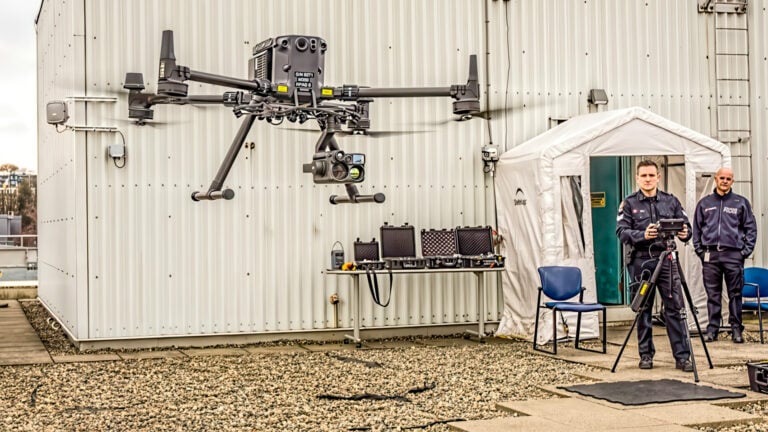
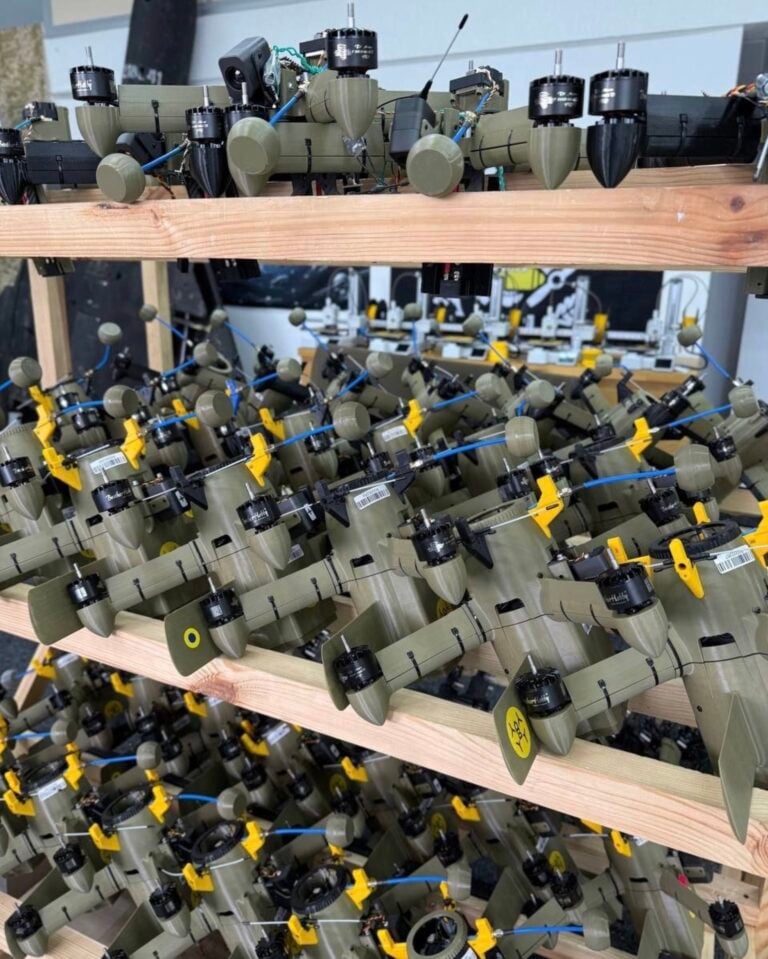
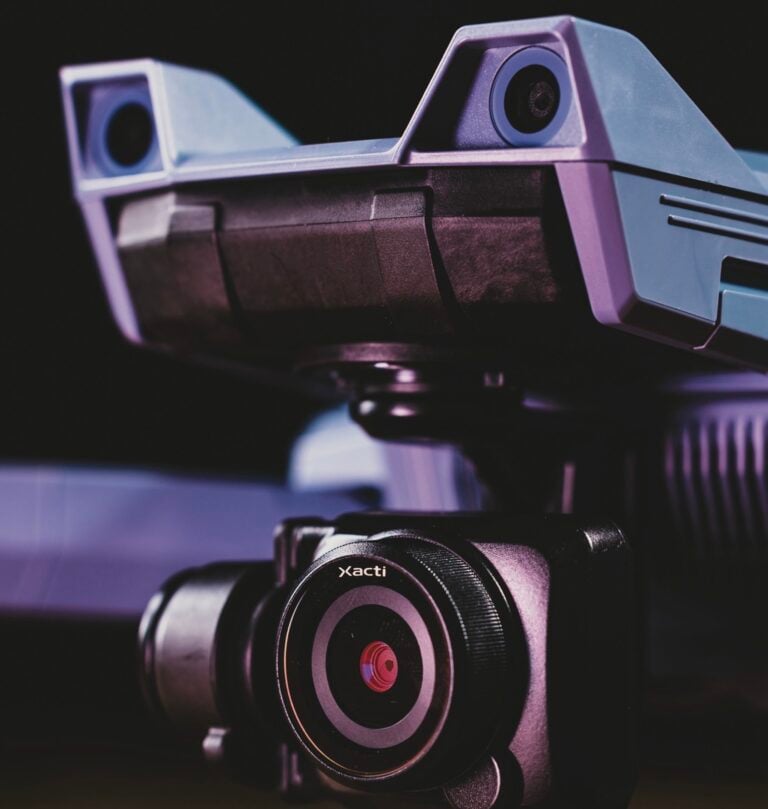
The South Bend Police Department in Indiana has launched a Drone as First Responder (DFR) program through a one-year, no-cost partnership with Flock Safety, according to local reporting on the program. Eight FAA-certified operators inside the department’s Real Time Crime Center manage the program. The drones carry zoom optics, thermal imaging, and night vision, reach speeds above 50 mph, and carry roughly 40 minutes of battery per flight. If South Bend decides to continue after the pilot year, the annual cost runs approximately $300,000.
What the South Bend DFR Program Does
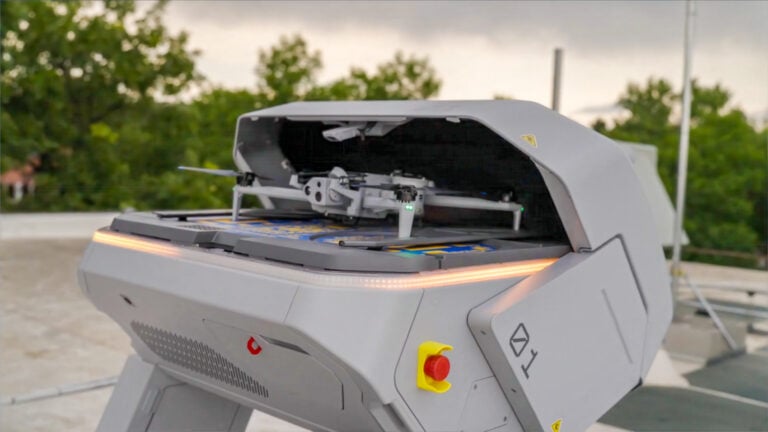
South Bend’s DFR setup follows a model now well-established across the country: a drone launches from a fixed location the moment a priority call hits dispatch, gets aerial eyes on scene before any patrol unit arrives, and feeds live video to operators in the Real Time Crime Center. The drones handle a range of call types, including vehicle crashes and fires, deploying thermal imaging when smoke or darkness would otherwise blind a ground unit. Video is retained. Audio is not recorded.
Eight trained operators manage the program from inside the RTCC, which puts South Bend’s staffing in line with how similar programs run elsewhere. Fairfax County, Virginia uses the same RTCC-based control model and reached 71 of its first 100 DFR scenes before any officer did, with an average response time of 83 seconds. South Bend’s program is younger, but the architecture is the same.
Flock Safety Brings Its No-Cost Entry Model to Indiana
Flock Safety has used free pilot agreements to land DFR contracts across multiple departments. In Greenville, Mississippi, the company integrated drones into its broader Safe City platform, pairing the aircraft with license plate readers, audio detection, and high-definition PTZ cameras managed from a single interface. That Greenville deal shows how an initial drone contract can expand into a full-stack public safety relationship with a single vendor.
That progression is exactly what South Bend’s decision-makers will be evaluating at the end of the pilot year. The $300,000 annual price tag that follows is the real question the department has to answer. For context, Warren, Michigan framed its own DFR cost case around a simple comparison: one fire truck costs over $1 million. A drone that reduces how often that truck rolls changes the math on the investment fast.
Weather Has Already Tested the Program
South Bend officials acknowledged that weather conditions posed problems during early operations. Indiana winters bring wind, precipitation, and temperature swings that ground or limit aircraft, and that operational ceiling is a real constraint for any DFR program in the Midwest. Warren, Michigan faces the same seasonal challenge — lake-effect snow, genuine wind, and temperatures that push drone battery performance to its limits. The question South Bend has to answer is whether the flight hours logged in favorable conditions demonstrate enough value to justify continued investment through the full year.
The no-cost structure insulates the department from financial risk during that evaluation period. If weather-affected data still shows meaningful response time improvements and call resolution benefits, the case for funding the $300,000 annual contract gets easier to make to the city.
DFR Adoption Is Moving Faster Than Most Cities Expected
South Bend joins a growing list of cities that started with a free pilot and are now weighing a multi-year commitment. Kansas City built eight drone nests across the city and is targeting a 20% reduction in calls requiring a physical officer response. Free pilots reduce the political friction of spending public money on technology a department hasn’t proven yet. By the time the pilot ends, the proof exists and the operator team is already trained.
Skydio’s DFR Command platform logged 10 million calls for service in early 2026, a milestone that tells you something about the pace of adoption nationally. South Bend is not an early adopter at this point. It is a mid-wave department learning from a body of operational data that already exists.
DroneXL’s Take
South Bend’s program is straightforward, and that’s actually its most interesting quality. No exotic hardware announcement. No press conference with a mayor holding a drone. A department looked at the Flock Safety offer, said yes to a free year, built an eight-person operator team inside its RTCC, and started flying.
The weather problem is worth watching. South Bend sits in a stretch of Indiana that gets lake-effect snow off Lake Michigan, real wind, and genuine winter. Covering drone launches in Michiana over the past year, I’ve noticed how quickly departments in northern states revise their operational assumptions once they hit their first ice-and-wind stretch. Thermal imaging helps at a crash scene at 2 a.m. It doesn’t help if the aircraft can’t launch.
The $300,000 annual figure is the number that determines everything. That’s the contract Flock Safety wants. South Bend’s decision-makers will spend the next several months building a dataset to either justify it or walk away. The no-cost structure removes the political friction of spending public money on unproven technology. By the time the pilot ends, the technology won’t be unproven anymore. In my experience covering DFR programs since the early Chula Vista deployments, departments that staff and train a full RTCC operator team before the bill comes due almost never dismantle what they’ve built.
South Bend will commit to a full Flock Safety DFR contract before the end of 2026. The operator investment alone makes walking away expensive in ways that don’t show up in the budget line.
DroneXL uses automated tools to support research and source retrieval. All reporting and editorial perspectives are by Haye Kesteloo.
Discover more from DroneXL.co
Subscribe to get the latest posts sent to your email.
Check out our Classic Line of T-Shirts, Polos, Hoodies and more in our new store today!

MAKE YOUR VOICE HEARD
Proposed legislation threatens your ability to use drones for fun, work, and safety. The Drone Advocacy Alliance is fighting to ensure your voice is heard in these critical policy discussions.Join us and tell your elected officials to protect your right to fly.

Get your Part 107 Certificate
Pass the Part 107 test and take to the skies with the Pilot Institute. We have helped thousands of people become airplane and commercial drone pilots. Our courses are designed by industry experts to help you pass FAA tests and achieve your dreams.

Copyright © DroneXL.co 2026. All rights reserved. The content, images, and intellectual property on this website are protected by copyright law. Reproduction or distribution of any material without prior written permission from DroneXL.co is strictly prohibited. For permissions and inquiries, please contact us first. DroneXL.co is a proud partner of the Drone Advocacy Alliance. Be sure to check out DroneXL's sister site, EVXL.co, for all the latest news on electric vehicles.
FTC: DroneXL.co is an Amazon Associate and uses affiliate links that can generate income from qualifying purchases. We do not sell, share, rent out, or spam your email.