Switzerland Is Testing Drones Where They’re Hardest to Fly
Check out the Best Deals on Amazon for DJI Drones today!
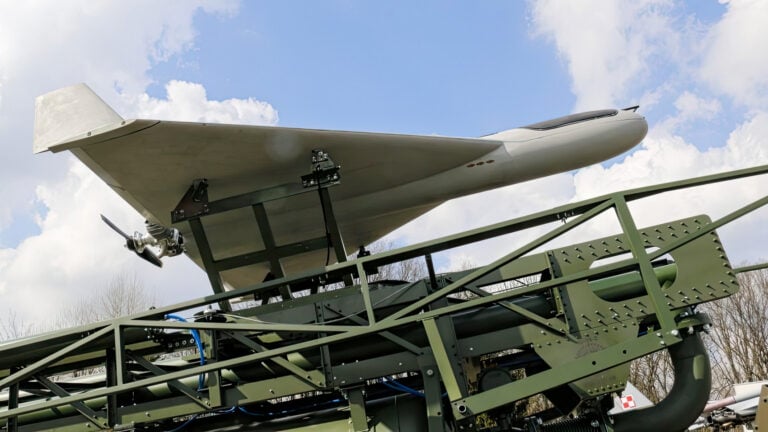
Switzerland’s government-backed Taskforce Drones is preparing its next round of UAS technical trials for autumn 2026, building on a December 2025 campaign that pushed attack drones and counter-drone systems through some of the most challenging terrain in Europe, as JANES reports.
The program is overseen by the Federal Department of Defence, Civil Protection and Sport and coordinated through Armasuisse, the national armaments procurement agency.
Kai Holtmann, managing director of Taskforce Drones, confirmed the autumn timeline to Janes on March 2: this will be the next standardized test campaign within the Taskforce. That’s a concise sentence doing a lot of work.
What it means in practice is that Switzerland is running a repeating, structured evaluation cycle for emerging drone technologies, with the results feeding directly into procurement decisions and European defense planning.
What the December 2025 Trials Actually Found
The December testing took place at the Hinterrhein shooting range in the canton of Graubünden, a site chosen specifically because it makes life difficult. The terrain is a combination of narrow valleys, high-altitude passes, and complex mountain backgrounds that stress every sensor system brought into it.
Holtmann was direct about what that environment did to the systems being tested. The specific problem was target recognition. Camera-based automated flight systems that perform reliably over flat or forested terrain struggled to distinguish targets against patchy snow and mountain backgrounds.
A drone flying autonomously toward a target it needs to classify optically has a harder job when the background is a mix of white snow, grey rock, and grey-white sky than when it’s green field against blue sky.
That’s not a minor calibration issue. It’s a fundamental challenge for AI-based target recognition that European militaries need their systems to solve before those systems go near an alpine or northern European battlefield.
The Hinterrhein site offered exactly the stress conditions that reveal those weaknesses. That’s the point of testing there rather than in a controlled flat-terrain environment.
The Three Companies That Showed Up
Three companies participated in the December trials: Auterion, Counter Drone Defence Systems, and ENS Dynamics. Each brings a meaningfully different approach to the problem.
Auterion is a Swiss-American software company founded in Zurich in 2017 by Dr. Lorenz Meier, the creator of the PX4 autopilot standard and the MAVLink communication protocol. Its core product is AuterionOS, a hardware-agnostic operating system for autonomous drone fleets that runs on its Skynode flight controller and mission computer hardware. What Auterion offers isn’t a drone.
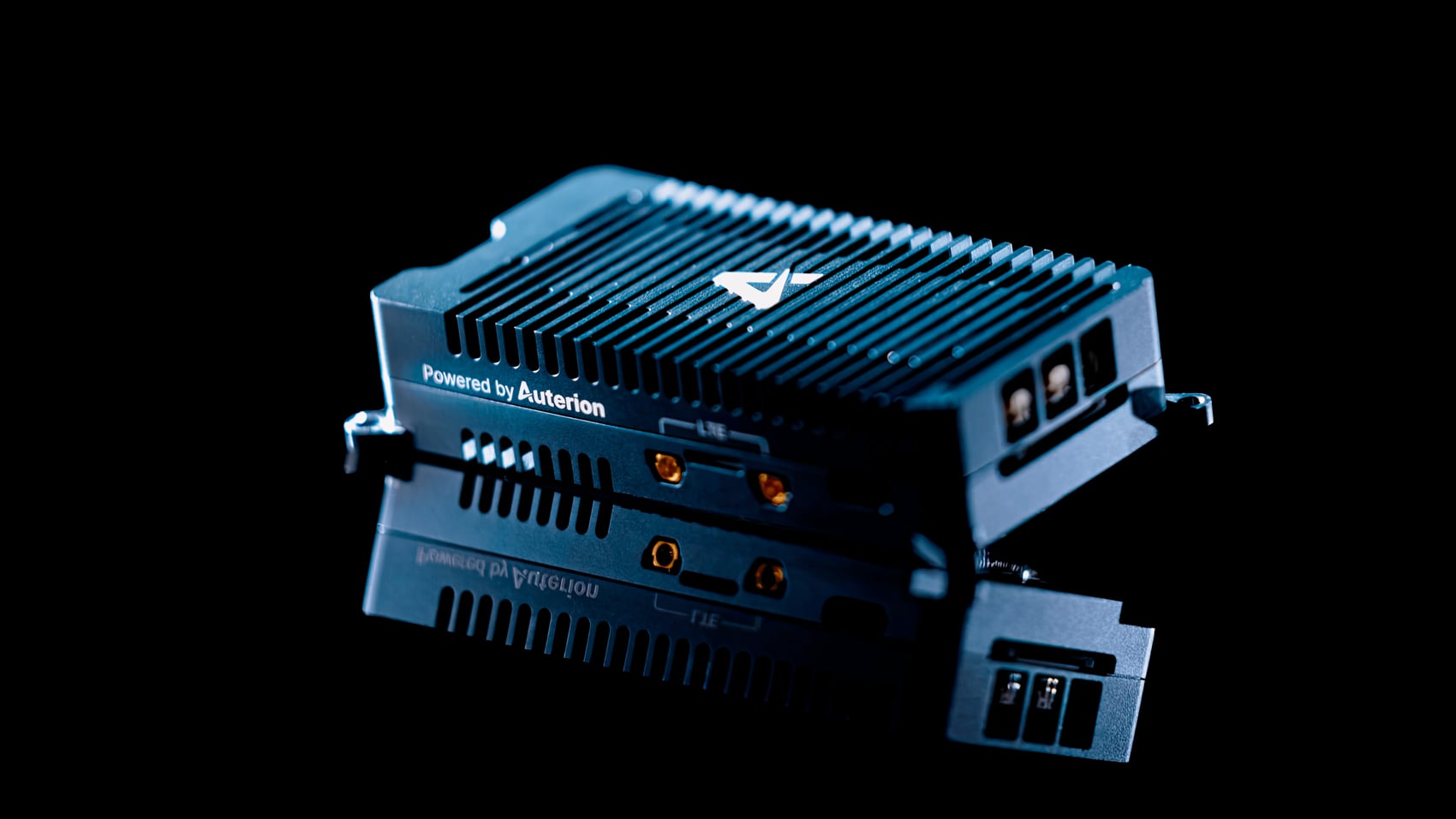
It’s the software layer that makes diverse drones from different manufacturers operate as a coordinated, intelligent system. Its Nemyx platform takes that further, turning multi-manufacturer drone fleets into unified swarms capable of simultaneous autonomous target engagement.
The company has been running its technology in active combat in Ukraine under a Pentagon contract for AI strike kits, raised $130 million in Series B funding in September 2025 at a valuation above $600 million, and relocated its headquarters to Arlington, Virginia, while keeping engineering teams in Zurich and Munich.
It’s one of the most operationally proven autonomous drone software companies in the world right now.
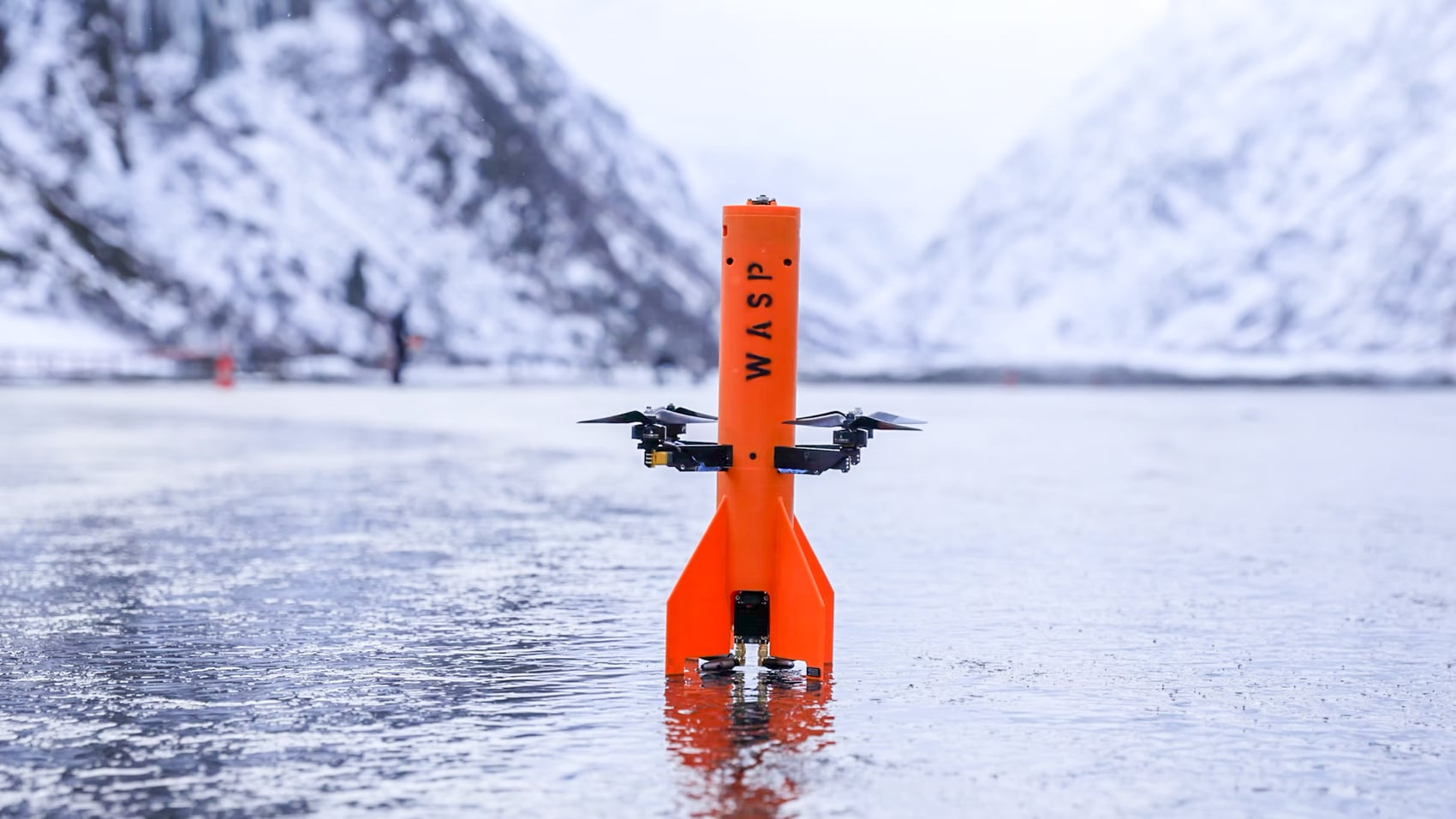
ENS Dynamics is a Swiss counter-drone company built around its WASP air defense system, a kinetic interceptor product line designed specifically to defeat Group 1 and Group 2 UAVs at the range where they’re most dangerous: 1 to about 3 miles, where conventional short-range air defense systems create a coverage gap.
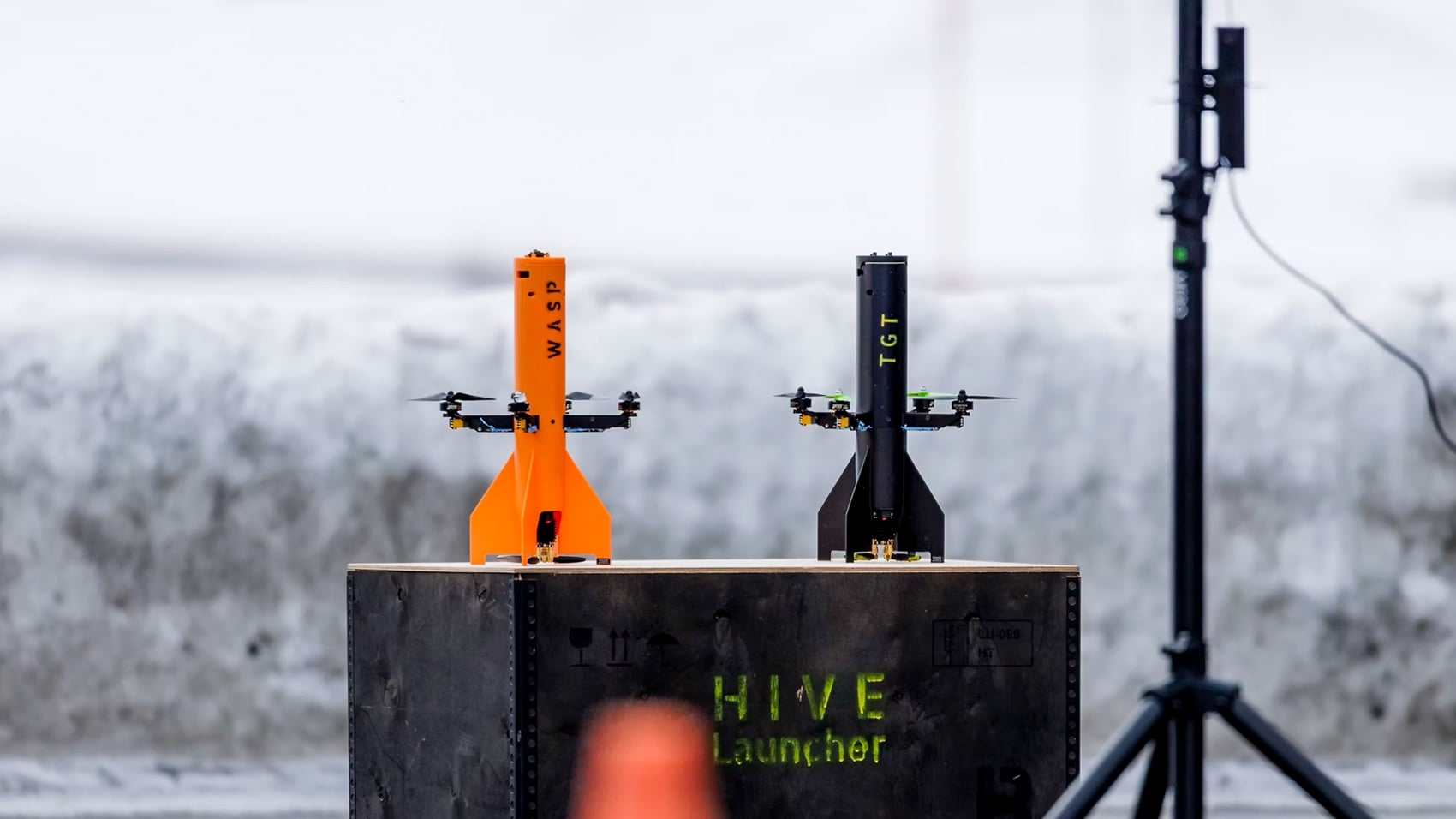
The WASP MK4 interceptor weighs about 17.6 oz, reaches speeds up to approximately 179 mph, carries either a proximity-fused warhead or a kinetic impact payload, and operates at altitudes above 11,500 feet, relevant in a Swiss alpine context.
Its HIVE launcher is compact enough to stack 64 units in a single installation controlled by one operator when radar-integrated. ENS Dynamics’ engineering philosophy is explicit: prove capability first, scale second, and only go to market after performance is validated under real operational conditions. The December trials at Hinterrhein were exactly that kind of validation environment.
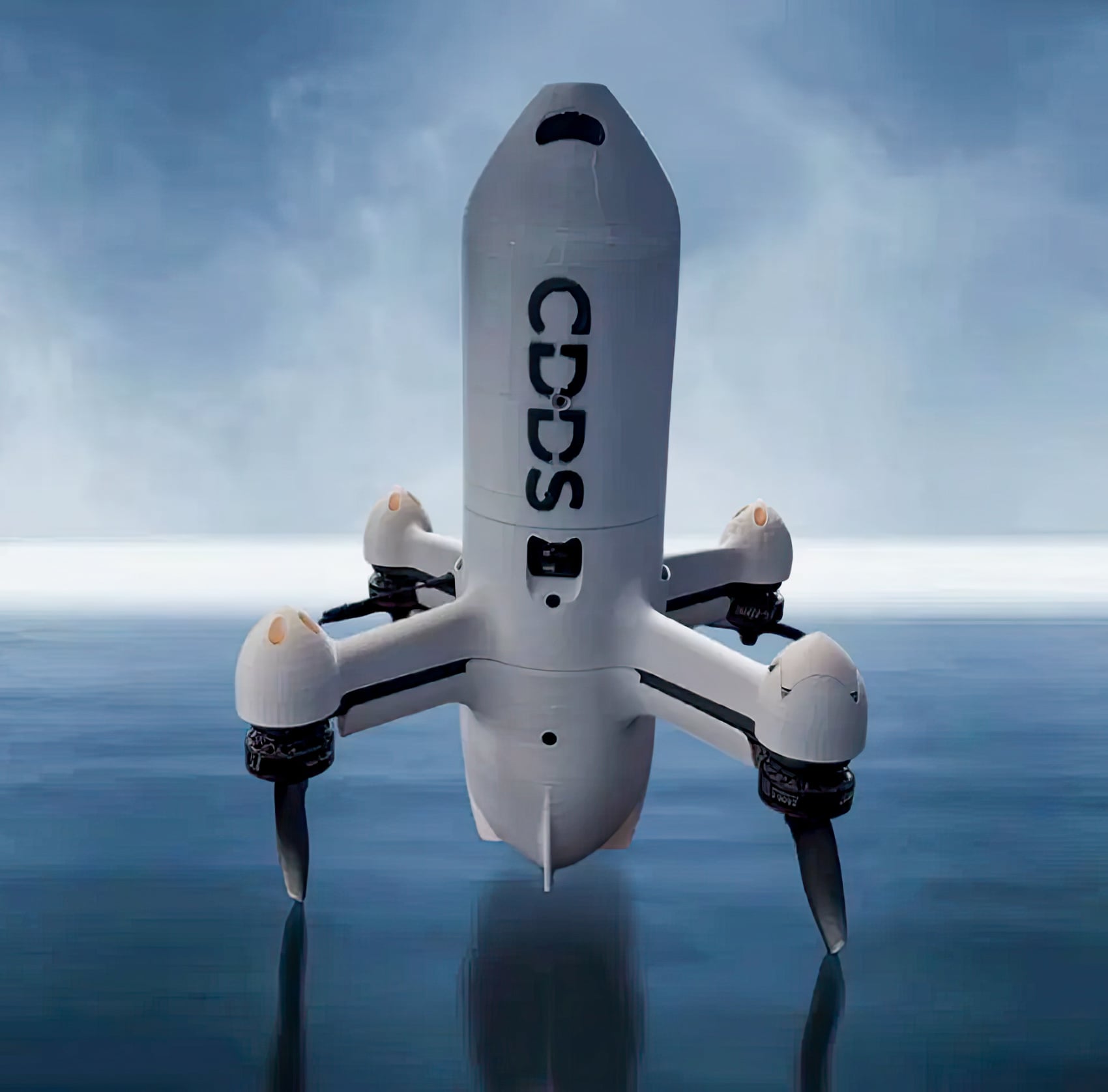
Counter Drone Defence Systems has limited publicly available information. The company participated in the December testing, but its specific product lines and technical capabilities aren’t documented in open-source material at time of writing.
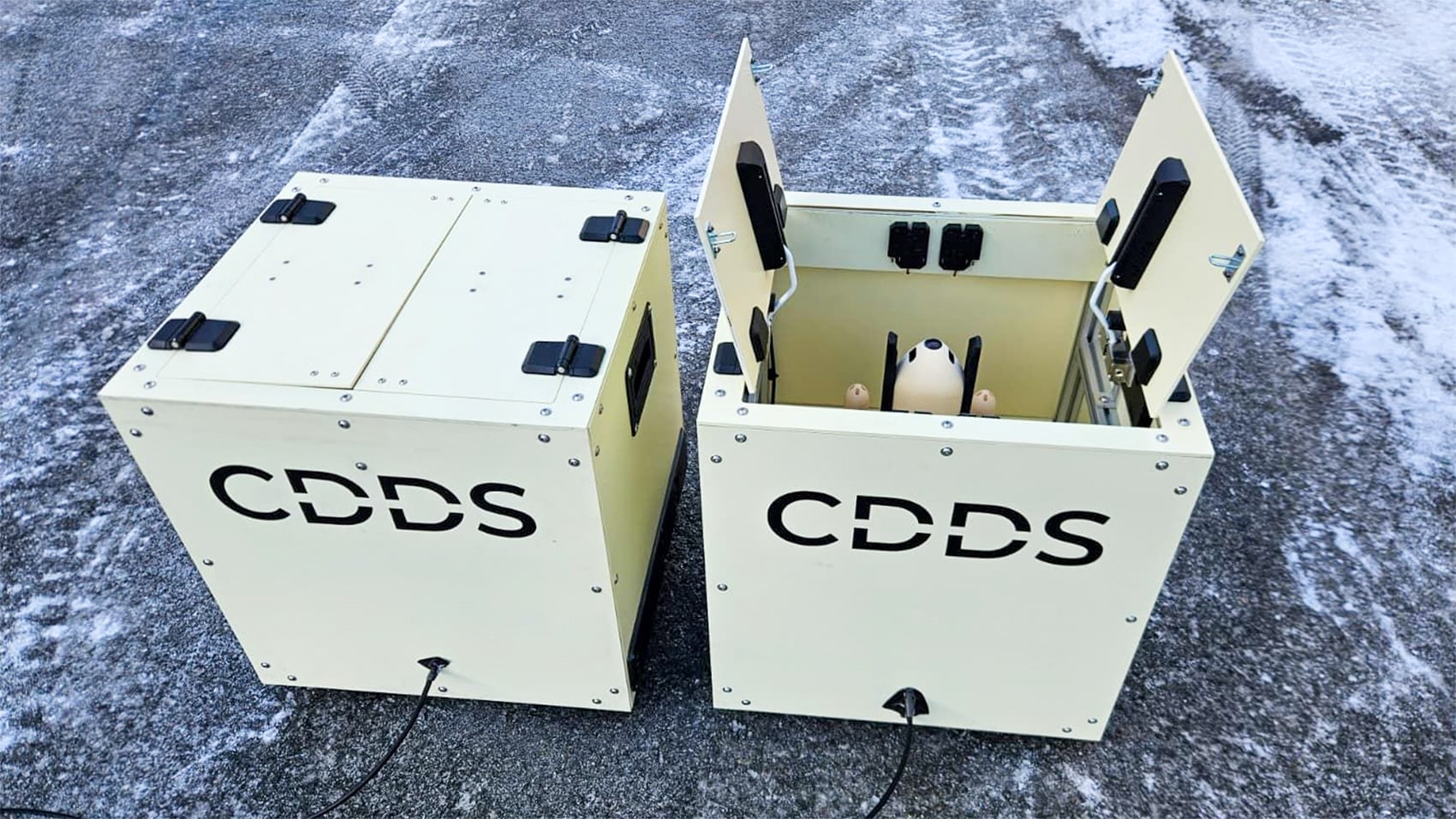
Its inclusion alongside Auterion and ENS Dynamics in a government-supervised trial suggests it has relevant technology under evaluation, but the nature of that technology cannot be confirmed here.
Why Switzerland Runs This Program
Switzerland is not a NATO member, but it sits in the middle of Europe’s defense industrial geography and its alpine terrain is operationally representative of conditions across the continent’s eastern mountain regions. Running standardized trials in that environment benefits not just Swiss procurement decisions but the broader European defense technology ecosystem.
The Taskforce Drones model is also worth understanding as a policy instrument. Traditional procurement cycles in European defense take years to move from requirement to contract.
By running rapid, structured, government-supervised technical trials, Armasuisse can generate operational performance data on multiple competing systems simultaneously and feed that data into procurement decisions without committing to a full program before the technology has been validated under realistic conditions.
For smaller defense technology companies like ENS Dynamics, participation in a government trial program provides a credibility signal and a pathway to procurement that isn’t available through conventional defense prime relationships.
The autumn 2026 campaign is expected to expand the number of test scenarios and may bring in additional industry participants. What the December trials found in terms of target recognition limitations under alpine conditions will almost certainly shape what the autumn campaign is designed to test.
DroneXL’s Take
I’ll be direct: the target recognition problem Holtmann described is the most important sentence in this entire story, and it’s buried in a subordinate clause.
Every major drone program currently in development, whether attack, counter-drone, or reconnaissance, relies on camera-based AI for at least part of its autonomy stack.
The assumption baked into most of that development work is that the AI will perform well enough under operational conditions to be trusted with consequential decisions. What the Hinterrhein trials found is that patchy snow against a mountain background is enough to cause significant degradation in automated camera-based flight.
That’s Switzerland in December. That’s also Finland, Norway, the Baltic states, and the northern European plain in winter. It’s a large fraction of the terrain where NATO would actually need these systems to work.
The part that doesn’t make the headline is that identifying this problem in a structured government trial in 2025 and 2026 is exactly how it gets fixed before it matters operationally. The alternative is finding it in the field when it’s too late to do anything about it. Switzerland doesn’t get enough credit for running this kind of rigorous, honest testing program. Most countries don’t.
Photo credit: CDDS, ENS Dynamics, Auterion.
Discover more from DroneXL.co
Subscribe to get the latest posts sent to your email.
Check out our Classic Line of T-Shirts, Polos, Hoodies and more in our new store today!

MAKE YOUR VOICE HEARD
Proposed legislation threatens your ability to use drones for fun, work, and safety. The Drone Advocacy Alliance is fighting to ensure your voice is heard in these critical policy discussions.Join us and tell your elected officials to protect your right to fly.

Get your Part 107 Certificate
Pass the Part 107 test and take to the skies with the Pilot Institute. We have helped thousands of people become airplane and commercial drone pilots. Our courses are designed by industry experts to help you pass FAA tests and achieve your dreams.

Copyright © DroneXL.co 2026. All rights reserved. The content, images, and intellectual property on this website are protected by copyright law. Reproduction or distribution of any material without prior written permission from DroneXL.co is strictly prohibited. For permissions and inquiries, please contact us first. DroneXL.co is a proud partner of the Drone Advocacy Alliance. Be sure to check out DroneXL's sister site, EVXL.co, for all the latest news on electric vehicles.
FTC: DroneXL.co is an Amazon Associate and uses affiliate links that can generate income from qualifying purchases. We do not sell, share, rent out, or spam your email.