Ukraine’s Madyar Brovdi Outpaces Russia’s Recruitment: $878 Per Kill, 400-to-1 Exchange Rate
Check out the Best Deals on Amazon for DJI Drones today!
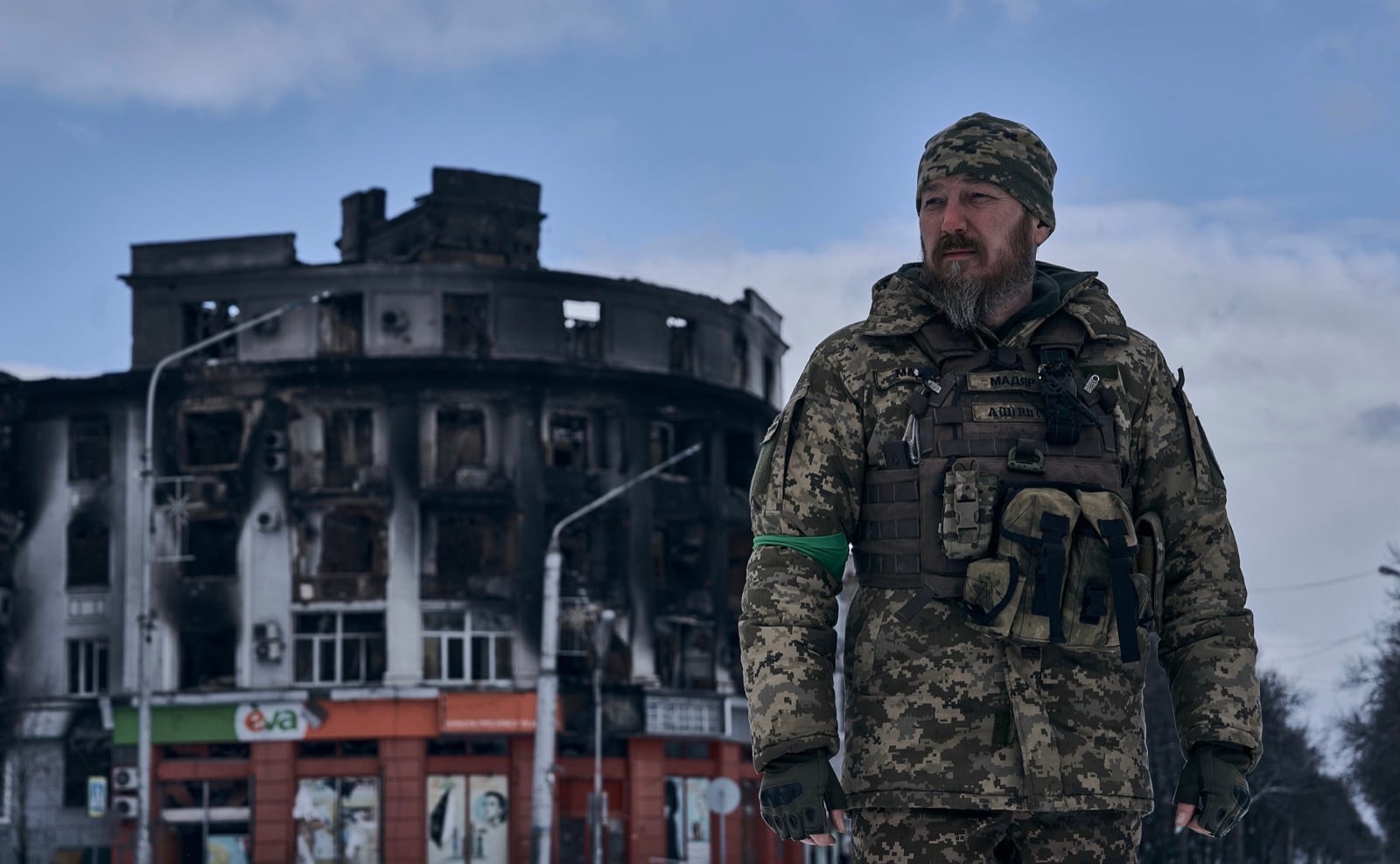
Robert “Madyar” Brovdi, commander of Ukraine’s Unmanned Systems Forces, is bleeding Russia’s army faster than Moscow can replace it. A detailed profile published today in The Economist reveals that December 2025 was the first month in four years of war when verified Russian losses to Ukrainian drones exceeded Russian recruitment. Since the start of winter, Brovdi’s forces have killed or incapacitated at least 8,776 more soldiers than Russia has managed to replace. His unit accounts for that damage using just 2% of the Ukrainian army’s headcount.
The cost per kill: $878 in materiel. The exchange rate, by Brovdi’s own accounting: 400 Russian lives for every Ukrainian lost. His unit’s cumulative casualty rate sits at 1%.
A Grain Trader Built Ukraine’s Drone Kill Chain From a Discord Channel
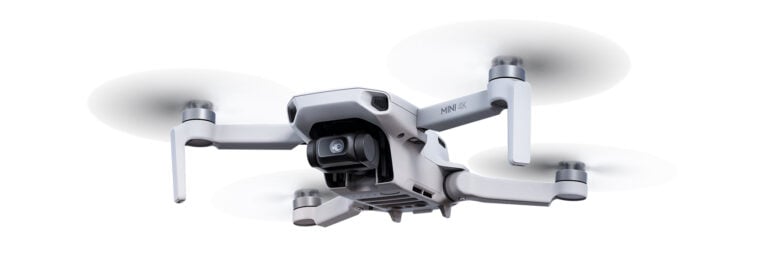
Brovdi is 50 years old and was, until Russia invaded in February 2022, a grain broker. He joined the Territorial Defense Forces as a civilian volunteer and ended up in the trenches near Kherson that summer. His unit had no idea where Russian fire was coming from. He remembered a commercial drone he had bought his son on a business trip in Asia, had several brought to the front, and began spotting hidden Russian tanks. He passed coordinates to a nearby artillery brigade over Discord. That was Ukraine’s first drone kill chain.
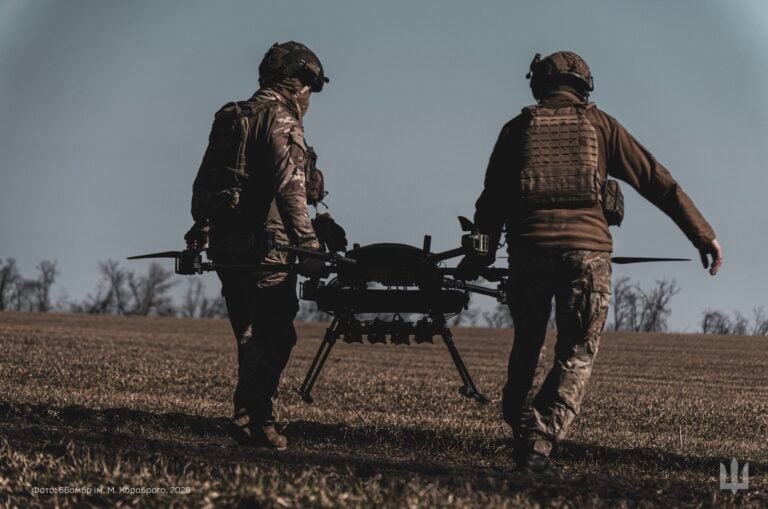
At Bakhmut the following year, a colleague — a former taekwondo champion known as Klym — knew a racer of FPV (First-Person View) drones. The team started hanging water-filled condoms from trees and trying to hit them with drones. When that worked, they taped American mk-19 grenades to the frames. That improvisation became the doctrinal foundation for a “line of drones” reconnaissance-and-strike kill-zone concept Brovdi later championed across the entire force to compensate for Ukraine’s infantry shortage.
The Economist describes the command point as a buried bunker lined with Japanese-style sleeping pods, a gym, and wall after wall of screens relaying live kill chains, missions, and enemy losses. Around a hundred screens in total. The killing is managed from teams 3–5 km behind the front line, overseen remotely by battle captains at headquarters.

Business Intelligence Software Now Runs a Drone War
Every drone strike and electronic-warfare session is logged, verified by video, and fed into business intelligence software that Brovdi repurposed from his days as a grain trader. “I asked my guys to swap grain type, tonnage and truck numbers for weapons, shifts and ammunition,” he told The Economist. The system treats an infantry battalion as a resource to be exhausted. His soldiers are directed to target personnel rather than armour or equipment at least 30% of the time, because Russia can only train and equip recruits so fast.
“We need to keep milking this cow, the Russian army, for everything it’s worth, exhausting it beyond its maximum capacity,” Brovdi said.
He describes his unit’s structure as an ecosystem of 15 interlocking functions: jamming, surveillance, mine-laying, explosive production, and more. When American generals visit and ask which drone is best, he gives them the same answer:
“The best drone is an ecosystem. For one pilot to make a kill, a whole machine must work behind him.”
At the December peak, his forces inflicted 388 confirmed enemy losses per day — equivalent to the assault component of an entire battalion. When a Russian battalion loses all its infantry, the Kremlin doesn’t disband it; it sends desk officers to the front instead.
“They are the easiest targets,” Brovdi noted, “because they can’t fight.”
Madyar’s Birds Carry the Psychological War Too
Brovdi’s unit, codenamed “Madyar’s birds,” claims responsibility for one-sixth of all Russian losses. The wider unmanned-forces grouping he commands accounts for more than a third. That outsized performance has attracted critics, who argue his success depends on the preferential funding and unconditional backing he has received since President Zelensky appointed him commander in June 2025 — resources his predecessor never enjoyed.
The battlefield kill videos his unit posts to social media — complete with slapstick chase music — have made him a divisive figure. Some critics allege the footage violates the laws of war. Brovdi dismisses the objection.
“A man with a rifle in his hand on my land is coming to kill me. I kill him or he kills me. Millions of Ukrainians, my mother included, draw strength from what we do,” he told The Economist.
Russia has responded by placing Brovdi on its international wanted list, charging him in absentia with “terrorism” for allegedly ordering road mining in Kursk Oblast. Hungary, where Brovdi’s ethnic Hungarian roots trace back to Uzhhorod, banned him from entry over strikes on the Druzhba pipeline last year. Brovdi noted that every dollar Hungary pays Russia for oil funds the missiles and drones hitting Ukrainian cities.
DroneXL’s Take
The Economist piece deserves more attention from Western defense establishments than it will probably get. We’ve been tracking Ukraine’s drone evolution since the first Discord-coordinated artillery strikes in 2022, through Russia’s FPV detection countermeasures, through FPV drones taking down Ka-52 helicopters, through Zelensky deploying Ukrainian drone intercept specialists to the Gulf. What Brovdi has built is not a drone program. It is an industrial attrition machine that runs on the same analytical logic he applied to commodity trading. As we noted in our China-free drone milestone report, Brovdi told The Times that drones now account for more than 90 percent of Russian battlefield losses — a figure independent analysts place lower, but which directionally reflects what the Economist’s more granular numbers confirm.
The 8,776-soldier deficit Russia is running against its own recruitment figures is the number that matters. Drones costing a few hundred dollars each are now the primary driver of a manpower math problem that no amount of Kremlin mobilization can easily solve. The $878-per-kill figure would be considered improbably cheap in any conventional procurement framework. Ukraine achieved it through decentralized innovation, battlefield feedback loops, and a commander who refused to separate business analytics from battlefield management.
NATO has been a slow learner here. Brovdi told generals at Wiesbaden last July that his crews could replicate a Pearl Harbor scenario against the base in 15 minutes from 10 kilometers out, and framed it as a courtesy warning, not a threat. Western alliance doctrine still treats drone warfare as a supplement to conventional forces. Brovdi’s 2% headcount delivering more than a third of total enemy losses is the rebuttal to that entire framework. By the end of 2026, at least four NATO members will have formally restructured their unmanned systems doctrine around the Ukrainian model — or they’ll spend the next decade explaining why they didn’t.
DroneXL uses automated tools to support research and source retrieval. All reporting and editorial perspectives are by Haye Kesteloo.
Discover more from DroneXL.co
Subscribe to get the latest posts sent to your email.
Check out our Classic Line of T-Shirts, Polos, Hoodies and more in our new store today!

MAKE YOUR VOICE HEARD
Proposed legislation threatens your ability to use drones for fun, work, and safety. The Drone Advocacy Alliance is fighting to ensure your voice is heard in these critical policy discussions.Join us and tell your elected officials to protect your right to fly.

Get your Part 107 Certificate
Pass the Part 107 test and take to the skies with the Pilot Institute. We have helped thousands of people become airplane and commercial drone pilots. Our courses are designed by industry experts to help you pass FAA tests and achieve your dreams.

Copyright © DroneXL.co 2026. All rights reserved. The content, images, and intellectual property on this website are protected by copyright law. Reproduction or distribution of any material without prior written permission from DroneXL.co is strictly prohibited. For permissions and inquiries, please contact us first. DroneXL.co is a proud partner of the Drone Advocacy Alliance. Be sure to check out DroneXL's sister site, EVXL.co, for all the latest news on electric vehicles.
FTC: DroneXL.co is an Amazon Associate and uses affiliate links that can generate income from qualifying purchases. We do not sell, share, rent out, or spam your email.