Germany Funds 15,000 STRILA Interceptor Drones for Ukraine’s National Guard as Shahed War Enters Industrial Phase

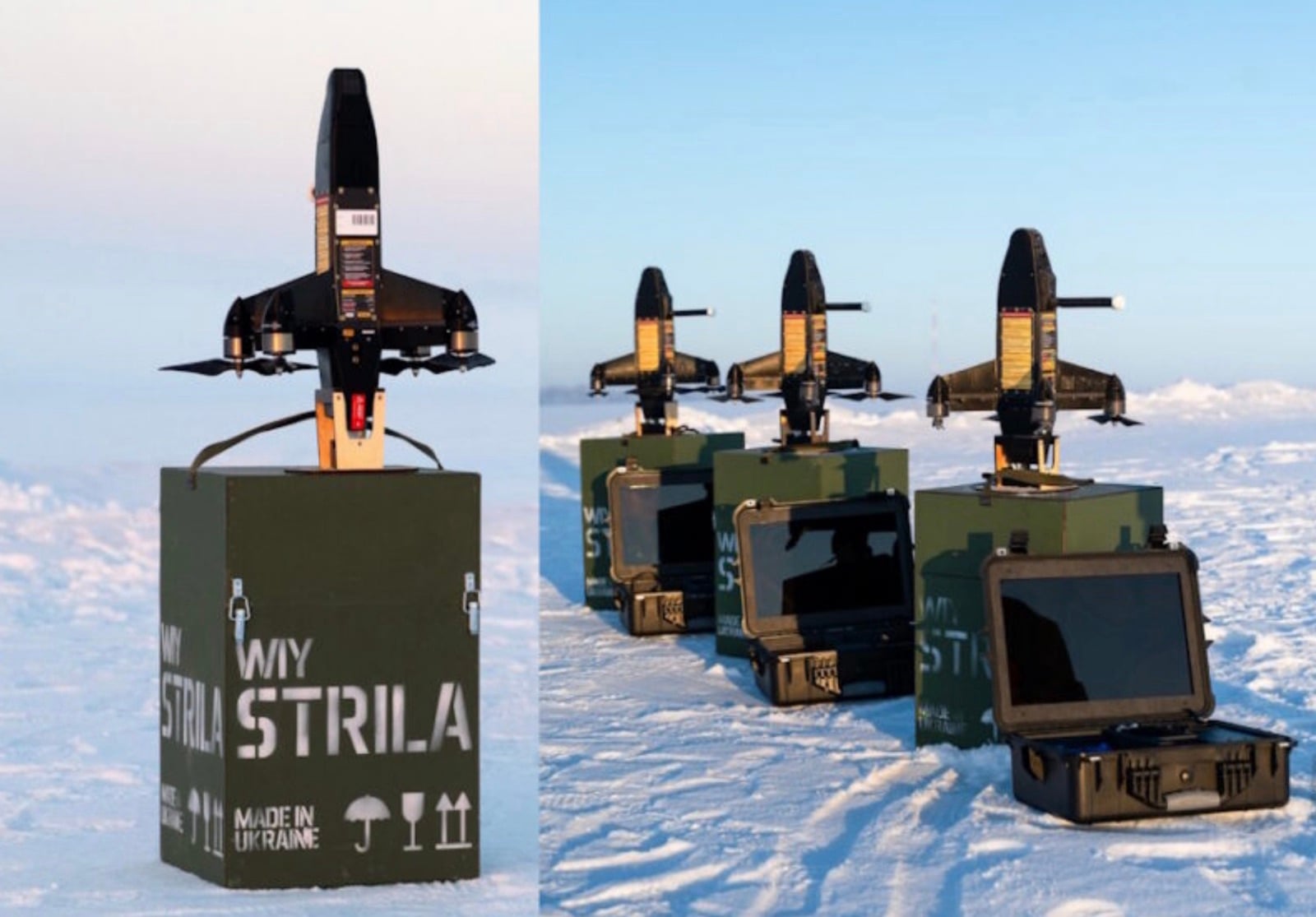
Germany is funding the production of 15,000 Ukrainian-made STRILA interceptor drones for the National Guard of Ukraine, according to an announcement from the German Embassy in Ukraine on March 23. The multimillion-euro agreement — signed in Kyiv in the presence of German Chargé d’Affaires Maximilian Rasch, alongside representatives of the National Guard and Quantum Systems — pairs procurement with operator training, logistics, and joint drone development. It is one of the largest foreign commitments to Ukraine’s interceptor program to date, and it arrives as interceptor drones account for over 70 percent of all Shahed kills over Kyiv.
The deal ties together two companies: WIY Drones, the Kyiv-based manufacturer behind STRILA, and Munich-based Quantum Systems, which is investing directly in WIY and will scale production inside Ukraine. Quantum Systems is already known to DroneXL readers as the maker of the Vector reconnaissance drone — a $246 million German Army contract winner whose platform has logged thousands of combat hours in Ukraine. This agreement extends that relationship from intelligence gathering into active air defense.
STRILA Is a Purpose-Built Shahed Hunter
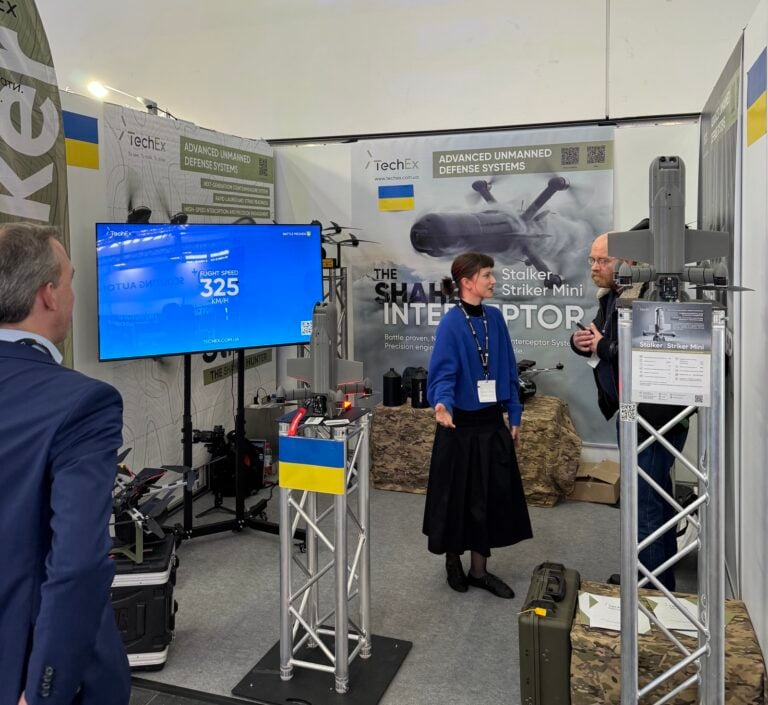
WIY Drones describes STRILA as a “rocket-type air-defence” interceptor — not a modified commercial quadcopter, but a system engineered from the ground up to kill fast-moving aerial targets. It reaches over 350 km/h in operation and hit 400 km/h during testing, making it one of the fastest drone interceptors in serial production anywhere. Tactical range is 14 km, with a maximum range of 28 km. Altitude ceiling is 4 to 5 km depending on payload configuration.
The drone weighs approximately 10 kg and launches from a catapult. Its warhead is kinetic — no explosives — which reduces collateral risk during intercepts over populated areas. Flight endurance runs 15 to 20 minutes. Both daytime and thermal cameras are fitted, with the operator able to switch feeds mid-flight. STRILA integrates natively with RADA radar systems and the SkyMap airspace management platform, enabling autonomous target acquisition from detection through initial approach before handing control back to the operator for the terminal engagement.
One operational detail WIY Drones highlights: if an attack is called off before intercept, STRILA can return autonomously to its launch position. That cuts the cost of a failed sortie to fuel and wear, not a lost airframe. At $2,292 per unit, that matters.
The SineLink Upgrade Is the Real Story
The most operationally important STRILA development is not the Germany deal. It is the SineLink communication system that WIY Drones began fitting to production units in late 2025. SineLink allows STRILA to operate without GPS and resist electronic warfare jamming. The operator can switch communication channels during flight — a capability that matters enormously when Russian EW systems are actively hunting the control link.
Russia has been adapting specifically to defeat interceptor drones. Russian operators have added rear-facing infrared spotlights to Shaheds to blind thermal cameras, and some variants now carry air-to-air missiles. Ukrainian Commander-in-Chief Oleksandr Syrskyi confirmed in early March that Russia is now deploying Shaheds at extremely low altitudes specifically to defeat GPS-reliant defenses. SineLink directly counters that tactic.
The optical package that arrived alongside SineLink extended daytime target identification to 1,000 meters and nighttime to 600 meters, with a rotating optical module added for full-angle tracking. WIY Drones now produces approximately 100 STRILA units per day under government contract. The price dropped from $3,317 to $2,292 in January 2026 — a 31 percent reduction in roughly three months — driven entirely by localizing electronics inside Ukraine. About 70 percent of components are now Ukrainian-made.
Quantum Systems Is Building a Paired Detect-and-Kill Stack
Quantum Systems’ investment in WIY Drones is not simply a check written to support Ukraine. The Munich company is building a paired system: Vector reconnaissance drones find and track targets; STRILA interceptors kill them. Both now operate in GPS-denied, EW-contested environments. Both are being produced in Ukraine under German investment. The intent, as TechUkraine reported citing Quantum Systems, is to close the loop on a complete tactical system from detection to intercept.
Quantum Systems also unveiled its own interceptor in late 2025, the Jäger — a solid-fuel-boosted design that climbs to 4 km in 30 seconds and reaches 405 km/h. The company is not funding a Ukrainian competitor while standing still. It is building domestic German interceptor capability in parallel. The STRILA deal addresses Ukraine’s immediate need at scale. The Jäger is positioned to address the NATO SHORAD gap, particularly against jet-powered Geran-3 variants that could outrun slower interceptors — though Quantum Systems has not formally named the Geran-3 as a target for the Jäger. We covered why the speed ceiling of current interceptors is an unsolved problem in detail last week.
The broader German-Ukrainian industrial framework also includes a separate joint venture: Quantum Frontline Industries, formed by Quantum Systems and Ukrainian company Frontline Robotics, with production localized in both countries. That entity will deliver 10,000 AI-enabled Lens drones in 2026, currently undergoing combat testing.
The Numbers That Explain the Urgency
The operational context for this deal is not abstract. In February 2026, Ukrainian interceptor drones flew approximately 6,300 sorties and destroyed over 1,500 Russian UAVs of various types, according to Syrskyi. Around Kyiv, interceptors accounted for more than 70 percent of Shahed kills that month. Across all of Ukraine, roughly one in three Russian aerial targets destroyed is now brought down by an interceptor drone rather than a missile or gun, according to Colonel Yurii Cherevashenko, Deputy Commander of the Air Force’s Unmanned Air Defence Systems.
The cost math explains every procurement decision in this sector. A Patriot PAC-3 missile costs over $3 million. A NASAMS round runs slightly over $1 million. Each Shahed costs Russia as little as $35,000 to manufacture. A STRILA at $2,292 changes the economics entirely. At that unit price, 15,000 STRILAs — the full Germany commitment — total roughly $34.5 million. That is less than the cost of a single IRIS-T SLM fire unit. As we reported when the Pentagon entered procurement talks in early March, Gulf states burned through more than 800 Patriot missiles in three days of Iranian Shahed attacks — more than Ukraine has received across four years of war. The interceptor model is not a niche workaround. It is becoming the primary economic answer to mass drone warfare.
On the same day Germany announced the STRILA deal, Ukraine’s Ministry of Defence reportedly approved a second interceptor platform — the JEDI Shahed Hunter — for operational use, according to defense-industry reporting. If confirmed officially, two platforms entering formal service on the same date marks an industrialization milestone, not a routine procurement event.
DroneXL’s Take
I’ve been covering Ukraine’s interceptor program since Wild Hornets first started mass-producing the Sting in late 2024, and the Germany-STRILA deal reads differently from anything that came before it. Earlier foreign support went toward strike drones and artillery. This is a NATO-member government writing a multimillion-euro check specifically for a counter-drone interceptor — built in Ukraine, produced in Ukraine, operated by Ukrainians defending Ukrainian cities. That is doctrine validation, not a weapons transfer.
The Quantum Systems angle is the part most outlets are missing. This is the same company that won a $246 million German Army contract for Vector reconnaissance drones — combat-proven in Ukraine — now investing in the kinetic half of the same tactical system. Germany is funding a paired detect-and-destroy capability, manufactured in Kyiv, paid for by Berlin. That model — European capital, Ukrainian production, battlefield-proven hardware — is the template other NATO members will follow. Poland and the Baltic states are watching this contract closely.
The speed gap against jet-powered Geran-3 variants remains real and unsolved. STRILA tops out around 355 km/h operationally; the Geran-3 reportedly flies between 400 and 500 km/h. That problem does not disappear with this deal. But SineLink addresses the immediate electronic warfare threat — the one actually killing Ukrainian interceptors right now — and at $2,292 per unit with 70 percent Ukrainian content, STRILA is an industrial product, not a prototype. A second German tranche before the end of 2026 would not surprise me. At least one additional NATO member following Berlin’s lead within six months of that announcement would surprise me even less.
DroneXL uses automated tools to support research and source retrieval. All reporting and editorial perspectives are by Haye Kesteloo.
Discover more from DroneXL.co
Subscribe to get the latest posts sent to your email.