While TechEx Was in Düsseldorf, Russian Intelligence Was Bugging Its Chief Engineer’s Office

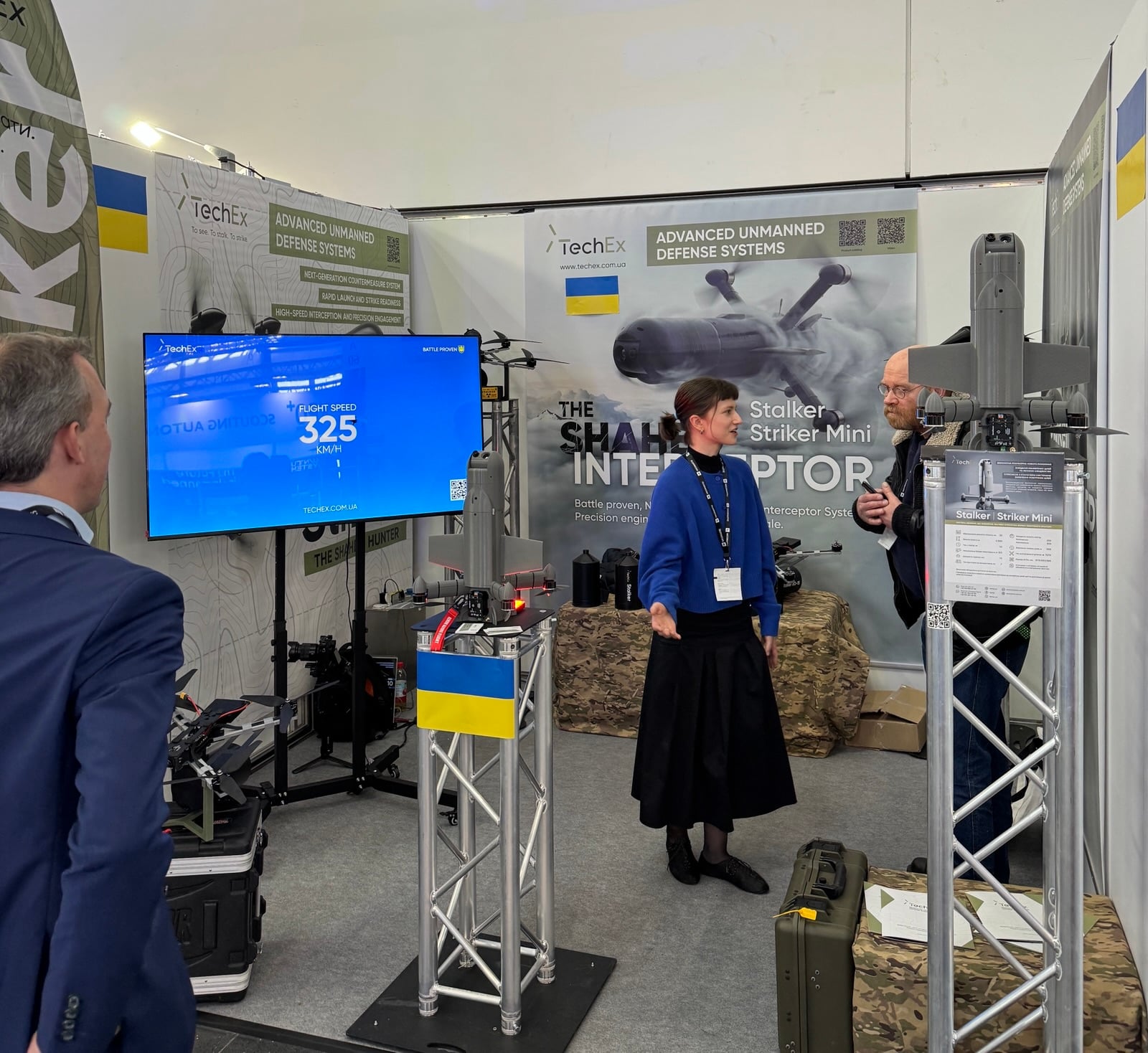
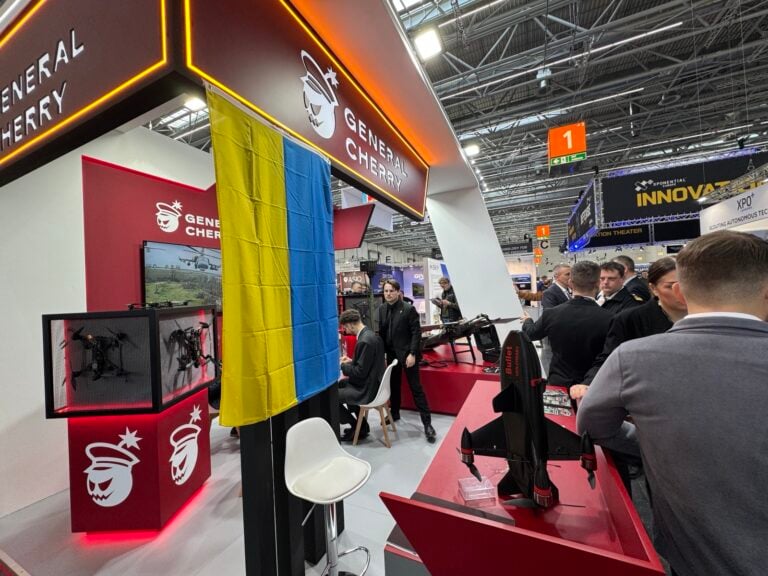
On March 24 — the opening day of XPONENTIAL Europe — Ukrainian drone maker TechEx was showing its fiber-optic FPV drones to European buyers in Düsseldorf. That same morning, back in Ukraine, the SBU’s counterintelligence department pulled Russian surveillance equipment out of the office of TechEx’s chief engineer. Hidden listening devices placed by Russian intelligence services, targeting the company’s engineering documentation, supply chains, partner networks, and data on the Ukrainian military units operating TechEx drones. The leak was prevented. The company fed disinformation to Russian handlers for an extended period before the operation was exposed. TechEx published a statement the same day: “Today we managed to expose the enemy, but we understand that this is not his last attempt.”
Russia bugged the company because TechEx makes something Russia cannot effectively jam. The Stalker series drones run on fiber-optic cable. There is no radio signal to intercept or disrupt. When conventional FPV drones started losing signal to Russian electronic warfare systems — which grew more sophisticated every month of this war — fiber-optic control was the answer. Ukraine has been chasing EW-resistant solutions since 2022. TechEx built one that works, got it codified by Ukraine’s Ministry of Defense in early 2025, and has been supplying frontline units ever since. Russia noticed.
Two Years From Volunteer Project to Ministry Codification
TechEx was formally established in 2024, but the engineering team behind it had been working together since spring 2023 — building fiber-optic drones as volunteers, with no documentation requirements, no Ministry of Defense process, no technical specifications. “Initially, we were working on volunteer projects where only the drone itself was needed — no documentation was required, as long as it was cheap but functional,” chief engineer Anton told Ukrinform.
Scaling changed everything. To supply the armed forces at volume, MoD codification was non-negotiable — which meant documentation, technical specifications, design drawings. “The first technical specifications took a month to prepare,” Anton said. “Now the technical specifications take days, not weeks.” The company received its first officially codified sample on November 25, 2024. It now has four codified products, with eight more in various stages of development or certification.
The fiber-optic winding technology itself was built from scratch. No suitable machinery existed. “At that time, there were no machines. Some tried to use machines for winding wire — copper, some for winding thread. But all these projects did not work, because the specifics of working with fiber optics are different,” Anton told online.ua. So TechEx built its own winding equipment — hardware and software — from scratch. The result is the lowest spool weight among Ukrainian fiber-optic drone manufacturers, which matters operationally: every gram saved on the spool is available for payload or extended range.
The Stalker XO-10 and XO-15
TechEx is currently scaling two core FPV models. The Stalker XO-10 is a 10-inch strike drone for front-line positions with heavy electronic jamming. Specs confirmed from the display at XPONENTIAL Europe: teleoperation range 15,000 meters, payload 360 grams or 160 grams depending on configuration, maximum takeoff weight 6.35 kg. Ukraine’s MoD describes it as “maneuverable in flight and fast in preparation for takeoff. Designed for pinpoint strikes, where every second counts.” Hundreds of combat sorties have been flown. Price on the Brave1 marketplace: 41,000 UAH, roughly $975.
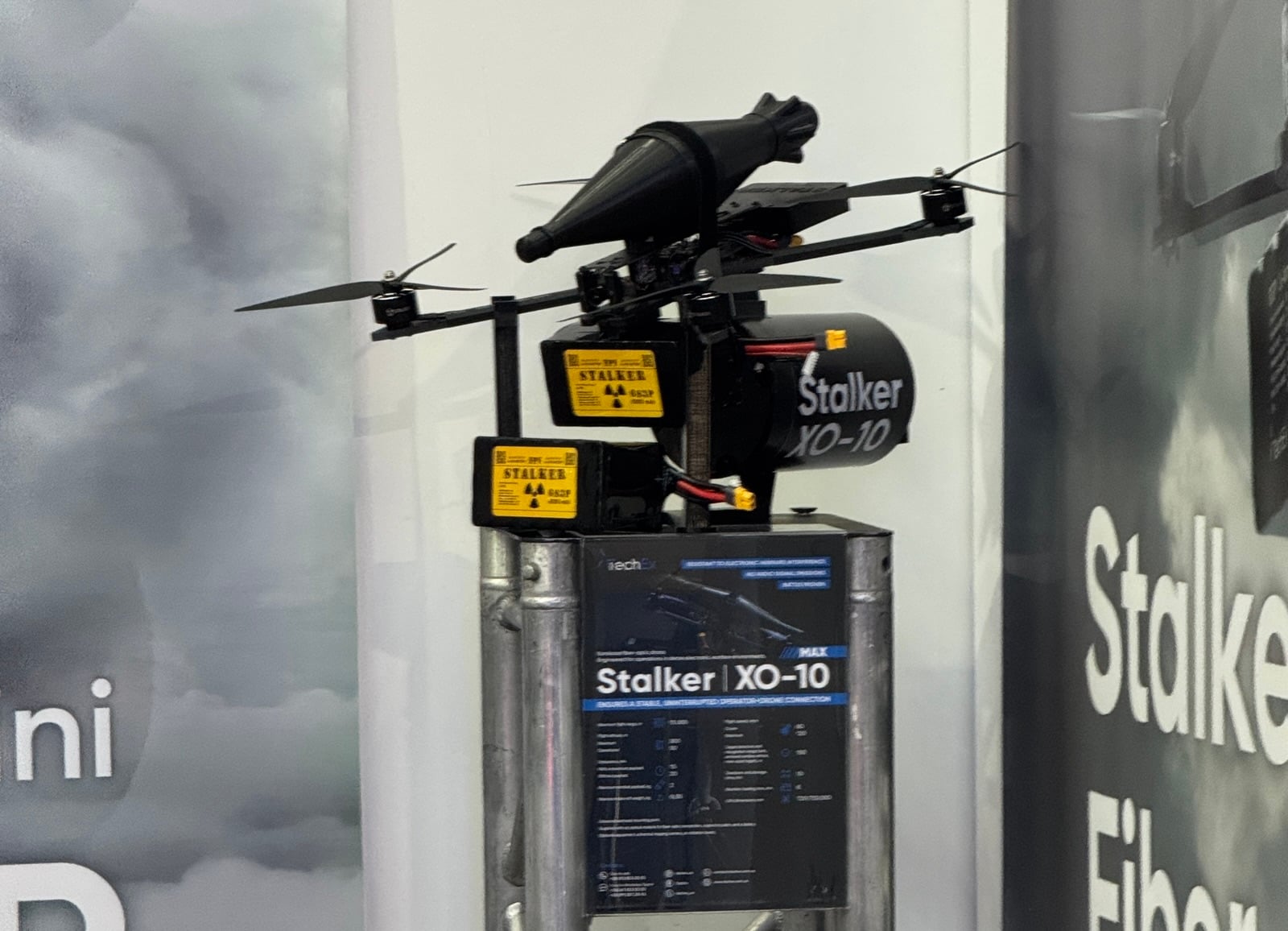
The Stalker XO-15 uses a 15-inch frame and reaches deeper. Where the XO-10 hits targets on the contact line, the XO-15 goes after rear-area objectives: command posts, self-propelled artillery, air defense systems, electronic warfare complexes. Price: 68,000 UAH. Both models share the same design logic — upper frame completely clear for any payload shape, battery front-mounted below for stable flight. Both detect targets at up to 150 meters. TechEx is currently testing extended spools pushing both models toward 20 and 25 km operational range, which when it works reliably will significantly change the XO-15’s operational reach.
The Stalker Striker Mini: The Shahed Interceptor
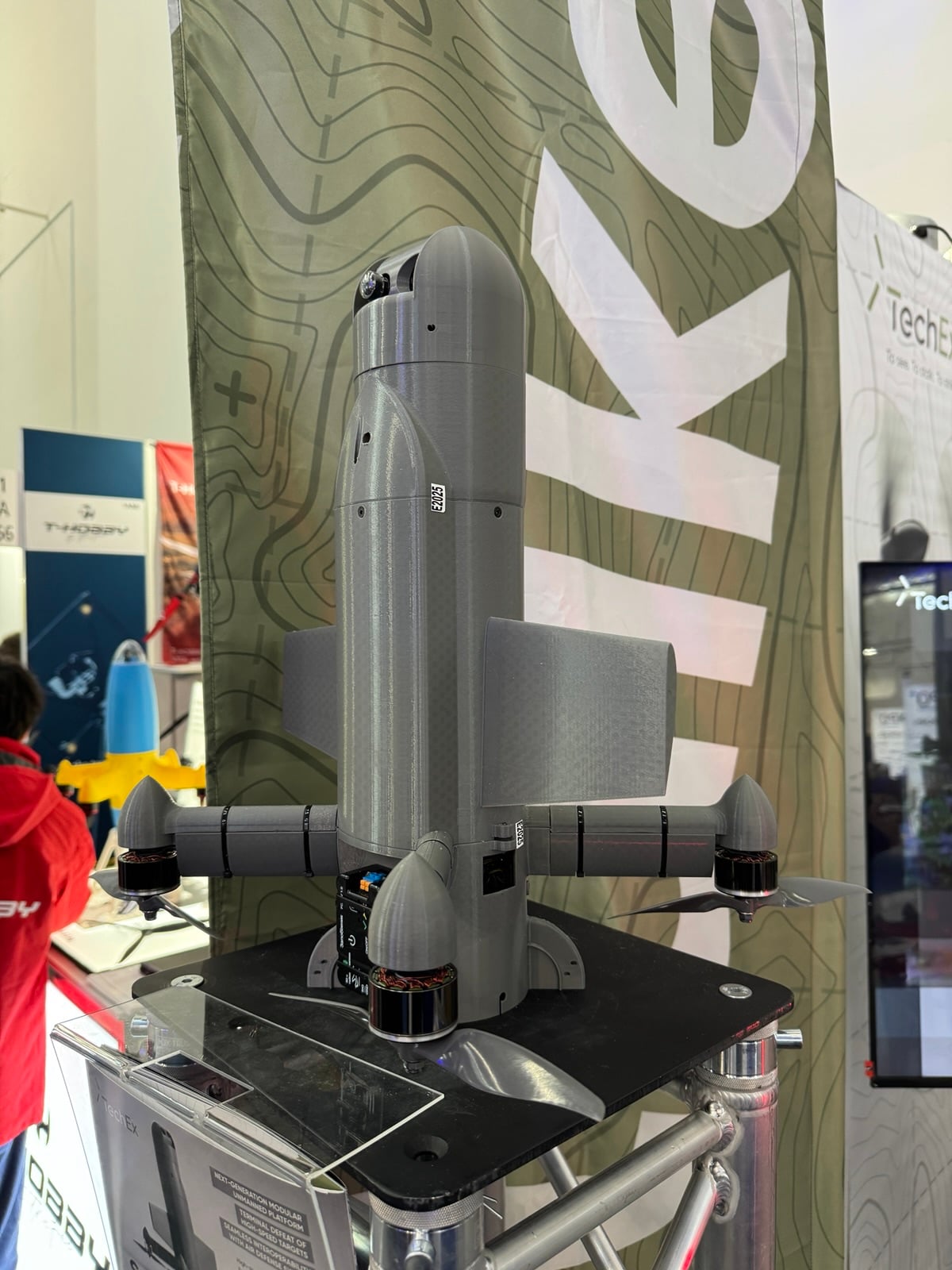
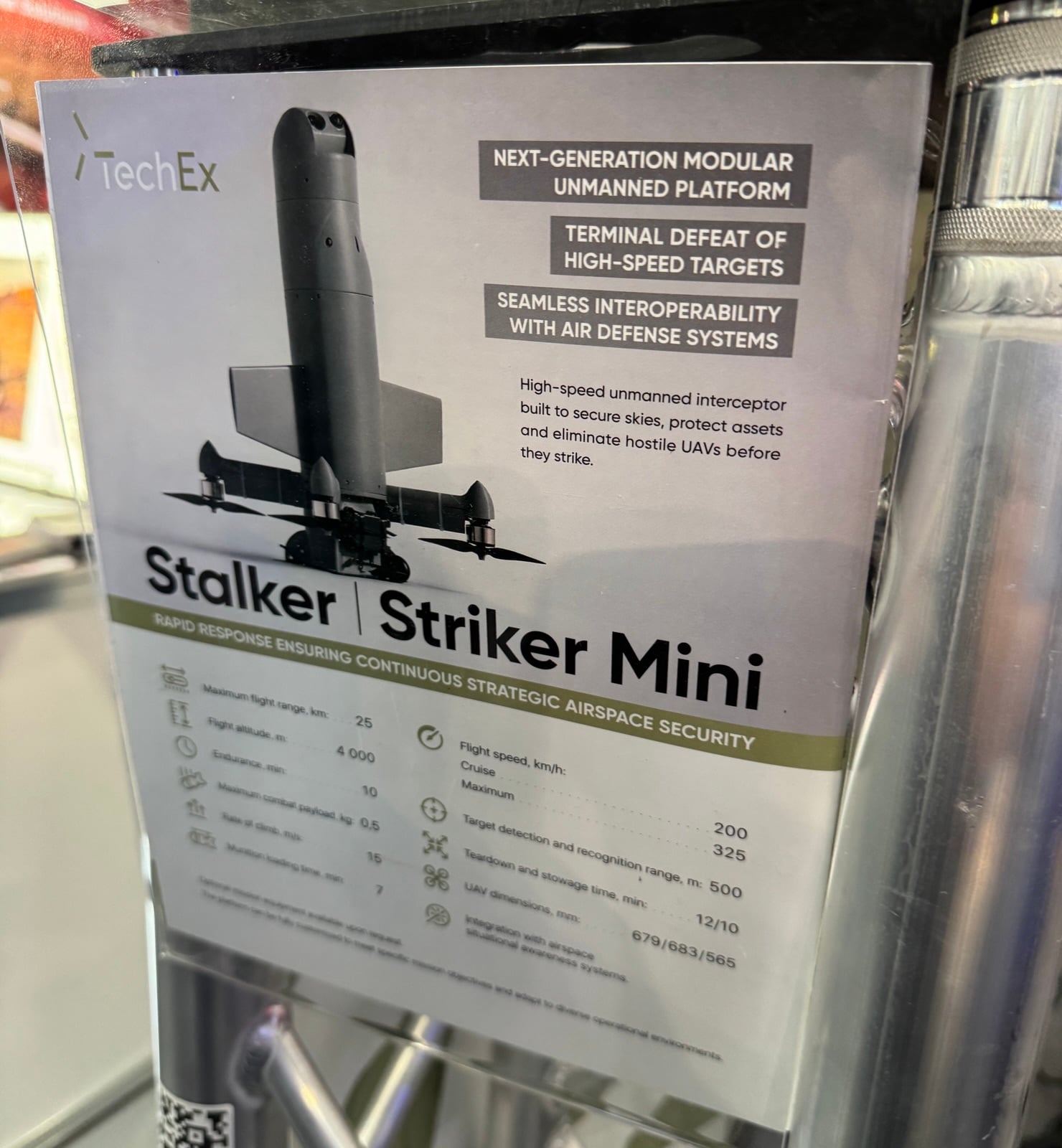
The second product TechEx brought to Düsseldorf was a different category. The Stalker Striker Mini is not a strike FPV — it is a dedicated high-speed interceptor for Shahed-type attack drones, and the company markets it as exactly that. Every figure below is confirmed from the spec card photographed at the show: cruise speed 200 km/h, maximum speed 325 km/h, range 25 km, flight ceiling 4,000 m, combat payload 0.5 kg, target detection range 500 m, deployment-ready in 7 minutes, dimensions 679 × 683 × 565 mm. It integrates with airspace situational awareness systems.
TechEx’s stand banner at the show read “Battle-proven. NATO-ready. Precision engineered.” The NATO-ready designation reflects MoD codification rather than an independent NATO certification — the phrase gets used broadly across the Ukrainian defense sector and isn’t independently verified here. What is confirmed: Ukrainian Ministry of Defense codification, hundreds of combat sorties on the XO series, and a Ukrainian doctrine that increasingly treats fiber-optic FPVs as essential frontline tools.
No Finished Drone Exports — Only Technology
TechEx came to Düsseldorf with a specific proposition for European manufacturers: build our drones under license, ship them back to Ukraine. The company will not export finished drones. Technology transfer is a different matter entirely.
The reasoning is practical. Russian strikes on Ukrainian production facilities are a recurring operational risk — the same logic that drove Ukrspecsystems to open a factory in Mildenhall and Ukrainian drone production to spread into Germany, the Netherlands, Denmark, and the UK. Distributed manufacturing means a strike on one facility doesn’t halt supply. For a European manufacturer, the deal offers a battle-proven, MoD-codified design without years of development. For TechEx, it keeps Ukrainian forces supplied without navigating the weapons export authorization complexity that slows every other Ukrainian arms deal.
DroneXL’s Take
The timing of the March 24 SBU operation tells you everything about where TechEx sits in this war. Russian intelligence doesn’t plant listening devices in offices of companies that don’t matter. They go after the engineering documentation, the supply chains, the names of the military units using the product. TechEx’s fiber-optic drones are EW-proof, they’re MoD-codified, and they’re already in use across the front. Russia knows this. The bug in Anton’s office is, in a perverse way, confirmation that the technology works.
Russia’s electronic warfare advantage has been one of the defining pressure points of this conflict. Fiber optics solves the problem structurally — immunity baked into physics, not patched in through software. The cable has a real limitation: it snags. Terrain, structures, and wind all create snagging risk, and spool weight caps range. That’s why the push to 20–25 km matters. When that works reliably at production scale, the operational picture for both the XO-10 and XO-15 changes significantly.
Within 12 months, at least one European manufacturer will be producing licensed Stalker variants. That is the deal TechEx came to Düsseldorf to close — on the same day the SBU was clearing Russian bugs from their engineer’s office back home.
DroneXL uses automated tools to support research and source retrieval. All reporting and editorial perspectives are by Haye Kesteloo.
Discover more from DroneXL.co
Subscribe to get the latest posts sent to your email.