Drone Catches Fleeing Driver in Beaverton Backyards
Check out the Best Deals on Amazon for DJI Drones today!
A hit-and-run suspect who crashed into two cars and ran through residential yards in Beaverton, Oregon, didn’t get far. Washington County’s new Drone as First Responder program tracked him from above and guided deputies straight to him. The arrest on April 2 gave the six-week-old trial program one of its most visible results yet, as Seattle Red reports.
The Chase and the Crash
Shortly after 5 p.m. on Thursday, April 2, a Washington County Sheriff’s Office deputy spotted a 1994 Toyota Camry driving through Aloha with two people inside. The car was linked to a January burglary in which suspects had broken into a vacant townhome and stolen a washer and dryer. The deputy attempted a traffic stop, but the driver took off.
A pursuit started but didn’t last long. Traffic ahead was congested, and the deputy called it off within minutes for safety. The sheriff’s office requested backup from additional deputies, Beaverton Police Department officers, and the DFR program.
With a drone already in the air, the operator watched the Camry stop near Southwest Farmington Road and Southwest Kinnaman Road, where the passenger got out. Ground units were directed to her location. The driver kept going. Elizabeth Sanguino of Aloha was heading home from Washington Square Mall when the Camry hit her car in an intersection on Southwest Farmington Road.
The driver kept speeding north and struck another vehicle head-on near Southwest 141st Avenue, pushing it into a third car. Sanguino and the occupants of the other vehicles suffered minor injuries and were treated at the scene. All are expected to recover.
The driver bailed from the wrecked Camry and ran.
The Drone Takes Over
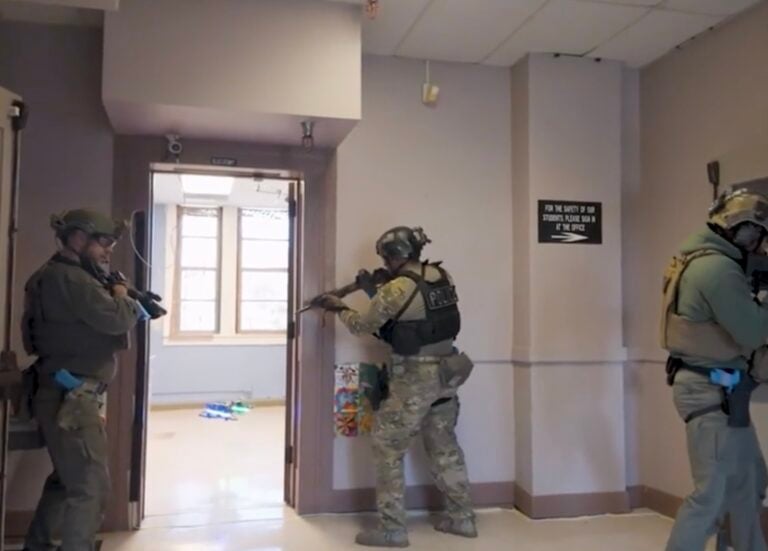
Deputies contained the surrounding area and launched a second drone to search for the suspect. The DFR operator located 32-year-old Jesus Cisneros-Vite of Beaverton moving through residential yards and coordinated with patrol units to close in.
Cisneros-Vite was taken into custody and booked into the Washington County Jail. He faces charges of attempt to elude in a vehicle, reckless driving, two counts of hit-and-run, criminal mischief, and a felony warrant from the Department of Corrections. The sheriff’s office has not said whether the passenger faces any charges.
The whole sequence, from a failed traffic stop to a foot chase through backyards to an arrest, played out exactly the way DFR advocates say these programs are supposed to work. The deputy made the right call ending the pursuit. The drone filled the gap.
The Skydio X10 and How the Program Works
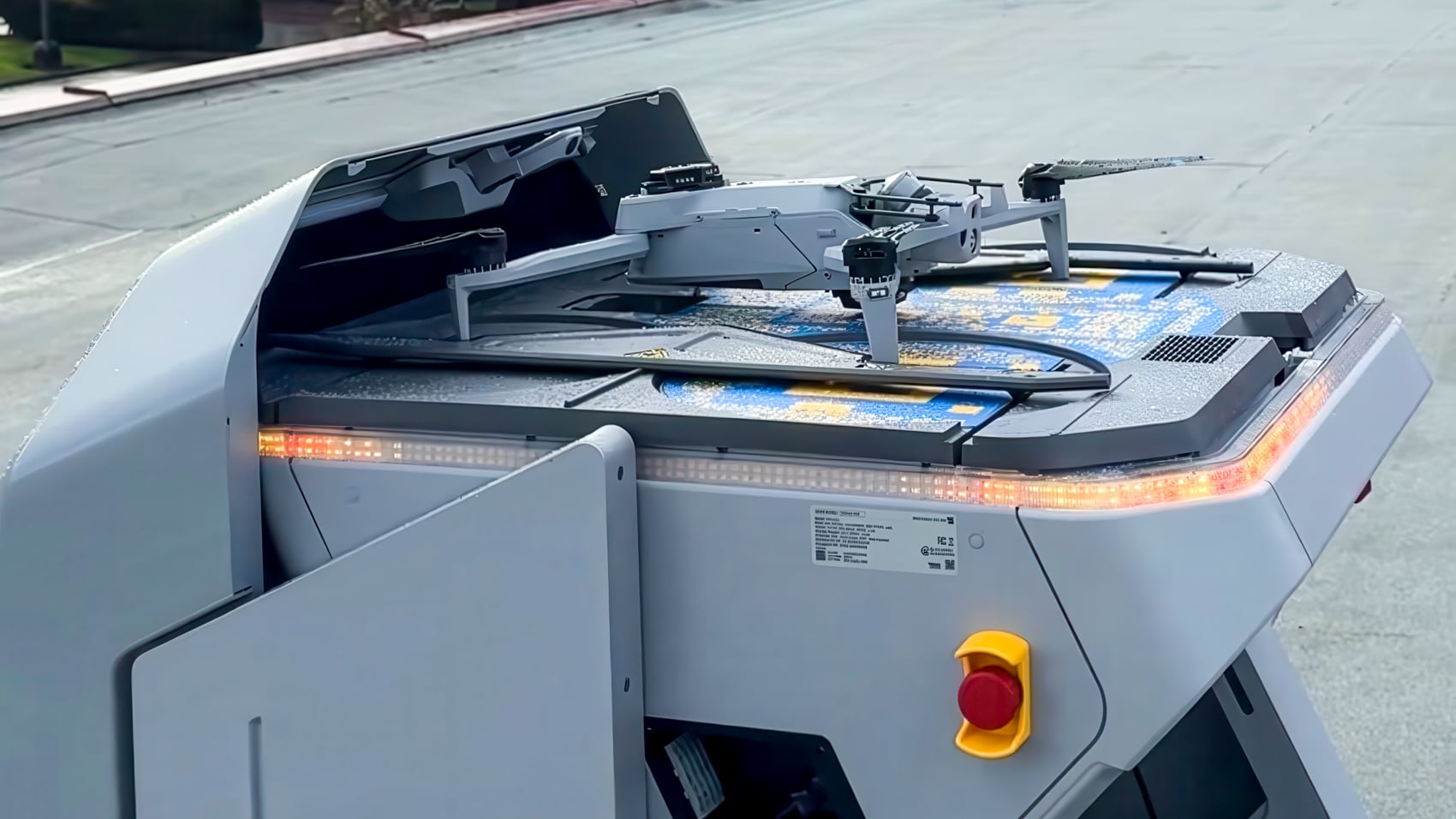
Washington County’s DFR trial launched on February 20, 2026, using two Skydio X10 drones provided to the county at no cost by the California-based manufacturer. The drones are based in Aloha, flying from secure enclosed docking stations, and are operated remotely by FAA-certified deputy pilots.

The Skydio X10 is built for autonomous flight in complex environments. It uses six 4K navigation cameras for 360-degree obstacle avoidance and can fly at speeds up to 45 mph. During DFR operations, the drones fly at 200 feet or lower per FAA regulations and can reach any scene within a three-mile radius of their dock.
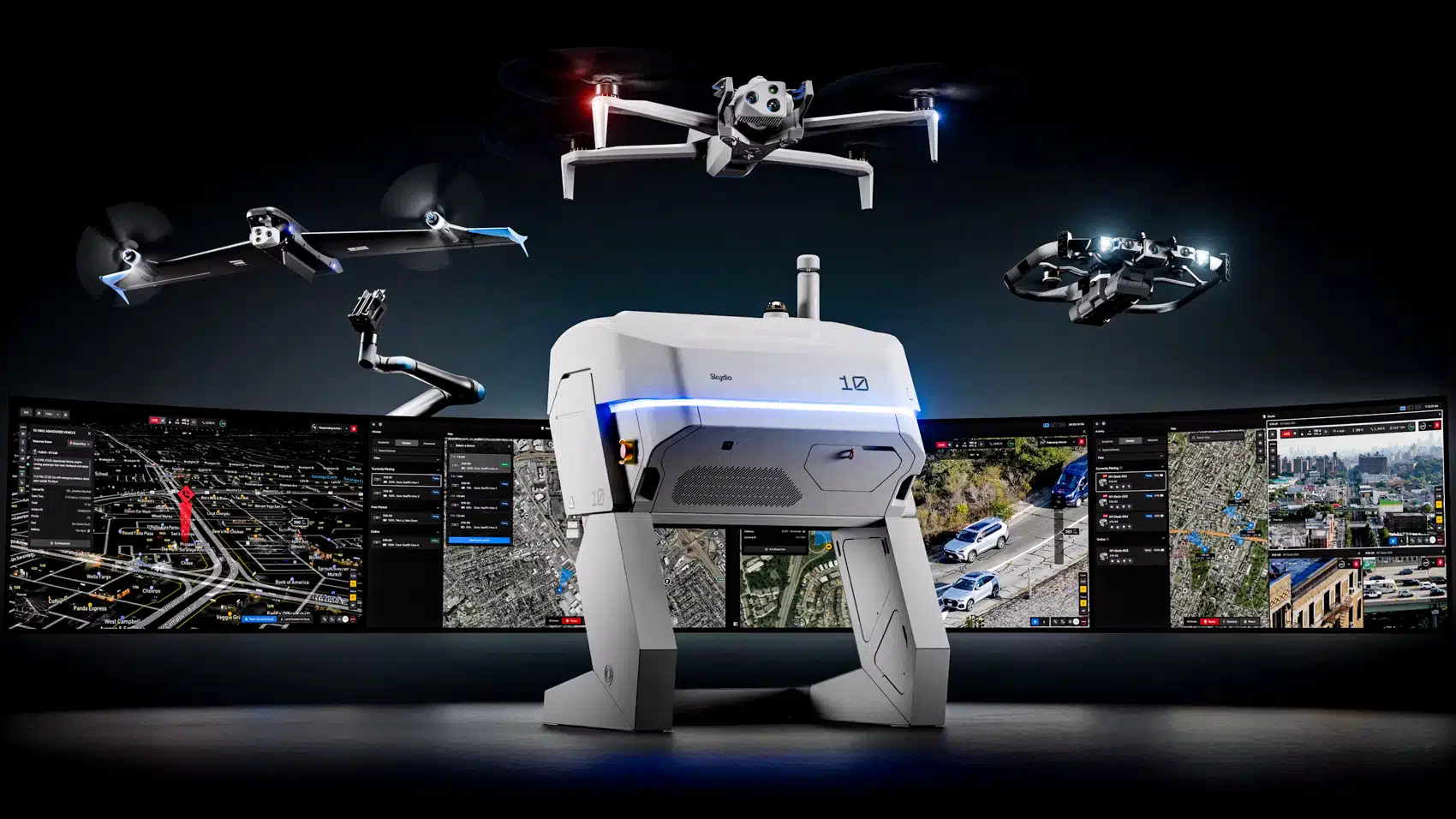
According to Lt. Matt Frohnert of the patrol division, average drone response times have been between 45 and 120 seconds. That’s faster than any patrol car can reach a scene, and it puts eyes on an active situation before deputies arrive on the ground.
Corporal David Huey, one of the program’s FAA-certified drone pilots, told OPB that the DFR can link directly to a deputy’s body camera feed to identify the exact location where response is needed.

Since launch, the two drones have responded to more than 90 calls for service. Traffic accidents have been the primary use case, particularly when deputies know or suspect someone is injured. But the Beaverton case shows the program’s value in a very different scenario: tracking a suspect who thinks he’s disappeared into a neighborhood.
Oregon’s Privacy Rules and What Comes Next
The DFR program operates under Oregon Revised Statutes governing drone use by law enforcement. Under state law, drones can’t be used to establish probable cause or reasonable suspicion of a crime, and all deployments must follow both the statutes and the sheriff’s office internal policy. Privacy protections are built into the program’s operating guidelines.
Skydio says more than 1,000 law enforcement agencies are already using its DFR technology nationally. Washington County’s trial is expected to wrap in mid-April, after which the sheriff’s office will conduct a comprehensive review of deployment data, response times, and operational outcomes.
Based on those findings, the agency will decide whether to expand coverage to additional areas of the county through a longer-term partnership with Skydio.
Sheriff Caprice Massey has framed the program in terms of the county’s broader drone experience. The interagency drone team deployed nearly 650 times in 2025 alone using traditional line-of-sight drones launched from vehicles.
The DFR model is different: drones launch from fixed docks, fly autonomously to the scene, and get there before patrol cars do. If the trial numbers hold, expanding the program would give Washington County a capability that most agencies in the Pacific Northwest don’t have.
DroneXL’s Take
The part that doesn’t make the headline is how clean this arrest was. A deputy made the right call to end a dangerous pursuit in traffic. A drone filled the surveillance gap in seconds. A second drone launched to track the suspect on foot. Deputies closed in with precise location data instead of searching block by block. Nobody got hurt during the arrest.
That’s not how these situations usually end. Foot chases through residential neighborhoods are high-risk for everyone involved. Suspects run into fences, dogs, and occupied yards. Deputies lose visual contact and have to guess which direction someone went. Bystanders get caught in the middle. A drone overhead eliminates the guessing and compresses the timeline from minutes to seconds.
Washington County’s program is still a trial, and the Skydio X10 drones were provided for free, which means the county hasn’t had to answer the budget question yet. If the sheriff’s office decides to make DFR permanent, that conversation gets real. Skydio hardware isn’t cheap, and maintaining a program with docked drones, certified pilots, and operational protocols costs money beyond the purchase price.
But 90-plus calls in six weeks, with results like the Beaverton arrest, makes a strong case. The real question isn’t whether DFR works. It’s whether departments can fund it and whether communities will accept persistent aerial capability in their neighborhoods. Oregon’s privacy statutes provide a framework. The Beaverton case provides the proof of concept.
Photo credit: KGW8, Skydio.
Discover more from DroneXL.co
Subscribe to get the latest posts sent to your email.
Check out our Classic Line of T-Shirts, Polos, Hoodies and more in our new store today!

MAKE YOUR VOICE HEARD
Proposed legislation threatens your ability to use drones for fun, work, and safety. The Drone Advocacy Alliance is fighting to ensure your voice is heard in these critical policy discussions.Join us and tell your elected officials to protect your right to fly.

Get your Part 107 Certificate
Pass the Part 107 test and take to the skies with the Pilot Institute. We have helped thousands of people become airplane and commercial drone pilots. Our courses are designed by industry experts to help you pass FAA tests and achieve your dreams.

Copyright © DroneXL.co 2026. All rights reserved. The content, images, and intellectual property on this website are protected by copyright law. Reproduction or distribution of any material without prior written permission from DroneXL.co is strictly prohibited. For permissions and inquiries, please contact us first. DroneXL.co is a proud partner of the Drone Advocacy Alliance. Be sure to check out DroneXL's sister site, EVXL.co, for all the latest news on electric vehicles.
FTC: DroneXL.co is an Amazon Associate and uses affiliate links that can generate income from qualifying purchases. We do not sell, share, rent out, or spam your email.