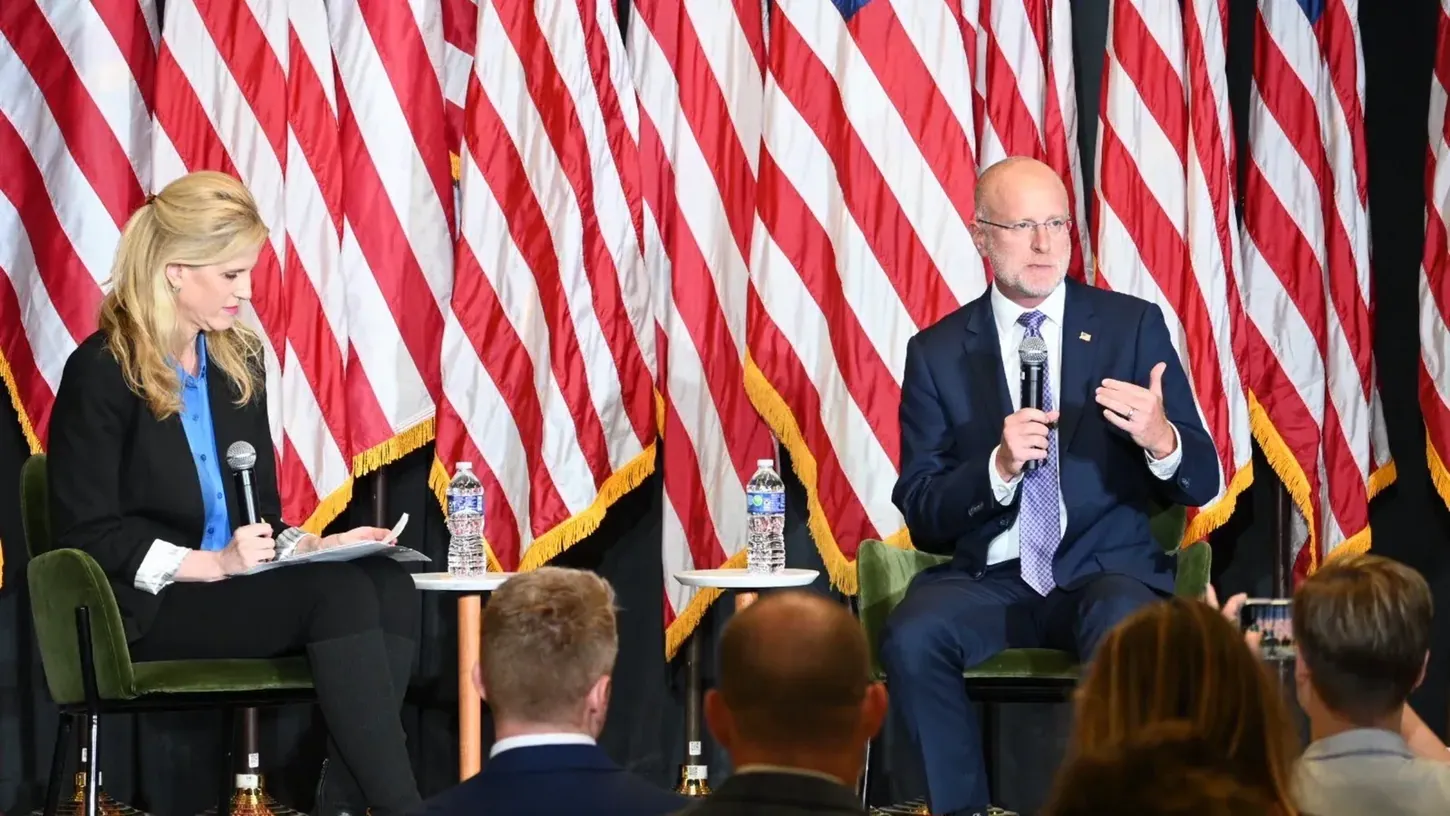
Sen. John Kennedy told the Federal Communications Commission’s top lawyer on Wednesday that the agency scares him. The Louisiana Republican was questioning FCC general counsel Adam Candeub at a Senate Judiciary Committee hearing on Candeub’s nomination to run the Justice Department’s Antitrust Division, and his unease centered on the commission’s moves against broadcasters, capped with a caution that the agency is edging toward First Amendment trouble.
Kennedy said nothing about drones. He did not need to. I have tracked every Covered List public notice since the FCC swept all foreign-made drones onto the list on December 22, 2025, and the discomfort a Republican senator just voiced from the dais describes the past eight months of American drone policy with uncomfortable precision.
The commission that alarmed Kennedy over television is three weeks into a proposal to end U.S. sales of thermal, LiDAR, docking, spraying, and heavy-lift drones it previously approved. That docket closes to public comment on September 2. Consider this the story of one agency told through two audiences: one with subpoena power, one with a filing deadline.
Kennedy Warned The FCC’s Own Lawyer, And Both Parties Joined In
Kennedy delivered the warning on August 5 to Adam Candeub, the FCC general counsel President Trump has nominated to lead the Justice Department’s Antitrust Division, telling him during a Senate Judiciary Committee confirmation hearing that the commission’s recent media actions trouble lawmakers well beyond the Democratic side of the room.
“Sometimes the FCC scares me right now,” Kennedy told Candeub, The Washington Post reported, adding that he dislikes plenty of what gets said on television and then asking what business any of it is of the FCC’s. He closed with advice for the whole agency to watch its step, warning that it is walking into constitutional terrain. Communications Daily reported that Sen. Peter Welch, a Vermont Democrat, joined Kennedy in pressing Candeub over FCC Chairman Brendan Carr’s media actions, and that Candeub declined to give either senator his opinion.
One day after Kennedy’s warning, the commission voted 2-1 to eliminate the 39 percent cap on the national audience a single television station group may reach, swapping a limit Congress set for case-by-case review. The advocacy group Free Press says it will sue, arguing that only Congress can change the cap. The complaint underneath all of it is the same: an agency substituting its own preferences for the limits written around it.
Carr Spent A Year Teaching Washington To Expect This
The Judiciary hearing room did not develop its unease overnight, because Chairman Carr’s commission has spent roughly a year pressuring broadcasters and rewriting ownership limits while stretching its equipment authority in ways that keep raising the same question about where the FCC’s writ ends.
In September 2025, Carr publicly threatened regulatory consequences for ABC and its parent Disney over Jimmy Kimmel’s late-night commentary, and aimed the same warning at the network’s licensed affiliates. Nexstar, the largest ABC affiliate group, pulled the show, and the network suspended it. Senate Commerce Democrats demanded Carr testify, calling it their constitutional duty to conduct oversight of an attack on the First Amendment. The show came back. The precedent stayed.
Drone operators met this same commission in December.
The Drone Docket Runs The Same Play With No Senators Watching
On December 22, 2025, the FCC placed every foreign-made drone and critical component on its Covered List while assuring the market that previously authorized models could still be imported and sold, an assurance the agency moved to unwind seven months later for anything it now labels military-grade.
The December action blocked new authorizations only, and the commission reinforced that reading in May by extending a waiver that lets previously authorized foreign drones receive firmware and software updates through at least January 1, 2029. Then came July 21. Public Notice DA 26-758 opened PS Docket 26-189 and proposed prohibiting the continued importation and marketing of previously approved foreign drones and components across seven capability categories: thermal imaging, LiDAR, docking stations, sprayers covered by the FAA’s economic poison rules, aircraft at or above 25 kilograms (55 pounds), defense-article integration, and swarming, defined broadly enough to capture drone light shows. DroneXL broke down the full proposal the day after it dropped.
The label is the tell. DJI wrote on its Viewpoints policy blog that the proposal could “amount to a ban on future sales of certified and currently available products” and pointed out that the definition sweeps in the thermal cameras public safety teams fly and the docks underneath Drone as First Responder programs. Marketing, in FCC usage, covers advertising, distribution, sale, and lease, and the agency proposes a 180-day wind-down after the August 3 Federal Register publication. The commission anchors the proposal in the Secure and Trusted Communications Networks Act of 2019 and its own equipment authorization rules, the same Covered List foundation DJI is challenging at the Ninth Circuit, where Case 26-1029 is pending.
Now the honest part. Kennedy was talking about television. He has said nothing about drones, and PS Docket 26-189 has so far drawn none of the Senate attention the media actions have. The parallel is mine: a commission that a senator from the president’s own party just described as frightening on speech is simultaneously drawing lines through American aviation by sensor type, deciding that a thermal camera or a LiDAR unit converts a working tool into military hardware. Operators who want that decision contested have exactly one venue that must respond to them, and DroneXL published filing instructions on August 8. Comments close September 2.
DroneXL’s Take
The loudest check on this FCC last week was a Republican senator telling its lawyer to be careful. That is where the guardrails sit right now: discomfort, voiced politely, at a confirmation hearing for a different job. The media actions at least draw that much. The drone docket draws a comment deadline.
I can tell you this commission reads what lands in front of it, because its July 17 notice in the companion proceeding cites DroneXL’s reporting in the footnotes. That cuts two ways. An agency this attentive to its record knows exactly how broad a category built around thermal sensors and LiDAR runs, and it wrote the category anyway. When Kennedy asked what business the content of television is of the FCC’s, he handed drone operators their question. What business is the camera payload on a search and rescue aircraft of the FCC’s? Congress told the agency to police the security of communications equipment. Deciding which lawful sensing capabilities Americans may buy is aviation industrial policy, whatever the docket caption says.
Earlier today DroneXL reported that cameras on the Royal Navy’s new K3 Scout sea drones, sold under an NDAA-compliant label, phoned an IP address in China. Hold that next to this docket. The screening regimes Washington trusts missed live component-level risk on an allied military platform, and a routine cyber check months into the fleet’s service is what finally caught it. Auditing actual hardware behavior is where real security work happens. Capability bans on gear the agency already authorized protect a market, and the market knows it.
Two proceedings will test how far this stretches. The September 2 comment record in Docket 26-189 forces the FCC to answer whatever operators put in it, and the Ninth Circuit briefing in Case 26-1029 tests the Covered List foundation underneath everything. Whether any senator ever asks about this docket what Kennedy asked about television is the open question worth watching. Until one does, the record is the only room where drone operators get to say be careful and the agency has to write back.
Sources: The Washington Post, Communications Daily, DJI Viewpoints, FCC Public Notice DA 26-758.
DroneXL uses automated tools to support research and source retrieval. All reporting and editorial perspectives are by Haye Kesteloo.