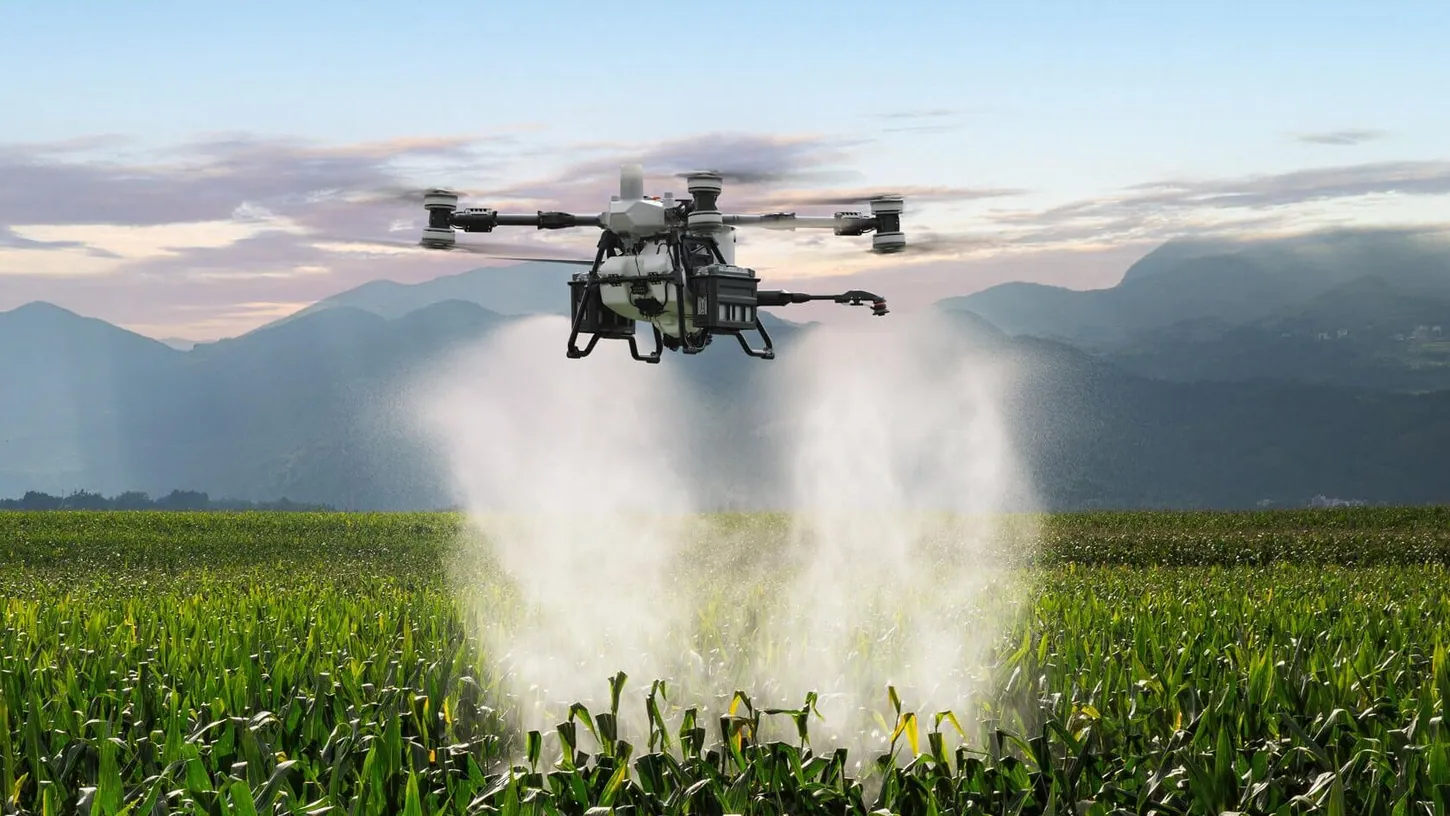
DJI is the primary drone for 97.1% of Associated Builders and Contractors members who fly, according to a survey the Washington trade association released on August 17. Autel Robotics accounts for the other 2.9%. Not one respondent named Skydio, the only American manufacturer on the ballot.
ABC surveyed its contractor members between May 1 and May 15, 2026, more than four months after the Federal Communications Commission added all foreign-made drones and critical components to its Covered List. Of the companies that answered, 36.1% fly drones, 62.4% do not, and 1.4% were unsure. The detailed findings come from the fliers.
I have been reporting on the fallout from that December action since the day it landed, and this is a survey from outside the drone world putting a number on it: American contractors standardized on DJI because it was cheap and it worked, and no American alternative registered.
DJI Holds 97.1% Of Primary Drones In ABC’s Survey
DJI builds the primary drone for 97.1% of ABC contractor members who fly, with Autel Robotics taking the remaining 2.9%. Wingtra, Parrot and Skydio each scored zero as a primary platform. The question went only to the 36.1% of respondents whose companies operate drones.
The secondary fleet looks the same. Asked which other manufacturers and models they use, 86.2% of drone-flying respondents picked DJI again, 20.7% selected “other,” and Wingtra came in at 10.3%. Skydio shows up at 5.2% and Parrot at 1.7%, both as backup aircraft. Wingtra is Swiss and Parrot is French, so the only American name in either question is Skydio, and it lost to a fixed-wing mapping drone from Zurich.
Those five options were the whole ballot. ABC did not offer a write-in for the primary manufacturer question, so a contractor flying a Freefly or a Teal had nowhere to put it. That limits the reading, but it does not rescue Skydio’s zero, because Skydio was on the list.
Contractors Fly Cheap Hardware For Progress Photos And Marketing
Most ABC drone programs run on modest budgets. 61.9% of drone-flying respondents have spent between $1,000 and $10,000 on hardware and related equipment, and 80.8% use their aircraft for site progress monitoring, with marketing and media close behind at 77.5%.
The rest of the spending curve drops fast. 11% of respondents sit in the $10,000 to $50,000 band, 5.9% each in the $50,000 to $100,000 and $100,000 to $250,000 bands, 4.2% between $250,000 and $1 million, and 0.8% above $1 million. ABC rounds the top four bands to 16.9% spending $50,000 or more.
A contractor who has spent under $10,000 in total is flying a Mini or a Mavic, not a Matrice. Inspections came in at 50%, aerial mapping or photogrammetry at 37.5%, volumetric analysis at 22.5%, and land surveying at 20.8%. High-resolution RGB cameras are the payload on 81.3% of fleets. RTK or PPK positioning runs on 21.9%.

Thermal And LiDAR Payloads Sit Inside The FCC’s Proposed Sales Ban
Thermal cameras fly on 19.8% of respondents’ drones and lidar sensors on 18.8%. Both capabilities sit among the seven categories the FCC proposed on July 21 to strip of import and marketing clearance. That proposal reaches foreign-made models the agency already approved, and comments close September 2.
DroneXL covered the seven-category proposal the day it dropped and the comment deadline as it approached. The Public Notice DA 26-758 in PS Docket 26-189 frames the targets as military-grade, and the FCC’s own justification for lidar cites three-dimensional terrain mapping. Aerial mapping and photogrammetry is exactly what 37.5% of ABC’s drone-flying contractors do with their aircraft.
The December Covered List action already means no new DJI model can be authorized for the US market. If the July proposal is adopted as written, roughly one in five of these construction fleets is flying a payload category the FCC wants to pull from shelves, with replacement parts to follow. The survey does not break out which thermal or lidar models respondents own, and the Public Notice defines its categories by capability rather than by model.
ABC Calls For Streamlined Compliance Without Naming The FCC
ABC’s August 17 release urges lawmakers to streamline drone compliance but never mentions the FCC, the Covered List, or the September 2 comment deadline. Regulatory and compliance issues topped the survey’s list of adoption challenges at 53.5%, and the report does not identify which rules respondents meant.
Training and staffing followed at 43.4%, limited use cases at 37.4%, workflow integration at 16.2%, and equipment cost at 12.1%. Matt Abeles, ABC’s vice president of construction technology and innovation, said the association “calls on lawmakers to streamline compliance” in the release. The full report runs ten pages and does not use the word “Chinese” once.
That silence is the most interesting thing in the document. ABC represents 24,000 member companies through 67 chapters, and its release says nothing about a federal proceeding that would cut off the hardware 97.1% of its drone-flying members depend on, with a comment window closing in nine days. Whether ABC intends to file in the docket is a question its release does not answer.
One small correction to the release while I am here: it lists “inspections and mapping” as a single 50% finding. The report itself scores inspections at 50% and aerial mapping or photogrammetry at 37.5% as separate answers.
DroneXL’s Take
I wrote up the Pilot Institute survey in January, where 43.4% of 8,056 operators said the DJI ban would have an extremely negative or business-ending impact. That was a self-selected pool of drone people, and ban supporters could dismiss it as DJI fans talking their book. ABC is a different animal. It is a Washington construction trade association, not a drone lobby, surveying members who mostly don’t fly, and it landed on the same number the drone industry has been shouting for a year: DJI, then nobody.
Yes, DJI’s dominance is partly the product of Shenzhen’s scale and pricing that no Western manufacturer has matched, and a government is entitled to worry about that. But the FCC’s answer to that worry is to take the tools away from a contractor who spent under $10,000 on a Mavic to photograph his own jobsite, and to offer him nothing in return. Skydio had a slot on ABC’s ballot. It got zero.
My read of the 53.5% “regulatory and compliance” figure is that most of those contractors are thinking about Part 107 and who on the crew holds the certificate, not the FCC. The survey didn’t ask about the ban. That’s what makes the 97.1% so damning: nobody prompted these companies to think about DJI, and DJI is what they had.
ABC has until September 2 to say something to the FCC on behalf of the 97.1%. Vic Moss and DSPA have already said their piece. A construction trade group with 24,000 members telling the commission that its proposal reaches one in five of their drone programs would carry more weight in that docket than any individual drone pilot’s comment. If ABC stays quiet, it will have published the best evidence available and then declined to put it on the record.
Sources: Associated Builders and Contractors news release, ABC Drone Usage Survey Report (August 2026), FCC PS Docket 26-189.
DroneXL uses automated tools to support research and source retrieval. All reporting and editorial perspectives are by Haye Kesteloo.