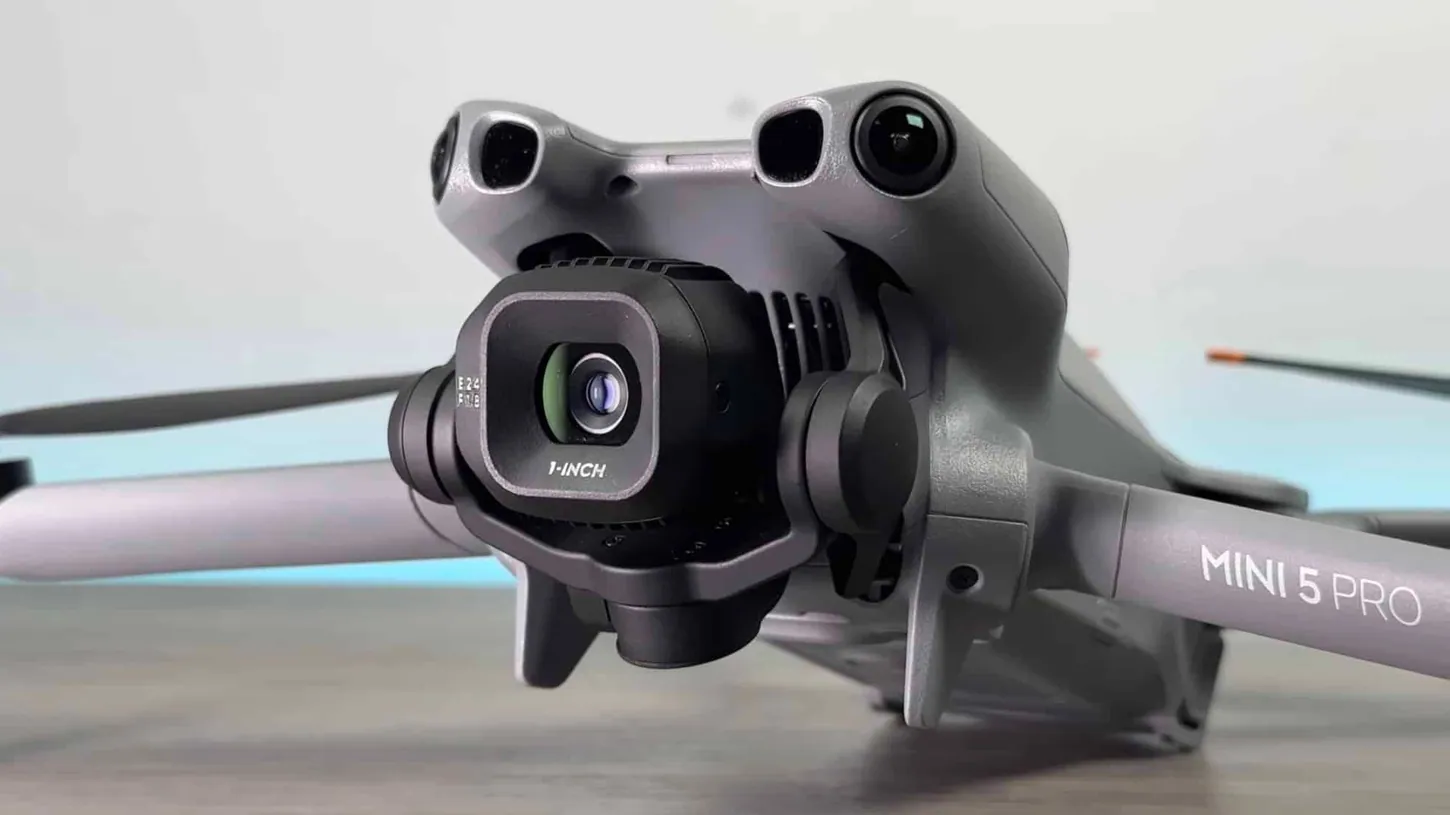
The DJI Mini 5 Pro is selling for $683 at Amazon, down from a $759 list price. That 10% cut matches the floor DroneXL logged on this aircraft in late July, and the badge on the listing reads “Lowest price in 30 days.”
Two federal dates sit on the other side of this purchase. Comments in the Federal Communications Commission proceeding that would end imports and sales of previously authorized foreign drones carrying LiDAR close on September 2. The Mini 5 Pro carries forward-facing LiDAR. One day later, on September 3, a 25% Section 232 tariff on imported drones takes effect.
For $683 the box holds the drone, the DJI RC-N3 controller, one battery, spare propellers, and 42GB of internal storage. The listing ships from Amazon but is sold by a third-party seller, so check the seller line before checkout.
Get the DJI Mini 5 Pro for $683 at Amazon

DJI Mini 5 Pro in Alaska. Photo credit: Jake Sloan
DJI Put A 1-Inch Sensor Into A 250-Gram Airframe
The Mini 5 Pro was the first mini drone to carry a 1-inch CMOS sensor. It shoots 50-megapixel stills, 4K HDR video at 60fps, and 4K/120fps slow motion behind a fixed f/1.8 lens, with 10-bit D-Log M and up to 14 stops of dynamic range in auto mode.
That chip size used to mean a bigger aircraft and a bigger bill. DJI reserved it for the DJI Air 3S and, nine years before that, the Phantom 4 Pro. Dropping it into a body that fits in a jacket pocket is why every reviewer DroneXL publishes has reached the same conclusion since launch, which is that no drone this size competes with it on image quality.
A 48mm medium-telephoto mode uses pixel binning for 2x reach without a meaningful quality penalty, which gives ridgelines and portraits the compression a 24mm wide angle flattens out. At $683 that is the cheapest 1-inch sensor DJI currently has on an American shelf.
Nightscape LiDAR And A Gimbal That Rotates 225 Degrees
Front-facing LiDAR pairs with omnidirectional vision sensors on the Mini 5 Pro, keeping obstacle detection alive in light as low as 1 lux and enabling a nighttime return-to-home mode. The gimbal rotates 225 degrees and flips to true vertical for full-sensor portrait video.
Vertical is the feature that settles the buying decision for anyone shooting Reels or Shorts. The file comes off the card in portrait using the whole sensor rather than a cropped strip out of a horizontal frame, which is the difference between a usable 50-megapixel still and a tall crop of one.
O4+ transmission is rated to 20 km (12.4 miles). The battery is rated at 36 minutes, and that number is marketing: DroneXL’s long-term testing put real-world flight time at 20 to 25 minutes per battery depending on wind and recording load, and no reviewer in our pool has matched the box figure in ordinary flying. The $683 package ships with a single battery, so a second one is the first accessory worth adding.
The FCC Proposal Names The Sensor On This Drone’s Nose
Public Notice DA 26-758 opened PS Docket No. 26-189 on July 21 and proposes ending the import and marketing of previously authorized foreign drones on the Covered List that fall into seven capability categories the agency calls military-grade. One of the seven is LiDAR. Comments close September 2.
The notice draws no line between survey-grade mapping payloads and the low-light obstacle sensor bolted to the front of a hobby drone. DroneXL walked through the full seven-category proposal and the September 2 window two weeks ago, and LiDAR is the category that reaches consumer pilots. A sensor whose job is stopping a 249.9-gram aircraft from flying into a balcony now sits in the same bucket as swarming systems.
Where the line falls is the part the FCC has not answered. The agency built its economic case on the finding that recreational consumers are “unlikely to fly military-grade UAS,” then wrote a category that captures an aircraft Amazon says 500 or more people bought last month. The notice publishes no threshold, no wattage figure, and no range cutoff separating a mapping unit from an obstacle sensor. It does ask commenters whether anything on the list is not military-grade, which is the exact question a Mini 5 Pro owner is qualified to answer.
Buyers should be clear about the scope. The proposal reaches importation and marketing. Flying an aircraft you already own stays authorized, and the firmware waiver runs to at least January 1, 2029. Adopted as written, the prohibition takes effect 180 days after the August 3 Federal Register publication, landing near the end of January 2027. What stops is the restocking. Vic Moss laid out how to file in the docket, and it takes about ten minutes.
The tariff is the nearer date. Trump’s Section 232 proclamation puts a 25% duty on consumer drones starting September 3, with a 100% rate on thermal and heavy aircraft. Duties apply to declared import value rather than retail price, so nobody should expect $683 to become $854 overnight. Importers decide what they pass through, and the last round of China duties showed they pass through plenty.
Registration Applies Because Production Units Weigh 252 Grams
DJI markets the Mini 5 Pro at 249.9 grams. A DroneXL industry source documented production units at 252 to 253 grams on a calibrated scale, and the FAA allows no manufacturing tolerance at its 250-gram threshold, so registration and Remote ID apply even to recreational flights.
Two late design changes pushed the aircraft past its printed weight before launch. Europe’s EASA kept the drone in its C0 class with a small buffer. American pilots get $5 and a few minutes at FAADroneZone instead.
DroneXL’s Take
This is a floor being retested rather than new territory. The standalone package held $759 from March into mid-July, broke to $683 late that month, then spent August underneath accessory bundles at $899 while the bare drone sat above $683 for the next 30 days.
Every price move on this airframe is dated on our Mini 5 Pro deal tracker, and the shape of that log says something plainer than any single headline: $683 recurs. Anyone holding out for $599 is waiting on a market where DJI has no American sales channel and where, from September 3, importers owe the Treasury a quarter of declared value on every unit that clears customs.
The commission’s underlying suspicion is not imaginary, and DroneXL helped build the record that makes it look reasonable. Our reporting on the Fikaxo shell company network turned up in the footnotes of the agency’s own July notice. Chinese-linked brands really did launder hardware into this market through proxies, and the FCC was right to chase them.
LiDAR is where that logic comes apart. Chasing shell companies is enforcement. Declaring a 1-lux obstacle sensor military-grade is a category error, because the capability test cannot tell a survey rig from the part that keeps a beginner out of a power line. The pilot who bought this aircraft to stay light and stay out of trouble is now inside a proceeding that treats the safest component on it as the disqualifying one.
So buy it or don’t, at a number that has come around twice this summer and will come around again. The calendar is the thing worth your attention. September 2 closes the one room where this commission has to write back, and the filings it is still missing are the ones with fleet counts and replacement quotes attached.
Sources: Amazon, FCC Public Notice DA 26-758, The White House
DroneXL uses automated tools to support research and source retrieval. All reporting and editorial perspectives are by Haye Kesteloo.