
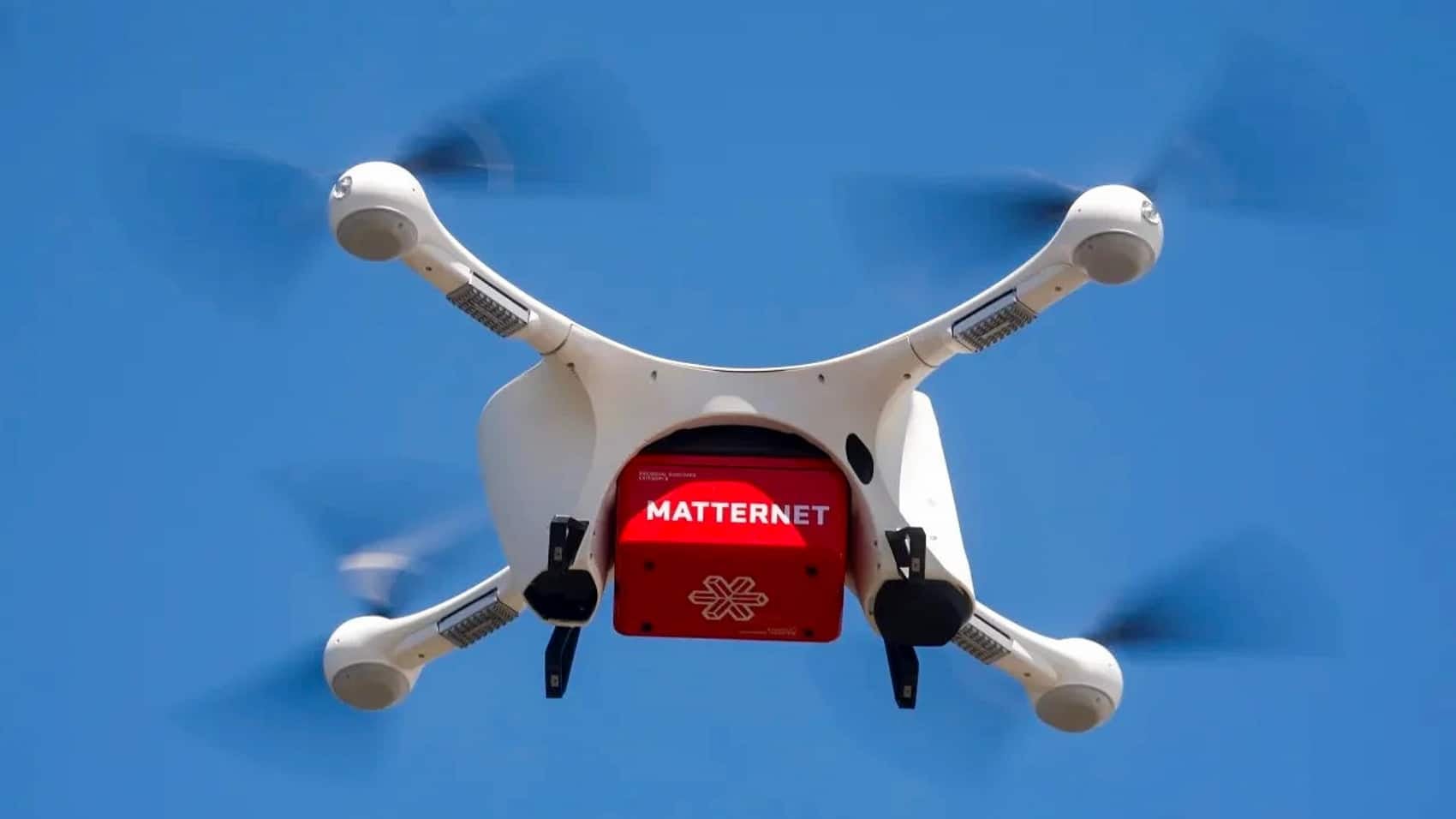
Matternet will fly replacement parts to audiovisual technicians working in congested downtowns, under a partnership with Tampa integrator AVI-SPL announced Tuesday morning. Neither company named a launch city, a start date, or how many aircraft the service would use.
The target is the gap between a technician discovering a dead component and holding a working one. AVI-SPL builds and services conference rooms, control systems and video infrastructure for corporate clients worldwide, and a single missing part can idle a crew for half a day while someone drives across town. Matternet’s answer is to send it by air.
It is also the fourth partner Matternet has named since April, and DroneXL has been tracking that pattern across the whole sector all year. Announcements have run well ahead of aircraft in the sky, which is most of the reason we built a drone delivery tracker in the first place.
AVI-SPL Wants Parts in a Technician’s Hands in Minutes
AVI-SPL services audiovisual and unified communications systems for what it says is more than 86% of the Fortune 100. When an install stalls on a failed component, the technician waits on ground transport. Under this partnership, a Matternet M2 would carry that component from a depot to the job site.
The release describes three expected applications: parts delivery to installers in downtown cores, premium support tiers with tighter service-level agreements, and eventual integration into AVI-SPL’s wider supply chain. All three are framed as expectations. None carries a date.
“Instead of waiting hours for a part, a technician can have it within minutes,” said Andreas Raptopoulos, founder and CEO of Matternet.
AVI-SPL is not a small pilot customer. It employs more than 4,400 people across some 70 offices, and private equity firm 26North, founded by Josh Harris, announced a deal for a controlling stake in June 2025 and closed it that August. If the parts-by-drone idea works anywhere, it works at that scale.
Matternet Has Named Four Partners Since April
Matternet named SoftBank Robotics America as a deployment partner on April 16, battery supplier Amprius on May 19, and Beeline UAS on July 15 as a third Part 135 operator alongside UPS Flight Forward and Ameriflight. AVI-SPL landed Tuesday. Four partners in five months.
In between, the company raised $33 million and went public through a reverse merger with a shell renamed Matternet Inc.
None of those announcements came with flight volumes, route counts, or revenue, and Tuesday’s release does not either. The one operational number Matternet publishes is cumulative: more than 60,000 commercial flights across the U.S. and Europe, a count it has been building since its first humanitarian missions in 2014.
Spare Parts Fit the Aircraft Better Than Dinner Does
The M2 is an electric quadcopter carrying roughly 4.4 pounds (2 kg) out to about 12.4 miles (20 km), launching from and returning to fixed Matternet stations. A control processor, a video card, or a cable bundle sits comfortably inside that envelope. A family’s dinner order usually does not.
The economics work differently too. A commercial job site has staff standing there, a loading area, and a business paying by the hour for the delay. That is closer to the hospital-to-hospital lab routes Matternet cut its teeth on than it is to the residential drone deliveries the company launched in Mountain View in 2024, or to the Dave’s Hot Chicken pilot it announced last October. Chicken sandwich margins never justified the aircraft.
Part 108 Sets the Ceiling on Any of It
Matternet holds the only FAA type certificate issued to a delivery drone, plus a production certificate, and its operating partners fly under Part 135. That combination already permits routine flights beyond visual line of sight on approved routes. Scaling it across dozens of metro areas is a different problem.
That problem runs through the FAA’s Part 108 rulemaking, which the industry is still fighting over this month.
AVI-SPL’s own city shows what clears the bar today. Tampa General Hospital started moving whole blood by drone in August, one route, one hospital system, after months of approvals. Nobody is flying a hundred parts runs a day in an American downtown yet.
DroneXL’s Take
Of every vertical anyone has picked for drone delivery, this is the one I would have picked. High-value, low-weight, time-critical, delivered to a commercial site with a person waiting. The alternative is a technician in a van on I-275. Matternet finally found cargo that justifies a certificated aircraft.
What the release does not say is who is paying. It never calls AVI-SPL a customer. It never says a contract exists. It says the two companies will pair their capabilities and lists what they expect the pairing to do, which is a different thing, and Matternet is a reporting company now, so that distinction eventually shows up in a filing rather than a press release.
Stadium-sized caveat: the type certificate is real, and nobody else has one. That document is why Matternet gets to have these conversations at all while Wing and Zipline work waiver by waiver. The moat is genuine.
It still has to turn into flights. Four partner announcements in five months, a cumulative flight count stretching back twelve years, and no route, date, or aircraft number attached to any of it is a pattern investors should read carefully. Matternet’s Q3 10-Q is the first filing that can settle it. If that document shows revenue moving with the announcements, the story holds. If it shows partnerships and flat numbers, the announcements are marketing.
Source: Matternet
DroneXL uses automated tools to support research and source retrieval. All reporting and editorial perspectives are by Haye Kesteloo. Read our editorial standards.


