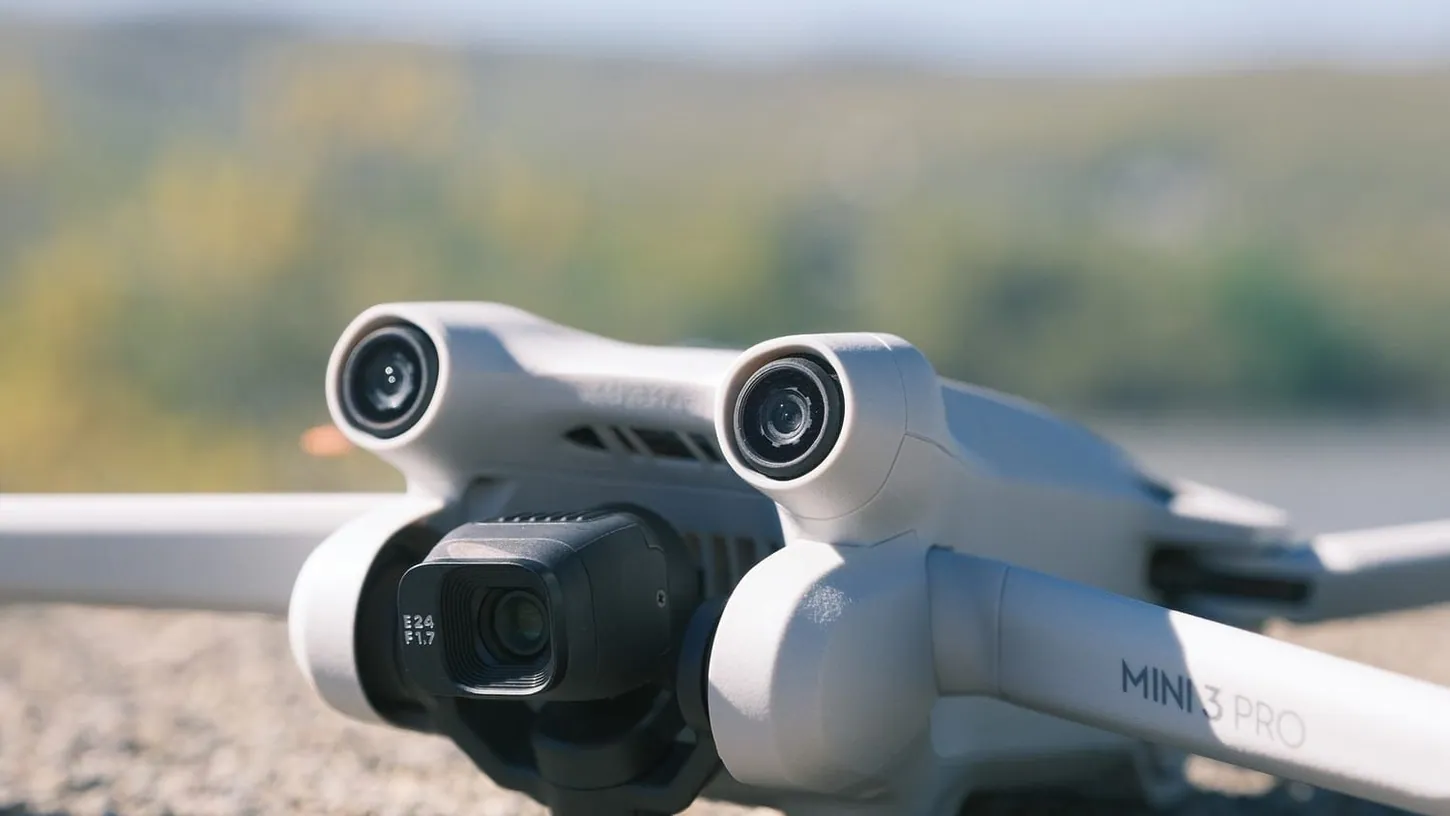
Zing Drone Solutions, the Pendleton, Oregon company behind the Z-RID Lite Remote ID module and the Z-SCAN drone detection system, has signed a memorandum of understanding with NUCODE, a Seoul maker of low-power Bluetooth and Wi-Fi modules. The two announced it on October 5. Zing wants a radio module small enough for what it calls its “ultra-compact solutions.”
Nothing has been bought yet. Zing has sent NUCODE a request for information, NUCODE has sent back samples of its Wi-Fi and Bluetooth combo module, and the terms are left for a definitive agreement that does not exist yet. On December 22, 2025, the FCC put every foreign-made drone “critical component” on its Covered List, and data transmission devices are the first example it names.
Zing Is Grading NUCODE’s Modules On Secure Boot And Component Origin
Zing is testing the samples against its size and power targets, and the announcement puts security on the same footing: secure boot, signed firmware updates, and transparency on the bill of materials and where parts come from. Neither company has named a price, a volume or a delivery date.
The two CEOs agree on what the buyer wants. Ian Annase, Zing’s founder, said customers need “a clean path to Remote ID compliance.” NUCODE CEO Bruce Lee said “customers need to trust the supply chain.”
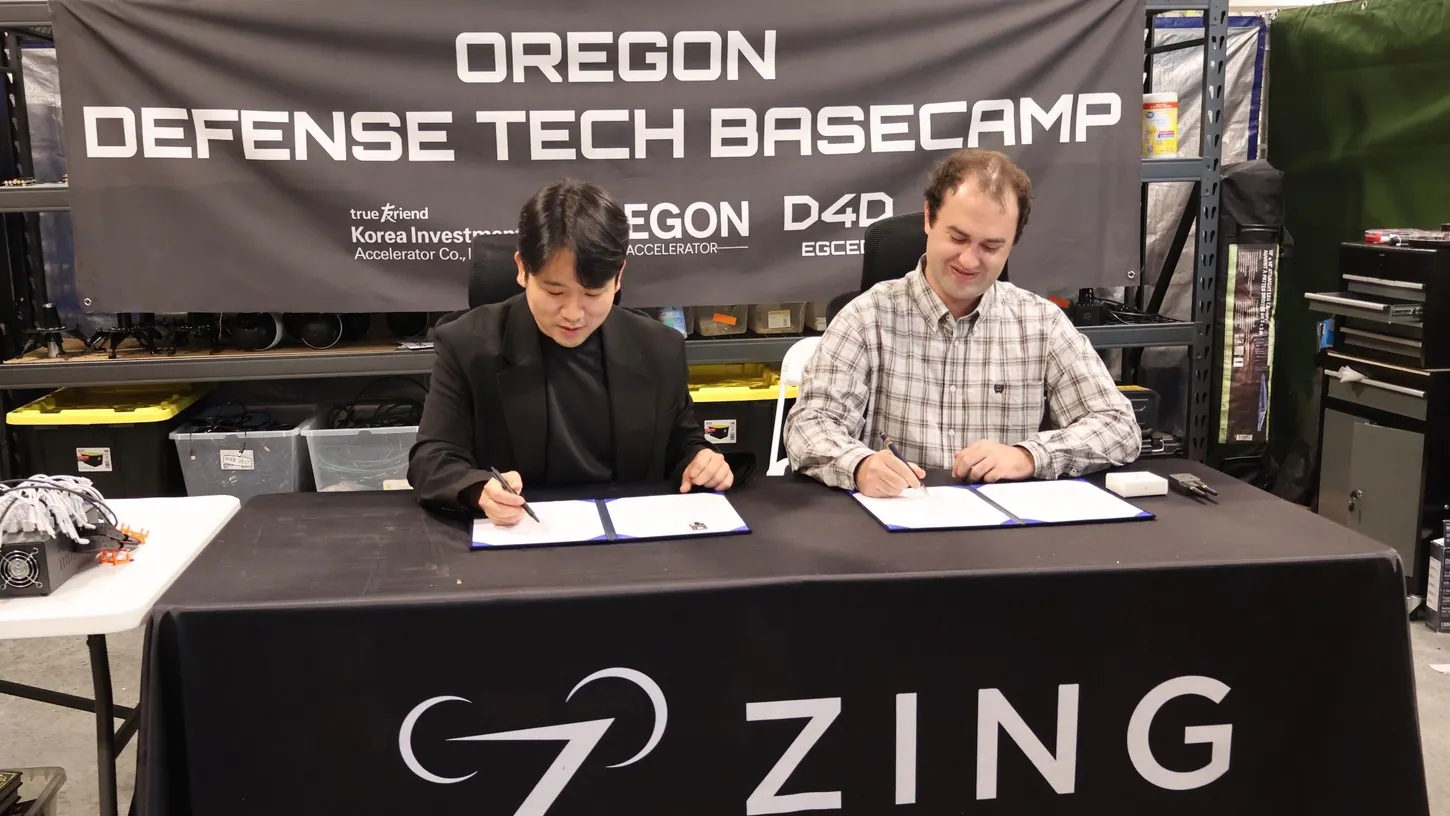
The Korean connection runs through Pendleton. Zing’s own timeline lists it as one of seven founding companies of the Oregon UAS Accelerator, and in July Korea Investment Accelerator signed an agreement with that accelerator to bring Korean defense and drone startups to the U.S. market. The Oregon Defense Tech Basecamp, the banner behind the signing photo, is the housing and office hub it opened in the Portland area afterward, according to Smart Today. NUCODE lists its own U.S. office in Portland.
Zing has changed shape since DroneXL first covered it. In July 2022 it rebranded from Zing Drone Delivery to Zing Drone Solutions, and in January 2024 it launched the Z-RID Lite as a cheaper broadcast module. Zing says the Z-RID Lite now carries approvals in the U.S., Europe and Singapore, and that Z-SCAN is deployed at Oregon Department of Corrections facilities and at Salinas Airport in California.
The FCC Covered List Treats A South Korean Drone Radio Like A Chinese One
The FCC’s December notice, DA 25-1086, adds drone critical components “produced in a foreign country” to the Covered List, with no carve-out for allies. A listed part can’t get a new FCC equipment authorization unless the Department of War or Homeland Security clears it.
Those clearances come in a few forms, and DroneXL has tracked them since January. Components on the Blue UAS list and U.S.-made products with at least 65% domestic content were exempted in January. In July the FCC extended both through January 1, 2028 and dropped the end date on Department of War Conditional Approvals, the case-by-case route a foreign part would most likely need. A NUCODE module would be foreign-made, and NUCODE’s published boards run on Nordic Semiconductor chips from Norway. NUCODE says it is Nordic’s only official third-party Bluetooth 6.0 module partner in Korea.
The notice never mentions Remote ID. It does not say whether a general-purpose Bluetooth and Wi-Fi module counts as a drone component, or whether it becomes one once it sits inside a Remote ID broadcaster. Neither company’s announcement mentions the Covered List, and the line about component origin is the closest either comes.
DroneXL’s Take
I like that Zing put secure boot and component origin on the checklist next to size and battery life. That is the right order of questions for a box whose whole job is telling the world where your drone is. But an MOU with samples and no price is a conversation, and I’d treat it as one until there is a supply contract. My bigger problem is with Washington. The FCC rule as written makes no distinction between a radio from South Korea, a treaty ally that hosts U.S. troops, and one from the country the rule was aimed at. If an Oregon company building compliance hardware needs a Pentagon Conditional Approval to use a Korean Bluetooth module, the foreign parts rule is catching the wrong supplier. Watch whether Zing’s definitive agreement names that approval path, because a smaller module that can’t get FCC authorization doesn’t help a single U.S. pilot.
Source: Zing Drone Solutions and NUCODE press release, October 5, 2026; FCC DA 25-1086.
DroneXL uses automated tools to support research and source retrieval. All reporting and editorial perspectives are by Haye Kesteloo. Read our editorial standards.