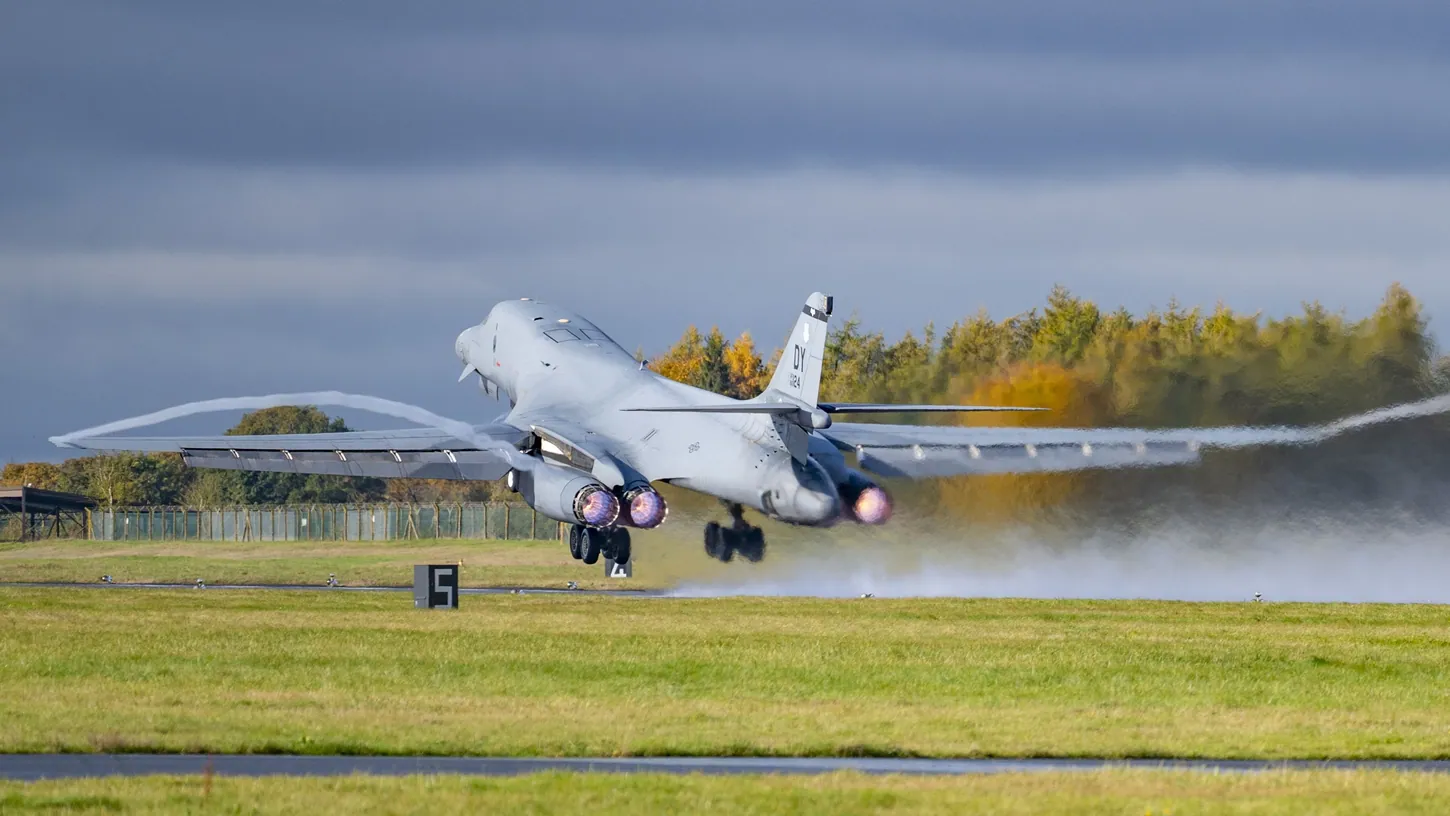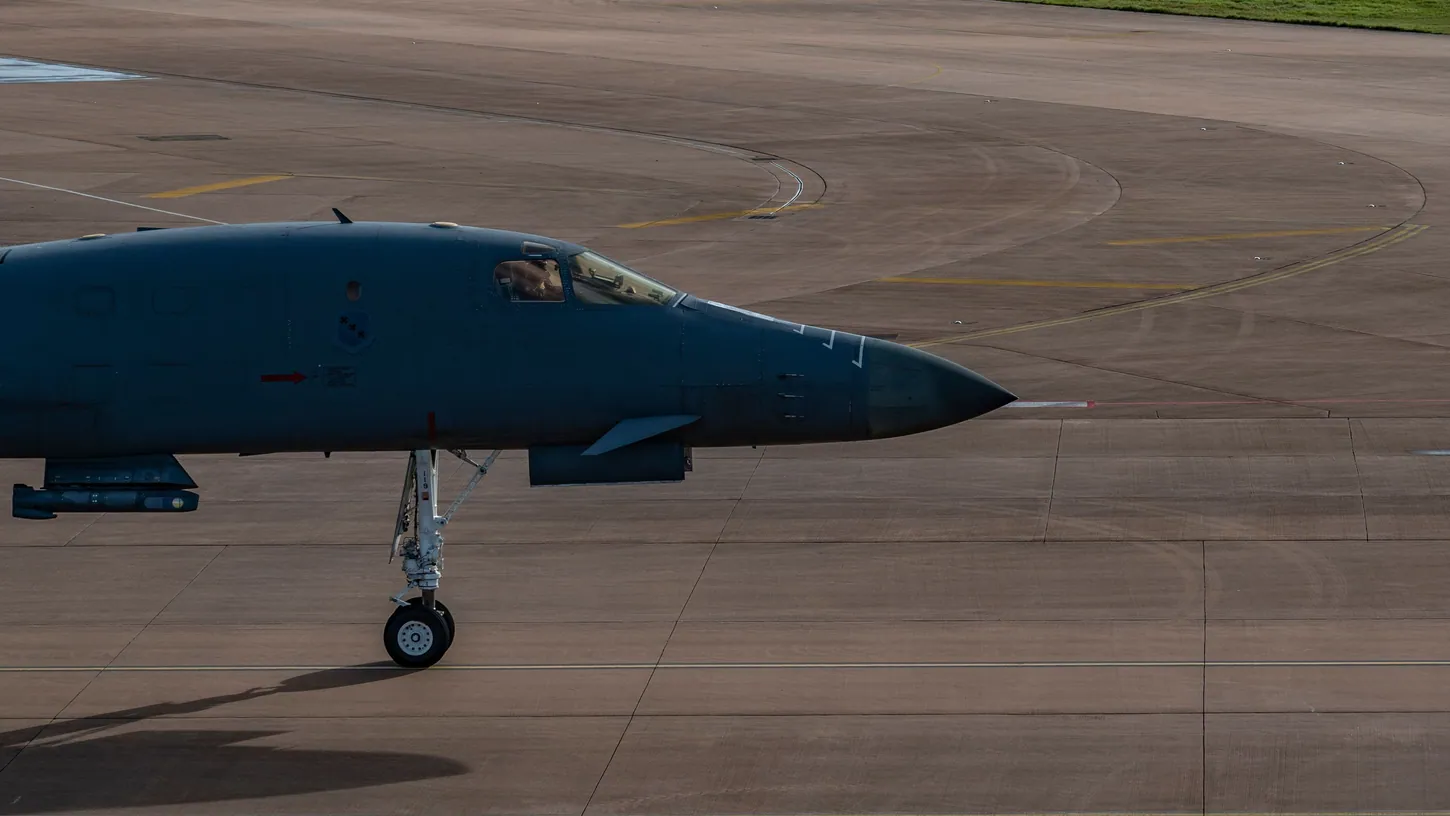
MI5 Director General Sir Ken McCallum said on Tuesday that the Iranian operations Britain has seen in recent years have “not been anywhere near the level of capability” for a sophisticated drone attack on British soil, according to The New York Times. He was asked about that doubt, which British security experts have raised since the US Air Force pulled all 12 of its B-1B bombers out of RAF Fairford this month. The Times reported that the US acted on intelligence about a possible Iranian-led drone attack on the base.
McCallum spoke at his annual threat update at Thames House, MI5’s London headquarters. He said Iran-linked operations had led to more than 50 arrests in Britain in the past 12 months, that Iran now wants to come at harder targets such as military sites, and that live investigations limit what he can say. A day earlier, Prime Minister Andy Burnham told the House of Commons that the Fairford incident was highly likely coordinated in Iran.
Police found petrol and no explosives in the three vans at the center of the September 27 arrests near Fairford. All seven men arrested in the investigation remain on police bail, and police have announced no charges.
Iran’s UK Campaign Has Run on Hired Proxies and Arson
McCallum said Iran subcontracts its violence in Britain, using criminal proxies against dissidents, Iranian media outlets and Israeli sites. A spring wave of arson and sabotage against Jewish communities in Britain and Europe was claimed by a front group, and McCallum said members of the Revolutionary Guards sat behind it.
The attacks claimed by that group did not kill anyone and were generally unsophisticated, The New York Times reported. They were generally carried out by local criminals or teenagers hired online, who often said they did not know who had recruited them. In London, four Hatzola ambulances, which serve mainly Orthodox Jewish communities, were set on fire in late March. In the published text of his speech, McCallum named the front as the Islamic Movement of the Companions of the Right. Britain has now designated both it and the IRGC under the National Security Act.
Security experts cited by the Times suggested the Fairford incident may have been a botched arson attempt, similar to earlier Iran-linked incidents. In the Commons on Monday, Home Secretary Shabana Mahmood said the government’s assessment is that it was highly likely coordinated by a known individual based in Iran. Burnham added that it was “almost certainly directed by Iran’s Islamic Revolutionary Guard.” Iran denies any role.
The Foreign Office sanctioned two men the same day for hostile activity on behalf of the Iranian regime: Ruhollah Bazghandi, head of counterespionage operations in the IRGC, and Shahram Ali Reza Tamarzadeh Jakki, a facilitator of the Zindashti criminal network. Neither government statement links either man to Fairford. Both face an asset freeze, a travel ban and director disqualification, which bars them from running UK companies.
McCallum’s Drone Warnings Named Russia and AI-Enabled Drones
In the published text of the speech, drones come up several times and never in the section on Iran. McCallum cited a Russian attempt to destroy a cargo plane in Germany with an explosive-laden drone. He also named a Swindon drone factory sabotage case and terrorist interest in AI-enabled drones.
The German case is one DroneXL has followed since August. Berlin formally blamed Russia for the explosives-laden quadcopter found beside a Ukrainian Antonov An-124 at Leipzig/Halle Airport on August 4, and ordered the Russian consulate in Bonn closed over it.
The Swindon case is closer to home. Joshua Cammidge, 31, was charged in September under the National Security Act with assisting a foreign intelligence service and preparing an act of sabotage. The charges state he sent Google Maps screenshots of four drone manufacturing sites in Swindon to a contact believed to be linked to the GRU Volunteer Corps, ITV News reported. Swindon has become a hub for military drone production. Cammidge did not enter a plea at his first hearing.
McCallum told defense suppliers, large or small, to follow MI5’s counter-drone guidance, and Mahmood told MPs the government is tightening security around military bases. British troops still lack a general legal power to bring down drones over their bases. The Armed Forces Bill that would give them one is still in the House of Lords awaiting report stage, according to the Parliament bill tracker on October 13. DroneXL reported 340 drone incidents at UK military sites in a year on September 19, and the Ministry of Defence named no culprit for any of them.
DroneXL’s Take
To me, McCallum’s answer makes the Fairford pullout look like a reaction to a capability Iran hasn’t shown in Britain in recent years, though he can’t say everything. I still think the US was right to go, because a base whose guards lack a general power to bring down a small drone has to treat a credible warning as the attack.
I suspect Iran wouldn’t need a team able to copy Ukraine’s truck-launched Spiderweb raid to exploit that gap. One hired courier with a quadcopter could do it, and McCallum’s own speech says Iran already subcontracts its UK violence to criminal proxies.
I’ll treat the B-1s’ return to Fairford, or their absence, as the clearest signal of whether Washington thinks Mahmood’s tighter base security is enough.
Sources: The New York Times, MI5, Prime Minister’s Office, Home Office, Foreign, Commonwealth and Development Office, Euronews, ITV News.
DroneXL uses automated tools to support research and source retrieval. All reporting and editorial perspectives are by Haye Kesteloo. Read our editorial standards.