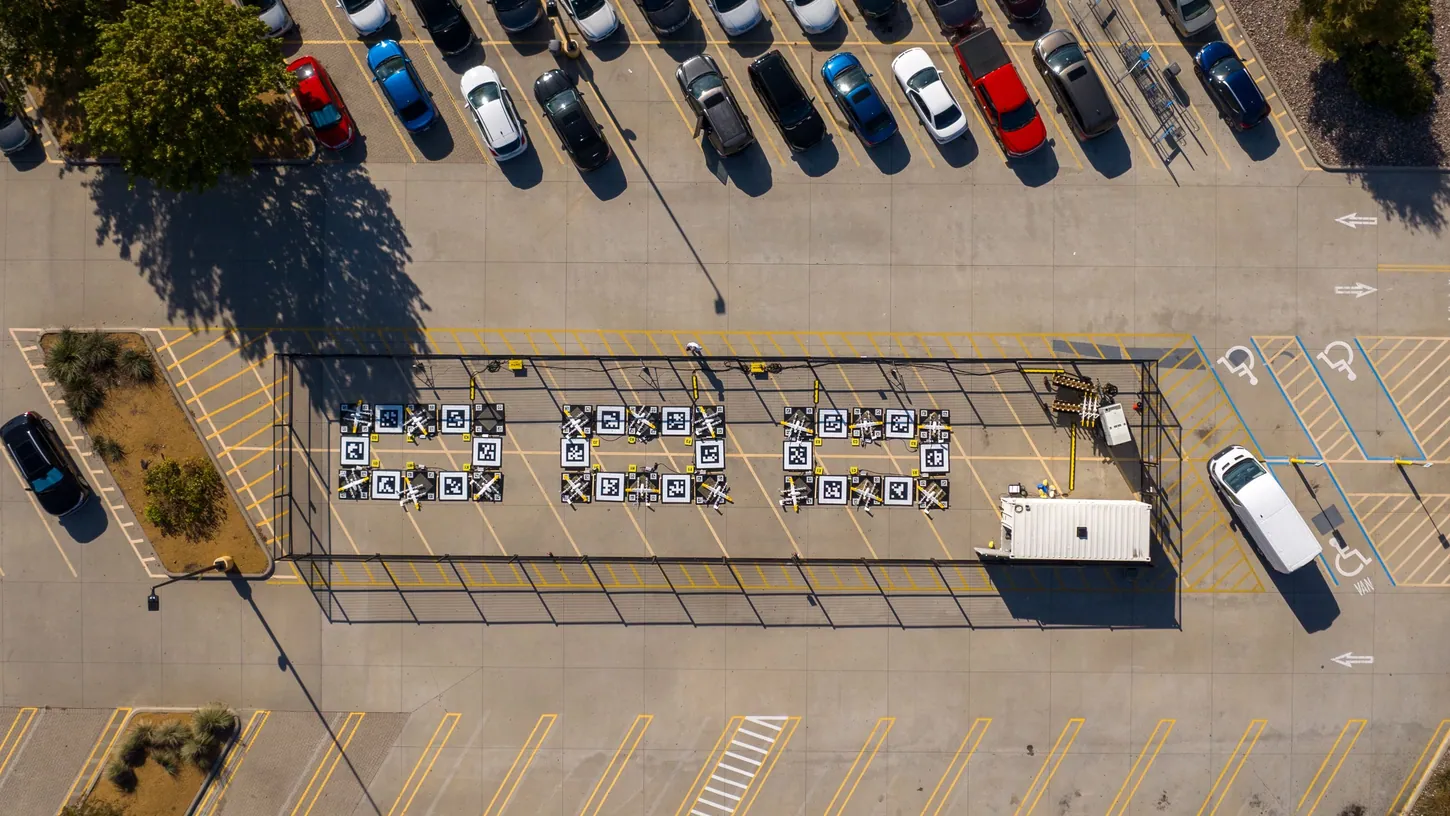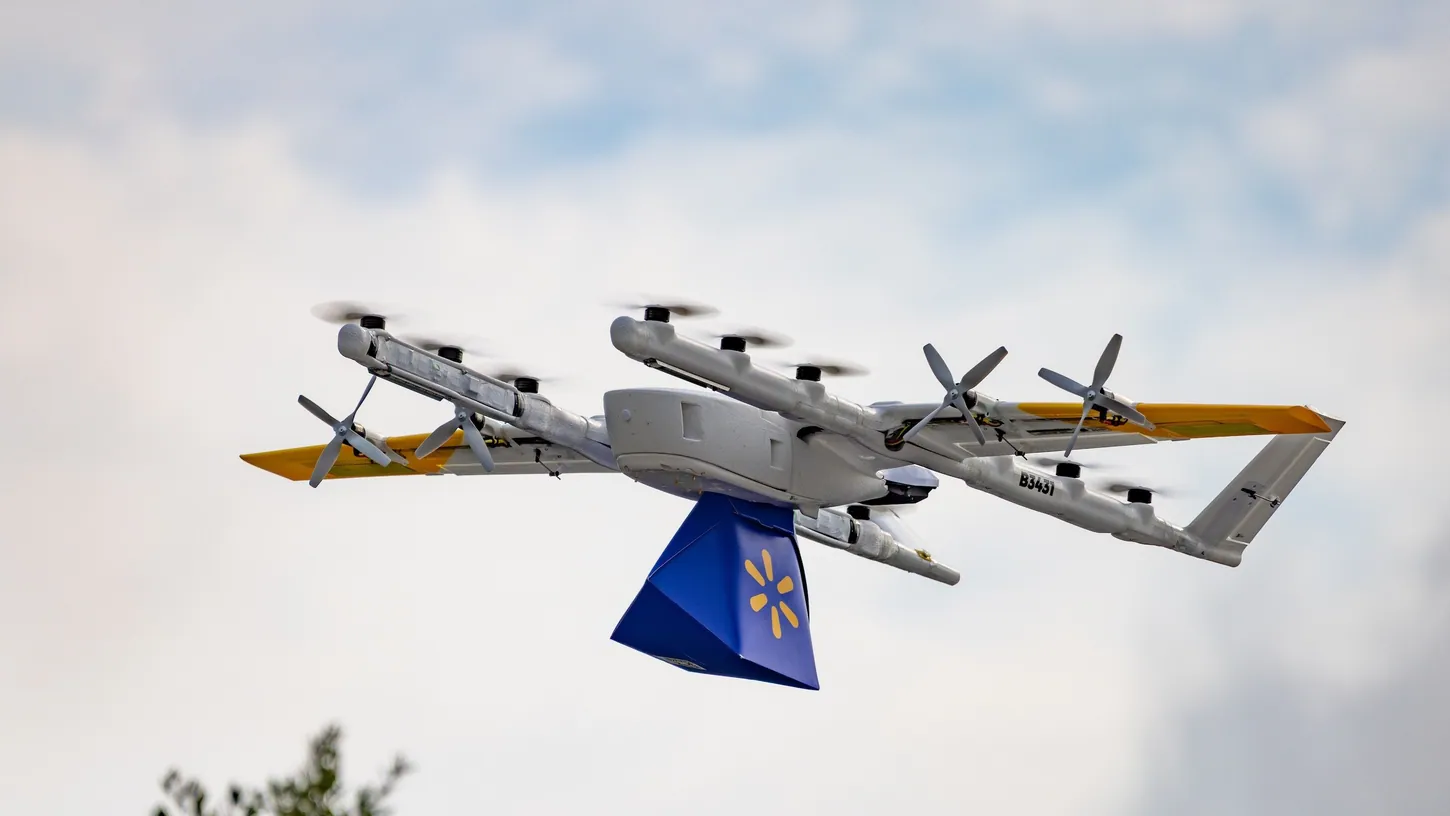
Wing, the Alphabet-owned company flying drone deliveries for Walmart, is the operator whose June presentation set off the drone delivery ordinance Wentzville, Missouri, is now writing. City minutes show Wing’s manager of local policy, Catherine Lovett, pitched an 18-drone nest at the Wentzville Walmart to the Planning and Zoning Commission on June 8. The commission voted 6 to 0 that night to have staff write a zoning category for it.
The Board of Aldermen gave that ordinance, Bill 4914, its first reading on Wednesday night, four weeks after postponing it. It would make drone delivery a conditional use in Wentzville, a city in western St. Charles County, and require a noise study before any nest goes up. The local TV report on Wednesday’s vote did not name Wing.
The commission’s June 8 minutes record Wing’s aircraft as carrying 2.3 pounds. That matches, in kilograms, the five pounds Wing published on October 5, and Bill 4914 sets no weight limit at all.
Wing Asked for a Nest Beside the Wentzville Walmart’s Curbside Pickup
Wing’s June 8 presentation covered the Wentzville Walmart. Lovett described a standard 18-drone nest beside the curbside pickup area, all-electric batteries instead of diesel, flights at 150 to 200 feet (46 to 61 meters), and deliveries in five to 15 minutes during the store’s curbside hours.
The commission asked for that meeting. Its May 11 minutes record a direction to staff to set one up with Wing representatives. Walmart and Wing had named St. Louis as a market in their 150-store expansion in January, but KMOV’s August list of St. Louis-area targets left Wentzville off, two months after the pitch.
Lovett told the commission the drones lower packages without landing, carry no audio or live feed, and deliver only to homes away from power lines and commercial property. Community Development Director Doug Forbeck said the zoning code had no category for drones, according to the June 8 minutes, and the commissioners pushed on the site more than the flights. Vice Chairman Bob Schmidt objected to a chain-link fence and asked for the nest to go behind the store. Lovett said it could not sit too close to the building or the truck entrance, that Wing was looking at other fencing and screening, and that it was open to another area. Commissioner Timothy Bubenik asked what happens when Target wants drones too, and Lovett pointed to the FAA’s unmanned traffic management system.
Bill 4914 Puts the Noise Data on the Applicant
Bill 4914 makes commercial drone delivery a conditional use in Wentzville’s C-2, C-3 and I-1 zones. It is allowed only as an accessory to an existing business. Applicants must file FAA authorization, insurance, state licensing and a noise study measuring decibels at the dispatch pad and at a receiving home.
The ordinance text in the Board’s October 21 agenda packet limits flights to 7 a.m. to 9 p.m. Sunday through Thursday and 7 a.m. to 10 p.m. on Friday and Saturday, subject to each permit. Operators may not intentionally collect images or data unrelated to deliveries and must publish a privacy policy. The Planning and Zoning Commission can set conditions on fencing, lighting, truck traffic and setbacks.
The commission approved the text on September 14. At the Board’s September 23 meeting, Alderman Frank Martell said he was not a fan and that the city was not ready for the noise or the potential liabilities. City Administrator Doug Lee said drones could fly in from outside city limits without being subject to city code. City Attorney Jim Hetlage said the FAA has already authorized the operation of drones for commercial deliveries, so the city’s rules reach only the base where drones take off and land, the same line Northglenn’s staff drew for a Walmart and Wing hub in suburban Denver. Mayor Nickolas Guccione asked who would be responsible if a drone damaged infrastructure. The aldermen postponed the bill 6 to 0, and Forbeck offered to ask the drone delivery vendor to present to the Board.
The bill’s applicability line still covers operations that “involve delivery of goods to properties within the City,” which as I read it reaches past the base the city’s attorney said it can regulate.
The bill passed first reading Wednesday, according to Guccione, and KMOV reported the aldermen are expected to take it up again in about two weeks. The Board’s next regular meeting is November 4.
Wing’s Payload Figures Run From 2.3 to Five Pounds on the Record
Wentzville’s June 8 minutes record Wing’s aircraft at 11.7 pounds, carrying 2.3 pounds. Wing’s October 5 announcement of its Denver and Seattle markets says its aircraft carry up to five pounds, which converts to 2.3 kilograms. Wing’s Walmart orders in Charlotte cap at 2.5 pounds.
The minutes are a recording secretary’s summary, not a transcript, and they do not say which unit Lovett used. My read is that 2.3 is the kilogram figure recorded as pounds. It could also be a per-order cap, which has moved before: Wise News Network put it at 2.1 pounds when Shelby, North Carolina, started flying in February.
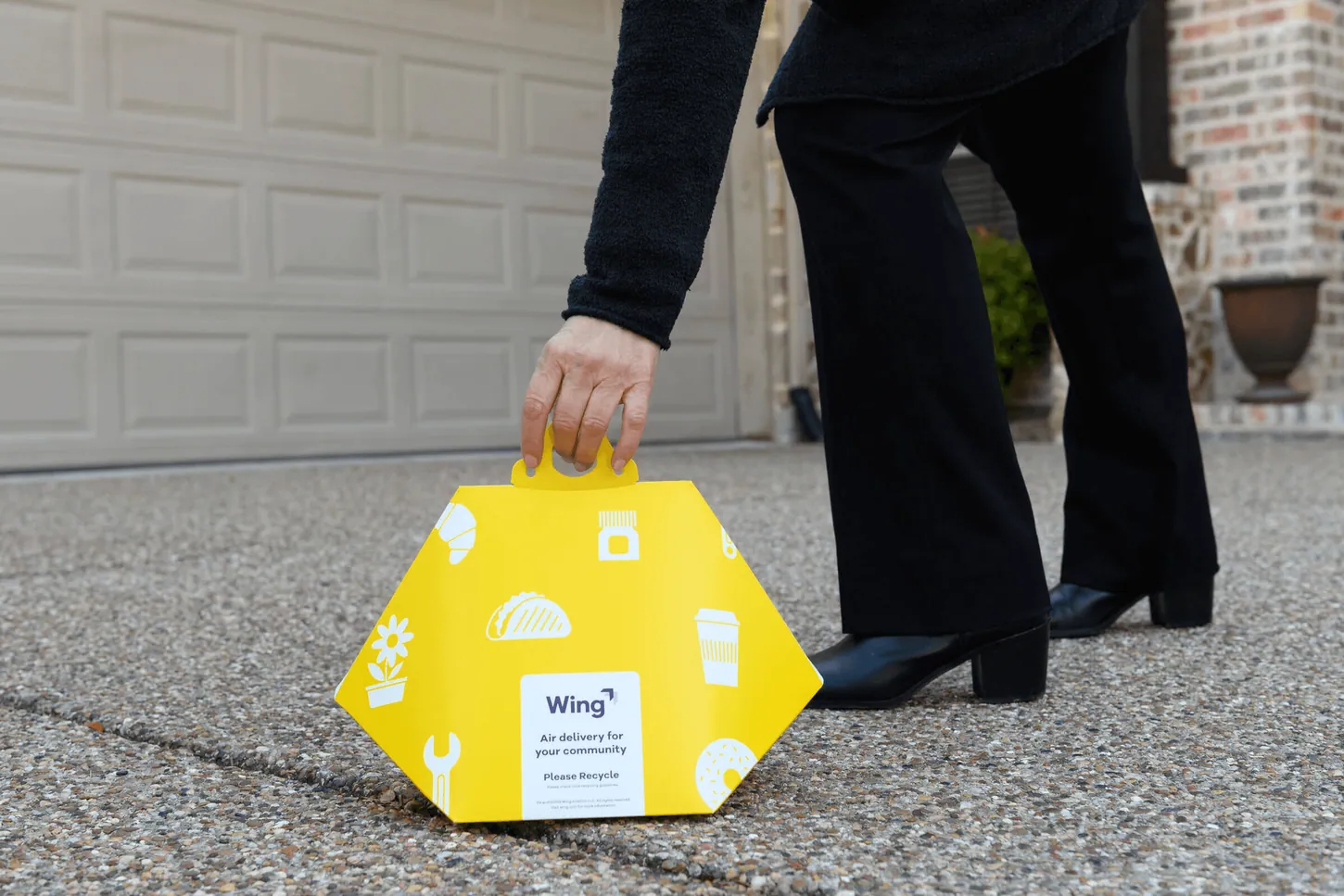
Wing’s Jessie Poole-Strang told KMOV in August that it would deliver “just over 2.5 pounds, maybe 3 pounds,” and Kirkwood’s draft special use permit capped deliveries at 2.5 pounds before the City Council let it die without a motion on October 15. Wentzville’s bill asks for no figure. Its permit conditions name hours, noise, lighting, location, access, truck traffic and fencing, but neither weight nor drone count, though Forbeck told the Board on September 23 that drone numbers could be handled through the permit. A resident’s October 3 letter in the Board packet asked for limits on both.
DroneXL’s Take
Wentzville is doing this the right way, and I’d pass Bill 4914 at its next reading. The city wrote its rule before any application arrived (the September staff report lists none) and put the cost of noise data on the company that wants the nest.
That beats Kirkwood, where the council had a finished permit in front of it and let it go without a reason on file. The bill does need two edits first. The permit application should state the aircraft and its per-order payload cap in writing. None of that regulates a flight, which Hetlage correctly says the city cannot do, and it gives the required noise study a known load to measure. Wing’s public numbers include a five-pound aircraft capacity and 2.5- to 3-pound order caps, and the only Wentzville record of what it told the city is a secretary’s summary. The second edit is to strike “properties within the City” from the applicability line, so the bill claims only the nest its own attorney says it can govern.
Sources: City of Wentzville, October 21, 2026 Board of Aldermen agenda packet (a 373 MB PDF: Bill 4914, staff report 26-48-PZ, September 23 minutes excerpt, resident letter), Wentzville Planning and Zoning Commission minutes, May 11, June 8 and July 6, Wentzville Board of Aldermen minutes, September 23, KMOV, October 22, KMOV, August 5, Wing, DroneXL Wing tracker
DroneXL uses automated tools to support research and source retrieval. All reporting and editorial perspectives are by Haye Kesteloo. Read our editorial standards.