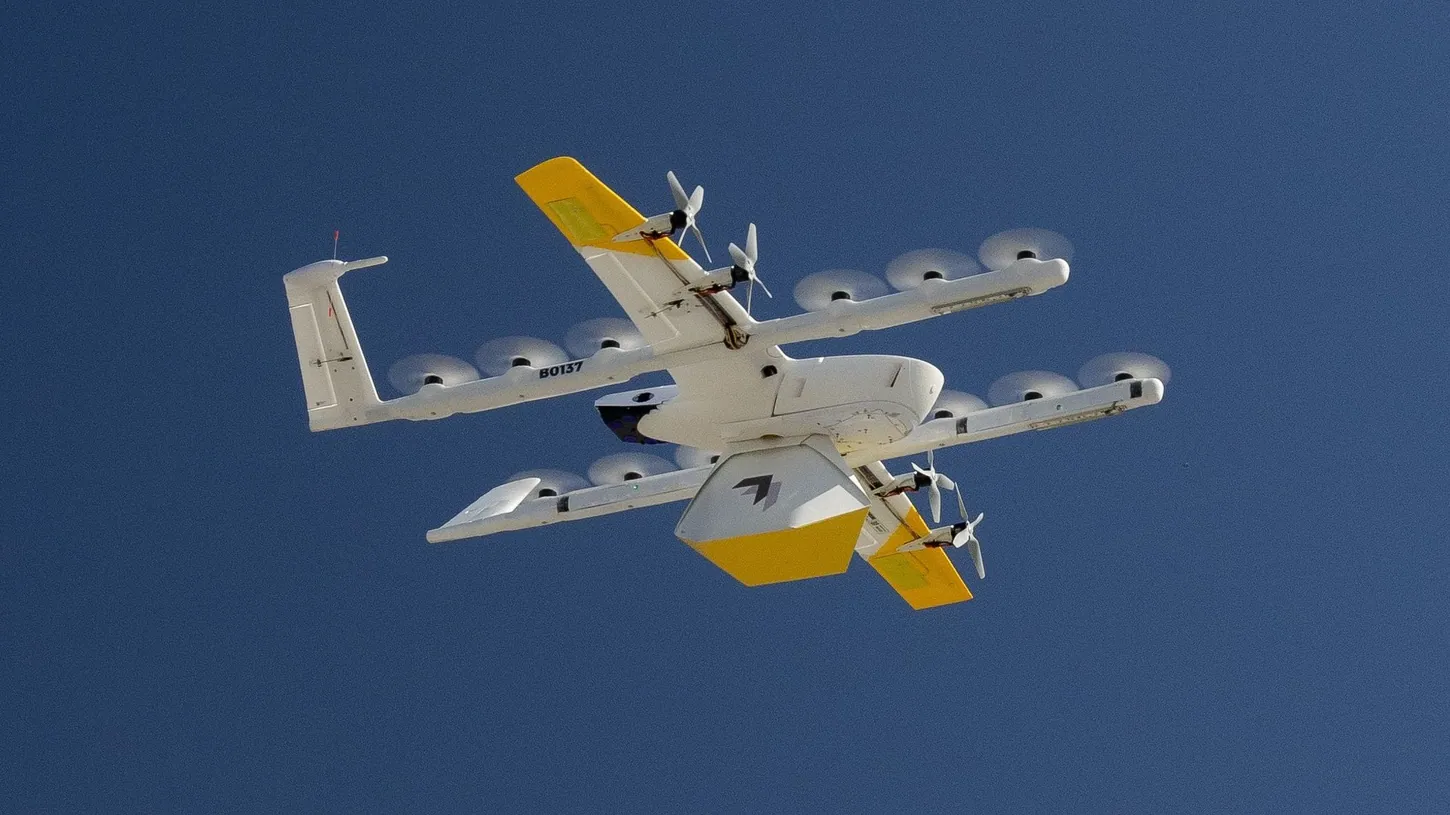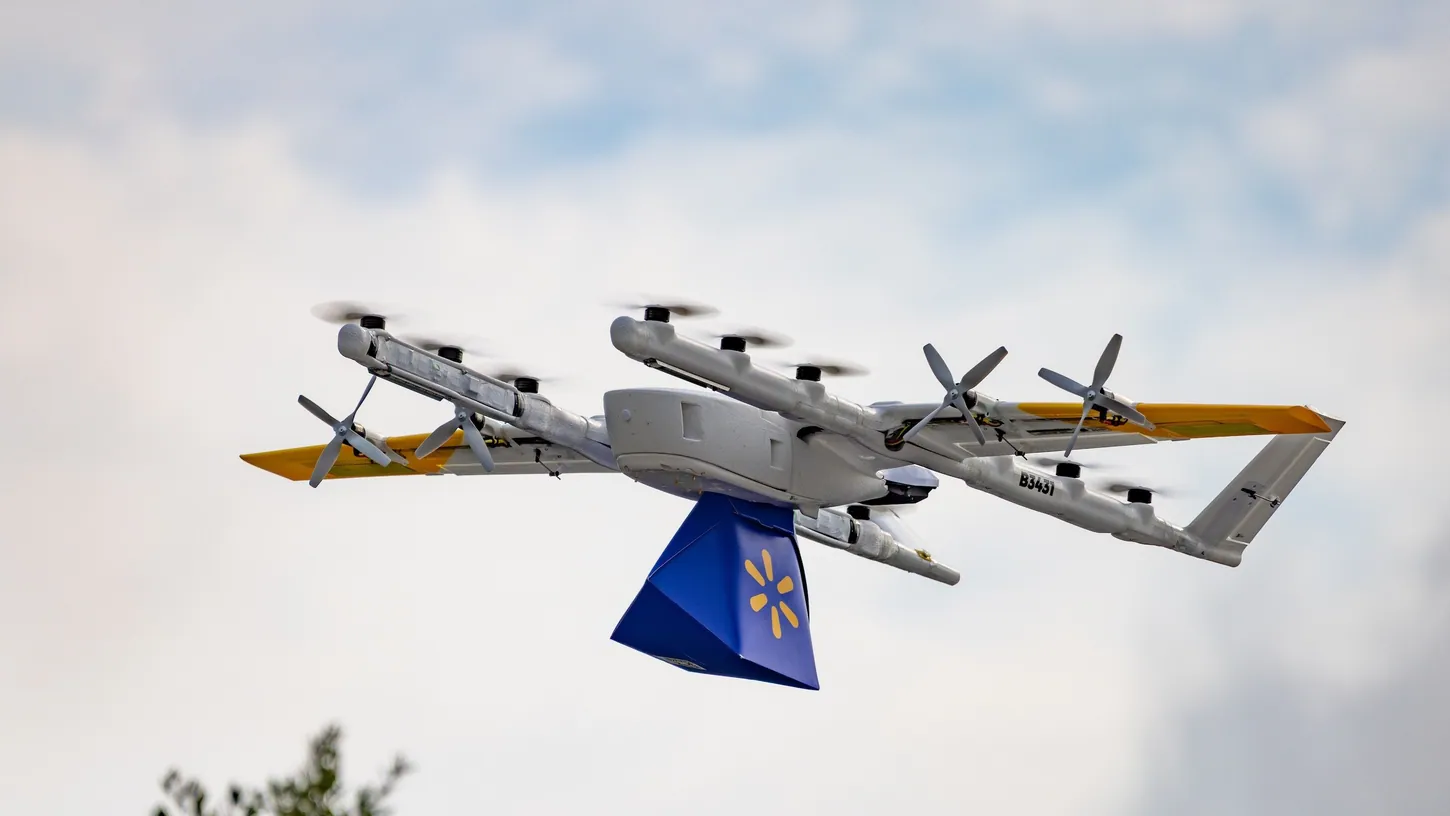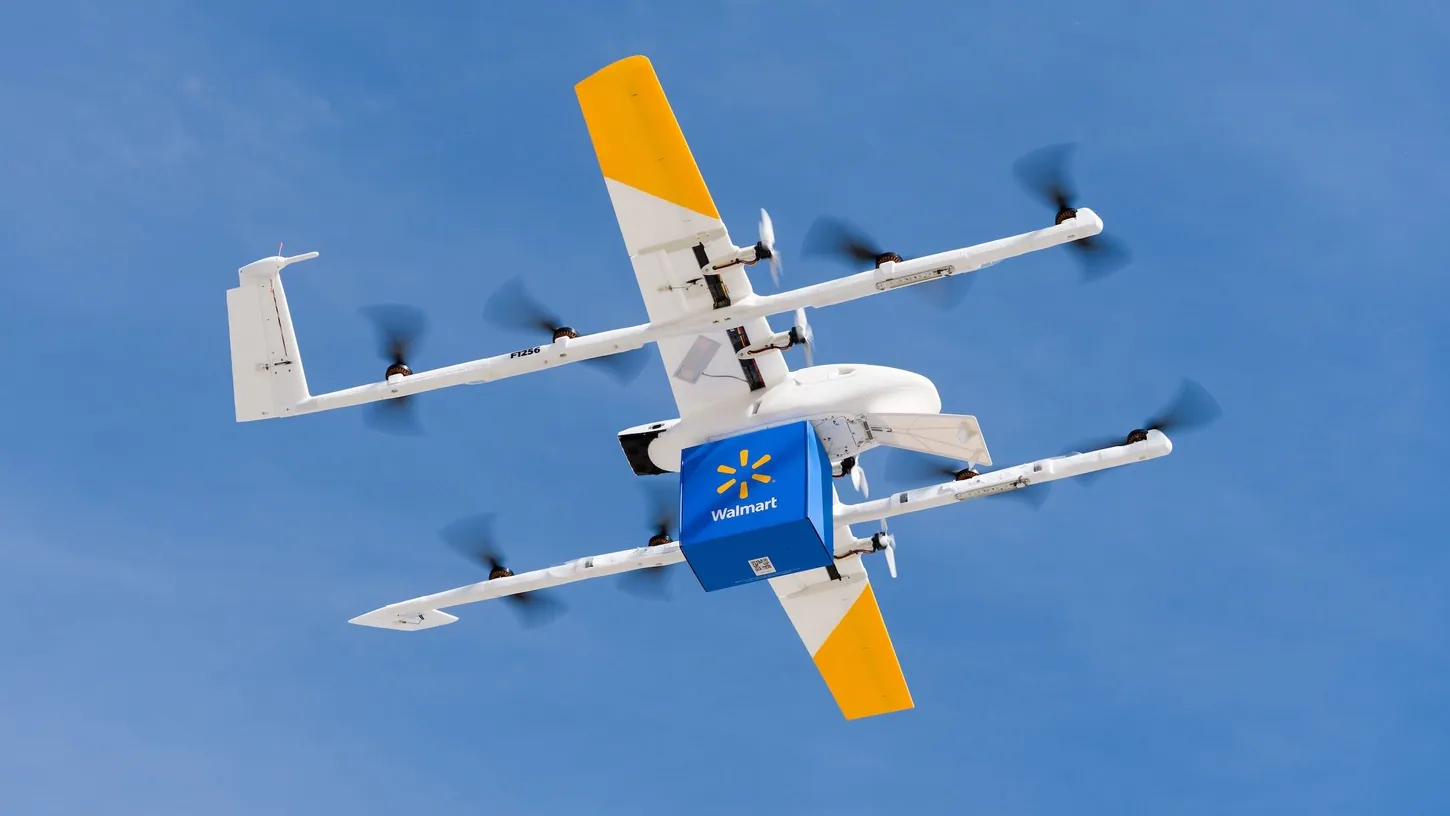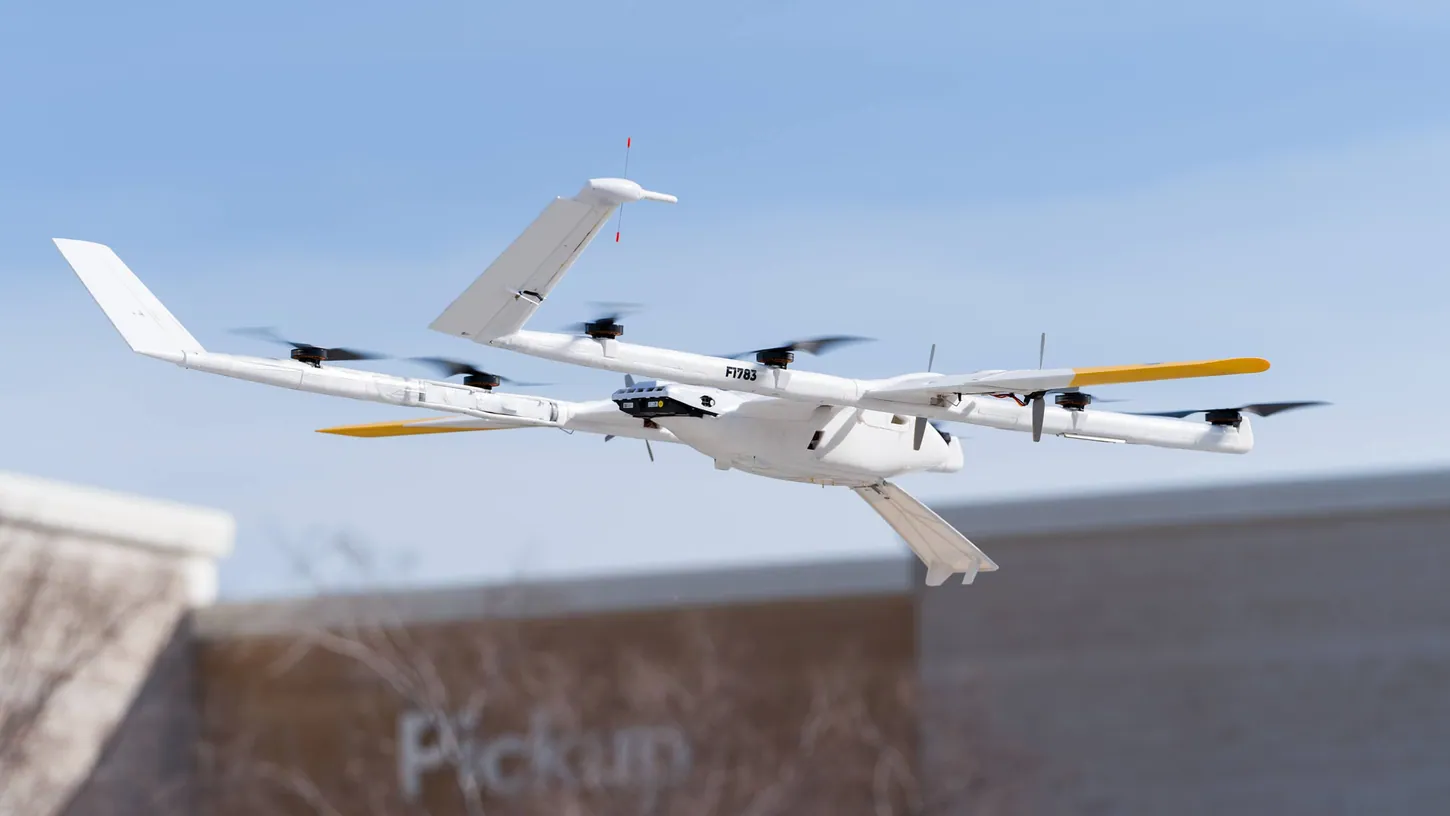
Wing says drone delivery starts with being a good neighbor. In a LinkedIn post on Thursday, the Alphabet-owned company said its flights have to stay “safe, quiet, and unobtrusive to those who didn’t order anything,” and that it has completed more than one million US deliveries this year.
People in Richardson, Texas, have spent the fall describing the other version. A resident there logged 52 Amazon Prime Air drones over her yard on a single Friday in September and called it a slow day, The New York Times reported, in a story DroneXL laid out against the FAA’s paper trail. Richardson residents were still asking Amazon to fly higher after the company raised its average outbound altitude.
Wing’s post gives one number for its own quiet, 43 dBA for a drone cruising overhead. For the moment a Wing aircraft stops over a yard and lowers a package, it gives a comparison instead: quieter than a typical mail truck.
Wing’s 43-Decibel Figure Covers Cruise, Not the Delivery Hover
Wing’s 43 dBA is for cruise, which it puts at 150 to 200 feet (46 to 61 meters), and Kirkwood, Missouri’s planning report put a cruising Wing drone at about 43 decibels too. For the delivery hover, that report said about 63 decibels, and Wing told Kirkwood’s council about 62.
Wing’s post calls the cruise figure an Leq, a level averaged over a measuring period, and calls it quieter than ambient neighborhood sound. It does not say what period the average covers. The FAA’s April 2025 review of Wing’s Charlotte operations measures the agency’s way, as a day-night average: a spot overflown 800 times stays at or below 40.7 decibels, against a residential threshold of 65.
Accounts of how Wing sounds split. St. Charles Mayor Dan Borgmeyer ran his own decibel meter test and put the drone at about a passing car, DroneXL reported from Kirkwood. Janet Ward Graves told the Kirkwood council that residents in other Wing markets were promised the sound of a passing van and got a leaf blower. Wing says it designed a quieter propeller after feedback from its early trials in Australia, and that in real-world testing the overflight was unnoticeable inside a home.
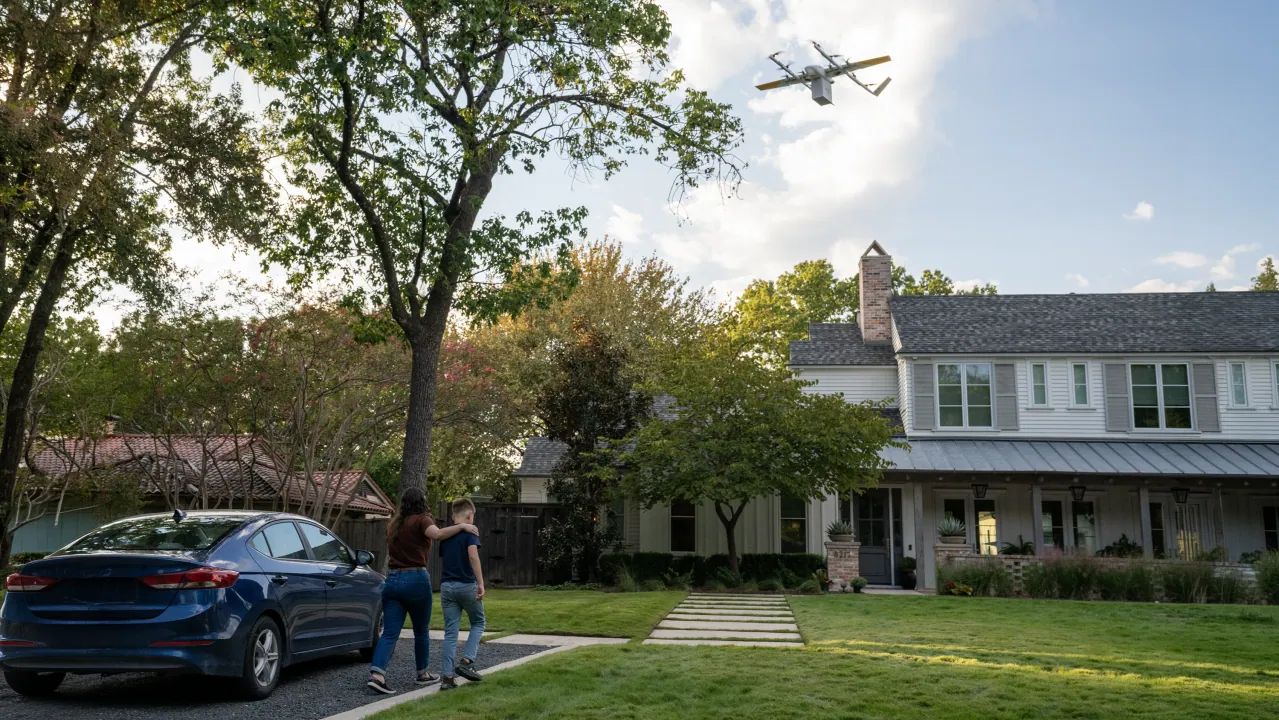
Amazon’s MK30 Weighs 83 Pounds and Hovers 13 Feet Over the Yard
Amazon’s MK30 weighs 83 pounds (37.6 kilograms) at takeoff to carry a 5-pound (2.3-kilogram) box, and the FAA’s Baton Rouge filing puts its delivery hover, 13 feet (4 meters) over the drop point, at a sound exposure level of 92.1 decibels measured 25 feet (7.6 meters) away.
Wing’s 7000W-B weighs 14 pounds (6.4 kilograms) at maximum takeoff, per the FAA’s national table, and its larger 8000-A weighs 24.3 pounds (11 kilograms). Wing’s aircraft stays about 23 feet (7 meters) up and lowers the package on a tether that lets go if it snags. In cruise, the FAA’s Chicago noise appendix puts an MK30 at 63.7 dBA SEL measured at 200 feet (61 meters), as DroneXL reported Monday. SEL and Leq are different measures, so that figure does not line up directly with Wing’s 43. Amazon spokeswoman Lindsay Hamilton told the Times the drones are quieter than a passing car during delivery. For people under Amazon’s routes, DroneXL’s residents’ guide covers what a town can and cannot do.
Neither company flies a parachute: Wing’s FAA filings show none, and Amazon’s MK30 has none either. Wing’s post defends the choice, as the company did in a May 2024 video. A deployed parachute ends all control and could set the aircraft down in a busy road, Wing says, and it adds weight. When onboard checks flag a problem, the drone returns to its nest or makes a slow, controlled landing in a field or a large tree, and a ground crew goes to collect it. Wing says those landings outside a nest are intentional and happen before a critical failure, and it gives no count. It also says its foam airframe is built to break apart on contact. I think that is an argument Wing’s 14- and 24-pound aircraft can make and an 83-pound MK30 cannot.
Wing Takes Its Pitch to Manchester, Missouri, After Kirkwood Let a Nest Die
Wing presents to Manchester’s Board of Aldermen on November 2 and holds a City Hall open house on November 4, part of a push for about seven St. Louis-area Walmart nests. Kirkwood’s council let a permit its own planners recommended die without a motion on October 15.
Residents’ objections in Kirkwood led with noise. One resident asked the council to bring a Wing aircraft to the resident’s house and drop a package through the mature oaks out front, the kind of up-close demonstration Wing’s post says it hosts, and the council never took up the offer. In Manchester, Mayor Ben Toben watched Wing deliveries demonstrated at a meeting with city staff in August.
DroneXL sent Wing 30 written safety questions on September 8 for its Drone Delivery Tracker, including one on measured noise. As of October 29, the only reply in DroneXL’s inbox is an automated acknowledgment from Wing Support.
DroneXL’s Take
Wing is right that drone delivery lives or dies on people who didn’t order anything. A drone residents hear as a leaf blower gets a Kirkwood council that would not make a motion, or Richardson residents emailing officials in El Paso and Richmond about the drones.
Wing has the better hardware for that test. Its 14-pound 7000W-B stays 23 feet up and lowers a box on a breakaway tether, which makes it a different neighbor from an 83-pound MK30 dropping to 13 feet over a customer’s yard. But the number Wing published is the cruise one. The moment a drone hangs over the yard next door is the one its post describes with a mail truck instead of a number. Wing should bring a sound meter to Manchester on November 2, measure the delivery hover at the property line, and publish the reading. I suspect it would beat every number Amazon has on the record, and a company that wants to be welcomed as a neighbor should put that number in writing.
Sources: Wing on LinkedIn, FAA, The New York Times.
DroneXL uses automated tools to support research and source retrieval. All reporting and editorial perspectives are by Haye Kesteloo. Read our editorial standards.