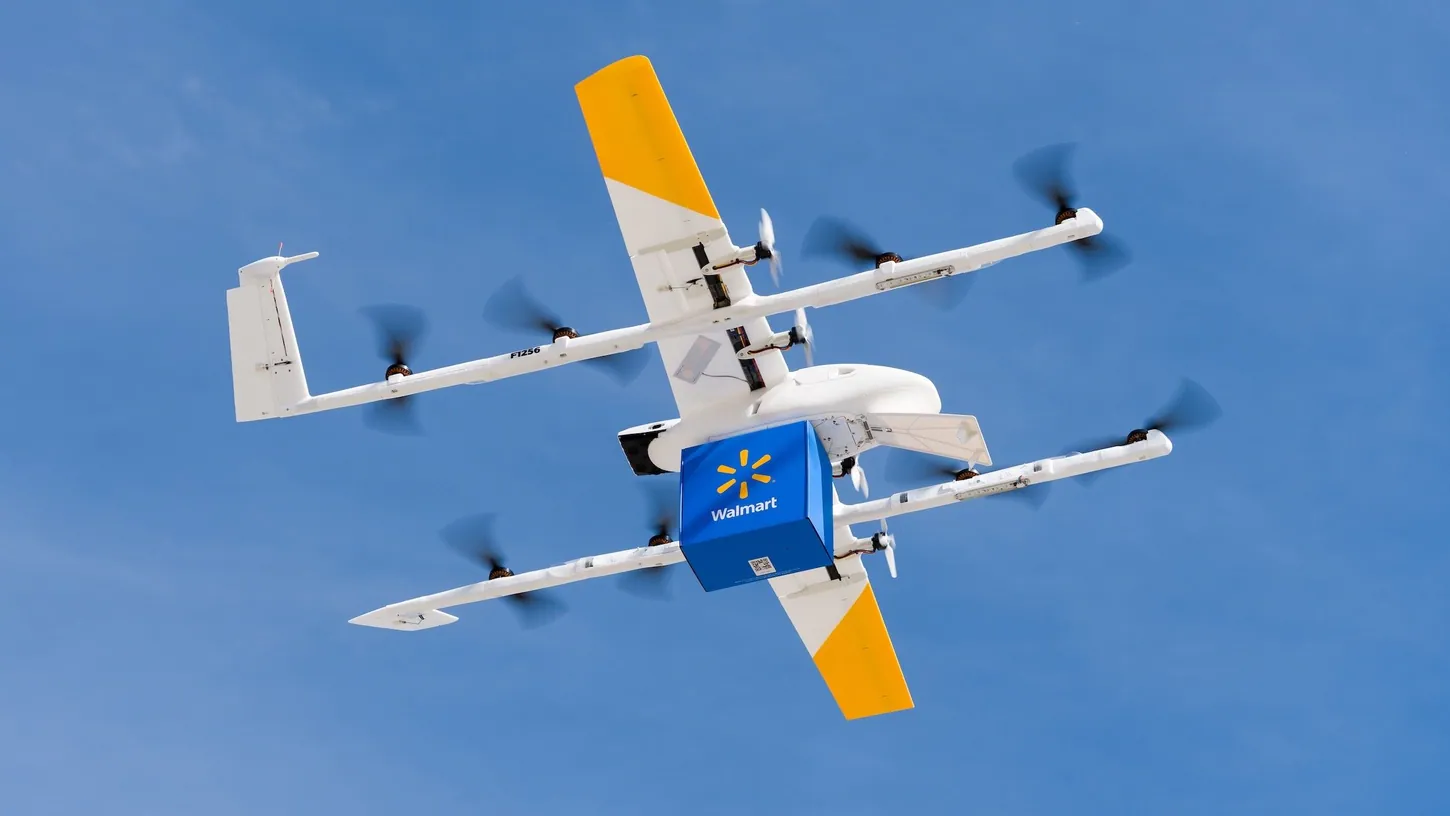
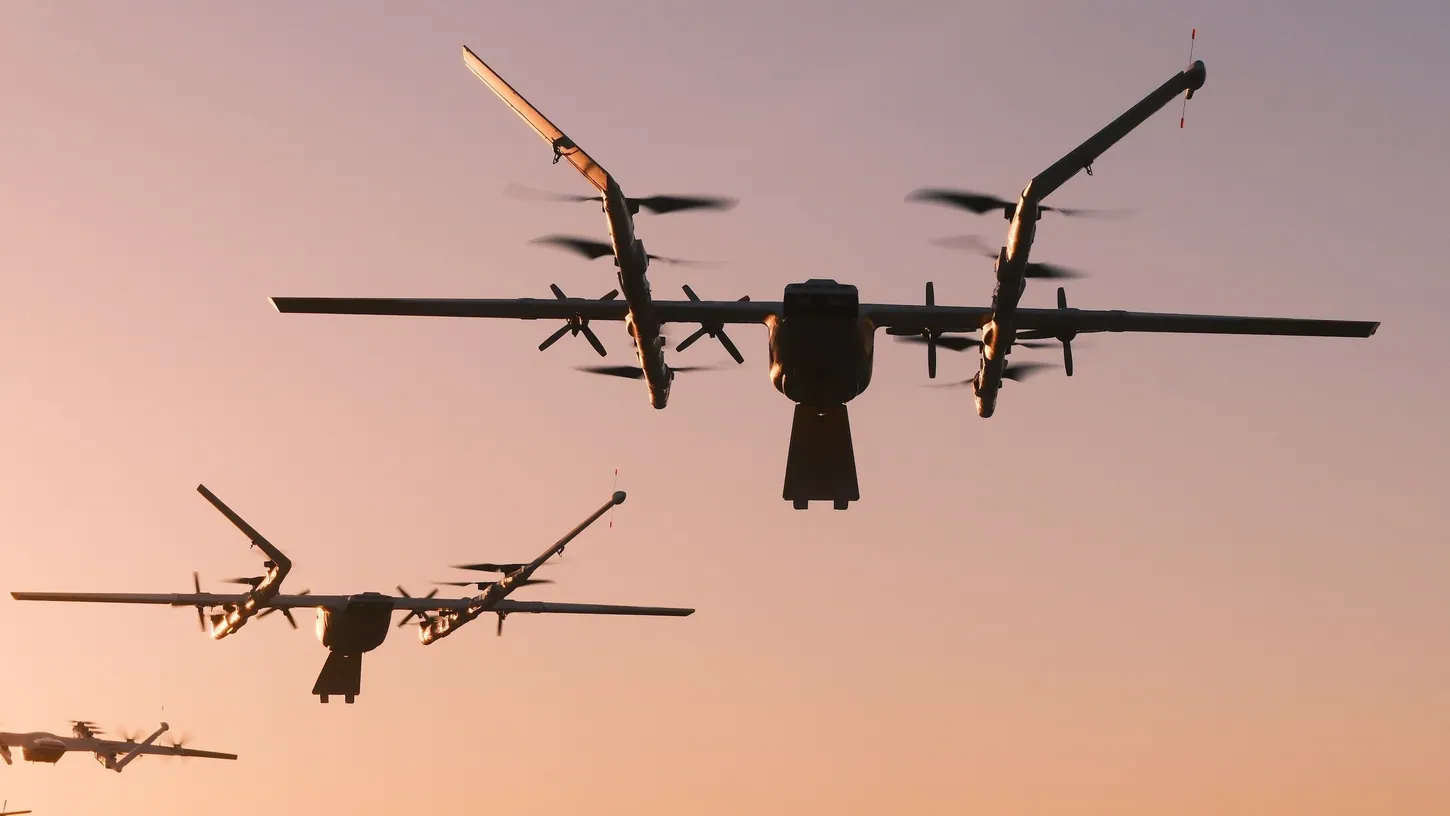
Northglenn, Colorado, is on track to become the first city in the state with an ordinance written specifically for drone delivery, and it is writing the rules before anyone has filed to fly. The Planning Commission voted on September 15 to recommend a new land-use category, the Commercial Drone Delivery Hub, and city staff expect a first reading before City Council on October 12 and a public hearing and final vote on October 26. Walmart has approached the city about flying orders from its Neighborhood Market at 10755 N. Washington St. with Wing, Alphabet’s drone unit, according to The Denver Post.
The draft keeps launch pads 200 feet (61 meters) from homes, schools and childcare centers, caps ground noise at 65 decibels at the property line, limits operations to 7 a.m. to 10 p.m., and requires a special use permit reviewed every year. Every one of those numbers applies to the fenced patch of parking lot. The city’s own staff memorandum says drones launched from a hub in the next town over can legally deliver to every address in Northglenn.
Northglenn’s Ordinance Regulates The Pad, And Nothing Above It
The proposed rules cover the ground facility only. Northglenn’s September 21 staff memorandum states that the Federal Aviation Administration has exclusive jurisdiction over flight paths, altitude and schedules, and that the city has no legal authority over a drone once it is airborne. The ordinance text repeats that limit in its own words.
A hub could operate as an accessory use in Commercial General, Commercial Auto-Oriented and Industrial districts, and as a primary use only in Industrial zones. It may take up no more than 10% of the lot or 10,000 square feet (929 square meters), whichever is smaller, and it cannot eat into the parking the main business is already required to keep. The 200-foot buffer is measured from the hub’s screening to the nearest property line of any residentially zoned parcel, licensed childcare center, school, or police, fire or utility site. Chain-link fencing is barred outside industrial zones unless it hides in a side or rear setback with a dark vinyl coat.
Applicants would have to file an operational narrative listing hours, maximum flight altitude, anticipated noise, maximum aircraft count and expected flight frequency, plus an Incident and Emergency Response Plan for an unplanned landing or crash inside the city. A crash triggers a 911 call and a written notice to the planning director within 24 hours. The memo says the flight information is collected for disclosure and compatibility analysis and gives the city no authority over the flights themselves.
The surveillance clause is one sentence. It makes it unlawful to operate a UAS to intentionally engage in surveillance of another person in a private place. The ordinance defines neither term. Wing has said its drones give controllers no live video feed, per the Post.
Becky Smith, the city’s planning and development director, asked the council to look hard at the numbers, naming the setback and buffer distances, facility size limit, hours and noise levels as figures that could still move before adoption.
A Hub Next Door Can Serve Every Address In Northglenn
Northglenn’s memo says operators design delivery networks to serve locations within roughly four to seven miles of each nest, and that denying a permit to a launch site in Northglenn does not prevent drone delivery activity from occurring in the city. That sentence is the reason the city wrote an ordinance instead of a moratorium: its land-use powers reach the pad and stop there.
Wing’s FAA authorizations put its nests at about six miles of range. The city’s August survey of ten metro-area peers found Thornton actively drafting its own “Launchpad” ordinance after one pre-application, and Longmont holding two Walmart pre-applications with no hearing scheduled because it treats an undefined use as not allowed. Boulder, Broomfield, Commerce City, Erie, Federal Heights and Littleton reported no applicable code and no filings. Eight of the ten said they would join a regional discussion.
South of Denver, Castle Rock and Parker went the other way. Castle Rock’s council passed an emergency ordinance on July 20 freezing drone delivery hub applications for six months after a pre-application for an 18-drone port, and Parker followed on July 21 with a nine-month pause, Colorado Community Media reported. Parker Councilmember Anne Barrington put it as “We’re not saying no, we’re just saying no today.” A moratorium on the pad has the same reach as Northglenn’s ordinance: none over the airspace.
Colorado was not on either of Wing and Walmart’s 2026 market lists. January named Los Angeles, St. Louis, Cincinnati and Miami; June added seven more metros, none of them in Colorado. As in Tacoma, Washington, the site surfaced in a local land-use process before either company said a word about the market.
Wing Claims A Clean Record, And Won’t Put It On Paper For DroneXL
Wing spokesperson Josh Bucci told The Denver Post the company is not aware of any collisions or mishaps involving its own fleet. Wing’s Hummingbird weighs 14 to 24 pounds (6.4 to 11 kilograms) at takeoff depending on the model, carries up to about 5 pounds (2.3 kilograms), and lowers the package on a tether from a hover of roughly 23 feet (7 meters). It carries no parachute; the safety case in Wing’s FAA filings rests on the light airframe.
That record contrasts with the operator Northglenn’s neighbors have also been hearing from. Thornton has fielded inquiries from both Walmart and Amazon, the Post reported, and Amazon’s 83-pound MK30 has hit an apartment building in Richardson, Texas and two drones into a crane in Tolleson, Arizona in the past year. Wing has no US incident in DroneXL’s file.
Wing has also declined to put that record on paper. DroneXL sent Wing 30 written safety questions on September 8, covering weight, descent behavior after a lost motor, the incident list, sound levels and cameras. Zipline answered its set in full. Wing has sent nothing. Northglenn’s operational narrative asks for the same altitude, noise and frequency figures, and its ordinance would make them a condition of the permit.
DroneXL’s Take
Northglenn got the law right and the reader should not mistake that for control. A city can decide whether a Walmart parking lot gets a fenced 10,000-square-foot nest. It cannot decide whether Hummingbirds cross its yards at 150 feet, because that authority sits with the FAA and the FAA’s national environmental finding this July settled the noise question for the whole country. Northglenn’s staff wrote that limit into the memo in plain words. A moratorium on the pad does not stop the flights; it moves the pad.
The part of this ordinance worth copying is the operational narrative. It forces the operator to state, in a public filing, its altitude, its noise figure, its aircraft count and its flight frequency before the first delivery. Wing has spent three weeks not answering those exact questions from this publication. A permit condition in a Colorado suburb of 40,000 may be what finally gets them on the record, and I’d tell every city on Thornton’s and Longmont’s list to lift that clause word for word.
Sources: City of Northglenn staff memorandum #29-2026, The Denver Post, Colorado Community Media
DroneXL uses automated tools to support research and source retrieval. All reporting and editorial perspectives are by Haye Kesteloo. Read our editorial standards.