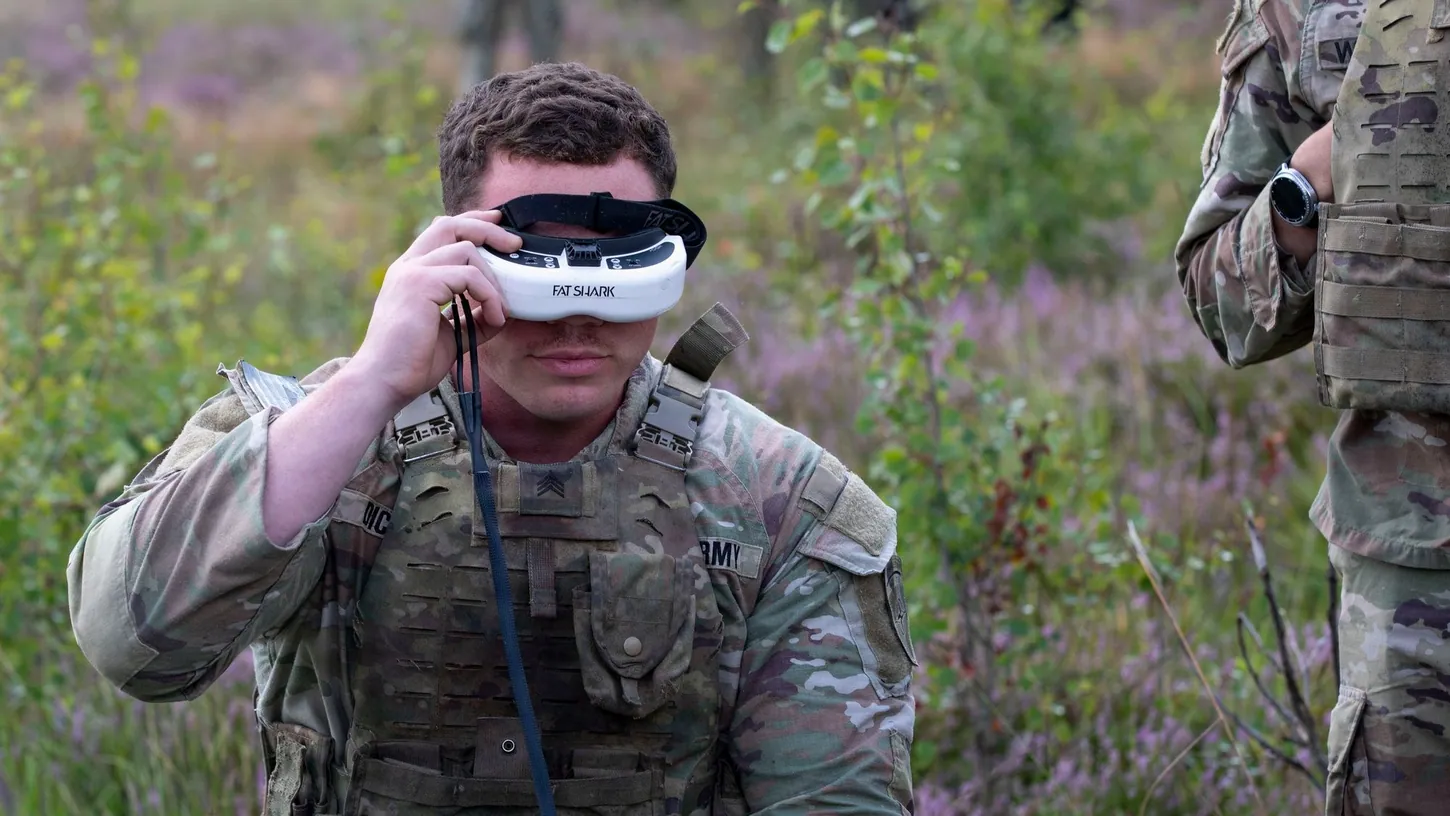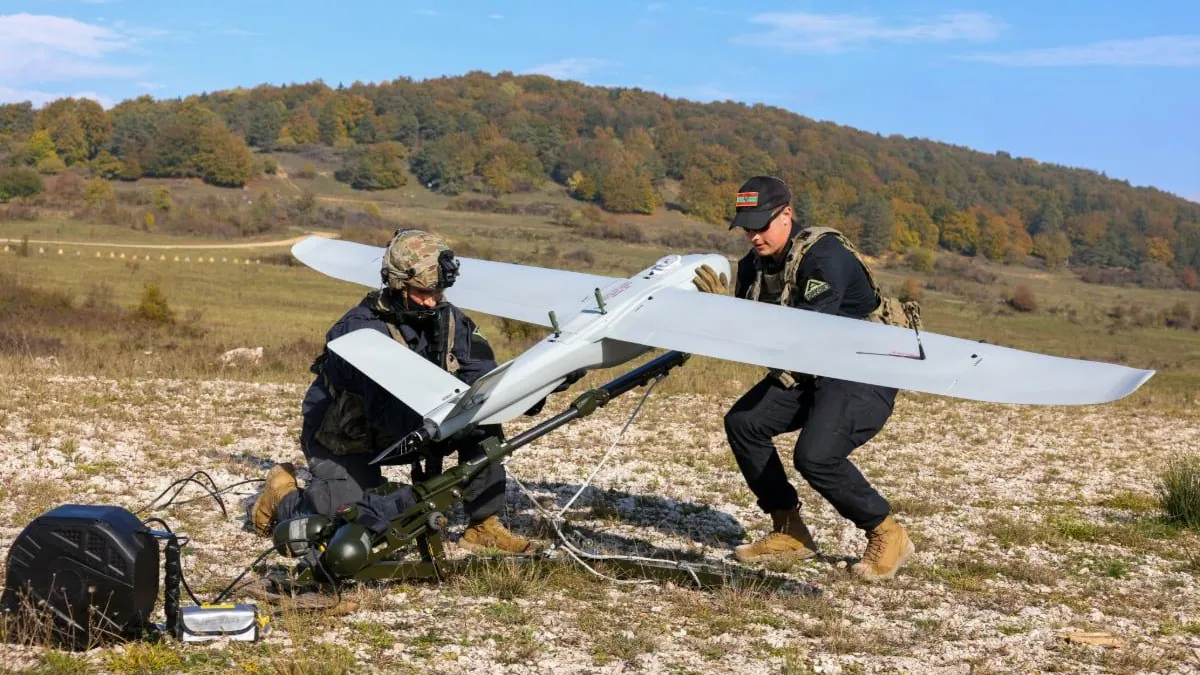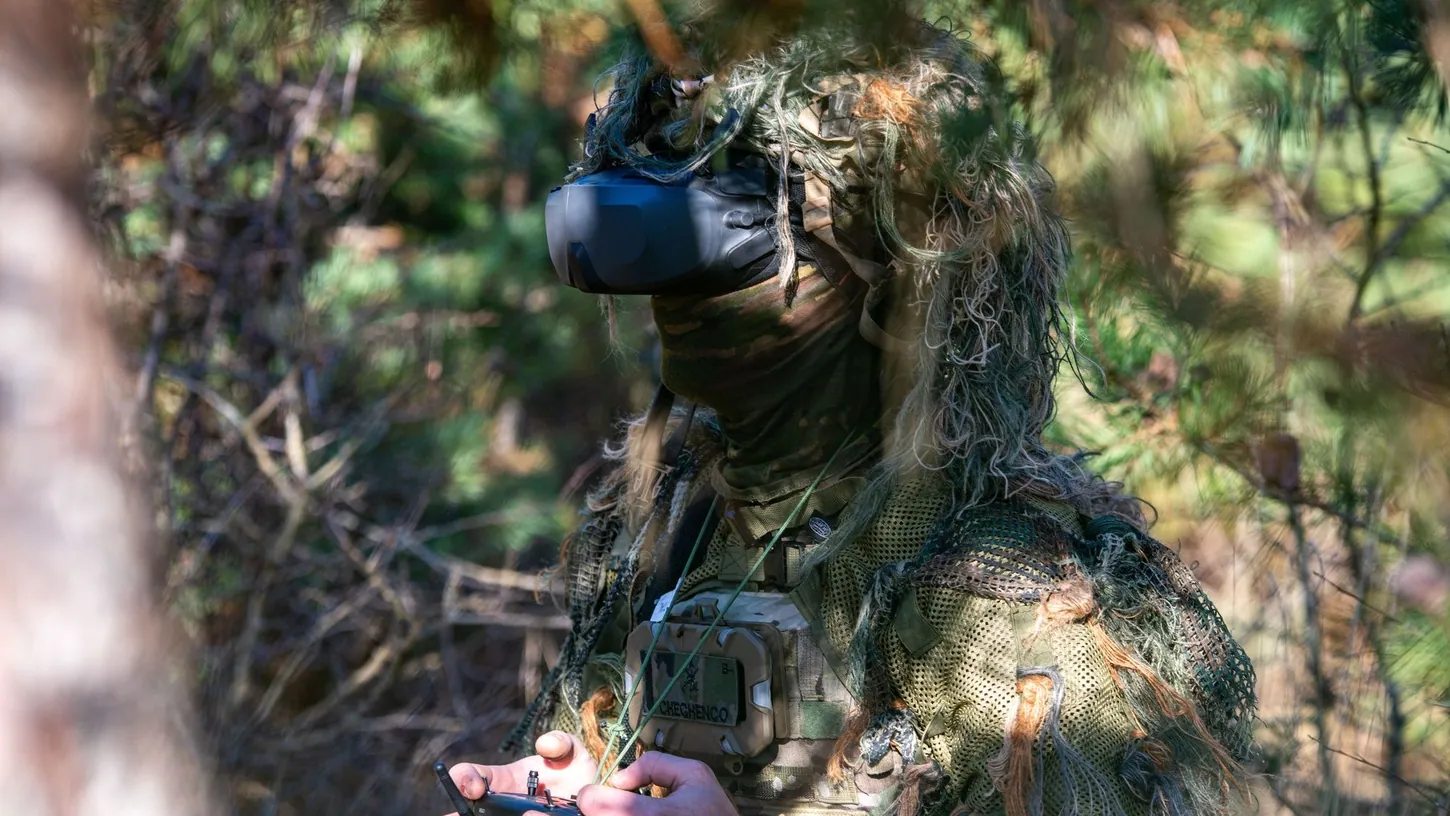
FPV drones operating within a kill web challenge the approach to ground combat NATO armies have followed since World War II, according to ten Spanish Army doctrine and capability specialists interviewed by a University of Granada researcher. Much of the delay in Spain’s response, they said, stems from the country’s own legal and bureaucratic procedures. A chapter by Javier Jordán examining the focus group appeared on October 22 in a Palgrave book about the Three Horizons foresight method. The findings are qualitative, drawn from a single national group.
Pilot certification illustrates the division of responsibility. The Spanish Army’s units own their drones, while the Air Force certifies the soldiers operating them.
Jordán Places The Kill Web At The Heart Of FPV Effectiveness
In Jordán’s account, the surrounding kill web explains the FPV drone’s impact in Ukraine. Rather than passing information along a chain, the network shares it among every node. Thousands of reconnaissance drones, together with data links and battlefield software, supply targets for mortars, rocket artillery and FPV attack drones.
Jordán writes that the network exposes terrain about 9 miles (15 km) behind the front line, drawing on a February 2025 RUSI study by Jack Watling and Nick Reynolds. The most concentrated coverage extends 2 to 3 miles (3 to 5 km) back. FPV strikes reach command posts and supply points 12 miles (20 km) away, and sometimes 19 miles (30 km). The estimates he cites attribute 60 to 70% of casualties in Ukraine to FPV drones. Tanks and infantry fighting vehicles operating about 2 miles from the line remain concealed or underground for much of the time, while vehicles conducting resupply or casualty evacuation face high risk around the clock.
Judged individually, these drones perform poorly as weapons. Jordán cites a RUSI success rate of under 10%, with weather, darkness, defective construction and jamming reducing it further. Their effectiveness therefore rests on low prices and large numbers. Around $2,000 buys an FPV drone, and most cost half that; a Spike LR2 missile costs more than $100,000. A CSIS analysis cited in the chapter puts Ukrainian companies’ 2024 production at about 2 million drones, including more than 1.5 million FPV drones. To counter jamming, both sides have turned toward fiber-optic guidance, costing about $500 a spool, and AI terminal-guidance modules priced at $50 to $100.
FPV Could Put A Brigade’s Reach In Spanish Infantry Companies
The specialists foresee Spanish infantry companies placing FPV drones in their support section, with deployment possibly extending to the section, the Spanish Army’s platoon-sized unit. A small unit could consequently reach targets up to 12 miles (20 km) away, matching the traditional fire range of a whole brigade.
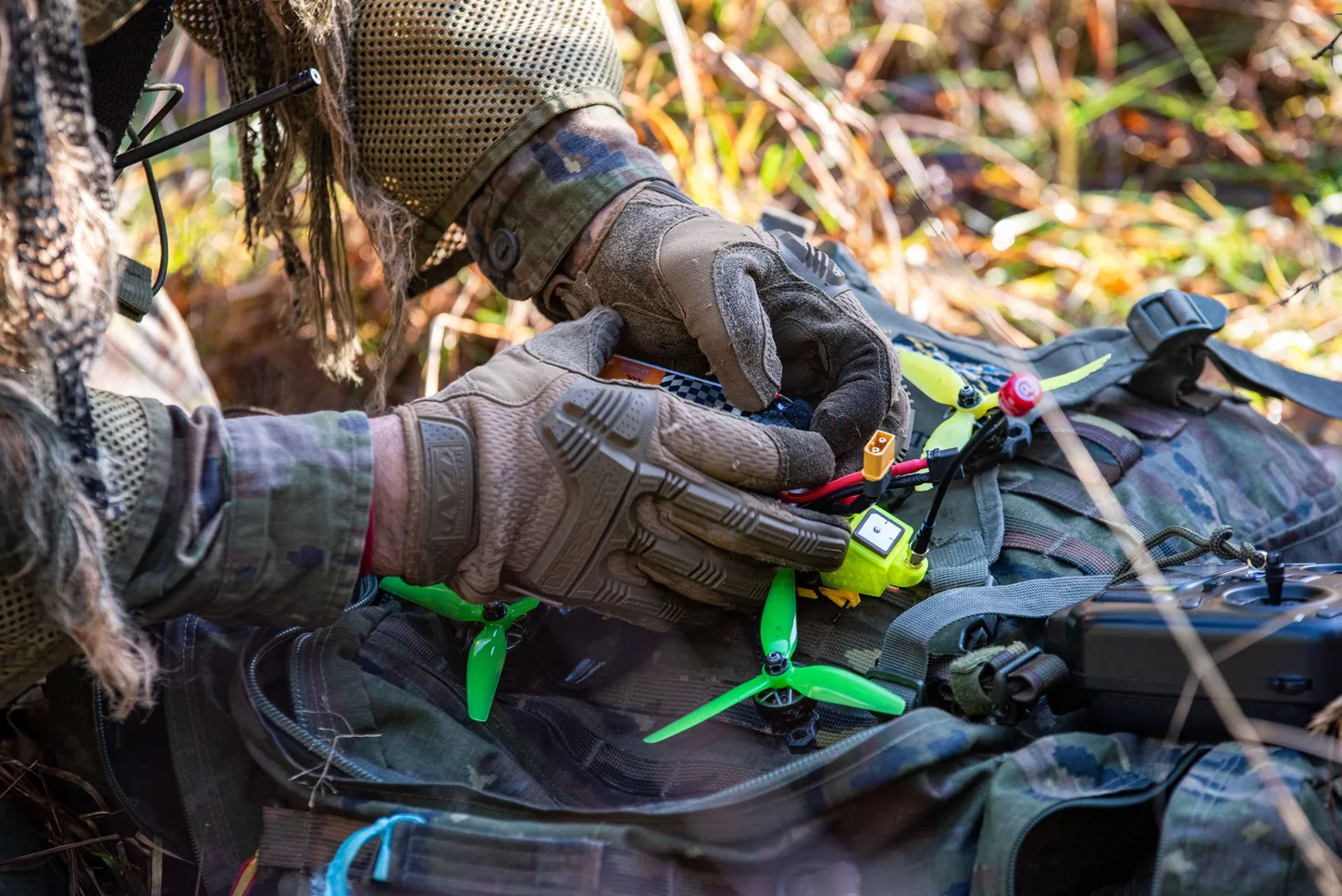
Jordán frames the group’s more far-reaching third horizon as a scenario. In it, one human operator would select a target for several attack drones, which would then carry out the mission independently, approaching from different directions. He says ethical and legal concerns may lead some European NATO armies to oppose that arrangement. Robots would dominate the front line and could account for all of it in the most exposed sectors. The experts also anticipate resolving the lack of friend-or-foe identification. FPV drones in Ukraine have no such capability, leaving both sides to shoot down every drone within reach.
Experts Point To Air Force Approval And Procurement Delays As Obstacles
Although Army units own the drones, responsibility for pilot training and certification, along with airworthiness approval, sits with the Air Force. The consequence, the chapter says, is that obtaining a civilian drone pilot certificate in Spain is “easier than acquiring a military one.”
Rules that would allow the Army to certify pilots flying drones under 25 kg (55 pounds) were still being developed when Jordán wrote. Buying equipment presents another obstacle: one participant described requests taking so long that the systems arrive already obsolete. Restrictions on attaching explosive payloads require the Army to purchase purpose-built loitering munitions from defense companies. Nor can a European army operating in peacetime match the low drone prices available to Russia and Ukraine during war. Flights of 12- to 19-mile (20 to 30 km) distances also exceed the size of most Spanish training grounds. Commanders’ legal liability for exercise accidents further discourages realistic drone training. To date, experimentation has relied on dispersed volunteer initiatives, which DIDOM, the doctrine directorate of the Army’s Training and Doctrine Command, is working to coordinate. With sufficient political will, Jordán considers these problems solvable in theory.
Training efforts are already under way. According to Infodefensa, the Army established its FPV flight school, the Escuela Práctica de Vuelo, in October 2025. An October 9 meeting at the Army Aviation Academy in Colmenar Viejo near Madrid laid out the roadmap for the school’s first initial-training kits. Training starts with academy instructors, progresses to unit instructors and then reaches operators.
Spain’s 2024 drone decree is another constraint identified in the chapter, which describes it as tightening EU drone rules for training. In a LinkedIn summary of the chapter, defense capability manager Tim De Zitter pointed out that Article 3.2(c) of Royal Decree 517/2024 exempts military drones as well as the individuals and organizations that operate them. Military aircraft are similarly excluded under the EU’s Basic Regulation. How the decree applies to Army training is not explained in the chapter.
DroneXL’s Take
A defense ministry has authority over most of the obstacles these experts identify, and the Pentagon provides an example of acting through a memo. Defense Secretary Pete Hegseth’s July 2025 drone memo made small drones consumables and, as DefenseScoop reported, set a deadline of 90 days for the services to designate at least three national ranges for deep drone training. In a year, the British Army purchased 10,000 drones, primarily for pilot training. Spain now has a flight school, but the pilot rule remained unfinished when Jordán wrote. My view is that completing that rule, allowing the Army to certify its own FPV pilots, is the least expensive remedy on Jordán’s list.
Source: Javier Jordán, “Three Horizon Analysis of the Impact of Lethal First-Person View Drones on Ground Combat,” in The Three Horizons Approach (Palgrave, 2026), Boletín Oficial del Estado, Infodefensa
DroneXL uses automated tools to support research and source retrieval. All reporting and editorial perspectives are by Haye Kesteloo. Read our editorial standards.