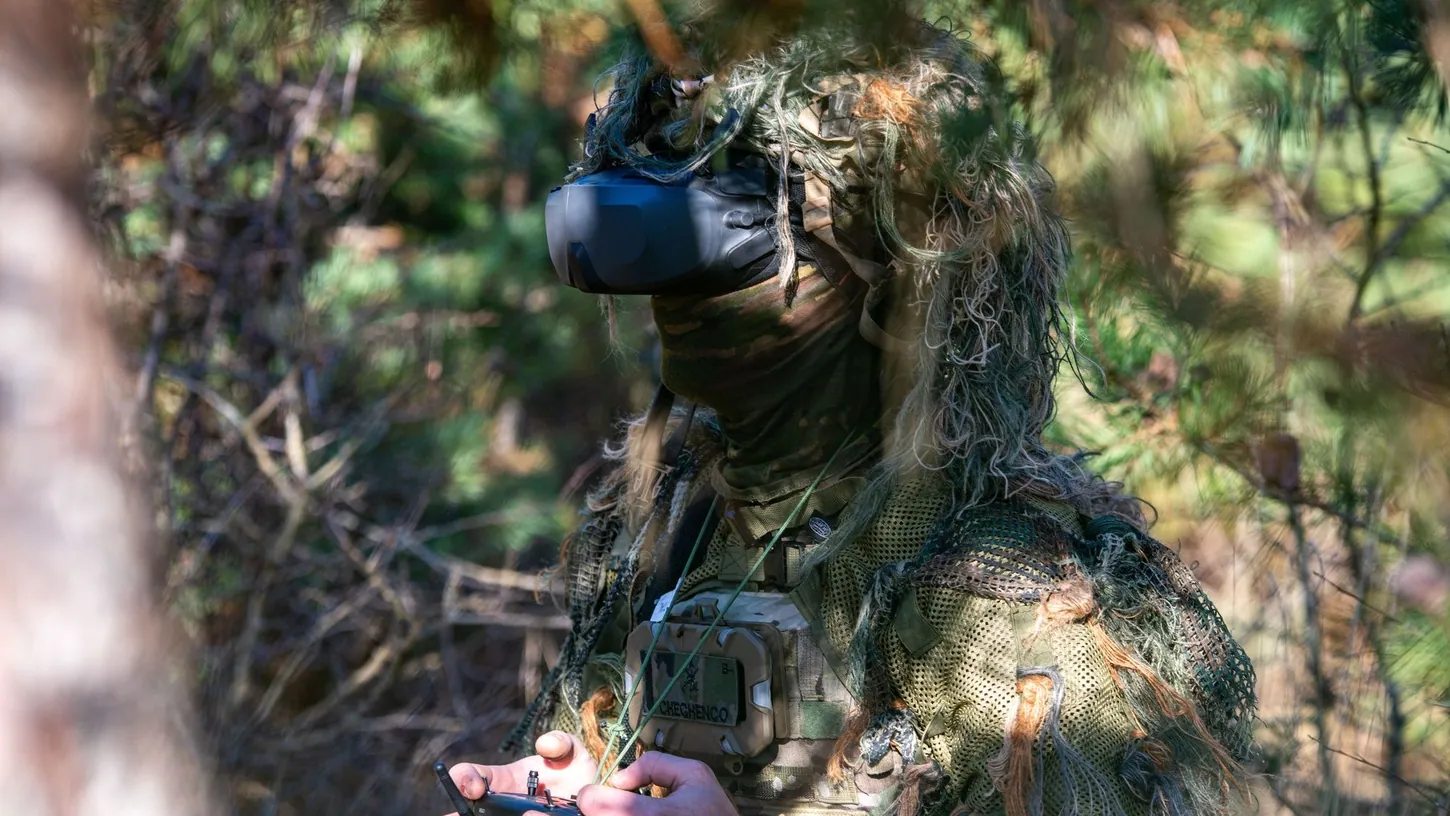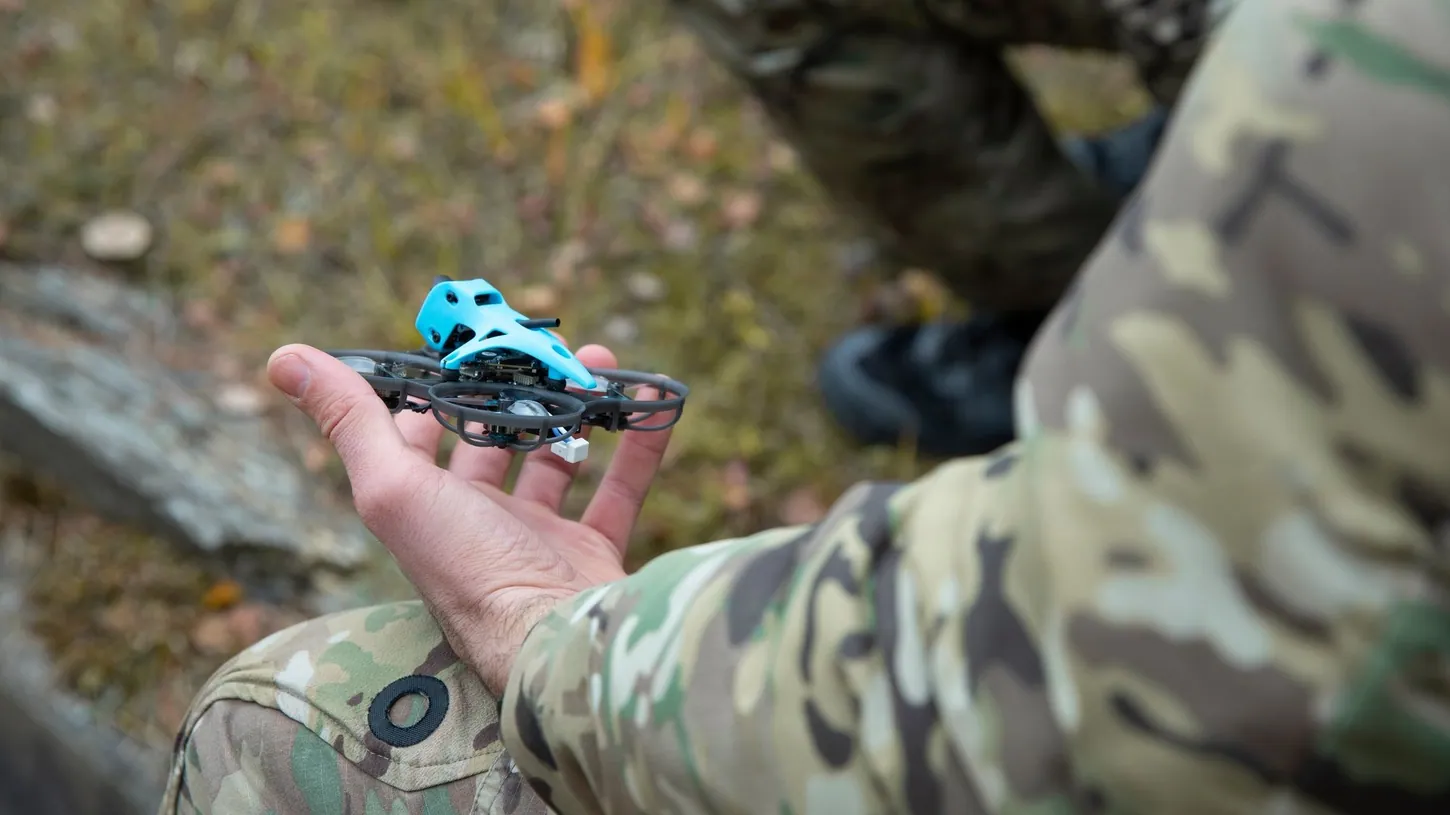
U.S. Special Operations Command Europe (SOCEUR) hosted its first International Drone Crucible at Grafenwöhr Training Area in Germany from November 2 to 5, and the American teams did not win it. First place went to Britain’s Royal Marines, who finished ahead of Army Green Berets, Naval Special Warfare operators and Air Force special tactics airmen, and ahead of teams from Germany, Latvia and Ukraine.
SOCEUR ran the competition with the United States National Drone Association (USNDA) and published its account on November 23. The Royal Navy had announced the result six days earlier.
The winning team is not part of UK Special Forces. The Royal Navy says the five Marines belong to the Information Warfare Company of 40 Commando.
Royal Marines Took the Title Without Sweeping the Three Challenges
The Royal Navy’s announcement says each of the three challenges had a different winner, and the team from Taunton-based 40 Commando was crowned champion for its overall display. It says the title came after 400 sorties, against teams from the United States, Germany, Latvia and Ukraine.
The first challenge was a long-range strike. Teams had to locate a target more than 1.2 miles (2 kilometers) away, confirm it with a surveillance drone, hit it, and then fly a battle damage assessment. The second sent drones into and through two-story buildings and narrow spaces. In the last one, each team had to put three drones on a single target, in order and in quick succession.
SOCEUR’s account adds that the lanes ran through dense forest and open ground, and that teams flew against signal degradation, limited visibility and obstacles. No lane fixed a flight path, so each team flew its own way. Alongside the head-to-head lanes, SOCEUR says, the event focused heavily on shared range work and interoperability.
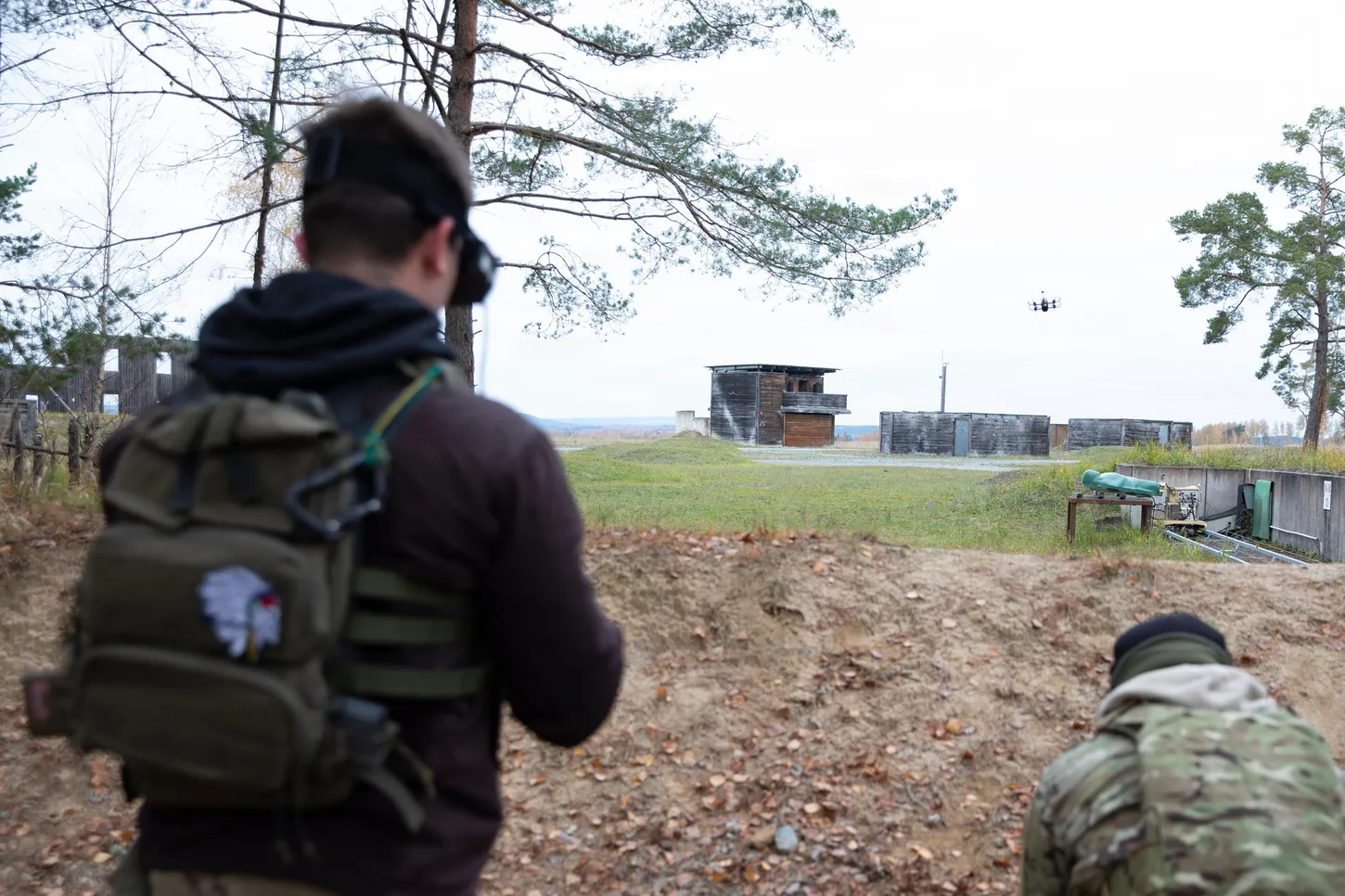
The American side came from three services: the Army’s 1st Battalion, 10th Special Forces Group (Airborne), Naval Special Warfare, and the Air Force’s 321st Special Tactics Squadron. U.S. Army operators also flew on a joint team with Latvian special operators. Germany sent the Bundeswehr’s 270th Airborne Engineer Company, and Ukraine sent a special operations team.
Maj. William Docherty, who commands the Information Warfare Company, said his Marines came from different specialties and had “minimal preparation time as a team.” He said they did well against experienced pilots from the special operations community. USNDA commended the British team for its “outstanding performance, professionalism and dedication,” according to the Royal Navy.
SOCEUR and the Royal Navy Describe the Winning Team Differently, and Neither Gives Scores
The two official accounts agree the Royal Marines won and differ on the team. SOCEUR credits Royal Marines “40th and 45th Commando teams” and calls the November 2 to 5 event weeklong. The Royal Navy describes one five-person team from 40 Commando and a three-day event.
The Royal Navy also names USNDA, not SOCEUR, as the host. SOCEUR’s own photo captions date the close-quarters lane to November 3 and a plaque presentation to November 5. Neither account publishes scores, says who won which challenge, or names the drones the teams flew.
SOCEUR does say what happens to the numbers. Performance data from the lanes will be used to update and standardize joint special operations tactics for small drones. Master Sgt. Raymond Rivera, the senior enlisted leader of SOCEUR’s Theater Edge Innovation Lab, said the competition makes troops “think critically, solve problems under pressure.”
The Crucible follows another drone competition at Grafenwöhr. U.S. Army Europe and Africa ran its first Best Drone Warfighter Competition there in December 2025, and a week after the Crucible the Army launched swarm drones from an unmanned ground vehicle at the same training area. The Army Drone Team has listed an earlier drone crucible, at Avon Park, Florida, among its first events.
DroneXL’s Take
I read this result as good news for anyone who wants drone flying taught well outside the special operations community. Five Marines from an information warfare company, with little time together, finished ahead of experienced special operations pilots, and that tells me FPV skill is learned fast by people who put in the hours. We reported in June that the Pentagon bet its drone arsenal on racers and hobbyists, and this is the same lesson on the flying side. SOCEUR says the lane data will be used to standardize how special operations teams fly small drones. I’d publish the scores as well, because a regular infantry battalion could learn as much from them as a Green Beret team.
Sources: U.S. Special Operations Command Europe, via DVIDS, Royal Navy
DroneXL uses automated tools to support research and source retrieval. All reporting and editorial perspectives are by Haye Kesteloo. Read our editorial standards.
Advertise with DroneXLYour company hereReach 200,000+ drone readers a month with a sponsored article, a banner on your beat, or a partnership.See the options →