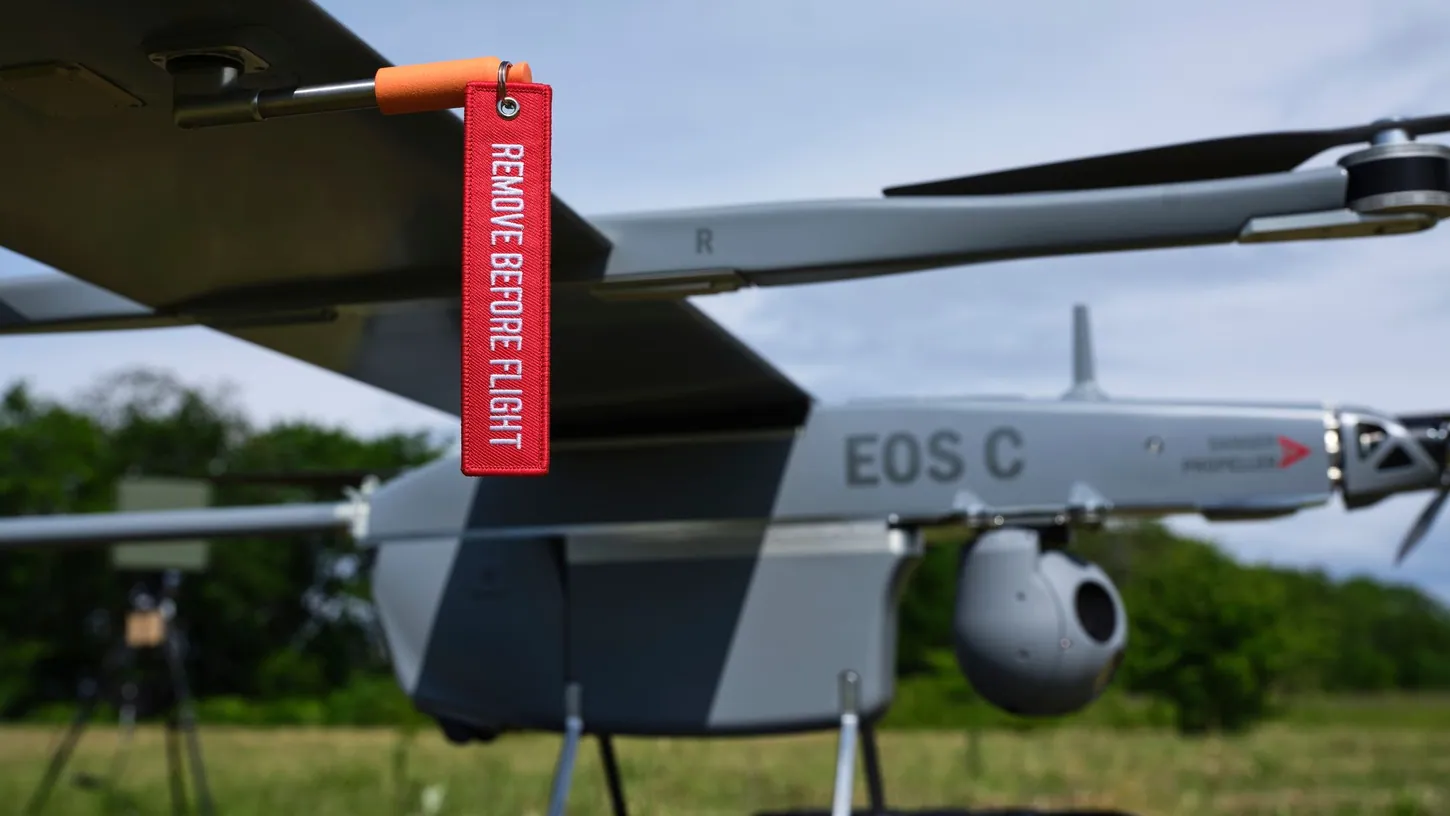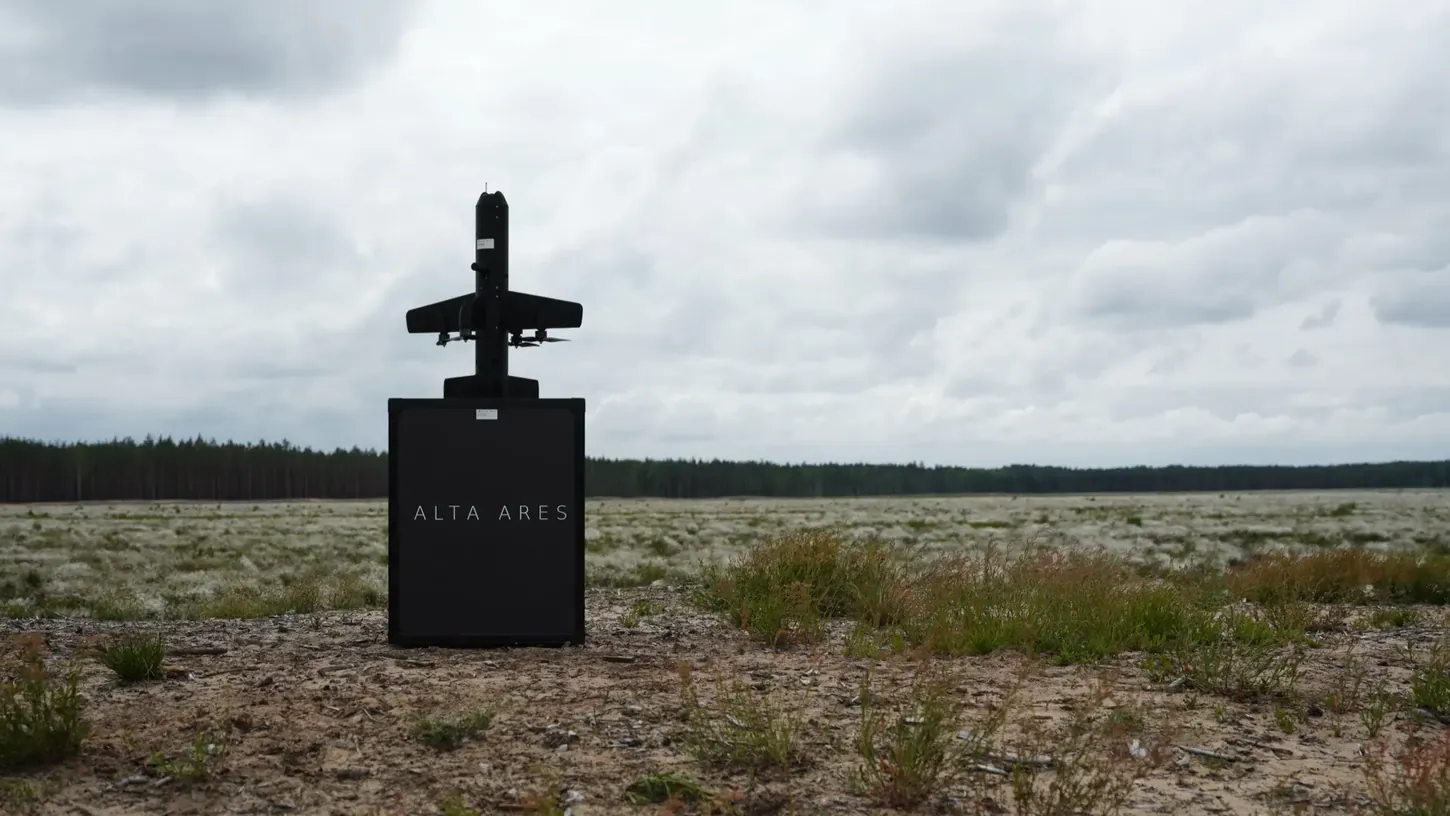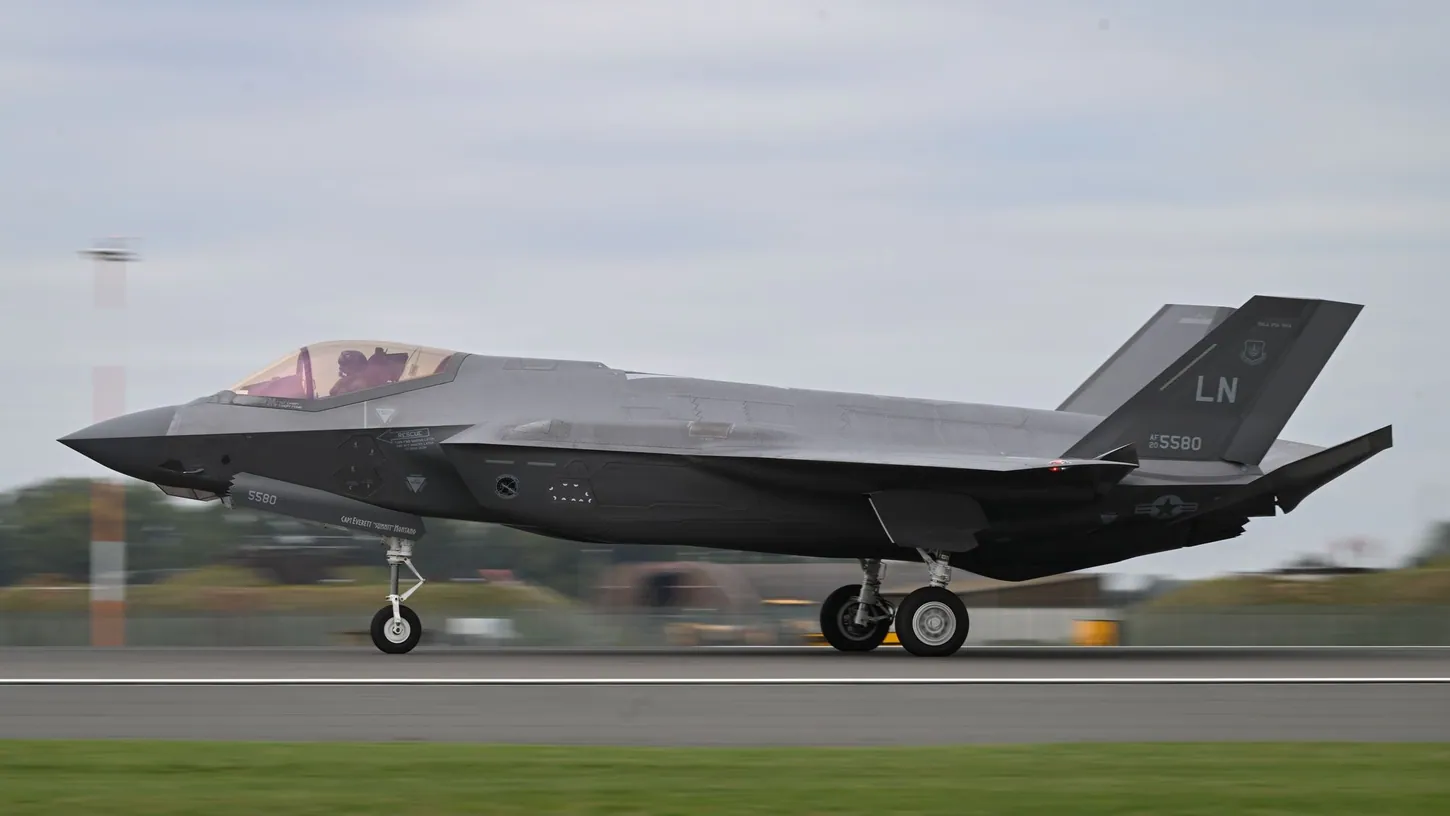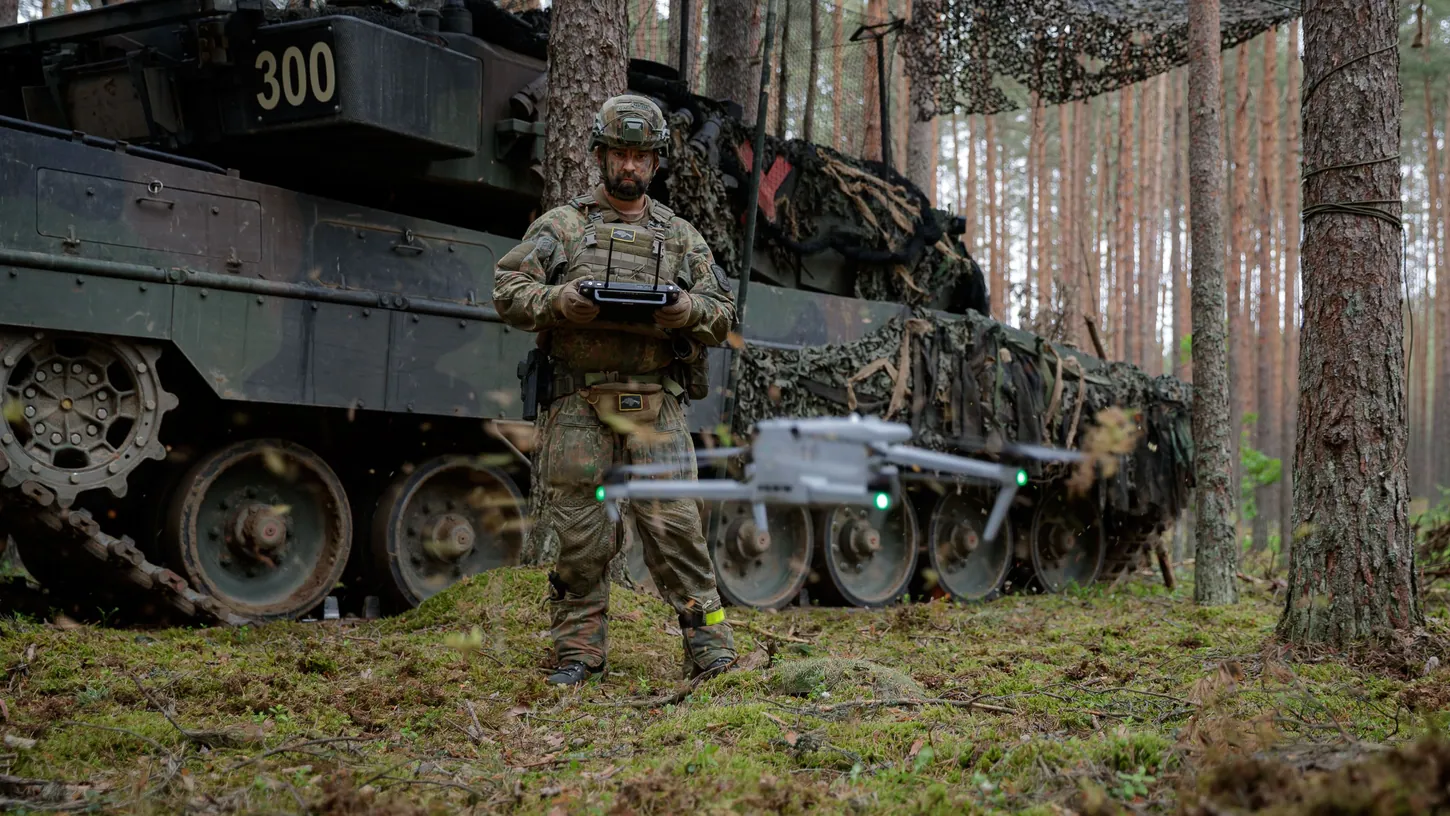
German soldiers flew Helsing and Stark strike drones into tanks on Sunday, November 22, at the Rūdninkai training ground in Lithuania, about 12 miles (20 kilometers) from the Belarus border. It was the German Army’s first tactical test of loitering munitions, nine months after the Bundestag’s budget committee approved the first 536 million euros to buy them.
The drones carried inert warheads and flew during Freedom Shield 26-II, a ten-day exercise of Panzerbrigade 45 “Litauen” with about 3,800 soldiers from eight NATO countries. Army chief Lieutenant General Christian Freuding watched with lawmakers he had flown in.
“If it started tonight, this stuff would be used,” Freuding said afterward, in German. The Bundeswehr’s own procurement office says both drones are still in qualification, and the brigade is not due to be equipped with them until 2027.
Bundeswehr Soldiers Flew the Strike Drones Without Company Staff
Bundeswehr soldiers launched and controlled Stark’s Virtus and Helsing’s HX-2 themselves at Rūdninkai, a job the manufacturers’ staff did in earlier trials. The brigade has about 100 of the two loitering munitions for the exercise, according to defense journalist Thomas Wiegold, who watched the demonstration.

Wiegold’s account on his blog Augen geradeaus fills in the detail. The soldiers have trained on the systems for a little over a year. The drones took off, circled out of sight and earshot, and then dove on main battle tanks and infantry fighting vehicles that NATO’s battlegroup in Lithuania supplied as targets. Most warheads were swapped for plaster of the same weight so the drones would fly the way armed ones do. The crews also stayed well inside the drones’ range of just over 62 miles (100 kilometers), because Belarus is so close.
Target data came from Falke reconnaissance drones, the Bundeswehr’s name for the Quantum Systems Vector, an order DroneXL reported in December 2025. Brigade commander Brigadier General Christoph Huber said he has about 700 drones of all types for this exercise, up from about 300 at the spring edition. “First contact is always unmanned,” Huber said.
Reuters reported the test from Rūdninkai the same day. The Army had announced on November 6 that the exercise would try out the new weapons for the first time. It started on November 17 and includes a crossing of the Nemunas river south of Kaunas.
Stark’s Virtus Passed Live Fire a Year After Missing Four Strikes
Virtus and HX-2 passed tests with live warheads in the week of November 9, according to Germany’s military procurement office. Much of that testing ran at WTD 91, the Bundeswehr’s proving ground in Meppen. In October 2025, Virtus missed its target on all four attempts during British and German trials.
DroneXL covered those four misses when the Financial Times reported them. Three months later Germany picked Helsing and Stark anyway, after Rheinmetall failed to produce a working demonstrator, according to Bloomberg. Wiegold writes that a third system from Rheinmetall is due to join the other two soon.
The procurement office’s release says the Meppen tests showed that both munitions reliably hit assigned targets and that the warheads go off as designed. That is the Bundeswehr grading its own purchase, and it published no hit counts.
Both Drones Are Still in Qualification and Reach the Brigade in 2027
The same release calls the live-fire result one part of a qualification that is still running. First deliveries are due before the end of 2026 for training and exercises, and Panzerbrigade 45 is to be equipped as the Army’s first major unit from 2027.
The contracts let development, testing and qualification run in parallel, with termination criteria written in, the office says. Parliament added its own brake in February, when the budget committee capped the framework at 2 billion euros and required a new vote for anything above it. The lawmakers Freuding brought to Rūdninkai sit on the defense and budget committees.
The targeting software is newer still. Helsing told reporters its Clarity software helped find and assign targets on Sunday, Wiegold writes, and Reuters reports that troops first tried Clarity at Rūdninkai only days earlier. A human is supposed to keep the final decision. Wiegold writes that it remains open whether that holds in combat when the link to the drone is jammed. The Army’s release says the exercise includes electronic warfare, but neither it nor Wiegold’s account says the strike drones flew against jamming.
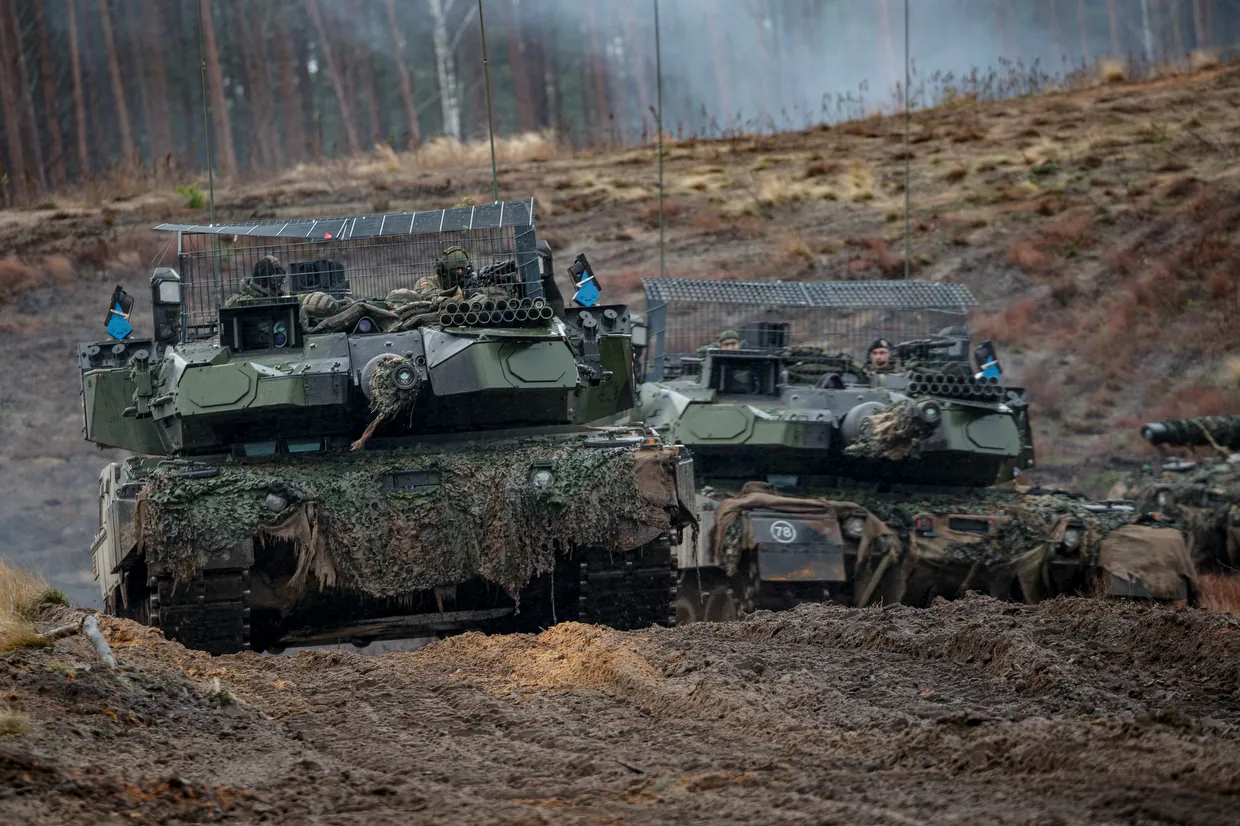
Panzerbrigade 45 is planned to reach about 5,000 troops and 2,000 vehicles by the end of 2027, and about 1,800 soldiers are already in Lithuania, according to Reuters. Its Leopard 2s now carry a cage over the turret against small drones, which Wiegold describes as a fix built by the troops themselves. Freuding, who becomes Germany’s chief of defense in February, said the Army urgently needs its own air defense rebuilt.
DroneXL’s Take
Sunday was a demonstration for the people who hold the budget, with plaster in place of explosives, and I’d read Freuding’s line about tonight with that audience in mind. What I take seriously is who was flying. A year ago Virtus missed four out of four in front of British and German evaluators, and now German soldiers are operating it 12 miles from Belarus. That is fast for any army, and very fast for Germany.
The test that counts hasn’t been run in public yet. Ukraine has shown that a strike drone is only as good as its link under jamming, and nothing published from Rūdninkai says how HX-2 or Virtus behave when that link is gone. American readers have a reason to watch for it, because Helsing plans to build the HX-2 in Martinsburg, West Virginia.
Sources: Augen geradeaus, Reuters, Bundeswehr Army press office, BAAINBw, Militarnyi. Quotes translated from German by DroneXL.
DroneXL uses automated tools to support research and source retrieval. All reporting and editorial perspectives are by Haye Kesteloo. Read our editorial standards.
Advertise with DroneXLYour company hereReach 200,000+ drone readers a month with a sponsored article, a banner on your beat, or a partnership.See the options →