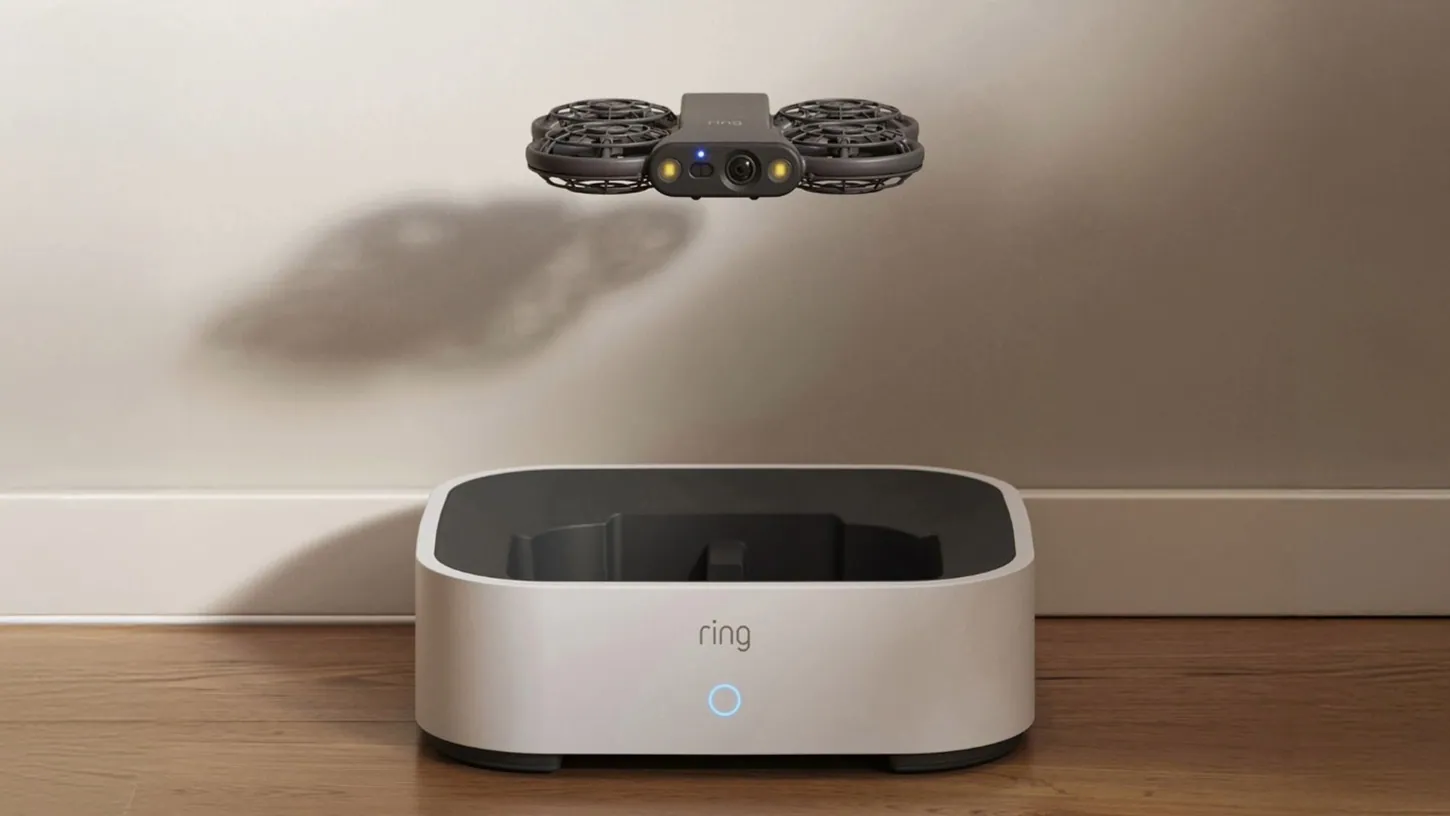
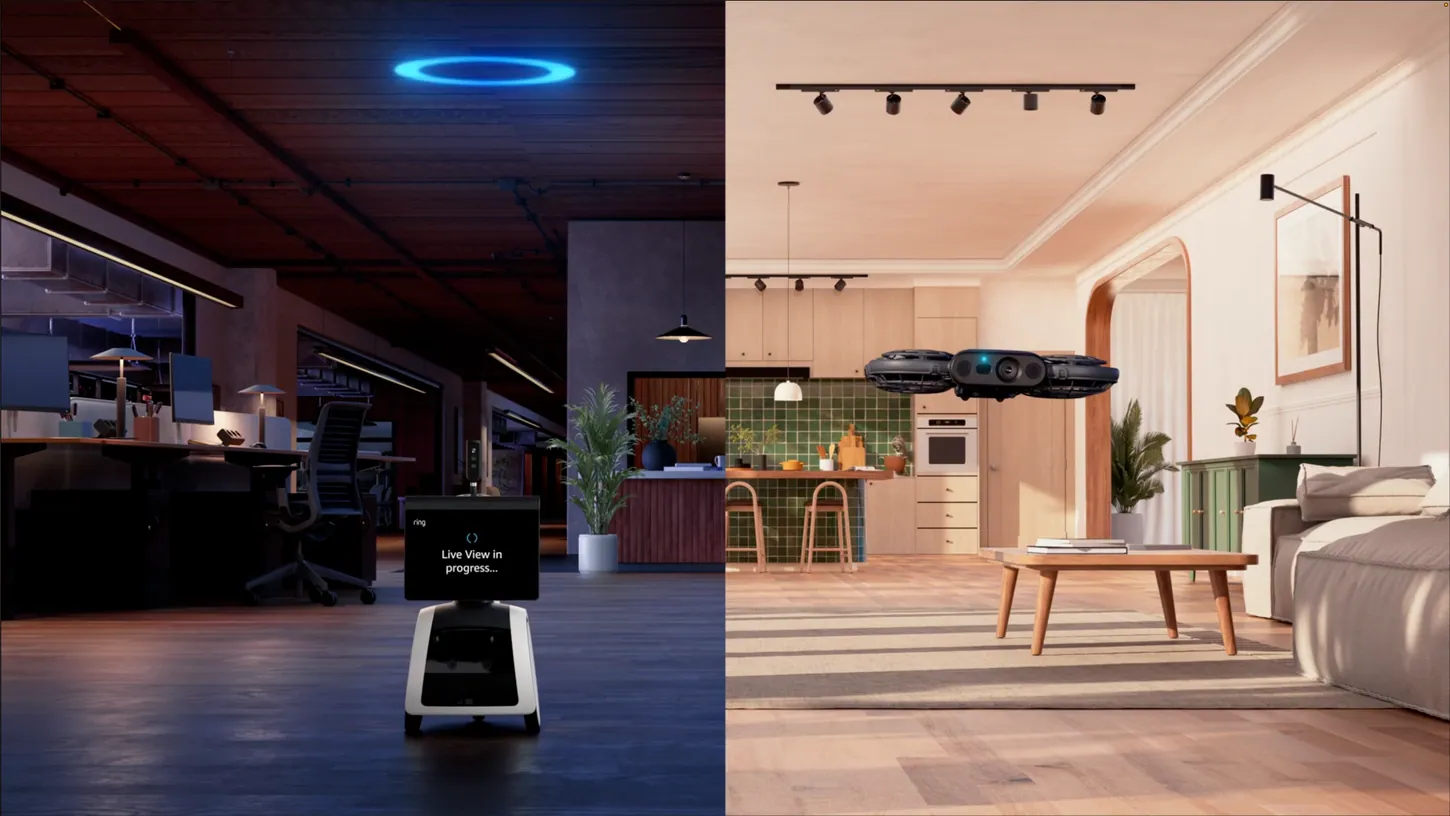
Ring finally has a drone. The Amazon-owned company announced the Ring Drone Cam on Tuesday, a 165-gram flying indoor security camera that ships to US customers on January 27, 2027 for $249.99. It is the same idea, at nearly the same price, that Amazon showed as the Always Home Cam in September 2020, promised for 2021, offered by invitation in 2021, and never shipped.
The drone launches alongside the Ring Rover Cam, a $999.99 wheeled security robot for businesses, under a new Ring Robotics label. Both run on what Ring calls AI Pilot, which maps a building, suggests patrol points and flies or drives to them on a schedule or when another Ring device trips an alarm. Ring founder Jamie Siminoff presented both at a media event in New York.
Amazon’s announcement offers an email sign-up for the Drone Cam rather than a preorder. Amazon’s announcement carries the standard notice that the drone has not yet been authorized under Federal Communications Commission rules and can’t be sold until it is. Since December 2025, those rules have blocked new authorizations for foreign-produced drones and drone components unless they qualify for an exemption.
Ring Rebuilt The Drone Around The Cloud After Scrapping Two Designs
Ring started over about a year ago. Siminoff told The Verge the company had worked on the drone since 2016 and nearly shipped two earlier models. The new design carries little onboard sensing, and moving its brains to the cloud is how Siminoff says Ring got it under $250.
Siminoff described the earlier attempts to Bloomberg as “a vicious cycle.” Each added sensor or processor needed a bigger battery, the extra weight needed stronger rotors, and flight stability got worse. The last version DroneXL covered was the CES 2023 demo, which The Verge’s reporter says was about four times the size of the new drone.
The trade-off is the internet connection. The Verge reports that without Wi-Fi the Drone Cam can do little beyond landing. Bloomberg says an unconnected unit can still take off and land safely. Ring rates it at five to eight minutes of flight, and every minute in the air costs eight minutes on the dock, so a five-minute patrol needs about 40 minutes to recharge.
The Drone Cam records 2K video with a 148-degree field of view, and two LED lights switch on in low light. Owners set it up by carrying the drone through the house so it can build a floor plan. It works with Ring’s existing cameras, doorbells, sensors and alarms, and with Amazon’s new Alexa Home Map. The camera is off while docked, an LED shows when it records, and video uses Ring’s Throw Away the Key encryption (TAKE). Amazon’s release says the propellers “aren’t quiet,” and Ring is pitching the noise as a deterrent. A compatible Ring Protect plan is required for scheduled flights, and Amazon’s announcement doesn’t name the plan or its price.
Siminoff told CNBC that Ring has put “guardrails in there to make it so it doesn’t fly outside.” Journalists at the preview watched preproduction units fly preset routes but were not allowed to control them, according to Bloomberg.
Ring Rover Cam Is Amazon’s Astro Rebuilt As A Business Security Robot
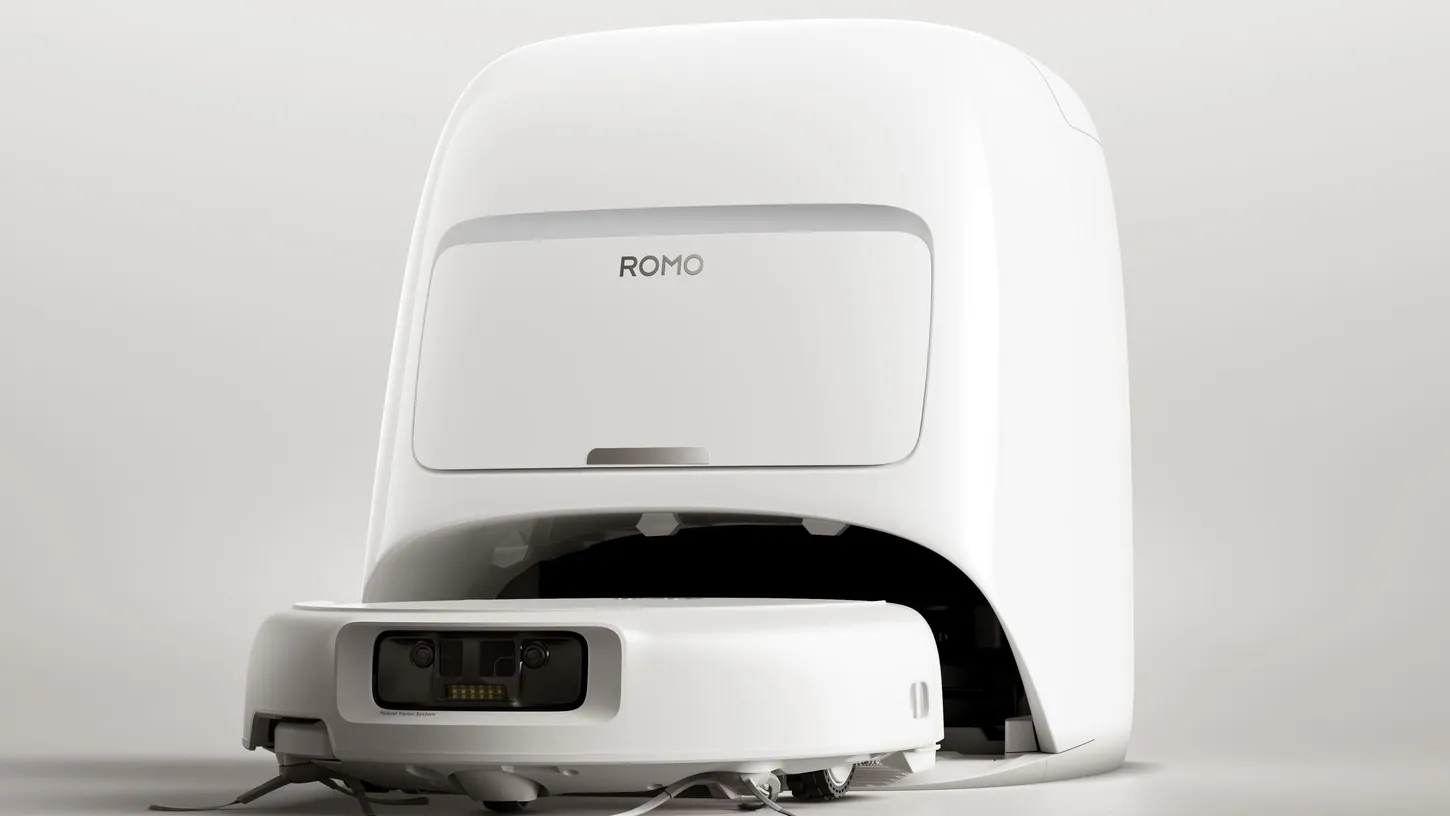
The $999.99 Rover Cam ships December 16. Preorders are open on Amazon. It is a security version of Amazon’s Astro home robot, with a periscope camera on an adjustable mast, a siren, two-way audio, 4K recording while it moves and person detection while docked.
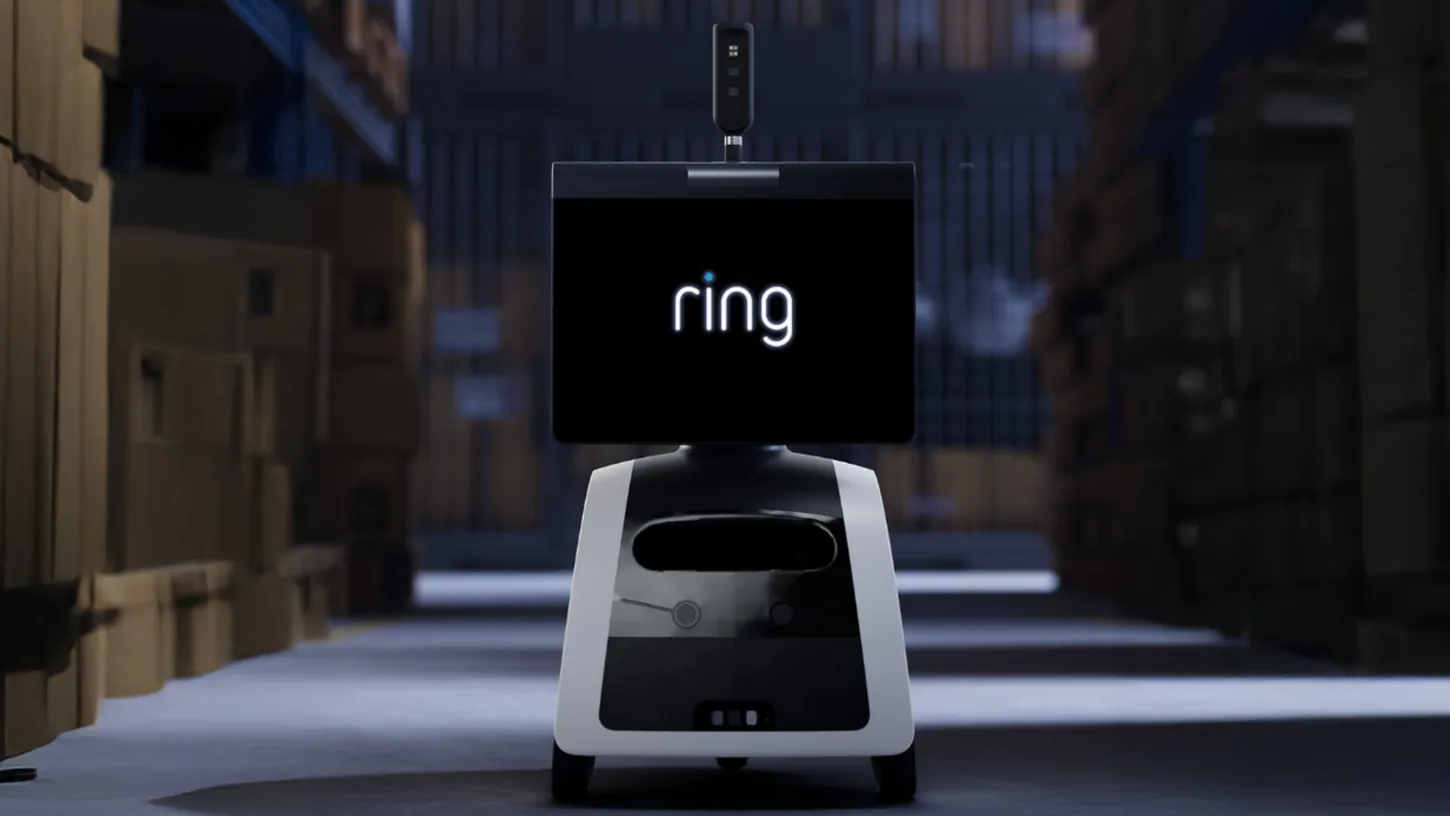
Bloomberg reports it patrols for up to 30 minutes and covers up to 5,000 square feet. Amazon’s release says the Rover grew out of Astro owners’ feedback, and Siminoff told Bloomberg most of the hardware is unchanged. The new piece is a light tower that projects a ring onto the ceiling so staff can see where the robot is. Amazon has tried this market before. It discontinued Astro for Business in July 2024, and those robots stopped working that September.
Ring Says The Drone Cam Is Assembled In The US As It Seeks FCC Approval
The Drone Cam needs an FCC grant under a rule that, since December 22, 2025, has covered drones and critical components produced in a foreign country, unless an exemption applies. Siminoff told The Verge the drone “does comply with” FCC regulations and is assembled in the US.
Ring told The Verge its FCC certification is in process, and the outlet notes that new gadgets routinely go through it before launch. CNBC reports the January ship date is pending FCC approval.
The same rule is why no new DJI aircraft can be certified for the US. The determination the FCC adopted lists flight controllers, navigation systems, batteries, motors, and sensors and cameras among critical components, and says the list is not exhaustive. Under the FCC’s guidance, a drone assembled in the US that contains foreign parts still qualifies if it is on the Blue UAS list or meets the Buy America standard of at least 65 percent domestic component value, exemptions now extended to January 1, 2028. Amazon’s announcement and the Verge, Bloomberg and CNBC reports do not say where the Drone Cam’s components are made or which path Ring is using.
The FCC has also shown it will pull a grant it later decides was issued in error. In August it told DroneXL the HOVERAir VERSA’s certification was granted in error, directed the company to stop sales, and said it was sending guidance to every certification body to strengthen its Covered List due diligence. Nothing in the public record suggests a problem with Ring’s application. The rule also leaves a door open: the Department of War or Homeland Security can clear a specific drone, class of drones or component, as the Department of War did in January for Blue UAS-listed hardware and Buy America products.
DroneXL’s Take
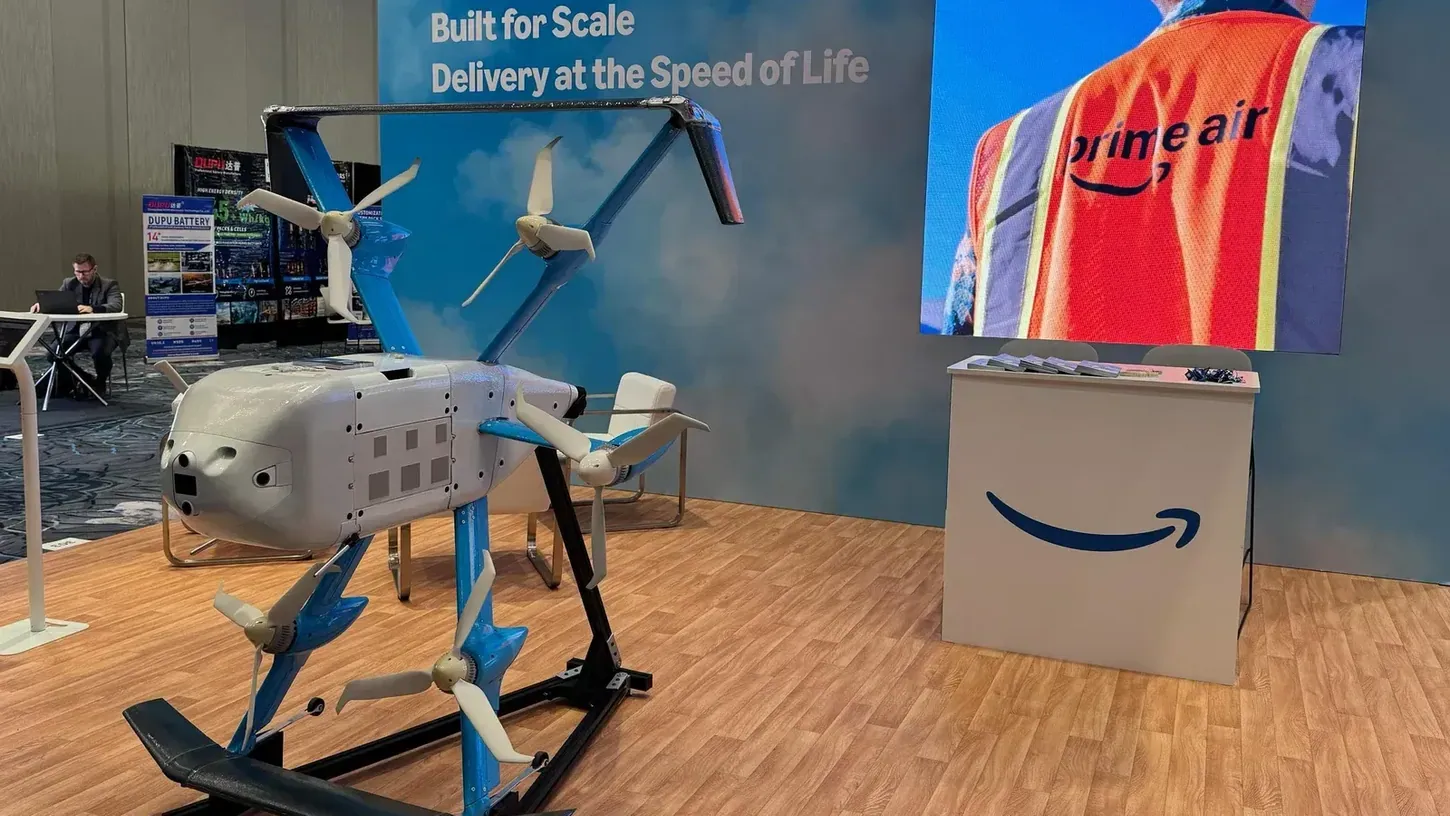
Amazon’s drones run late, and Ring’s is no exception. Jeff Bezos told 60 Minutes in December 2013 that drone delivery could be four or five years away. Nearly 13 years later, Prime Air flies in 13 US metros by DroneXL’s count, and Amazon paused deliveries twice in 2025. Ring showed its home drone in 2020 for a 2021 launch, and the new version is due January 27, 2027. I’d rather Amazon ship flying hardware late than ship it broken, and by Siminoff’s account, Ring dropping two designs it nearly shipped counts in its favor.
Ring should tell buyers where the Drone Cam’s parts are made, beyond the final assembly Siminoff says happens in the US. If Ring is relying on the 65 percent domestic-content test, it should say which components come from where and show the numbers. If it needs a Department of War or DHS exemption, that’s fine too, as long as the same path is open to every other drone maker. My read is that how the FCC handles a 165-gram Amazon camera will tell hobbyists whether the Covered List is applied the same way to every company. If the Drone Cam ships on January 27, a grant has to exist first, and it will be listed in the FCC’s public equipment authorization database, where anyone can look it up.
Sources: Amazon, Bloomberg, The Verge, CNBC, CBS 60 Minutes
DroneXL uses automated tools to support research and source retrieval. All reporting and editorial perspectives are by Haye Kesteloo. Read our editorial standards.