
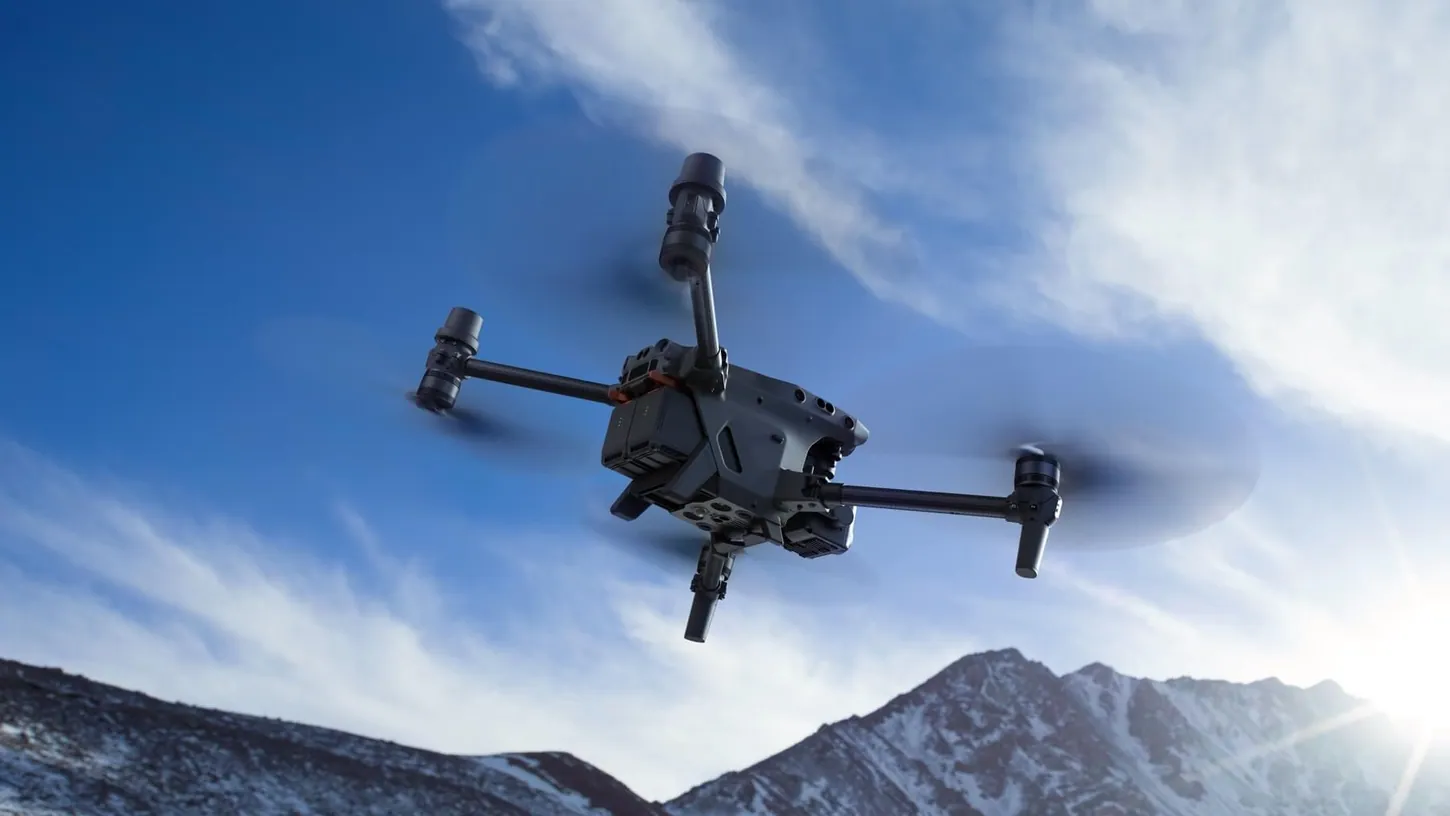
Germany’s armed forces, the Bundeswehr, have banned Chinese small drones from their barracks and training grounds with immediate effect, and ordered every unit to stop flying the ones it already owns, DJI models included. A Defense Ministry spokesperson confirmed the move to Der Spiegel, which reported it on Tuesday, November 10, and said existing systems will be replaced with German or European products.
The Bundeswehr has banned Chinese drones before. That order, issued in November 2023, warned that Bundeswehr data could flow to Beijing. A year later, the military signed a contract for 500 DJI Matrice M30T drones.
Defense Ministry Ties the Drone Ban to Technological Sovereignty
The ministry presents the move as industrial policy as much as security. A spokesperson told Reuters that “Chinese-made models will no longer be used” in order to strengthen the Bundeswehr’s self-sufficiency and technological sovereignty. The same spokesperson said there is no blanket ban on systems from any particular country.
The decision rests on individual risk assessments covering military, IT and data security, according to the ministry. Der Spiegel’s report says the orders went out to the whole force in recent weeks, because of concern that the drones could pass details of exercises, images of bases and training grounds, or information on German weapons systems to Chinese intelligence.
Spiegel also reported lists of car models from BYD, Geely and NIO circulating in the forces. Soldiers who drive one now park outside the gate and walk in. Spiegel points to Norway, where the armed forces found during their Hovedstad home defense exercise in September that Chinese-made rental cars had recorded the security checks at a military camp’s entrance. The ministry told Reuters there is no general ban on vehicles from any country or maker, but access to sensitive sites can be restricted where a car’s sensors pose a risk. Poland banned Chinese-made vehicles from its military facilities in February, and the US barred BYD cars from its air base on Okinawa last month, Reuters reported.
A Drone Task Force Put DJI on the Approved List in 2024
Seven months after the first ban, the Bundeswehr’s own drone task force reopened the door. Its then head, Wolfgang Jordan, recommended in June 2024 that eight DJI models, the Matrice M30 among them, go on a white list that otherwise held only US-made drones, CORRECTIV reported in August.
The CORRECTIV investigation quotes the order it reversed. Lieutenant General Martin Schelleis, then head of the Joint Support Service, signed Order 159 in November 2023, banning unmanned aircraft from states with special security risks, “currently only China.” Spiegel says the reversal came out of plain need. The Bundeswehr was behind on drones and wanted to catch up fast, and security concerns took a back seat. A Bundeswehr insider told CORRECTIV that no German or European drone matched DJI on quality and price.
In November 2024, the Bundeswehr signed a framework contract with Droneparts GmbH for 500 DJI Matrice M30T drones, according to the contract, which CORRECTIV obtained. It included a “no-spy” clause stating the aircraft were hardened against data leaks. Jordan’s rules said the DJI drones had to fly without an internet connection and have their data deleted after each use.
Local commanders could also buy commercial drones themselves with little paperwork, the ministry confirmed to Spiegel. Insiders estimate they bought several thousand Chinese drones nationwide, M30Ts among them, and reportedly many other DJI models. Nobody tracked centrally which unit bought which drone, so the Bundeswehr had no option but a force-wide ban, Spiegel reported. The ministry won’t give a number, citing military security.
The rules never allowed DJI drones in reconnaissance or tactical roles during exercises, according to Spiegel, and units used them for taster courses for future drone pilots and as targets for air-defense systems. The ministry at first argued they flew only where no security-relevant information was involved, and in August a spokesperson told CORRECTIV that flying only on military property, offline and under strict rules, ruled out a leak of sensitive data.
An Insider Says Counterintelligence Found Traces of Data Diversion
Whether the drones ever leaked sensitive data is not known, Spiegel wrote, but one insider who had repeatedly filed complaints against the Bundeswehr’s use of DJI drones told the magazine that the MAD, Germany’s military counterintelligence service, found forensic traces of data being diverted from drones the Bundeswehr had flown.
The ministry did not answer Spiegel’s questions about those suspicions directly. Insiders had warned of the risk when the white list was drawn up, and Spiegel cites Western intelligence assessments that all Chinese drone makers work closely with Chinese authorities.
CORRECTIV had already described how readable the drones are. After a Bundeswehr DJI drone crashed in April 2025, the military filed a warranty claim, and DJI rejected it as pilot error based on its own analysis of data stored on the aircraft, according to an insider. A penetration test found the onboard memory would need to be overwritten up to 1,000 times to clear it, the same insider said. The ministry disputed that account, saying all IT devices go through mandatory deletion procedures before they are handed to outside parties. CORRECTIV also reported that the Bundeswehr takes the drones off the cellular network and loads its own software onto them, and that the spying scenario modeled in an internal Bundeswehr analysis has not been proven.
DJI has repeatedly said its drones pose no security risk. In May, an OnDefend audit of the Air 3S and Matrice 4E found no clear evidence of hidden backdoors and no data transmissions outside the United States during testing.
DroneXL’s Take
I have argued against the US DJI ban for years, and I won’t argue against this one. A military keeping Chinese drones off its own training grounds is taking a legitimate security measure, and it doesn’t need the unconfirmed MAD finding to justify it.
Germany also drew the line in the right place. The Bundeswehr banned DJI from its barracks, not from German farmers or firefighters. Compare that with the FCC adding foreign-made drones to its Covered List last December, which reaches every American who wants a new DJI model.
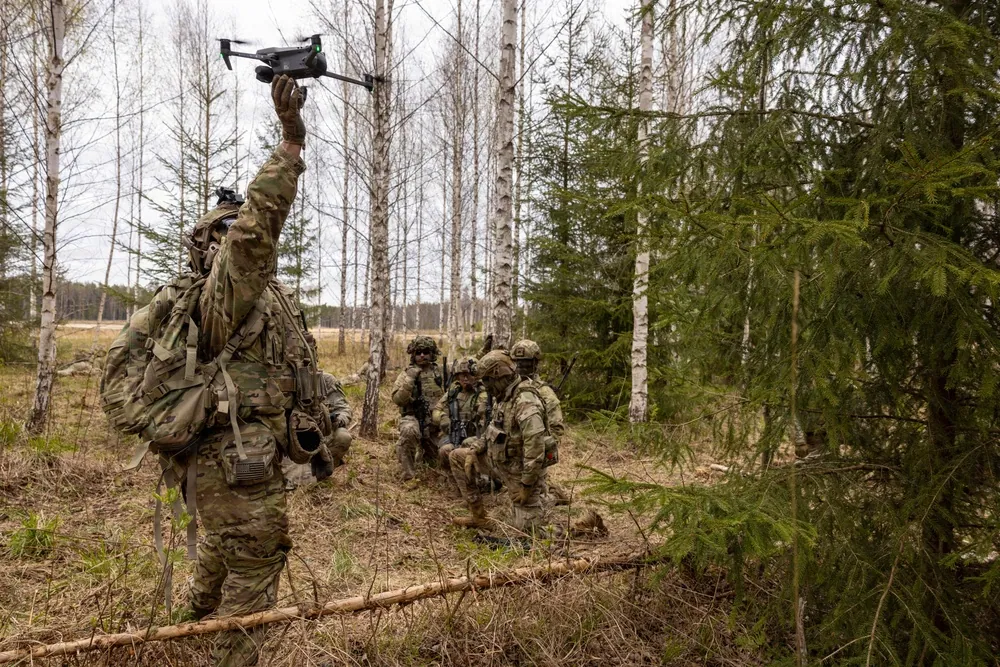
Germany needed two bans to get here, and I suspect the same rush for cheap, capable drones explains why soldiers from 1-12 Cavalry flew a DJI Mavic 3 in a live-fire exercise in Latvia in April. If the MAD finding holds up and covers DJI aircraft, the Pentagon should be asking which of its own units still train with DJI drones.
Sources: Der Spiegel, CORRECTIV, Reuters, DVIDS.
DroneXL uses automated tools to support research and source retrieval. All reporting and editorial perspectives are by Haye Kesteloo. Read our editorial standards.


