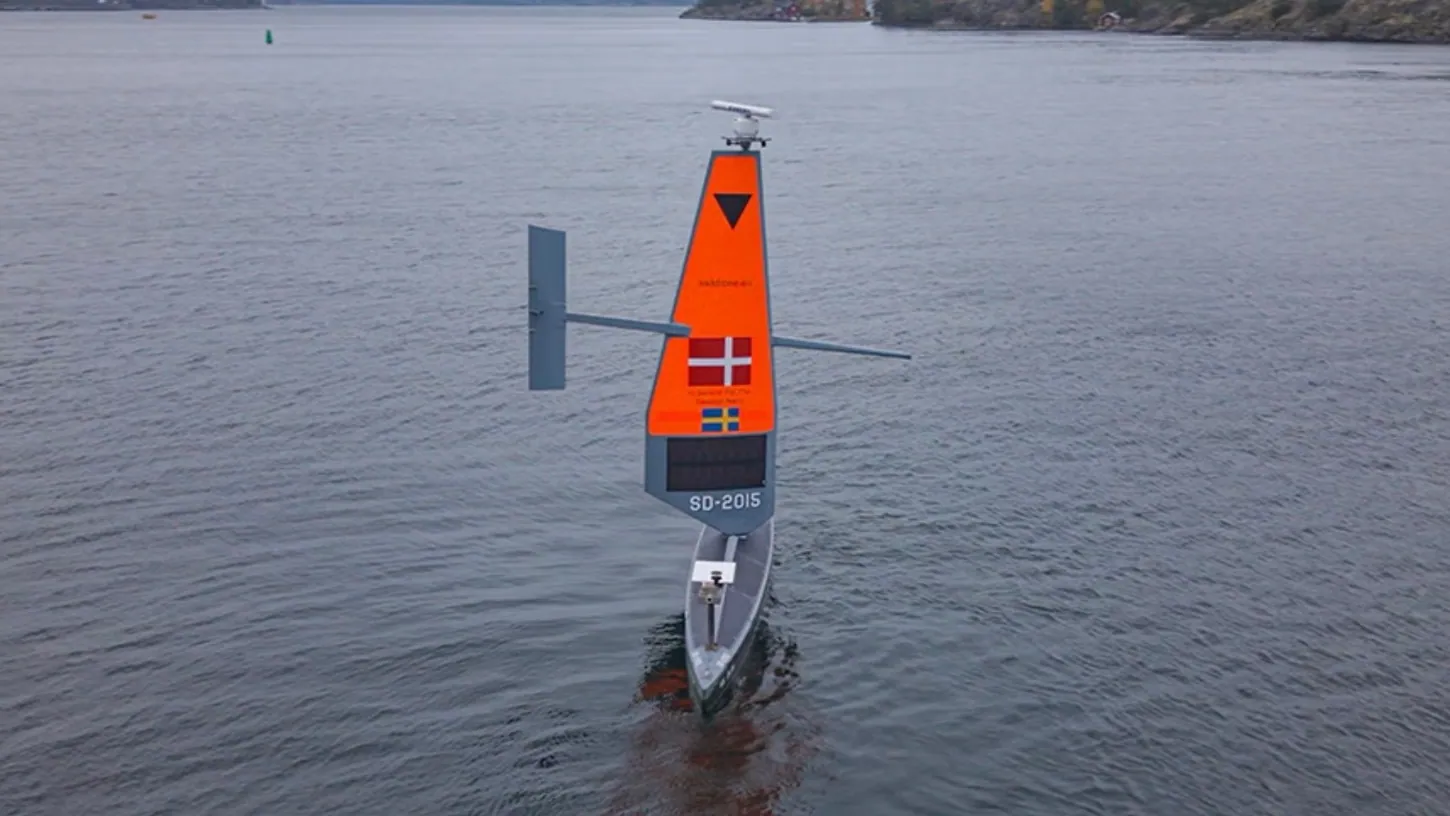
American sea-drone maker Saildrone has started a year-long mission for the Swedish Armed Forces, patrolling Sweden’s territorial waters and exclusive economic zone in the Baltic Sea with four wind-powered Voyager uncrewed surface vessels (USVs). Sweden’s Defence Materiel Administration (FMV) signed the framework agreement, the first national deployment under the Nordic Defence Cooperation (NORDEFCO) framework.
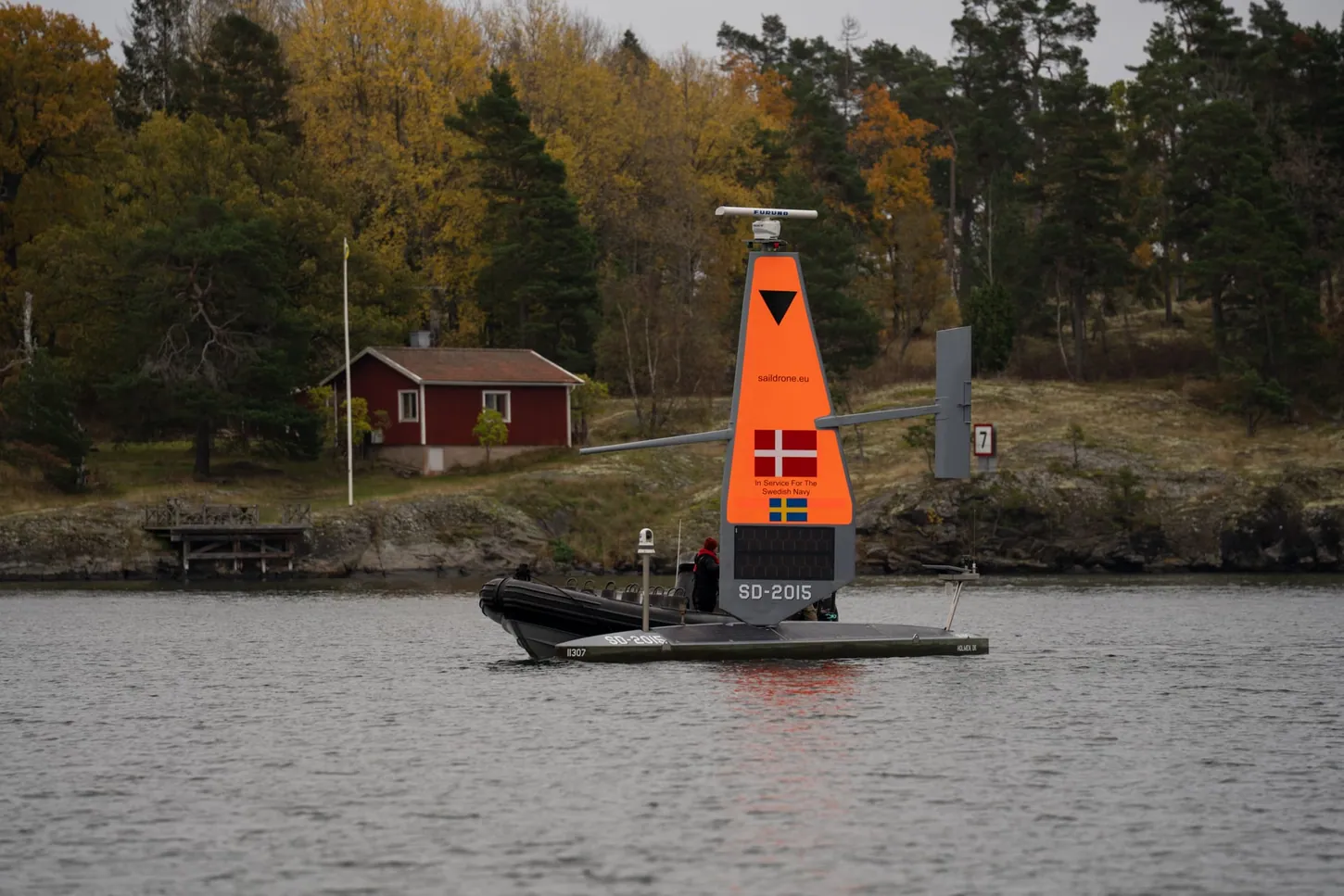
Defence Minister Pål Jonson saw one of the boats at an FMV media day in Nynäshamn, south of Stockholm, on October 22. In January, Jonson announced Sweden’s $440 million push into unmanned military systems, with sea surveillance on the list. Four Voyagers now sail for the Swedish Navy, and FMV says Sweden did not buy any of them.
Sweden Pays Saildrone for Surveillance Data Instead of Boats
Sweden is paying for what the Voyagers see. Saildrone deploys and operates four of them for 360 days each, 1,440 contracted vehicle-days, and the Swedish Navy receives their maritime surveillance data around the clock. Saildrone’s own staff monitor the boats at all times.
FMV project manager Johan Wahren said Sweden is “purchasing a persistent maritime surveillance service” in Saildrone’s announcement of the mission. In FMV’s own release, published in Swedish, he calls this service model a concept FMV sees spreading internationally. The Navy hands Saildrone its tasks, and the contract lets Sweden add more sea drones to the service.
The US Navy already buys Voyager time this way. In August, Saildrone announced a $16.3 million Navy task order to keep its Voyager fleet operating in the Caribbean and Eastern Pacific for US Naval Forces Southern Command and the Fourth Fleet, where Saildrone has run the boats since 2023. Its larger Surveyor also fired two JAGM missiles at the US Navy’s RIMPAC exercise this summer.

Denmark’s Six-Month Saildrone Mission Detected 170,000 Vessels
Saildrone’s Baltic track record comes from a six-month mission for the Royal Danish Navy, where four Voyagers held 92% fleet uptime, sailed more than 20,000 nautical miles and detected over 170,000 unique vessels, according to Saildrone. Sweden’s contract uses the same four-boat fleet size.
NORDEFCO links Sweden, Denmark, Finland, Iceland and Norway, and has done so since 2009. FMV says the agreement lets other Nordic nations sign up on their own terms, and it drafted an implementing arrangement to make that easier. Saildrone says more national deployments will follow.
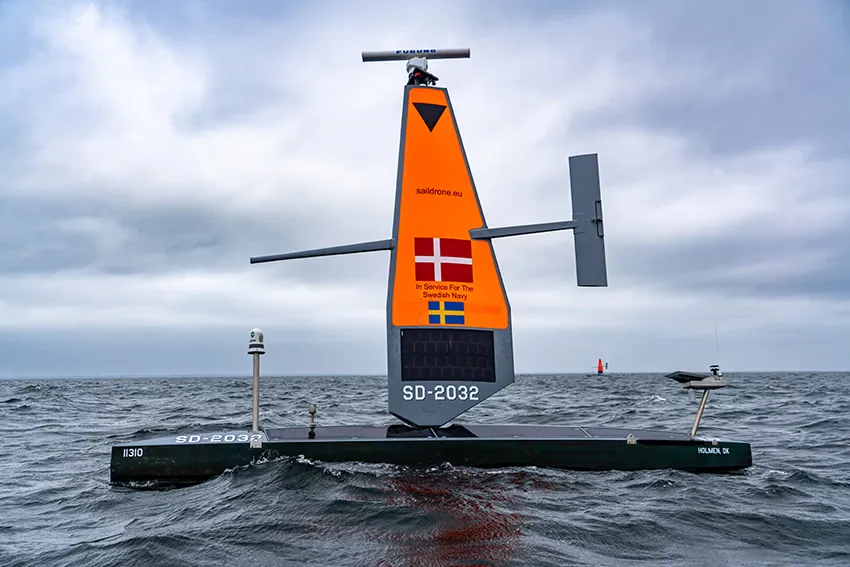
Robert Kleist, Saildrone’s European managing director, said “Sweden is investing in year-round maritime awareness as an operational capability.” The company opened its European headquarters in Copenhagen this year, backed by a 2025 financing round led by the Export and Investment Fund of Denmark (EIFO), and now registers Voyagers under the Danish flag. That is why the Swedish Navy’s boats carry a Danish flag on the sail.
Saildrone Voyagers Check Baltic Ships Against Their Own AIS Signals
Detecting ships is only part of the job. Wahren says in FMV’s release that the Voyagers also check that a vessel really is what its AIS transponder says it is. Another task is confirming the position of ships that may have broadcast a false one.
Each Voyager is a 33-foot (10-meter) sailboat carrying camera and radar, driven mainly by wind. Solar panels power the electronics, and a small engine with a fuel tank backs up the sail. The boats move between positions on their own within the mission Saildrone is given.
The work ties into NATO. FMV says the Swedish boats contribute to Task Force X Baltic, a NATO Allied Command Transformation project to speed up unmanned sea surveillance. It grew out of Operation Baltic Sentry, launched after subsea cable breaks in 2024 and 2025. In February, Sweden and seven other allies agreed to cooperate on acquiring new maritime technology for Baltic security.
In July, an IISS report on Russian drone incursions described shadow-fleet vessels sailing close to European coastlines with their AIS transponders switched off. Saildrone sells the same boat at home, too: Voyagers were scheduled to watch vessel traffic on the Great Lakes for the US Coast Guard from May through October.
DroneXL’s Take
Sweden is buying sea drones the way they should be bought. The Navy pays for a picture of the Baltic, and as I read the service model, a Voyager that breaks its wing sail in a January storm is Saildrone’s problem to fix. Denmark’s 92% fleet uptime is the figure Sweden should hold Saildrone to, because uptime is what it is paying for. The model suits the AIS work too. A Voyager cruises at about 5 knots, so it won’t chase a tanker, but it can sit off a shipping lane for months and report ships whose transponders don’t match what the camera sees, without tying up a crewed patrol vessel. Finland and Norway can now sign on through the same NORDEFCO arrangement, and I think they should.
Sources: Saildrone, Swedish Defence Materiel Administration (FMV), NATO
DroneXL uses automated tools to support research and source retrieval. All reporting and editorial perspectives are by Haye Kesteloo. Read our editorial standards.