
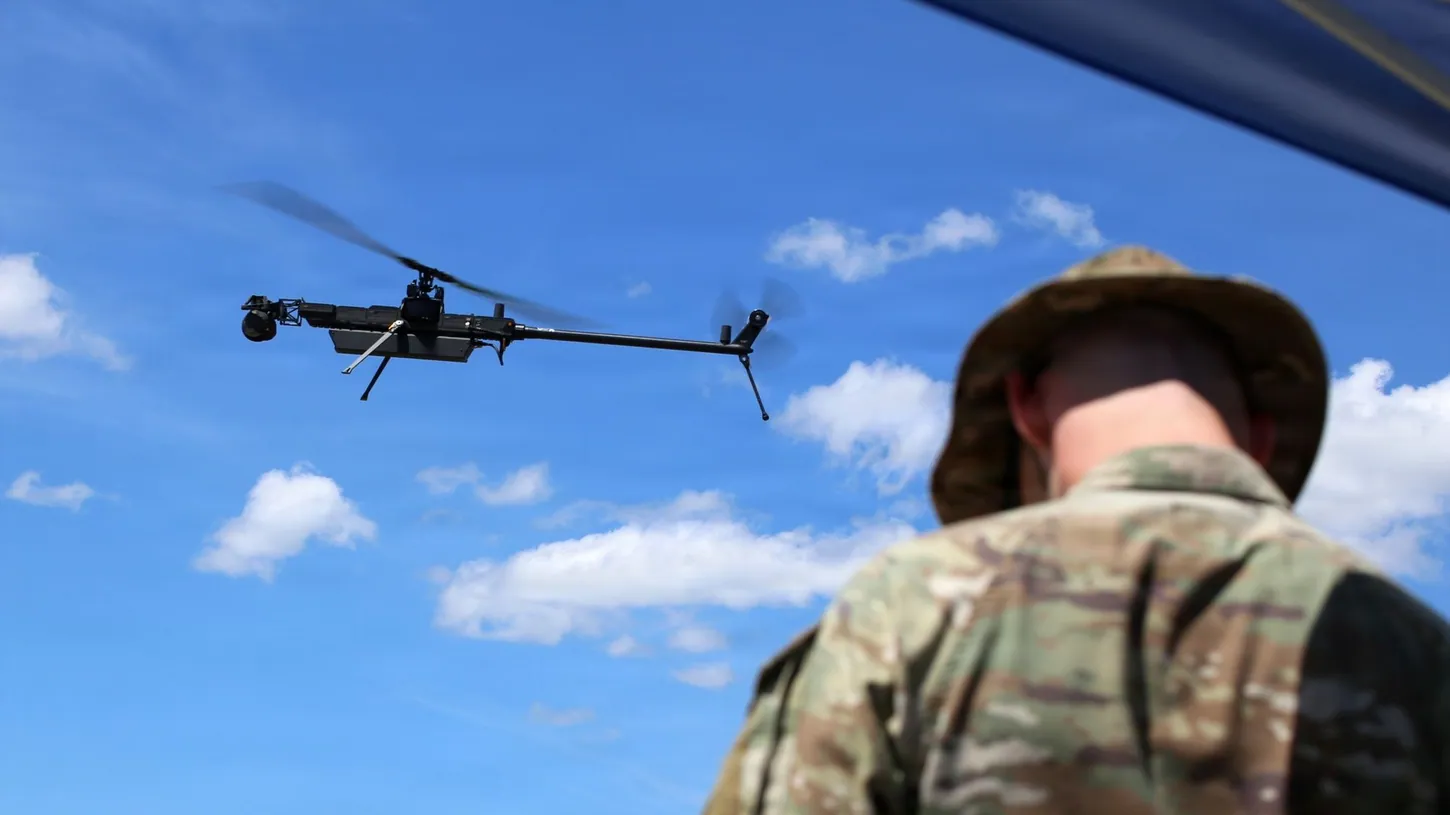
Department of Homeland Security officials said on Thursday that security planning for the 2028 Los Angeles Olympics has already started, and that drones and counter-drone systems are among the missions they are preparing for. The planning began right after this summer’s World Cup ended.
One lesson from that tournament came from Ryan Riccucci, a senior adviser at Customs and Border Protection. He said in October that he saw a World Cup command center where one screen showed the same drone detected three times.
DHS opened a counter-drone contract worth up to $1.5 billion in August, after the tournament, and seven of its vendor slots are for services that include making those systems work together. Riccucci, speaking two months later, said the software that translates between them is still missing.
A World Cup Command Center Showed One Drone as Three Detections
Riccucci tied the nine screens he saw in the command center to duplicate detections. One screen had the same drone detected three times, and another carried the only vendors able to tell whether three drones or one were in the air. He spoke at the Red Hat Government Symposium.
The cause he described is language. Agencies, vendors and data sets use different words for the same object, so one aircraft can arrive as a threat, a drone, a hostile, a credible threat or an item of interest. “I don’t want 10 dots on the map about a singular drone,” he said, according to FedScoop, which reported the remarks on Friday. He compared the missing software to a translation app for data. FedScoop described it as a problem the agencies are still working through.
Riccucci also said scheduled events are easier to secure than open-ended missions, because they are short and agencies get waivers that normally take a long time. DHS officials have pointed to the tournament’s drone mitigation and command center hubs as successes, FedScoop reported. The Department of Transportation counted more than 700 drones seized across the 11 host cities, as DroneXL reported in October.
The $1.5 Billion DHS Contract Pays Seven Vendors for Integration Through 2031
DHS split the contract into two tracks, and it started after the World Cup. Track one has seven vendors, among them Fortem and D-Fend, supplying hardware and software under a ceiling above $1 billion. Track two has seven, including Anduril and GDIT, providing services under a ceiling below $500 million.
The services track covers system integration for interoperability and counter-drone capability run as a managed service, according to FedScoop’s August report on the procurement documents. Leidos and BAE Systems hold places in both tracks, and the contract runs into 2031. Its minimums ask for equipment that detects a drone at 1.2 miles (2 km), tracks at least three at once and stops one at 1,640 feet (500 meters).
Thursday’s remarks came at GDIT Emerge: Protect the Homeland, a Washington event hosted by one of those service vendors. Amy Szestak, special agent in charge of the Secret Service’s Office of Administration, said there that the agencies are already working together on the Games. On technology she said “we’re looking to the skies now.” Officials are also asking who was missing from the table during the World Cup, FedScoop reported.
Mullin Says a $40,000 One-Way Attack Drone Is Not Economically Feasible
DHS Secretary Markwayne Mullin told a counter-drone grant forum on November 9 that one of the attack drones his department uses costs $40,000 to produce. It is built to crash into its target and fly once, and he said a single-use aircraft at that price is not economically feasible.
“We’re kidding ourselves to think it is going to work,” Mullin said, in FedScoop’s account of the forum, which does not name the aircraft. He said drone swarms are a particular challenge for one-way attack drones, and he told industry to rethink its systems and make them affordable. DHS announced its counter-drone pact with the FAA the same day.
Brian Cavanaugh, the DHS under secretary for management, was asked on that stage what the highest level of drone security for the Olympics would cost. “It’s hard to put a finger on the exact dollar amount,” he said, and added that the department has to prioritize.
Some of the money is already allocated. States file by Monday for FEMA’s second $250 million counter-drone round, and California, the host state, gets $18.7 million, 46% less than it got for the World Cup.
DroneXL’s Take
DroneXL has long argued that most mystery drone sightings turn out to be planes or satellites. Riccucci’s account says a version of that problem exists inside the command center, where one aircraft became three detections on one screen. I’m glad a CBP adviser said it in public.
FEMA wants 80% of the jammers and takeover systems bought with its Olympic grant round working events like the Games, and the officers holding them in 2028 will act on what the screen shows. My read is that DHS should show its vendors can agree on a single track before it pays for more equipment to act on one. Until it does, the detection totals that come out of LA28 deserve the same skepticism as any mystery drone report.
Sources: FedScoop, November 13, 2026, FedScoop, November 9, 2026, FedScoop, August 4, 2026, GDIT Emerge: Protect the Homeland event page.
DroneXL uses automated tools to support research and source retrieval. All reporting and editorial perspectives are by Haye Kesteloo. Read our editorial standards.


